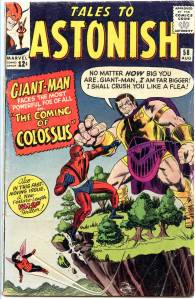
Tales to Astonish (Silver Age)

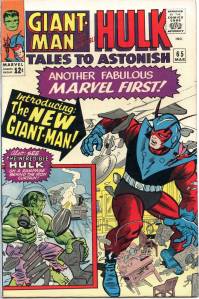
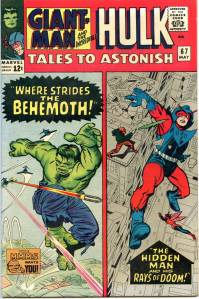
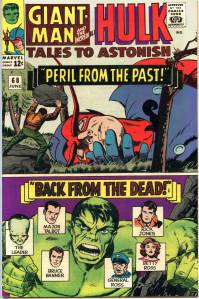
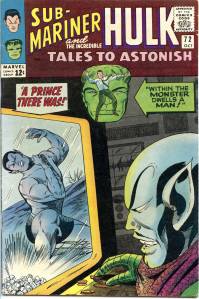
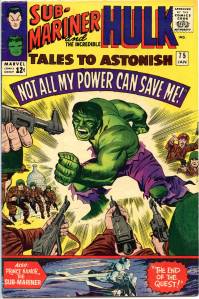
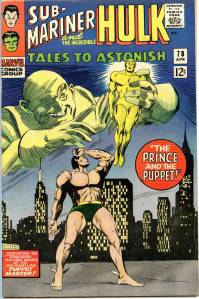
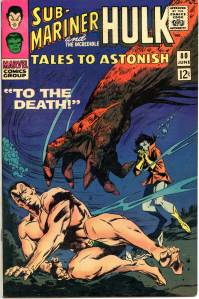
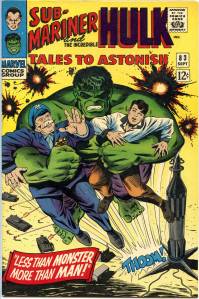
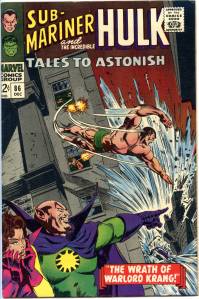
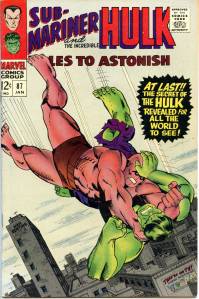
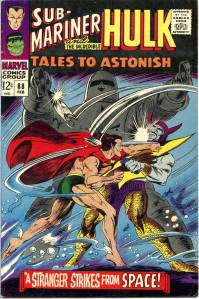
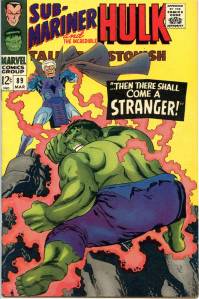
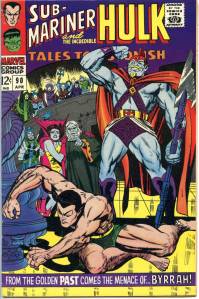
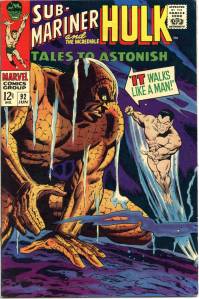
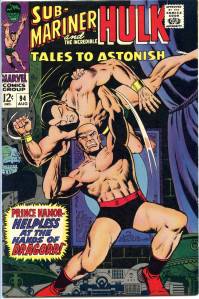
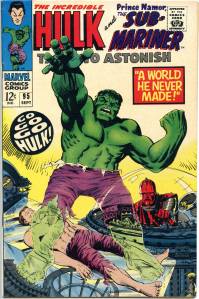
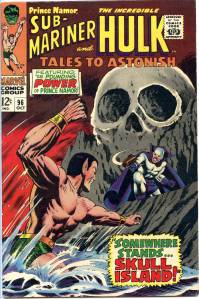
Tales to Astonish was published from January 1959 to March 1968 . It began as a science-finction anthology that served as a showcase for such artists as Jack Kirby and Steve Ditko. It became The Incredible Hulk with issue #102 (April 1968). Its sister title was Tales of Suspense.

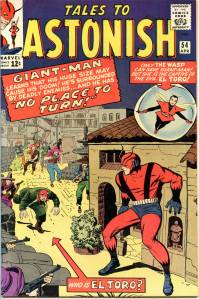
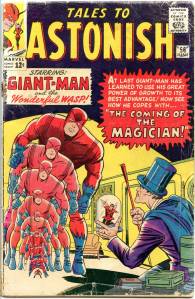
Following his one-shot anthological story in #27 (Jan. 1962), scientist Henry Pym returned donning a cybernetic helmet and red costume, and using size-changing technology to debut as the insect-sized hero Ant-Man in #35 (Sept. 1962). The series was plotted by Lee and scripted by Lieber, with penciling first by Kirby and later by Heck and others. The Wasp was introduced as Ant-Man’s costar in issue #44 (June 1963). Ant-Man and Pym’s subsequent iteration, Giant-Man, introduced in #49 (Nov. 1963), starred in 10- to 13-page and later 18-page adventures,

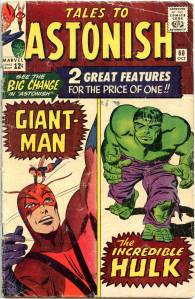
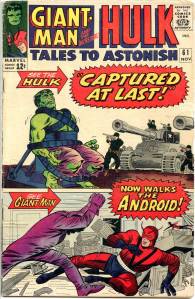
The Hulk, whose original series The Incredible Hulk had been canceled after a six-issue run in 1962-63, returned to star in his own feature when Tales to Astonish became a split book at issue #60 (Oct. 1964),]after having guest-starred as Giant-Man’s antagonist in a full-length story the previous issue. The Hulk had proven a popular guest-star in three issues of Fantastic Four and an issue of The Amazing Spider-Man. His new stories here were initially scripted by Lee and illustrated by the seldom-seen team of penciler Steve Ditko and inker George Roussos. This early part of the Hulk’s run introduced the Leader, who would become the Hulk’s nemesis, and this run additionally made the Hulk’s identity known, initially only to the military and then later publicly.
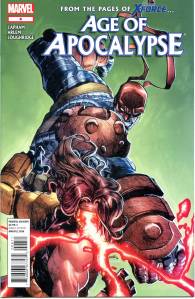
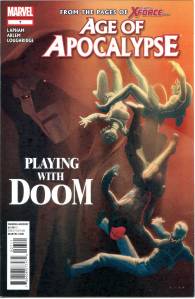
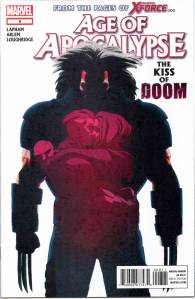
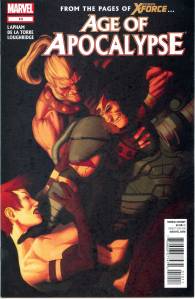
Age of Apocalypse (2012)

Jean Grey and Sabretooth return to Earth 616. Weapon X and his Black Legion attack the last human city where Weapon X slays both Magneto and Rogue, leaving Jean Grey and Sabretooth the last two X-Men alive. Jean telepathically nudges clones of the Scarlet Witch to recreate the Decimation and remove all mutants’ powers across the globe. However, this was only successful within a radius of 12 feet, so Jean Grey and Sabretooth are both left de-powered. The human coalition distracts Weapon X with a bomb long enough for the group to escape as the city explodes behind them.  Harper Simons joins with the human team, the X-Terminated. Others who work with the X-Terminated are Doctor Moreau and Bolivar Trask.

Manga Darkchylde (2005)

Darkchylde creator Randy Queen returns to write, draw, and re-imagine for an all- ages audience the character that made him famous!

In this first- ever, comic book release of Manga Darkchylde, the Sinister Sisters of Shadow have come to Salem, Georgia to seek an audience with a girl named Ariel Chylde! The same girl who just discovered she can become any of the creatures from her nightmares! Poor Ariel’s still just trying to adjust, and only wants to use her curse for good, but these creepy Sisters surely have something more sinister in mind!

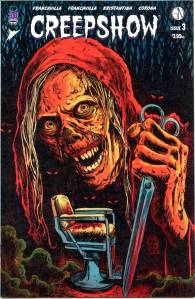
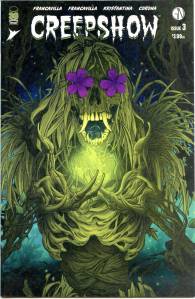
Creepshow – Image (2022)

The worldwide phenomenon based on the hit Shudder TV series comes to comics with a collection of can’t-miss horror that critics are screaming about! An all-star roster of comics creators brings readers ten uniquely terrifying standalone stories guaranteed to SCARE YOU TO DEATH!

Thor (Silver Age)

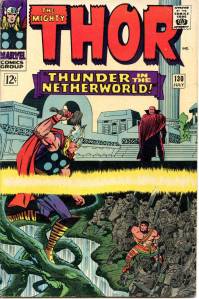
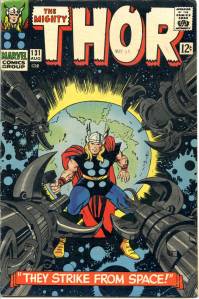
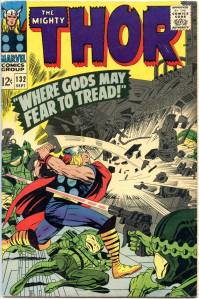
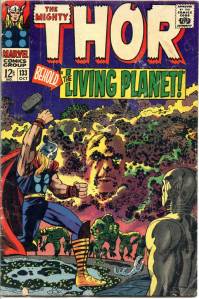
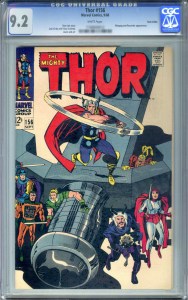
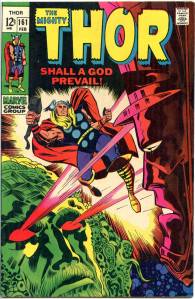
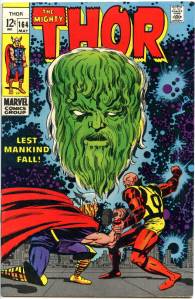
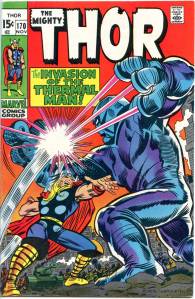
Thor debuted in the science fiction/fantasy anthology title Journey into Mystery #83 (cover-date Aug. 1962), and was created by editor-plotter Stan Lee, scripter Larry Lieber, and penciller-plotter Jack Kirby. A different version of the mythological Thor had appeared previously in Venus #12-13 (Feb.-April 1951).
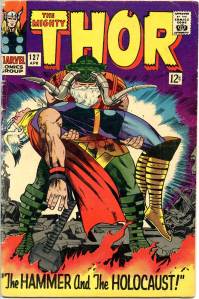
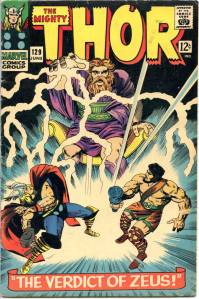
In a 1984 interview Kirby said “I did a version of Thor for D.C. in the Fifties before I did him for Marvel. I created Thor at Marvel because I was forever enamored of legends, which is why I knew about Balder, Heimdall, and Odin. I tried to update Thor and put him into a superhero costume, but he was still Thor.” And in a 1992 interview, Kirby said “[I] knew the Thor legends very well, but I wanted to modernize them. I felt that might be a new thing for comics, taking the old legends and modernizing them.”

Journey into Mystery was retitled Thor (per the indicia, or The Mighty Thor per most covers) with issue #126 (March 1966). “Tales of Asgard” was replaced by a five-page featurette starring the Inhumans from #146–152 (Nov. 1967 – May 1968), after which featurettes were dropped and the Thor stories expanded to Marvel’s then-standard 20-page length.

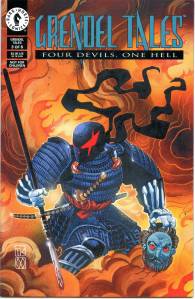
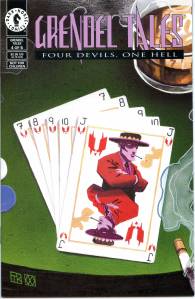
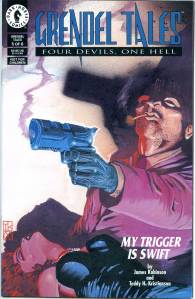
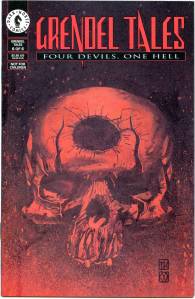
Grendel Tales – Four Devils, One Hell

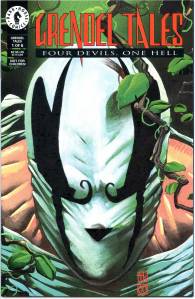
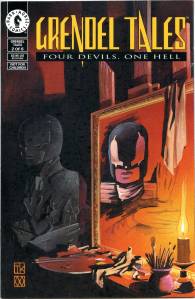
Too many devils are looking to rule the underworld. Some of them have to head for higher ground. The gambler, the detective, the madman, the artist — four displaced devils each in search of a hell to call his own. But while each follows his own path, they all end up on the night train to New Orleans. Four devils are fighting for one town, and an unknown threat with a thirst for power is lurking amongst them, unwilling to give up his town. There’s always somethin’ hot goin’ down in the Big Easy, but forecasts are predicting an all-time high!

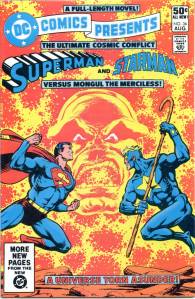
DC Comics Presents V1 (1978)

DC Comics Presents debuted with a July/August 1978 cover date . The series was launched with a team-up of Superman and the Flash by writer Martin Pasko and artist José Luis García-López.  Issue #26 included an insert introduction story to the then-upcoming New Teen Titans series by Marv Wolfman and George Pérez. Len Wein and Jim Starlin co-created the supervillain Mongul in issue #27 (Nov. 1980) as part of a three-issue storyline. Another insert in issue #41 previewed the “new direction” Wonder Woman. In issue #47, Superman traveled to Eternia and met the Masters of the Universe. Ambush Bug made his first appearance in issue #52 (Dec. 1982)  and made additional appearances in issue #59 and #81. The Superman/Challengers of the Unknown tale in issue #84 was drawn by Jack Kirby and Alex Toth. The series also contained the Alan Moore Superman/Swamp Thing story “The Jungle Line” in DC Comics Presents #85 (Sept. 1985), pencilled by Rick Veitch and inked by Al Williamson. Issue #87 featured the first appearance and origin of the divergent Kal-El of the Earth Prime reality, who would become known as Superboy-Prime. The final issue is an exception to the team-up format, instead featuring Superman in an “Untold Tale” involving the Phantom Zone, by Steve Gerber, following up in his limited series of the same title.

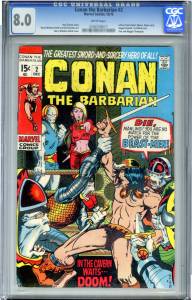
Conan (1970)

Marvel Comics introduced a fairly faithful version of Conan in 1970 with Conan the Barbarian, written by Roy Thomas with art initially by Barry Windsor-Smith, then John Buscema and Ernie Chan (aka Ernie Chua). The highly successful Conan the Barbarian series spawned the more adult, black-and-white Savage Sword of Conan in 1974, by Thomas, Buscema, and Alfredo Alcala. Savage Sword of Conan soon became one of the most popular comic series in the 1970s.

The Marvel Conan stories were also adapted as a newspaper comic strip which appeared daily and Sunday from September 4, 1978, to April 12, 1981. Originally written by Roy Thomas and illustrated by John Buscema, the strip was continued by several different Marvel artists and writers.

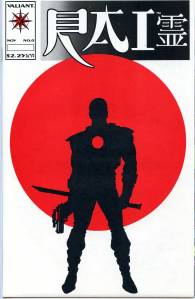
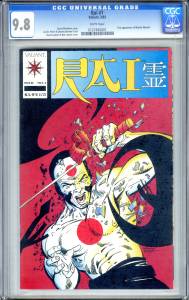
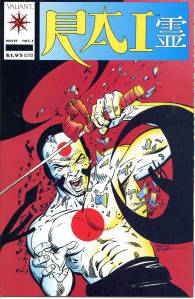
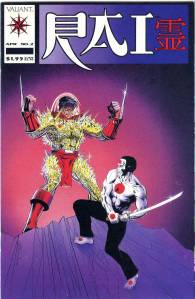
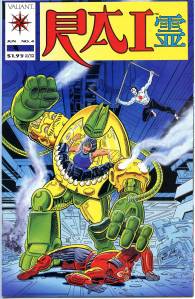
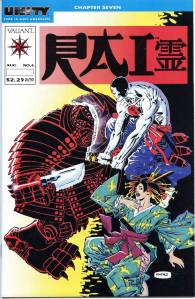
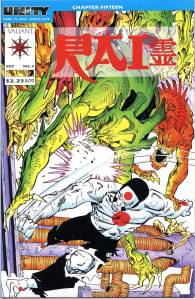
Rai – V1 (1992)

Rai (pronounced “rye”) appeared in books published by Valiant Comics. Rai was the first original hero created by Valiant and had its beginning as a flipbook back-up feature in Magnus Robot Fighter issues #5-8. The popularity of the flipbook back-up story later led to an ongoing series. Valiant Entertainment is the current owner of Rai and the rest of the original Valiant Comics characters.

In his original incarnation, Rai is the spirit guardian that protects the nation of Japan in the 41st century. It is a mantle passed down from father to son through the generations. As such, the series chronicled a number of protagonists.

A new Rai ongoing series was launched in April 2014 by the creative team of writer Matt Kindt and artist Clayton Crain, selling out of its initial print run.

World’s Finest (1950’s)

The series was initially a 96-page quarterly anthology, featuring various DC characters – always including Superman and Batman – in separate stories. Comics historian Les Daniels noted that “pairing Superman and Batman made sense financially, since the two were DC’s most popular heroes”. When superheroes fell out of vogue in the early 1950s, DC shortened the size of the publication to that of the rest of its output, leaving only enough space for one story; this led to Superman and Batman appearing in the same story together starting with World’s Finest Comics #71 (July 1954). The title often depicted Batman gaining superpowers as a way to avoid having him be overshadowed by Superman. Lex Luthor and the Joker first joined forces in issue #88 (June 1957).