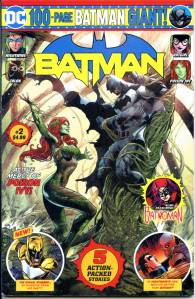
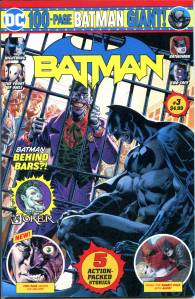
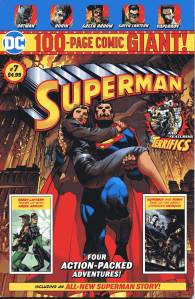
100 Page Giants – Walmart Exclusives (2018)

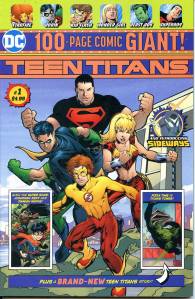
The Giant line of comics mixes all-new original material by some of DC’s top creators with reprints for a 100-page package.

Creators working on the new material include such fan-favorites as Tom King, Brian Michael Bendis and the Harley Quinn writing team of Jimmy Palmiotti and Amanda Conner, each working on characters outside of their traditional range in the regular DC line, with Bendis working on his first solo Batman material in September — a 12-part story beginning in Batman Giant No. 3 — and Tom King taking on Superman with artist Andy Kubert for their own yearlong epic beginning in Superman Giant No. 3. Not to be left behind, Palmiotti and Conner will launch a 12-part Wonder Woman story in the third Justice League issue.

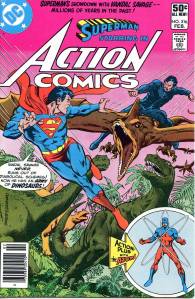
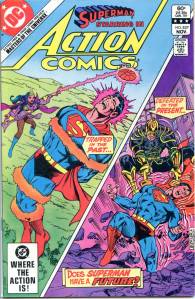
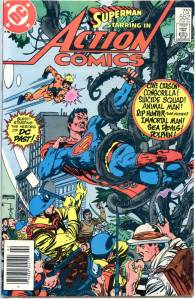
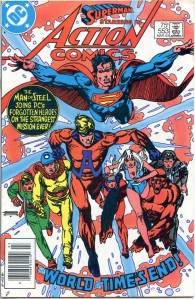
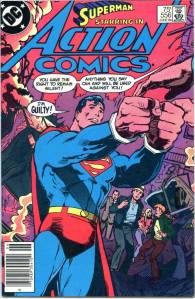
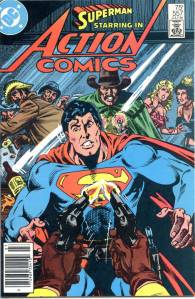
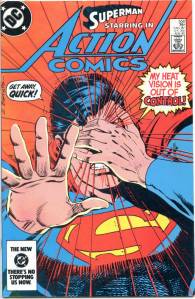
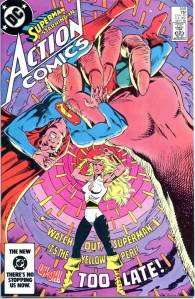
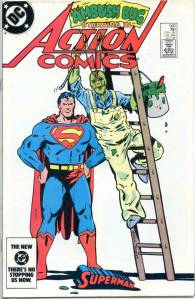
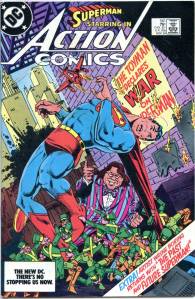
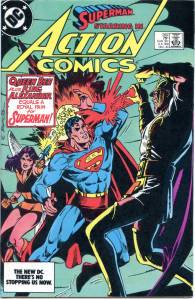
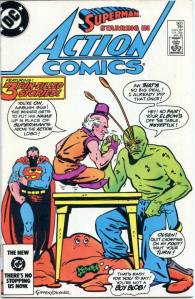
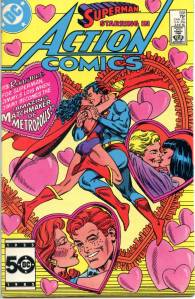
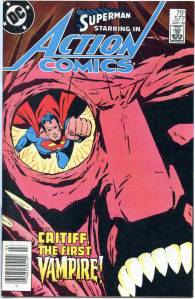
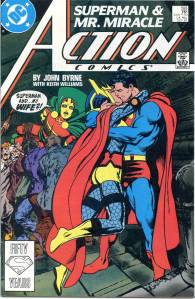
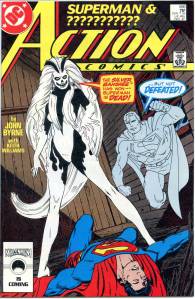
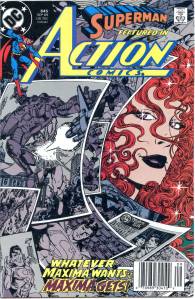
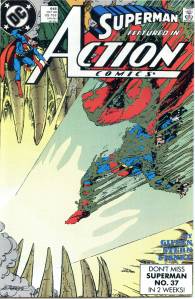
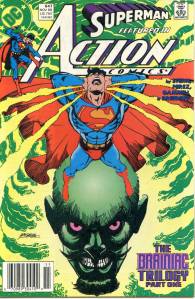
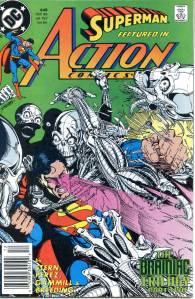
Action Comics (1980’s)

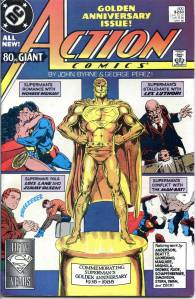
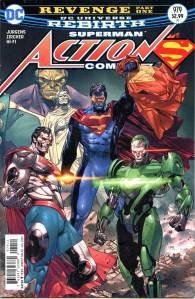
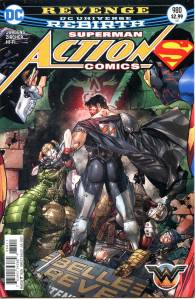
The superheroine Vixen made her first appearance in Action Comics #521 (July 1981). To mark the 45th anniversary of the series, Lex Luthor and Brainiac were both given an updated appearance in issue #544 (June 1983). Lex Luthor dons his war suit for the first time in the story “Luthor Unleashed!” and Brainiac’s appearance changes from the familiar green-skinned android to the metal skeletal-like robot in the story “Rebirth!”. Schwartz ended his run as editor of the series with issue #583 (September 1986) which featured the second part of the “Whatever Happened to the Man of Tomorrow?” story by Alan Moore and Curt Swan.

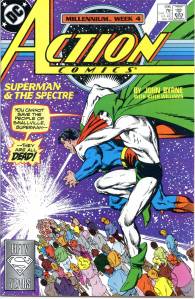
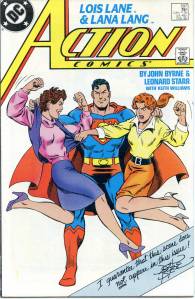
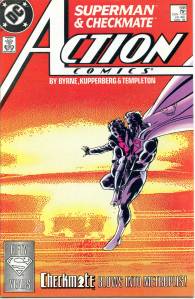
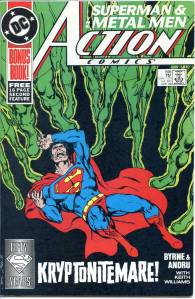
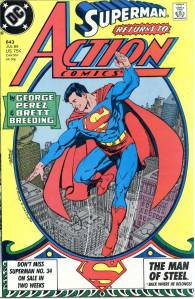
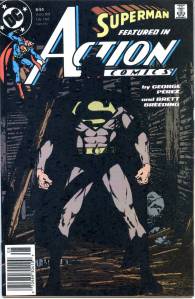
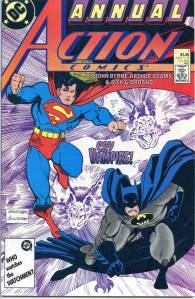
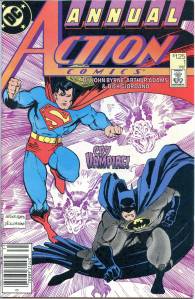
Following the events of Crisis on Infinite Earths, writer/artist John Byrne relaunched the Superman franchise in The Man of Steel limited series in 1986. Action Comics became a team-up title with issue #584 (January 1987).  The first Action Comics Annual was published in 1987 and featured Superman teaming with Batman in a story written by Byrne and drawn by Arthur Adams. A DC Comics Bonus Book was included in issue #599 (April 1988).

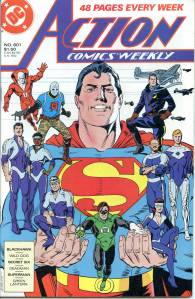
From May 24, 1988 – March 14, 1989, the publication frequency was changed to weekly, the title changed to Action Comics Weekly, and the series became an anthology. Prior to its launch, DC cancelled its ongoing Green Lantern Corps title, and made Green Lantern and his adventures exclusive to Action Comics Weekly.
Superman (Silver Age)

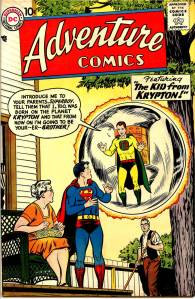
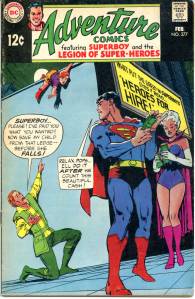
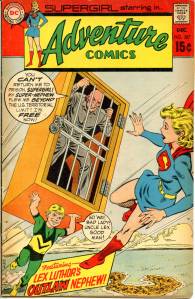
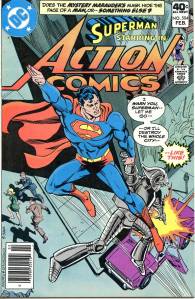
In the view of comics historian Les Daniels, artist Curt Swan became the definitive artist of Superman in the early 1960s with a “new look” to the character that replaced Wayne Boring’s version. Writer Jim Shooter and Swan crafted the story “Superman’s Race With the Flash!” in Superman #199 (Aug. 1967) which featured the first race between the Flash and Superman, two characters known for their super-speed powers. Another Silver Age first is the “Death of Superman,” from 1961’s Superman #149, by Jerry Siegel, Curt Swan and Sheldon Moldoff. The Silver Age was a fantastic period for Superman fans, giving us  characters such as Braniac, Bizzaro, Titano, Supergirl and The Legion of Superheroes.

Superman V2 (2000’s)

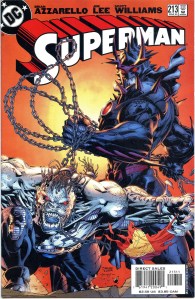
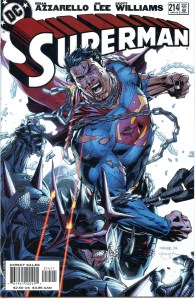
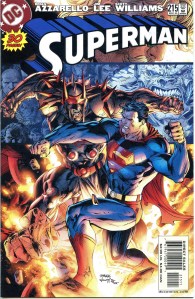
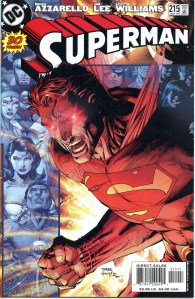
In 2004-2005, artist Jim Lee, who had recently concluded the Batman: Hush storyline with Loeb, provided the artwork for a Superman story by writer Brian Azzarello. The story, Superman: For Tomorrow, ran for twelve issues and was collected in an Absolute Edition hardcover in May 2009.

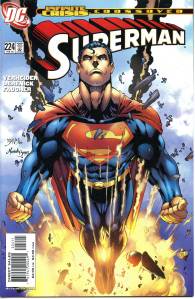
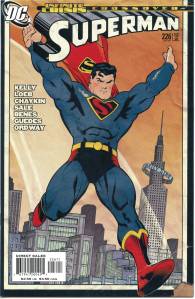
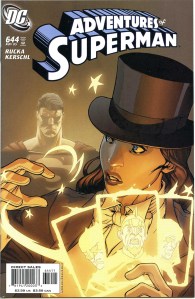
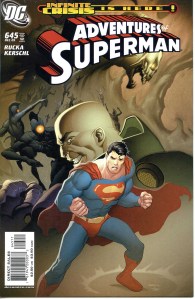
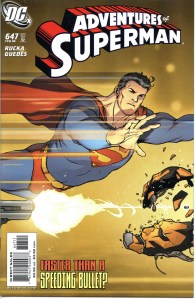
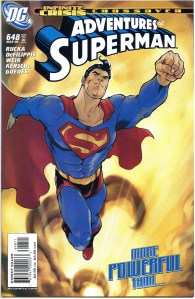
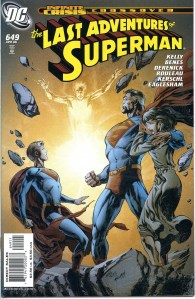
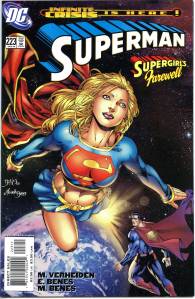
With the publication of issue #226 (April 2006), the series was canceled as part of the company-wide Infinite Crisis event. The Adventures of Superman was returned to its original title, Superman, with issue #650 the following month.

In November 2011, a third volume of Superman was launched with issue #1 as part of The New 52 company-wide reboot.

Adventures of Superman (1990’s)

Writer/artist Dan Jurgens worked on the title from 1989–1991. Hank Henshaw, a character who would later become the Cyborg Superman, first appeared in issue #466 (May 1990). By the late 1980s, the plots of the Superman books were often linked. To coordinate the storyline and sequence of event, from January 1991 to January 2002, “triangle numbers” (or “shield numbers”) appeared on the cover of each Superman comic book. During these years, the Superman storylines ran with the story continuing through the titles SupermanAction Comics and later in two further series, Superman: The Man of Steel and Superman: The Man of Tomorrow.

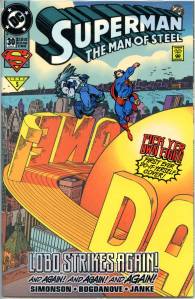
Superman: The Man of Steel (1991)

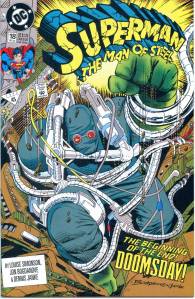
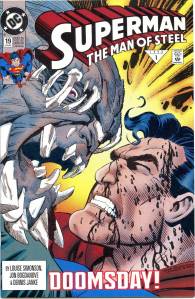
Beginning an all-new monthly Superman title. Over a year ago, Superman fought the urge to become the Krypton Man…now the Krypton Man is born anew from the Earth’s fiery sun, where the Man of Steel buried the mysterious Kryptonian Eradicator! In the wake of the rebirth of his nemesis, Earth’s yellow sun begins turning red – causing natural disasters planetwide!

Superman (Golden Age)

The major event many cite as marking the beginning of the Golden Age was the 1938 debut of Superman in Action Comics #1, published by the predecessor of modern-day DC Comics. The creation of Superman made comic books into a major industry. Some date the start to earlier events in the 1930s: The Overstreet Comic Book Price Guide‘s regular publication The Golden Age Quarterly lists comic books from 1933 onwards (1933 saw the publication of the first comic book in the size that would subsequently define the format); some historians, such Roger Sabin, date it to the publication of the first comic books featuring entirely original stories rather than re-prints of comic strips from newspapers (1935) by the company that would become DC Comics.
Superman (1970’s)

The early 1970s were a time of change for the Man of Steel. As Clark Kent shifted from being a newspaper reporter to a TV newscaster, his alter ego saw the destruction of all remaining Kryptonite on Earth! This period also featured many new villains, including Terra-Man, and the dramatic reintroductions of such foes as Lex Luthor — in green and purple armor!

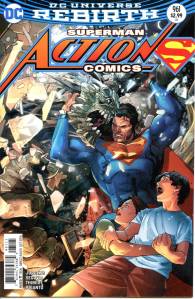
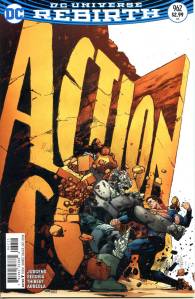
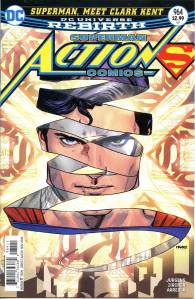
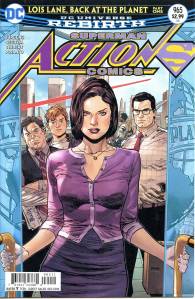
Superman V4 – Rebirth (2016)

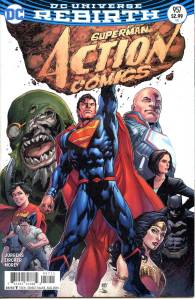
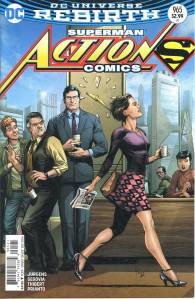
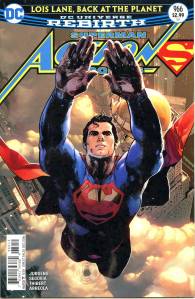
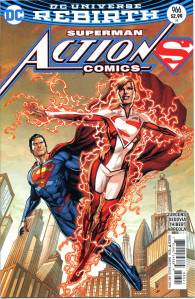
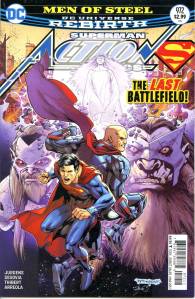
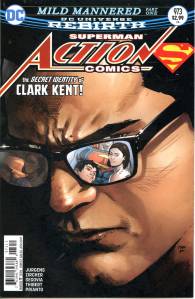
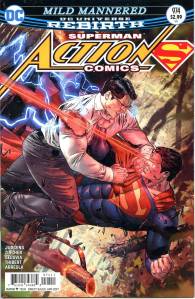
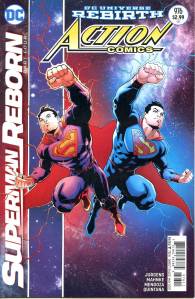
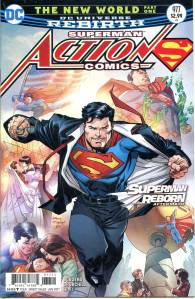
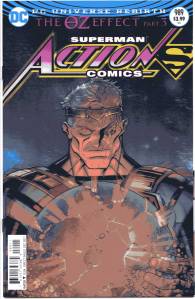
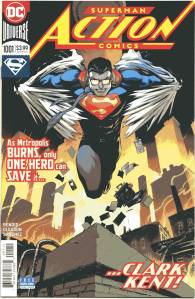
In June 2016, DC Comics once again relaunched its comic book titles with DC Rebirth. The publisher re-established the pre-New 52 Superman as the protagonist of the new comic books, with Lois Lane as his wife once more. He and Lois also conceive a biological son, Jonathan Samuel Kent, who eventually becomes Superboy. The story arc Superman Reborn smooths over the discrepancies between the two versions of the character. According to Mister Mxyzptlk, the creation of the New 52 caused Superman to be separated into two people: the New 52 character that served as the protagonist of the Superman books and the pre-Flashpoint character that took part in the Convergence event and sired Jon. Thanks to Jon, the new Superboy, the two Supermen merge into one complete version of Superman, rearranging their shared histories and accommodating them into the restored DC Universe. This complete Superman features a new suit that combines elements from the two eras. DC Comics ended the Rebirth branding in December 2017, opting to include everything under a larger “DC Universe” banner and naming. The continuity established by Rebirth continues across DC’s comic book titles, including volume one of Action Comics and the fourth volume of Superman.
Lex Luthor: Man of Steel (2005)

Lex Luthor: Man of Steel (later collected as simply Luthor) is a five-issue monthly limited series written by Brian Azzarello and illustrated by Lee Bermejo, which features Superman‘s nemesis Lex Luthor as the protagonist.

It explores Luthor’s motivations behind being a constant foe to the Man of Steel inside a city that has largely embraced him. Luthor views Superman as a demigod who looks down on humanity and believes that in order to “save” the human race from extraterrestrial threats, Superman must be stopped.