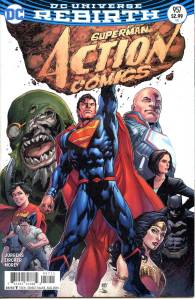
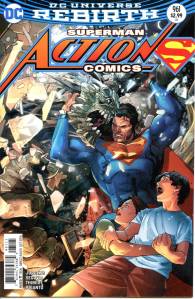
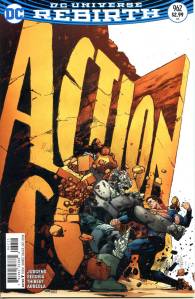
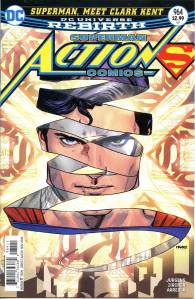
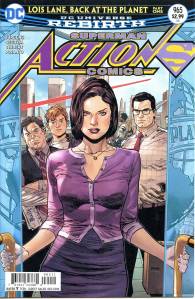
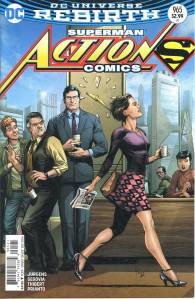
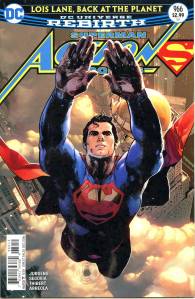
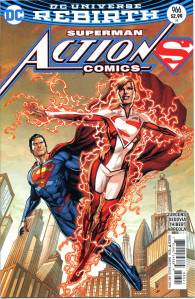
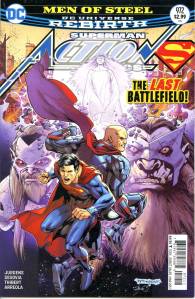
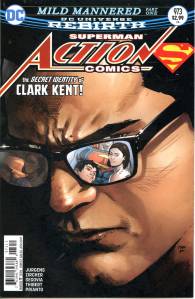
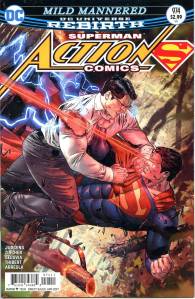
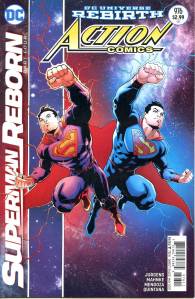
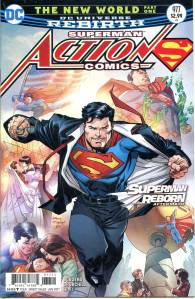
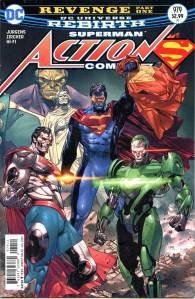
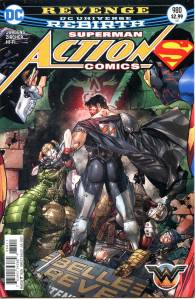
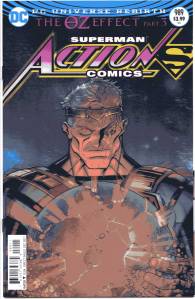
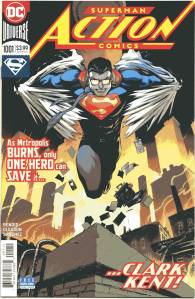
As part of DC Comics’ DC Rebirth relaunch in June 2016, Action Comics reverted to its original numbering beginning with Action Comics #957, with the series shipping twice-monthly. The series, written by Dan Jurgens, serves as a continuation of the comic book series, Superman: Lois and Clark, which featured the pre-Flashpoint Superman alongside his wife, Lois Lane, and their son, Jonathan Kent.
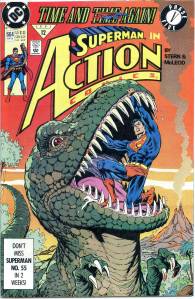
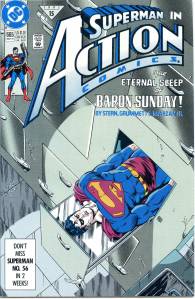
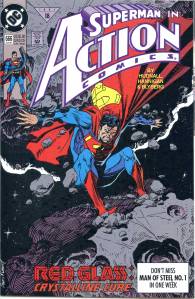
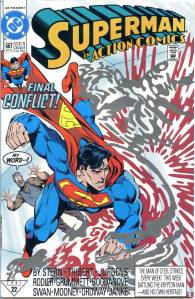
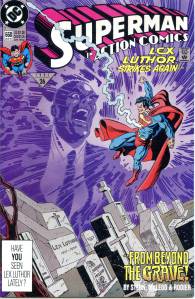
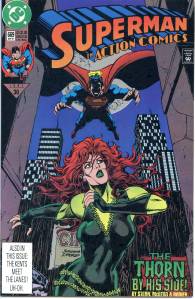
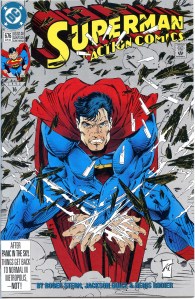
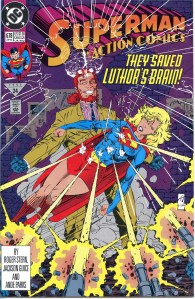
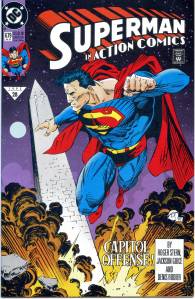
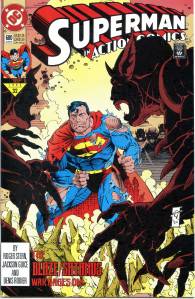
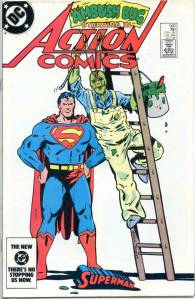
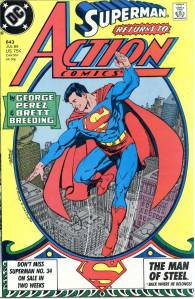
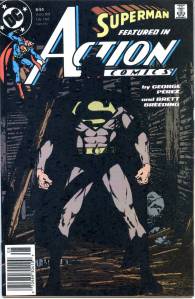
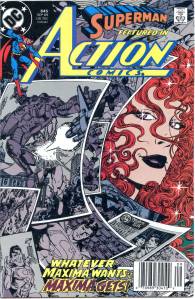
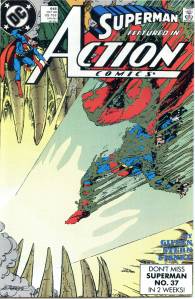
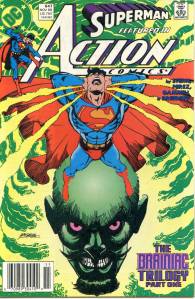
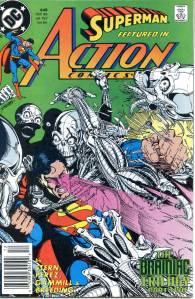
Action Comics Weekly lasted until the beginning of March 1989 and after a short break, issue #643 (July 1989) brought the title back onto a monthly schedule. Writer/artist George Pérez took over the title and was joined by scripter Roger Stern the following month.
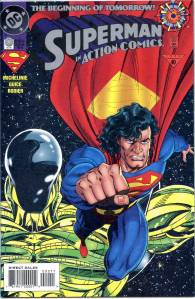
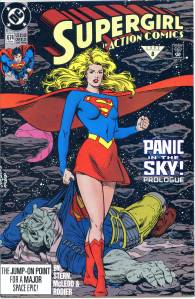
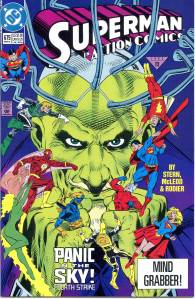
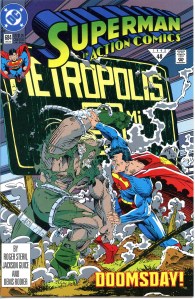
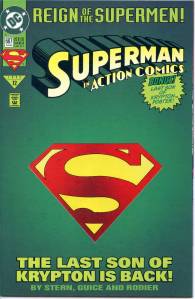
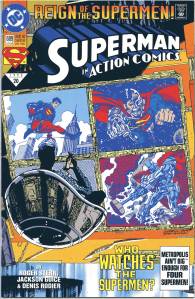
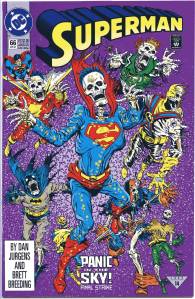
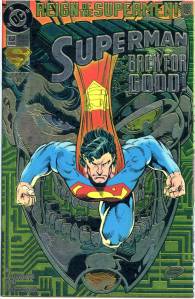
As writer of the series, Stern contributed to such storylines as “Panic in the Sky” and “The Death of Superman“. He created the Eradicator in Action Comics Annual #2 and later incorporated the character into the “Reign of the Supermen” story arc beginning in The Adventures of Superman#500. The Eradicator then took over Action Comics as “the Last Son of Krypton” in issue #687 (June 1993).
Stern wrote the 1991 story wherein Clark Kent finally revealed his identity as Superman to Lois Lane.
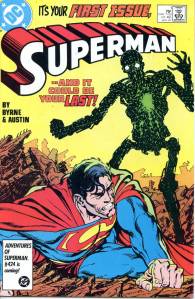
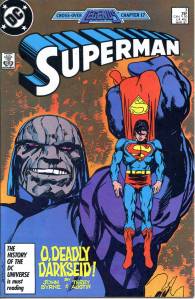
The 1980s saw radical revisions of Superman. DC decided to remove the multiverse in a bid to simplify its comics line. This led to the rewriting of the back story of the characters DC published, Superman included. John Byrne rewrote Superman, removing many established conventions and characters from continuity, including Superboy and Supergirl. Byrne also re-established Superman’s adoptive parents, The Kents, as characters. In the previous continuity, the characters had been written as having died early in Superman’s life (about the time of Clark Kent’s graduation from high school).
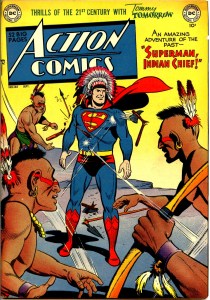
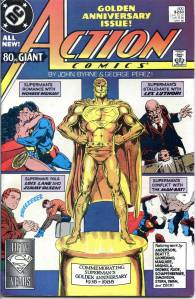
The major event many cite as marking the beginning of the Golden Age was the 1938 debut of Superman in Action Comics #1, published by the predecessor of modern-day DC Comics. The creation of Superman made comic books into a major industry. Some date the start to earlier events in the 1930s: The Overstreet Comic Book Price Guide‘s regular publication The Golden Age Quarterly lists comic books from 1933 onwards (1933 saw the publication of the first comic book in the size that would subsequently define the format); some historians, such Roger Sabin, date it to the publication of the first comic books featuring entirely original stories rather than re-prints of comic strips from newspapers (1935) by the company that would become DC Comics.
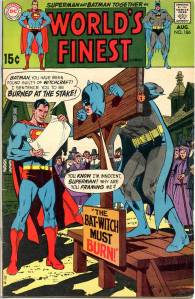
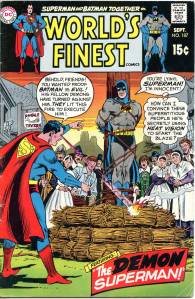
World’s Finest was initially a 96 page quarterly anthology, featuring various DC characters – always including Superman and Batman – in separate stories. Comics historian Les Daniels noted that “Pairing Superman and Batman made sense financially, since the two were DC’s most popular heroes.” When superheroes fell out of vogue in the early 1950s, DC shortened the size of the publication to that of the rest of its output, leaving only enough space for one story; this led to Superman and Batman appearing in the same story together starting with World’s Finest Comics #71 (July 1954).The series continued to feature Superman and Batman team-ups until issue #197. Noted Batman artist Neal Adams first drew the character in an interior story in “The Superman-Batman Revenge Squads” in issue #175 (May 1968).
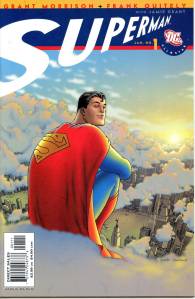
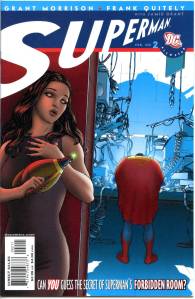
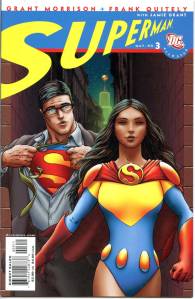
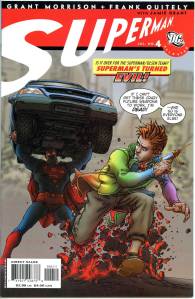
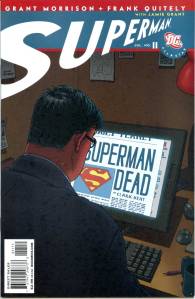
All-Star Superman is a twelve-issue series featuring Superman that was published by DC Comics. The series ran from November 2005 to October 2008. The series was written by Grant Morrison, drawn by Frank Quitely, and digitally inked by Jamie Grant. DC claimed that this series would “strip down the Man of Steel to his timeless, essential elements”.
The series was the second to be launched in 2005 under DC’s All-Starimprint, the first being All Star Batman & Robin, the Boy Wonder. These series were attempts by DC to allow major comics creators a chance to tell stories showcasing these characters without being restricted by DC Universecontinuity.
The series was met with critical acclaim and is widely considered to be one of the best Superman stories of all time.
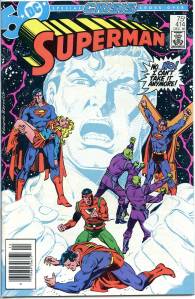
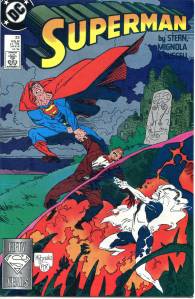
After that limited series, Action Comics returned to publication and Superman vol. 2, #1 was published. The original Superman series (volume 1) became The Adventures of Superman starting with issue #424. Superman vol. 2 continued publishing until April 2006 at which point DC restored The Adventures of Superman to its original title and canceled the second Superman series.
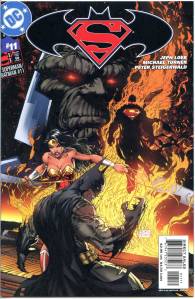
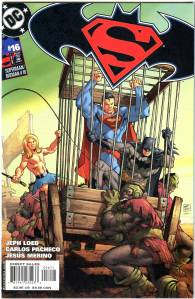
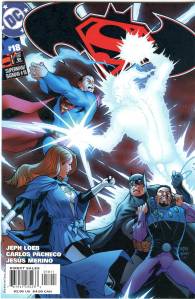
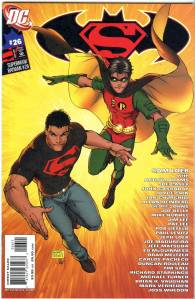
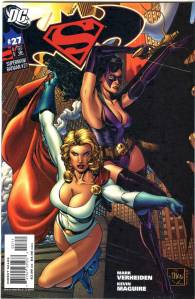
Superman/Batman was a monthly series published by DC Comics that features the publisher’s two most popular characters: Superman and Batman. Superman/Batman premiered in August 2003 and was an update of the previous series, World’s Finest Comics, in which Superman and Batman regularly joined forces.
Superman/Batman explored the camaraderie, antagonism, and friendship between its titular characters. Jeph Loeb, the series’ first writer, introduced a dual-narrator technique to present the characters’ often opposing viewpoints and estimations of each other, which subsequent series writers have maintained. Before the 1985 limited seriesCrisis on Infinite Earths, the two iconic characters were depicted as the best of friends. Frank Miller‘s landmark series The Dark Knight Returns was the first DC story that depicts the heroes at odds with each other, as opposed to pre-Crisis incarnations. This dynamic became DC Universecanon with John Byrne‘s The Man of Steel, a Superman reboot published in 1986.
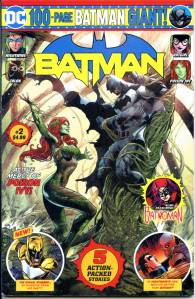
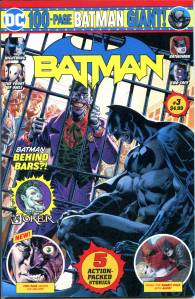
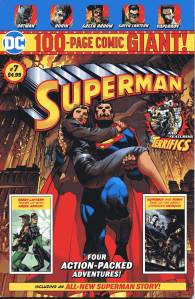
The Giant line of comics mixes all-new original material by some of DC’s top creators with reprints for a 100-page package.
Creators working on the new material include such fan-favorites as Tom King, Brian Michael Bendis and the Harley Quinn writing team of Jimmy Palmiotti and Amanda Conner, each working on characters outside of their traditional range in the regular DC line, with Bendis working on his first solo Batman material in September — a 12-part story beginning in Batman Giant No. 3 — and Tom King taking on Superman with artist Andy Kubert for their own yearlong epic beginning in Superman Giant No. 3. Not to be left behind, Palmiotti and Conner will launch a 12-part Wonder Woman story in the third Justice League issue.
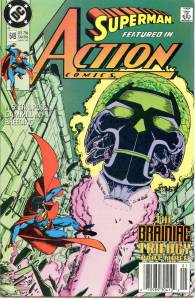
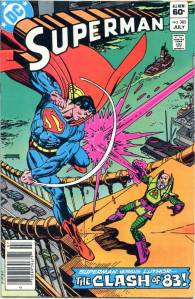
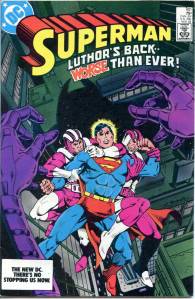
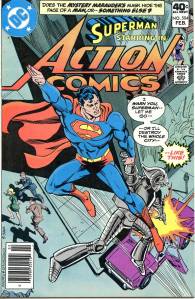
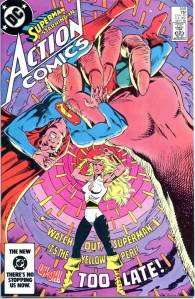
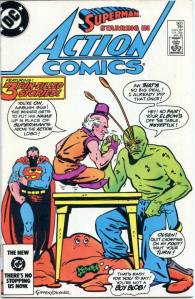
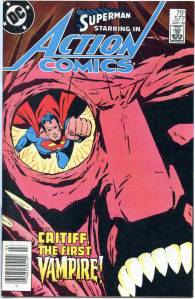
The superheroine Vixen made her first appearance in Action Comics #521 (July 1981). To mark the 45th anniversary of the series, Lex Luthor and Brainiac were both given an updated appearance in issue #544 (June 1983). Lex Luthor dons his war suit for the first time in the story “Luthor Unleashed!” and Brainiac’s appearance changes from the familiar green-skinned android to the metal skeletal-like robot in the story “Rebirth!”. Schwartz ended his run as editor of the series with issue #583 (September 1986) which featured the second part of the “Whatever Happened to the Man of Tomorrow?” story by Alan Moore and Curt Swan.
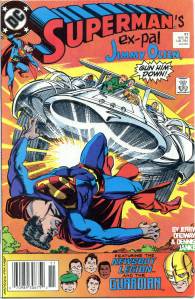
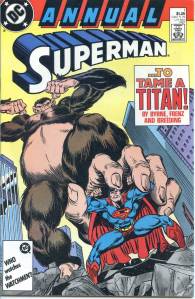
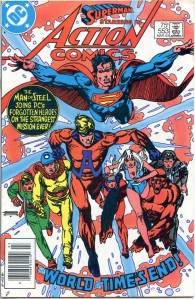
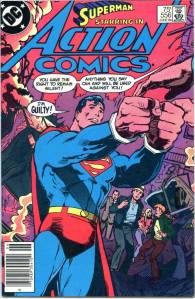
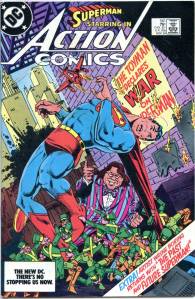
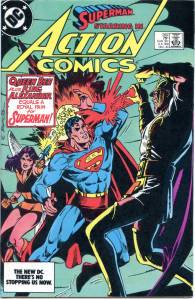
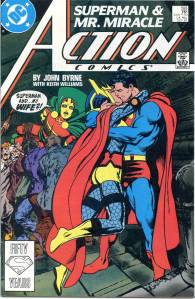
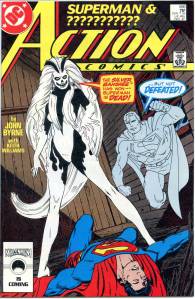
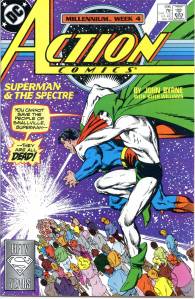
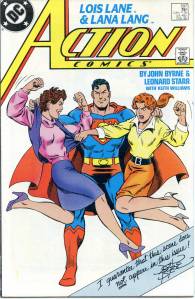
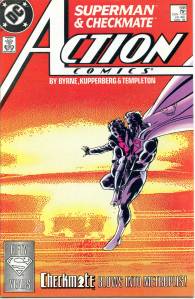
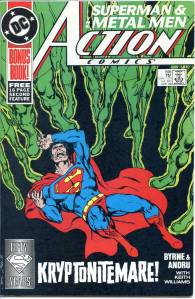
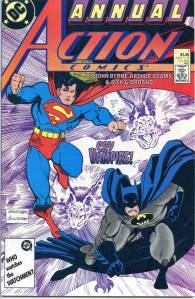
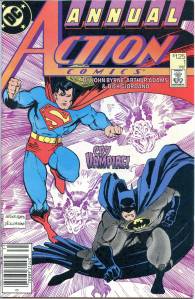
Following the events of Crisis on Infinite Earths, writer/artist John Byrne relaunched the Superman franchise in The Man of Steel limited series in 1986.Action Comics became a team-up title with issue #584 (January 1987). The first Action Comics Annual was published in 1987 and featured Superman teaming with Batman in a story written by Byrne and drawn by Arthur Adams. A DC Comics Bonus Book was included in issue #599 (April 1988).
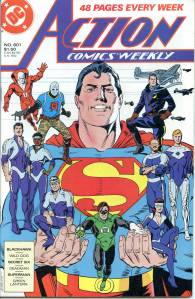
From May 24, 1988 – March 14, 1989, the publication frequency was changed to weekly, the title changed to Action Comics Weekly, and the series became an anthology. Prior to its launch, DC cancelled its ongoing Green Lantern Corps title, and made Green Lantern and his adventures exclusive to Action Comics Weekly.
























































 EHT Comics