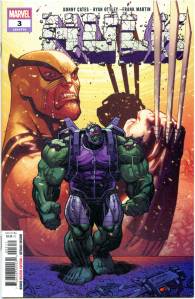
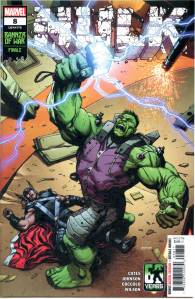
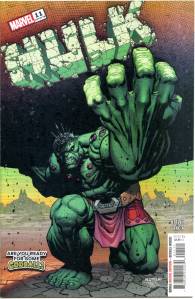
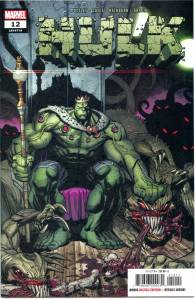
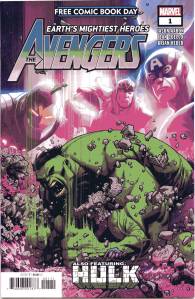
The uncontrollable rage of the Hulk has reached an all-new level, and nobody – including the Avengers – is prepared to handle it. But is it really the Hulk that people should be afraid of, or is there something missing to this puzzle? Join the creative team of Donny Cates and Ryan Ottley as they look to the stars for the next era of HULK!
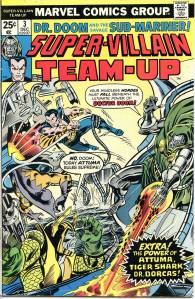
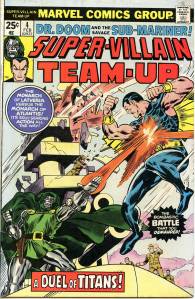
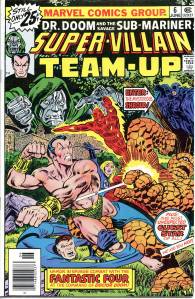
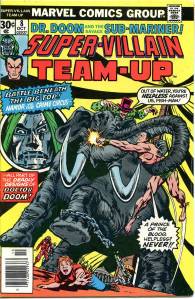
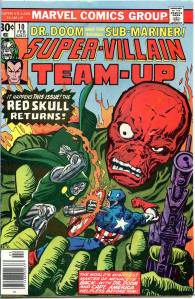
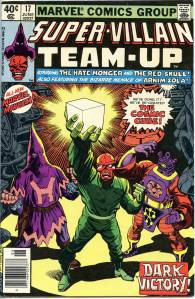
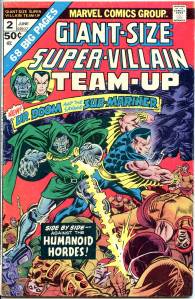
The first series started in 1975 with two giant-size issues before starting as a regular series, and was mostly bi-monthly during its existence. It initially teamed up Doctor Doom and the Sub-Mariner, who had lost his own series, from which it picked up the unresolved plots, especially that of the comatose Atlanteans. After a succession of writers and artists and a crossover with The Avengers, the plot gets resolved in issue #13 when Dr. Doom revives the Atlanteans, thus dissolving his alliance with the Sub-Mariner.
Issue #14 (Oct. 1977), which featured Magneto and Dr. Doom, was billed as the final issue of the series, and its plotline was resolved in The Champions #16. The following year, SVTU continued with issue #15 (Nov. 1978), a reprint of Astonishing Tales #4-5. Issues #16 (May 1979) and #17 (June 1980) featured the Red Skull and the Hate-Monger. The irregular publishing frequency of the final three issues was due to a legal maneuver to prevent DC Comics from trademarking the term “super-villain”.
The series saw the death of the Sub-Mariner’s 1940s sweetheart Betty Dean and the death of her murderer, Dr. Dorcas. Steve Englehart created The Shroud, a character partly inspired by Batman, shortly before he started to work for DC Comics on Detective Comics.
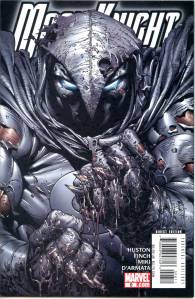
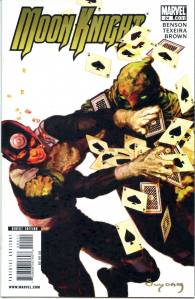
Moon Knight vol. 5, was launched in April 2006, written by Charlie Huston with art by David Finch. The series revises Marc Spector’s history by saying he fought in the Gulf War. Starting with issue #14 of this series,Mike Benson took over writing duties while Huston acted as a story/plot adviser according to Benson. The 2006 series ended with #30 (July 2009), and only one Annual issue for the series was printed in 2008. Peter Milligan wrote a 2008 seasonal one-shot titled Moon Knight: Silent Knight with artist Laurence Campbell.
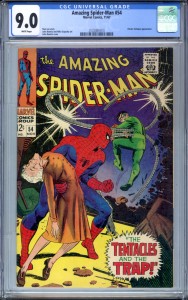
Due to strong sales on the character’s first appearance in Amazing Fantasy #15, Spider-Man was given his own ongoing series in March 1963. The initial years of the series, under Lee and Ditko, chronicled Spider-Man’s nascent career with his civilian life as hard-luck yet perpetually good-humored teenager Peter Parker. Peter balanced his career as Spider-Man with his job as a freelance photographer for The Daily Bugle under the bombastic editor-publisher J. Jonah Jameson to support himself and his frail Aunt May. At the same time, Peter dealt with public hostility towards Spider-Man and the antagonism of his classmates Flash Thompson and Liz Allan at Midtown High School, while embarking on a tentative, ill-fated romance with Jameson’s secretary, Betty Brant.
By focusing on Parker’s everyday problems, Lee and Ditko created a groundbreakingly flawed, self-doubting superhero, and the first major teenaged superhero to be a protagonist and not a sidekick. Ditko’s quirky art provided a stark contrast to the more cleanly dynamic stylings of Marvel’s most prominent artist, Jack Kirby, and combined with the humor and pathos of Lee’s writing to lay the foundation for what became an enduring mythos.
Amazing Spider-Man #17 FN+ $525
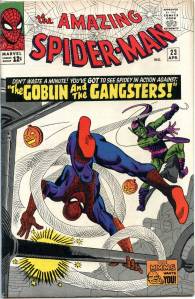
Amazing Spider-Man #23 VF- $379
Amazing Spider-Man 30 CGC 7.5 Off-White to White Pages $295
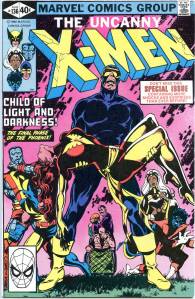
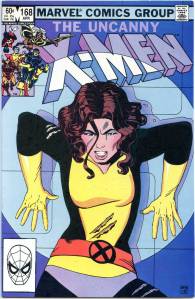
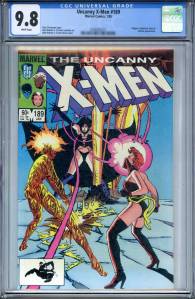
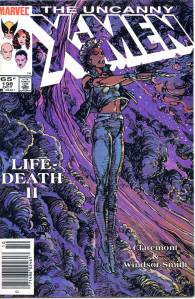
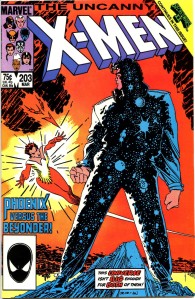
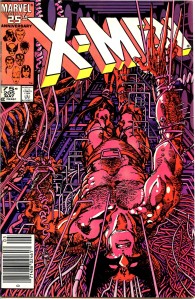
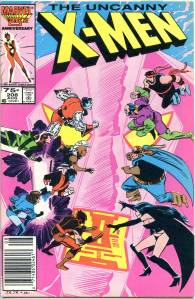
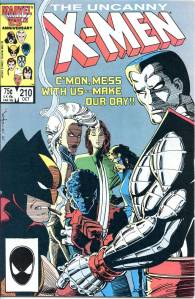
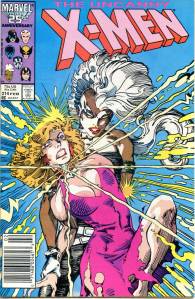
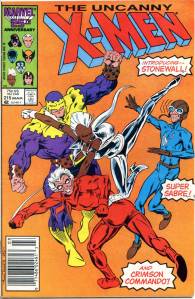
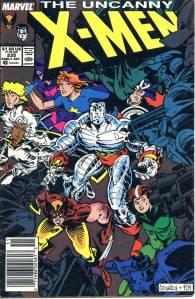
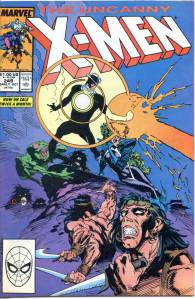
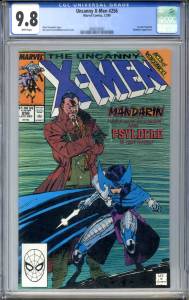
The “Dark Phoenix Saga” in 1980 led to a change in the line-up of the team, with the death of Phoenix (Jean Grey), and Cyclops leaving the team to mourn for her. Comics writers and historians Roy Thomas and Peter Sanderson observed that “‘The Dark Phoenix Saga’ is to Claremont and Byrne what ‘the Galactus Trilogy‘ is to Stan Lee and Jack Kirby. It is a landmark in Marvel history, showcasing its creators’ work at the height of their abilities.” The storyline also saw the introduction of recurring antagonists the Hellfire Club, and its Inner Circle consisting of Sebastian Shaw, Emma Frost, Harry Leland, Donald Pierce, along with Mastermind, previously a member of Magneto’s Brotherhood. The new teenage mutant Kitty Pryde was introduced in #129 (Jan. 1980) and joined the X-Men in #139. The Dazzler, a disco-singing, roller-skating mutant, was introduced in #130 (Feb. 1980), but did not join the team, instead headlining her own solo title.
A new Brotherhood of Evil Mutants, led by Mystique, was introduced in the “Days of Future Past” storyline (#141-#142, Jan–Feb 1981) in which a time-travelling Kitty Pryde tried to avert a dystopian future caused by the Brotherhood assassinating Presidential candidate Senator Robert Kelly. Byrne plotted the story wanting to depict the Sentinels as a genuine threat to the existence of the mutant race. He then left the series after #143, being replaced by a returning Cockrum, who in turn was succeeded by Paul Smith and John Romita Jr.
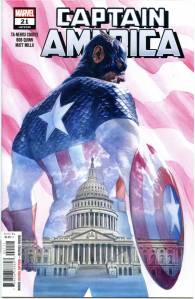
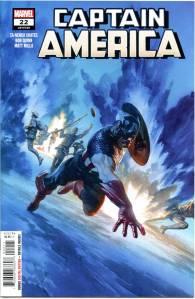
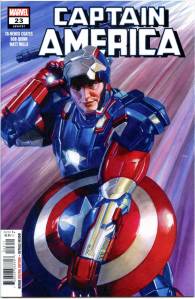
IT IS WINTER IN AMERICA. For over 70 years, he has stood in stalwart defense of our country and its people. But in the aftermath of Hydra’s takeover of the nation, Captain America is a figure of controversy, carrying a tarnished shield…and a new enemy is rising! Who are the Power Elite? And how do they intend to co-opt and corrupt the symbol that is Captain America?
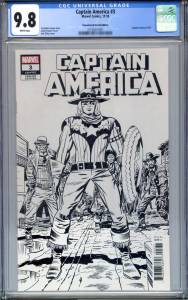
Captain America V9 #3 1:100 Variant CGC 9.8 White Pages $249
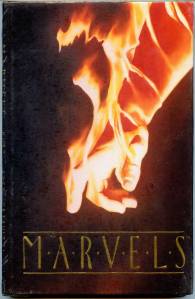
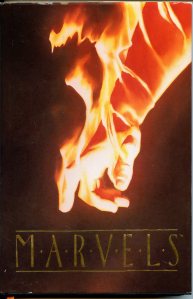
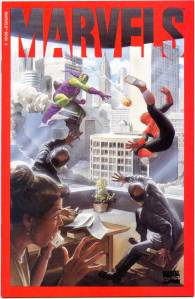
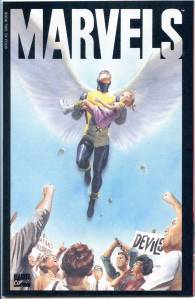
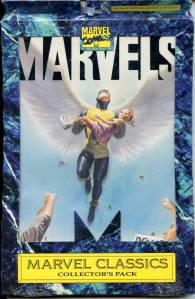
Marvels is a four-issue limited series comic book written by Kurt Busiek, painted by Alex Ross and edited by Marcus McLaurin, and published by Marvel Comics in 1994. It was collected into a limited edition hardcover signed by both Busiek and Ross (shown below).
Set from 1939 to 1974, the series examines the Marvel Universe, the collective setting of most of Marvel’s superhero series, from the perspective of an Everyman character: news photographer Phil Sheldon. The street-level series portrayed ordinary life in a world full of costumed supermen, with each issue featuring events well known to readers of Marvel comics as well as a variety of minute details and retelling the most famous events in the Marvel universe.
Marvels – Ltd. Ed. Signed and Numbered Hardcover – Sealed NM $99
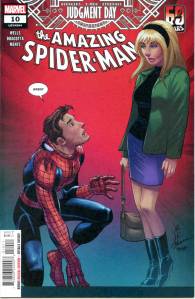
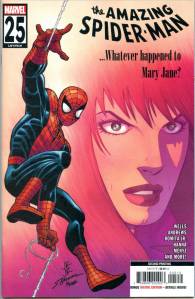
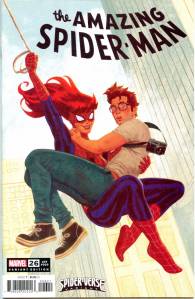
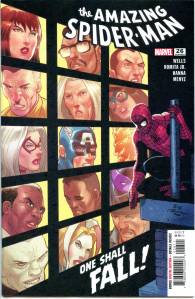
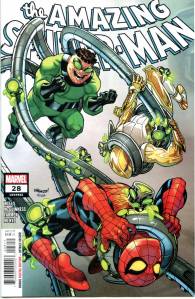
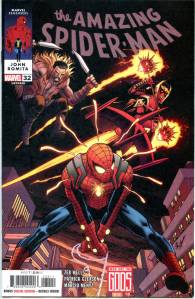
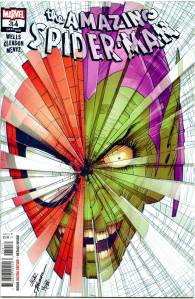
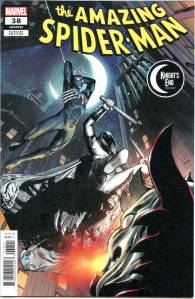
In January 2022, it was announced that writer Zeb Wells and John Romita Jr. would be working on a relaunched The Amazing Spider-Man, bringing the number of volumes for the title to its sixth, with the series beginning in April 2022. The relaunch encompasses both a legacy numbering of #900 as well as the 60th anniversary for the character. It included the crossover event, Dark Web, with Chasm having teamed up with Madelyne Pryor to bring limbo to Earth.
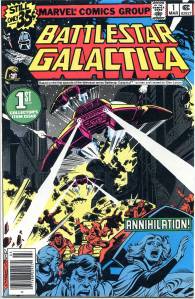
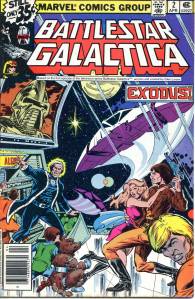
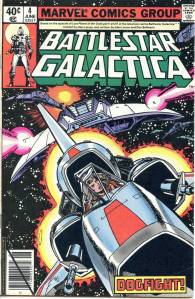
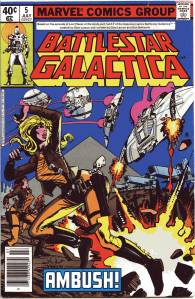
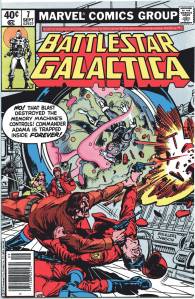
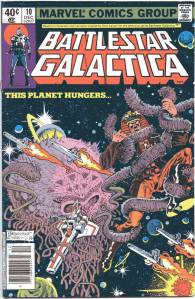
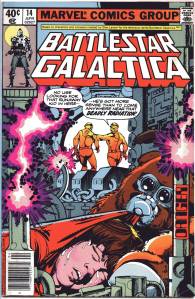
The comic book Battlestar Galactica, based on the ABC television series of the same name, was published monthly by Marvel Comics from March 1979 through January 1981, and lasted 23 issues.
Although there were other attempts to adapt Battlestar Galactica into a comic book format, the Marvel series is considered by many to have been the most successful in terms of run, sales, and content.
This was accomplished against some notable odds. Although Roger McKenzie was most often the writer, and Walt Simonson the most regular artist, the book also had a heavy rotation of guest writers and artists.
Marvel Comics’ began its adaptation of Battlestar Galactica with Marvel Super Special #8, a magazine format comic written by Roger McKenzie and drawn by Ernie Colón which was released as a tie-in to the start of the series. Based on an early script of the three hour series premiere “Saga of a Star World”, this adaptation, which gave a relatively short treatment to the third hour, was also released in a tabloid format and then later as a paperback as well. The tabloid version was also printed by Whitman Comics. Its success led Marvel to print a regular monthly comic depicting the adventures of the ragtag fleet.
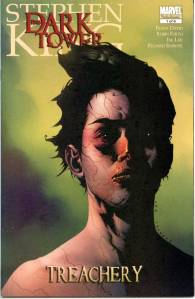
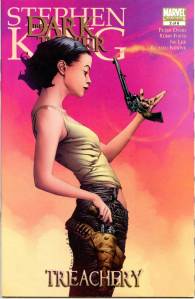
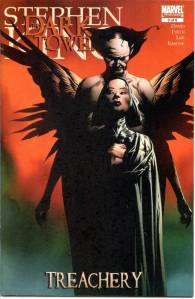
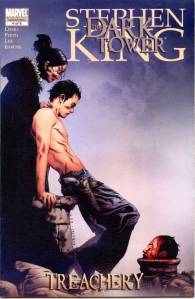
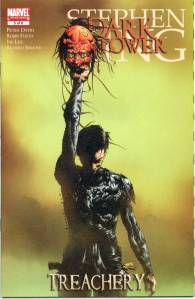
Whereas The Gunslinger Born was largely based on the events of The Dark Tower IV: Wizard and Glass, Treachery, like The Long Road Home, consists mostly of new material not found in any of the novels.
The story depicts the ka-tet of Roland Deschain, Alain Johns and Cuthbert Allgood dealing with the events following their return to Gilead from Hambry, including the toll that Maerlyn’s Grapefruit has taken on Roland’s health, his obsessive desire to continue peering into its depths, and the search for John Farson and the Big Coffin Hunters.

























 EHT Comics