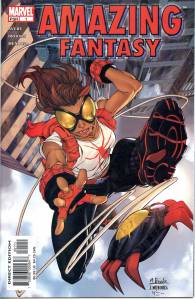
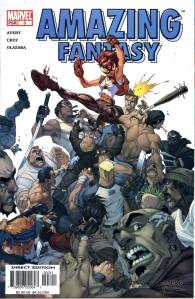
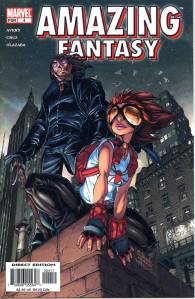
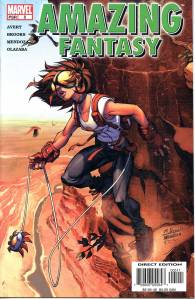
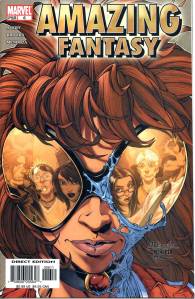
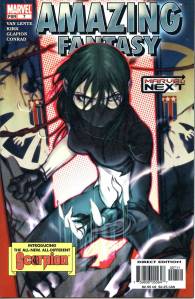
The second volume of Amazing Fantasy ran 20 issues (cover-dated Aug. 2004 – June 2006). The first arc ran through vol. 2, #1–6 and featured a new teenaged heroine, Araña. The second arc, in vol. 2, #7–12, published after a short hiatus, featured a revamped, female version of the supervillain the Scorpion. A back-up feature in vol. 2, #10–12 (Sept.-Nov. 2005) starred the character Nina Price, Vampire by Night. Vol. 2, #13–14 (both Dec. 2005) led with the modern-West feature “Vegas”, backed up by “Captain Universe“
The cover to #15 was a revamped version of the original Amazing Fantasy #15 cover, complete with Spider-Man swinging through a modern-day New York City, while the new heroes watch in awe in the background.
The final arc, in vol. 2, #16–20 (Feb.-June 2006), introduced Death’s Head 3.0, a revamp of the Marvel UK character, written by the original version’s creator, Simon Furman. Issues #18–19 contain two “Tales of the New Universe” stories as backup features, while #20 featured a Western backup, “Steamrider”
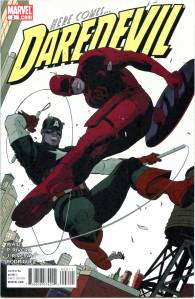
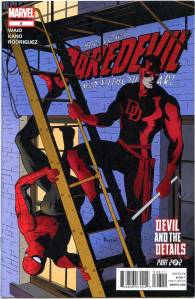
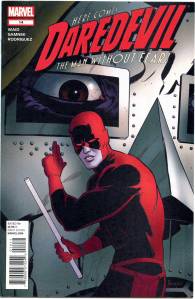
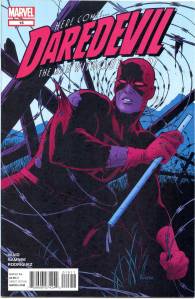
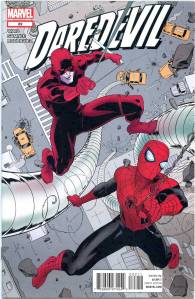
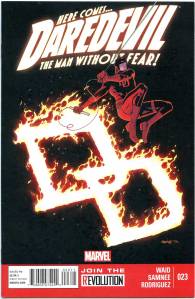
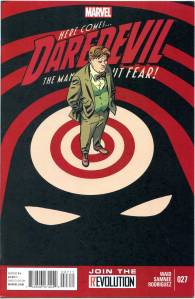
In July 2011, Daredevil relaunched with vol. 3, #1 (Sept. 2011), with writer Mark Waid. Waid focused on emphasizing the character’s powers and perception of the physical world. In the premiere issue, Murdock finds he can no longer serve as a trial lawyer due to past allegations of his being Daredevil causing a case he represents in court to turn into a media circus. Two issues later, Nelson and Murdock have developed a new business strategy of serving as consulting counselors, by teaching clients how to represent themselves in court.
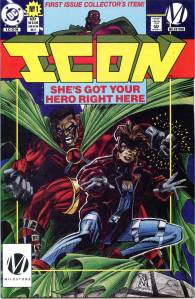
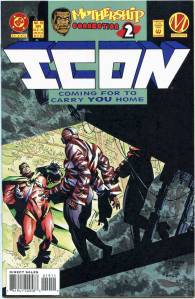
Icon is one of the headline characters introduced by Milestone Media in the 1990s. A being from another planet, he has taken on the form of an African American man, but has abilities such as flight, super-strength, and invulnerability. He uses these in partnership with Rocket, a human teenager using his alien technology, to protect the people of the fictional city of Dakota.
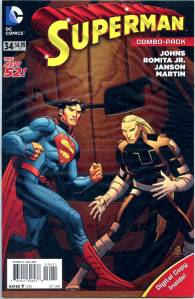
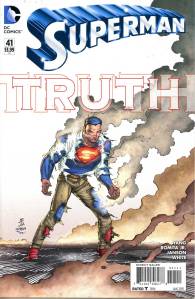
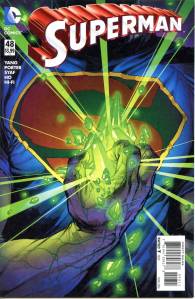
In late July 2011, DC released The New 52, a free preview book giving solicitations and previews of all of the new titles launching from August 31, 2011. Notable continuity changes shown included Superman‘s two new looks: one which consists of jeans, a blue T-shirt with the “S” logo and a cape, the other consisting of Kryptonian battle armor that resembles his classic costume.
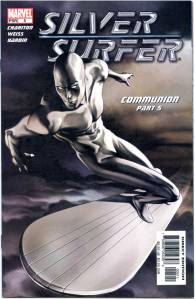
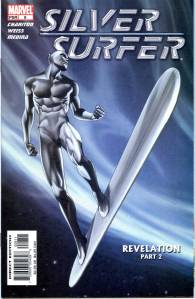
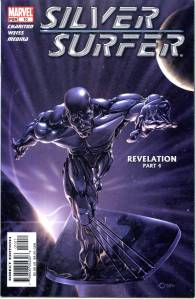
Children all around the world are vanishing, spirited away by a gleaming figure from the stars! Are these just routine cases of alien abduction, or the harbinger of something far more sinister?
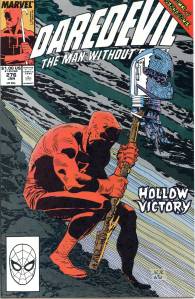
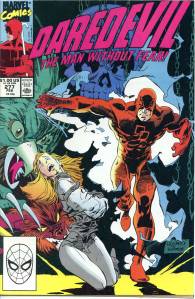
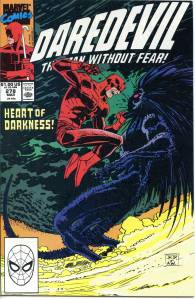
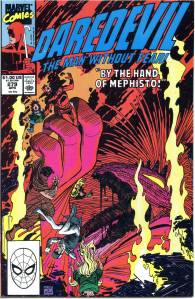
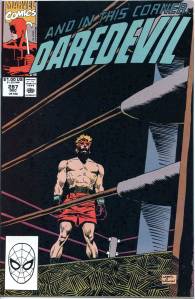
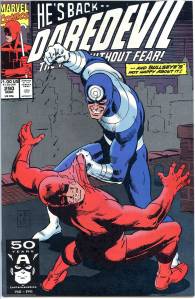
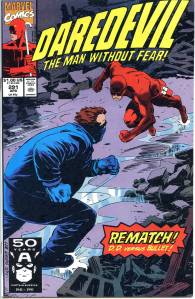
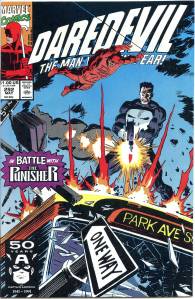
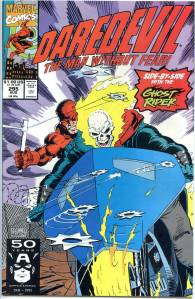
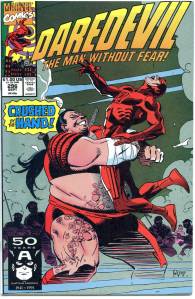
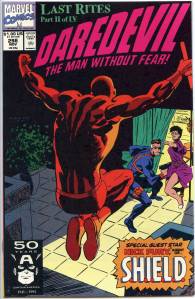
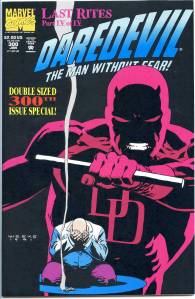
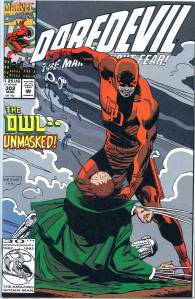
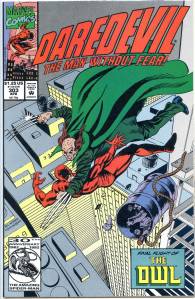
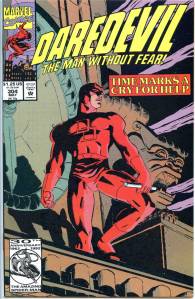
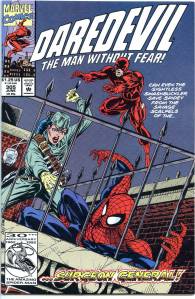
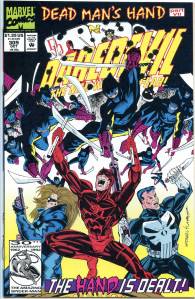
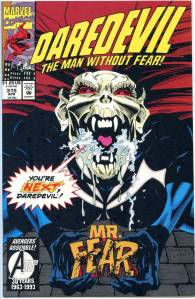
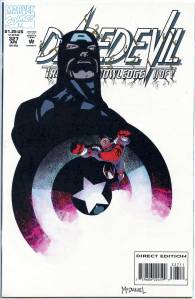
New writer D. G. Chichester and pencilerLee Weeks continued from where Nocenti left off, with Murdock resuming his friendship with Foggy Nelson, struggling to re-win the heart of Karen Page, appealing the revocation of his attorney’s license, and bonding more deeply than ever with Hell’s Kitchen. Chichester’s focus on Daredevil’s relationship with New York City went so far as to have two issues devoted entirely to Daredevil defending New Yorkers from ordinary criminals and even simple accidents. The critically acclaimed “Last Rites” arc from #297–300 saw Daredevil regaining his attorney’s license and finally bringing the Kingpin to justice.
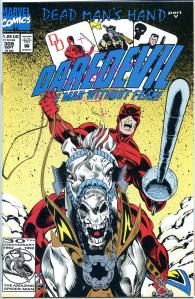
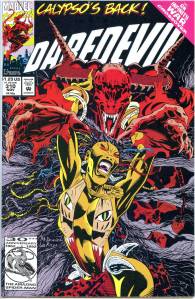
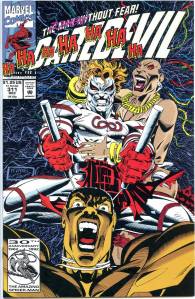
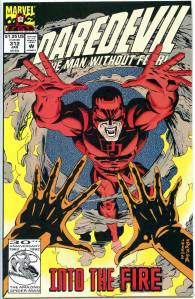
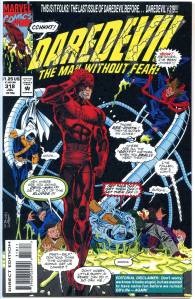
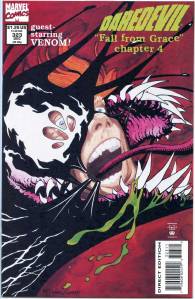
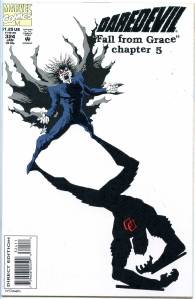
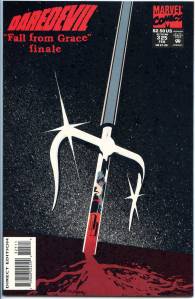
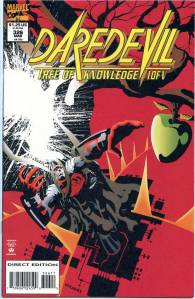
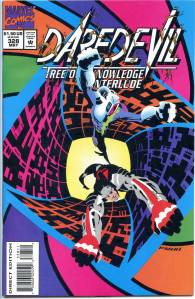
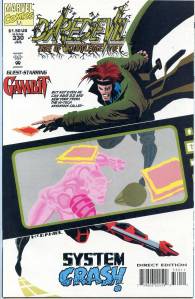
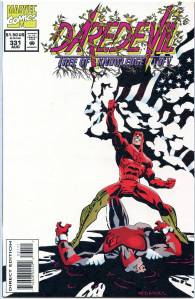
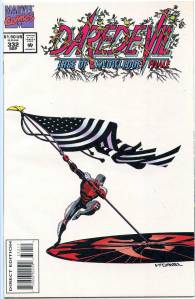
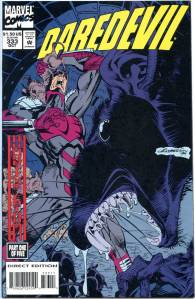
The creative team of Chichester and penciler Scott McDaniel changed the status quo with their “Fall From Grace” storyline in issues #319–325 (Aug. 1993 – Feb. 1994). Elektra, who was resurrected in #190 but had not been seen since, finally returned. An injured Daredevil creates a more protective costume from biomimetic materials: red and gray with white armor on the shoulders and knee pads. Revamped billy clubs could attach to form nunchucksor a bo staff. His secret identity becomes public knowledge, leading to him faking his own death and assuming the new identity of “Jack Batlin”. This new identity and costume lasts for several story arcs, while Murdock finds a way to convince the world that he is not, in fact, secretly Daredevil (courtesy of a double). A short stint by J. M. DeMatteis returned Daredevil to his traditional red costume and Matt Murdock identity.
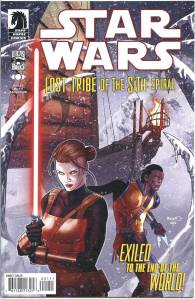
On a planet ruled by a tribe of Sith—marooned thousands of years ago and cut off from the galaxy—the throne holder is about to be challenged by a power-hungry Sith rebel from the slums . . . and a thwarted royal Sith princess! Their few shared interests set them on a quest together—but most certainly not as partners!
The saga of the lost tribe continues in comics, following the release of John Jackson Miller’s Lost Tribe of the Sith: The Collected Stories.
In 1989, DC Comics began publishing the Forgotten Realms comic series, written by Jeff Grubb. Each issue contained twenty-six pages, illustrated primarily by Rags Morales and Dave Simons. The 19 issues produced by Morales were his first professional works. Tom Raney illustrated issues #17 and #20. Elliot S. Maggin served as an editor for DC from 1989 to 1991 and oversaw the licensed TSR titles, including Forgotten Realms. Twenty-five issues were published in total, with the last being released in 1991.
Madman first appeared as Frank Einstien in Creatures of the Id and Grafik Muzik published in 1990, but it wasn’t until March 1992 that the first Madman miniseries debuted from Tundra Publishing. The series gained further recognition with its move to Dark Horse Comics in April 1994, where it was relaunched as Madman Comics and went on to be nominated for several Harvey Awards. Madman Comics ran for 20 issues and ended in 2000. From 2007–2009, Image Comics published Madman: Atomic Comics for 17 issues.
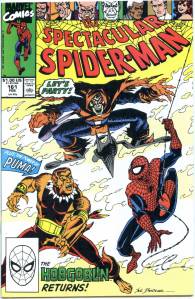
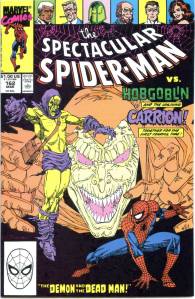
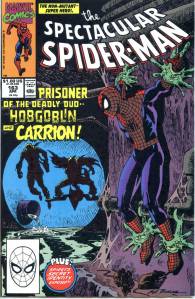
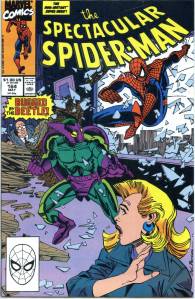
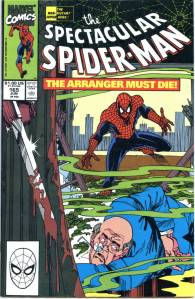
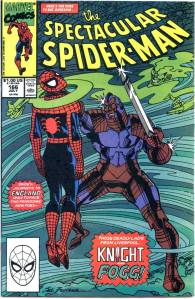
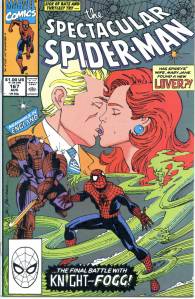
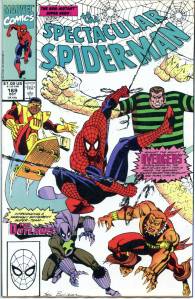
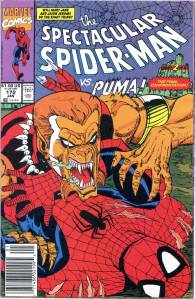
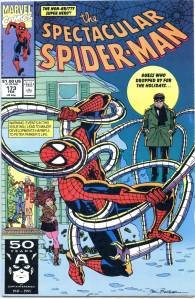
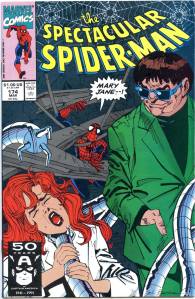
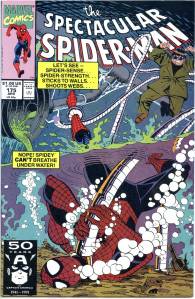
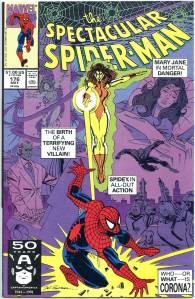
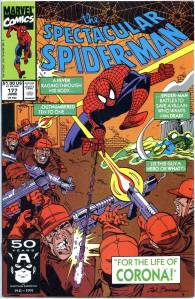
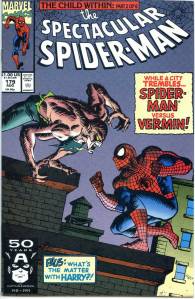
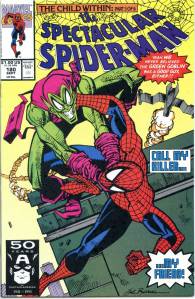
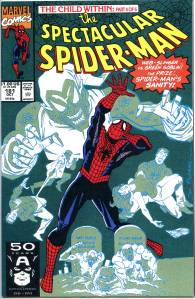
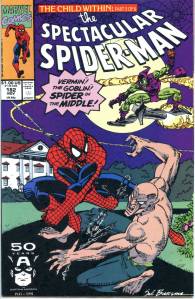
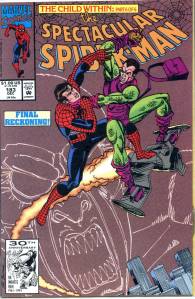
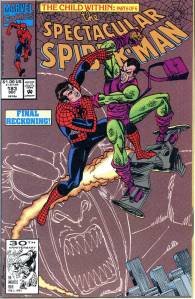
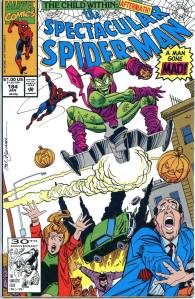
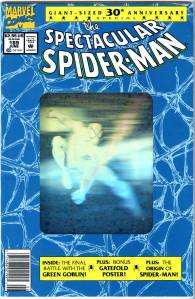
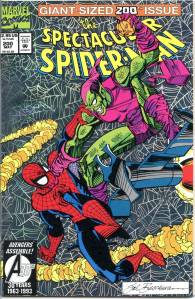
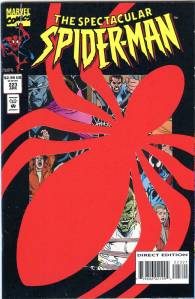
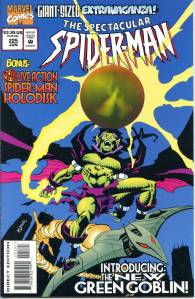
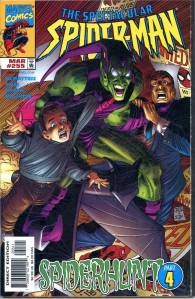
J. M. DeMatteis became the regular writer in mid-1991, injecting a grim, psychological tone into the series. DeMatteis began his run with the story arc “The Child Within” (#178–184, July 1991-Jan. 1992), featuring the return of the Harry OsbornGreen Goblin. As written by DeMatteis, Harry sank further into insanity and gained the same super-strength possessed by his father, battling Spider-Man again in #189 (June 1992), before being killed in #200 (May 1993). In an undated 2000s interview, DeMatteis said, “I really loved the two years on Spectacular Spider-Man that I wrote with Sal Buscema drawing. Talk about underrated! Sal is one of the best storytellers and a wonderful collaborator. I loved that run.”
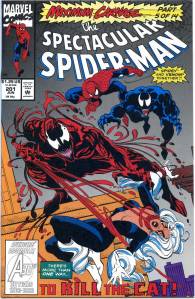
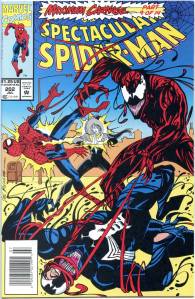
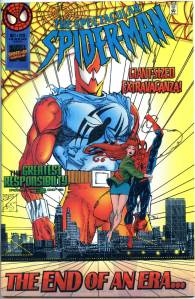
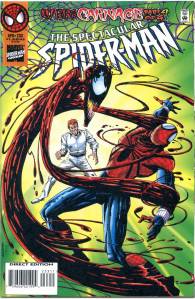
DeMatteis left the book in mid-1993 to write The Amazing Spider-Man. Steven Grant and other writers followed through late 1994, when formerAmazing Spider-Man writer Tom DeFalco took over. By this time, all the Spider-books were affected by the controversial “Clone Saga” that culminated with Spectacular Spider-Man #226 (July 1995). This story revealed (though it was later reversed) that the Spider-Man who had appeared in the previous 20 years of comics was a clone of the real Spider-Man. This tied into a publishing gap after #229 (Oct. 1995), when the title was temporarily replaced by The Spectacular Scarlet Spider #1–2 (Nov.-Dec. 1995), featuring the “original” Peter Parker. The series picked up again with #230 (Jan. 1996).
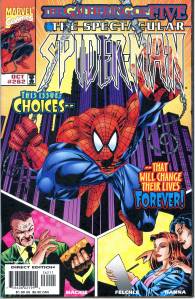
Todd DeZago then wrote for a year before DeMatteis returned through May 1998. Luke Ross succeeded Sal Buscema as the artist and remained until the series ended, but there was no regular writer for the last half-year with Glenn Greenberg, Roger Stern, John Byrne and Howard Mackie all contributing during this time. The final issue was #263 (Nov. 1998).