Panic (1954)

Panic was a bi-monthly humor comic that was published by Bill Gaines‘ EC Comics line during the mid-1950s as a companion to Harvey Kurtzman‘s Mad, which was being heavily imitated by other comic publishers.

Panic was edited by Al Feldstein (who became the editor of Mad a few years later). Beginning with its first issue (February–March 1954), Panic had a 12-issue run over two years. Feldstein was the primary cover artist, with stories illustrated by Jack DavisWill ElderJack KamenJoe OrlandoBasil Wolverton and Wally Wood. Some story ideas were by Nick Meglin, later the co-editor of Mad. Scripts were by Feldstein, Elder and Jack Mendelsohn, later a co-screenwriter of Yellow Submarine (1968) and an Emmy-nominated TV comedy writer.

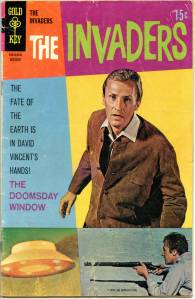
The Invaders (1967)

Comic book version of the 1960s TV series about one man’s crusade to convince people that an advance guard of alien creatures had infiltrated the world’s population and were preparing to conquer Earth.

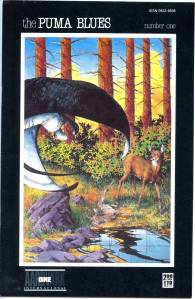
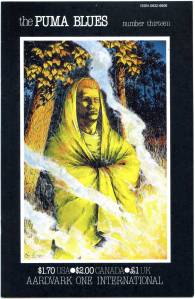
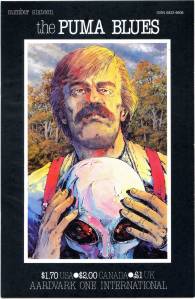
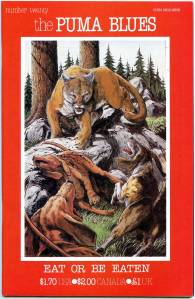
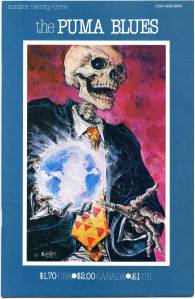
The Puma Blues (1986)

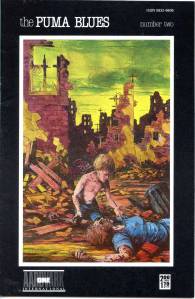
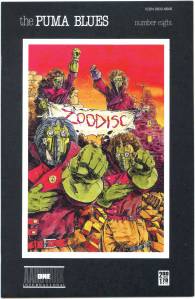
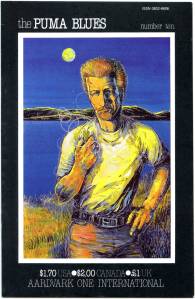
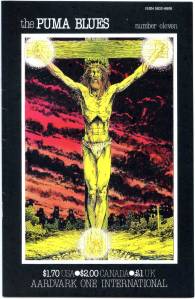
The Puma Blues was a comic book written by Stephen Murphy and drawn by Michael Zulli. It ran from June 1986 to the beginning of 1989, stretching over 23 regular issues and a single “half-issue” minicomic.

Published first by Aardvark One International and later by Mirage Studios, the story is set around the millennium. and follows Gavia Immer, a governmental fauna agent, as he goes through an existential dilemma while watching videos his father left for him after his death.

The comic book’s detailed artwork by Michael Zulli, which focused primarily on wildlife and nature, was superposed to a loose narrative with a druggy, dreamy, new age apocalyptic atmosphere. This de-structuralizing of the main narrative increased dramatically in later issues, with the second half of the series often taking the form of illustrated prose poetry within an associative narrative.

Murder Incorporated (1948)

Murder Incorporated would’ve been an obvious title for a hard-hitting true-crime comic book in 1948.   The real-life Murder Incorporated, the infamous hit squad of New York City organized crime had been shut down by the early 1940s, but their legend lived on in other media.  This Fox Feature Syndicate series was true to its title as it featured true crime tales with a focus on mob killers and other notorious murderers.  Murder Incorporated‘s notoriety was such that the series was mentioned by both Fredric Wertham in Seduction of the Innocent, and Geoffrey Wagner in Parade of Pleasure, and it landed on countless municipal government ban lists around the country in 1948, along with much of the rest of Victor Fox’s comic book line.  An interesting series in the context of both comic book history and from a true-crime perspective.

Optic Nerve (1995)

Optic Nerve is a series by cartoonist Adrian Tomine. Originally self-published by Tomine in 1991 as a series of mini-comics (which have later been collected in a single volume,32 Stories), the series has been published by Drawn and Quarterly since 1995.

Tomine’s style and subject matter are restrained and realistic. Many are set in Northern California. Many of his stories for Optic Nerve feature Asian American characters, including “Hawaiian Getaway,” “Six-Day Cold,” “Layover,” and “Shortcomings.” Adrian Tomine is Asian American and lives in Brooklyn, New York. Many topics of his stories are at least partly autobiographical.

In the initial self-published issues, as well as the first eight Drawn & Quarterly issues (1995-2001), Optic Nerve was typically a collection of short stories. After an extended hiatus, Tomine resumed the comic in fall of 2004 and began his first multi-issue storyline, “Shortcomings,” with #9. The most recent issue, #13, was published in July 2013.

The Prisoner – Titan Comics (2018)

In the modern day, MI5 agent Breen is tasked with breaking into The Village in order to extricate a fellow spy. The information she possesses is too valuable to fall into the hands of the mysterious Village, so Breen must engineer his own defection and capture, reduced to a mere number. Yet nothing can prepare the new Number 6 for the bizarreness that awaits him inside the Village…

Rai – V1 (1992)

Rai (pronounced “rye”) appeared in books published by Valiant Comics. Rai was the first original hero created by Valiant and had its beginning as a flipbook back-up feature in Magnus Robot Fighter issues #5-8. The popularity of the flipbook back-up story later led to an ongoing series. Valiant Entertainment is the current owner of Rai and the rest of the original Valiant Comics characters.

In his original incarnation, Rai is the spirit guardian that protects the nation of Japan in the 41st century. It is a mantle passed down from father to son through the generations. As such, the series chronicled a number of protagonists.

A new Rai ongoing series was launched in April 2014 by the creative team of writer Matt Kindt and artist Clayton Crain, selling out of its initial print run.

The Rocketeer Adventure Magazine (1989)

Starring Dave Steven’s classic Pulp-inspired character The Rockeeter (later made into a big-budget Hollywood movie). Guest-stars other clasiic Pulp Characters (The Shadow, Doc Savage, etc.) and Bettie Page. Beautiful art & a thrilling storyline. Includes “Brucilla The Muscle: Galactic Girl Guide” by Elaine Lee & Michael Kaluta as a back-up feature.

Eternal Warrior (1992)

Gilad Anni-Padda, also known as the Eternal Warrior, is a superhero published by Valiant Comics and created by Jim Shooter and Don Perlin. Introduced in 1992, he was then rebooted in 1996 after Acclaim Entertainment bought Valiant Comics. He was rebooted again by Valiant Entertainment, Inc. in 2012. An ageless master fighter with enhanced abilities, Gilad helps protect Earth and humanity from various threats over his long life, often using methods considered ruthless by others.

Shadowman (1992)

Shadowman debuted in 1992 as a flagship title in the Valiant Universe and became one of the industry’s most popular comic books. After one year in publication, Shadowman was selling over 100,000 comics books a month. By its second year, Shadowman was outselling long-standing industry stalwarts from Marvel Comics and DC Comics.

Shadowman continued strongly with sales in the hundreds of thousands of books per month (ultimately selling more than 5 million copies altogether) until 1996 when Acclaim Entertainment, which bought Valiant for $65 million, started a new Shadowman series under the Acclaim Comics banner.