Jim & Frank (1993)

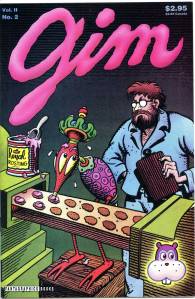
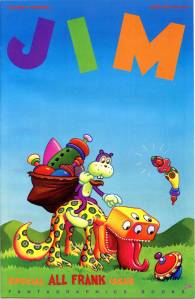
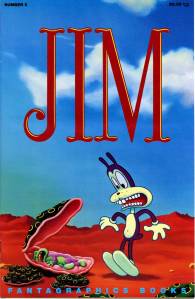
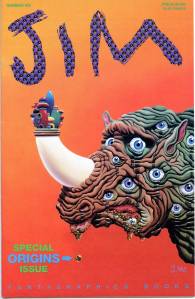
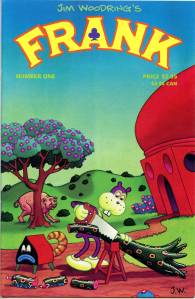
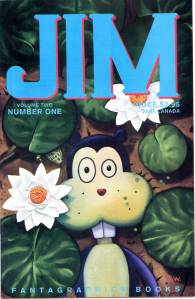
Jim is a series created by Jim Woodring. It began in 1980  as a self-published zine and was picked up by Fantagraphics Books in 1986 after cartoonist Gil Kane introduced Woodring to Fantagraphics co-owner Gary Groth. The publisher released four magazine-sized black-and-white issues starting in September 1987. A comic book-sized continuation, Jim Volume II, with some color, began in 1993 and ran for six issues until 1996.

Jim, which Woodring described as an “autojournal”, contained comics on a variety of subjects, many based on dreams, as well as surreal drawings and free-form text which resembled Jimantha automatic writing. Besides dreams, the work drew on Woodring’s childhood experiences, hallucinations, past alcoholism, and Hindu beliefs. It also included stories of recurring Woodring characters such as Pulque (the embodiment of drunkenness), boyhood friends Chip and Monk, and, in Volume II, his signature creation Frank.
Crime and Punishment (1948)

A companion series to Crime Does Not Pay from the same publisher, slightly less violent and with more emphasis on police work. Stories and art by Fred Kida, Dick Rockwell, Carl Wessler, Fred Guardineer, and Charles Biro.

Cry for Dawn (1989)

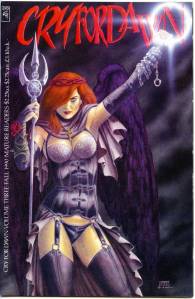
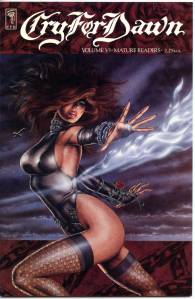
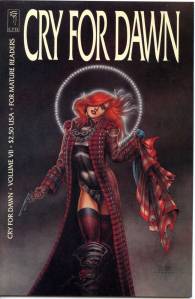
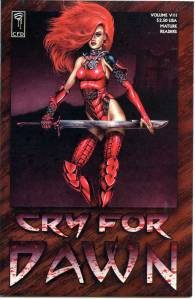
Cry for Dawn was a 9-issue horror anthology comic book. The book was primarily written by Joseph Michael Linsner and Joseph Monks with artwork by Joseph Michael Linsner.The series featured guest artist and writers in some issues, but the work was largely performed by Linsner and Monks. It was published by Cry for Dawn Productions from 1989–1992 and is famous for introducing the character of Dawn, the goddess of birth and rebirth. Although Dawn served as an emcee in the Cry for Dawn issues, she would later have many titles dedicated to her journeys through heaven and hell across multiple spin-off titles for Sirius Entertainment, Image Comics, and Linsner.com.

Cry for Dawn was a mature-readers-only title that hit during the peak of the 90’s independent comic rise. Due to the artwork by Linsner and the cutting-edge subject matter that the series dealt with, the titled developed a cult following that has continued in the decades following the publication.

Black Cat (1948)

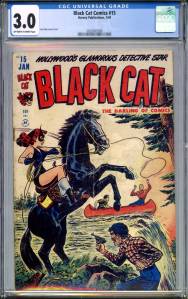
Linda Turner is the daughter of silent film Western actor Tim Turner, and a former Hollywood stunt woman. Linda has successfully made the transition from stunt woman to lead actress. During the filming of an unnamed picture, Linda suspects the film’s director, Garboil (no first name given), of being a Nazi spy or at the very least an American Bund member. In order to follow him and gain corroborating evidence, she disguises herself in a backless blue blouse, red shorts, blue flared gloves, red buccaneer boots and a blue opera mask and calls herself the Black Cat.

According to Jess Nevins’ Encyclopedia of Golden Age Superheroes, most of the Black Cat’s opponents are ordinary criminals and Axis agents, but she does fight a female mad scientist, the criminal brothers known as the Three Black Cats, a vampire, and after the war Russians in Afghanistan.

In 1944, The Black Cat’s costume was modified slightly, becoming a one piece blue bathing suit with buccaneer boots, flared gloves and opera mask, all in blue, and a red belt. This look would remain for the rest of her career.

Lady Death – The Reckoning (1994)

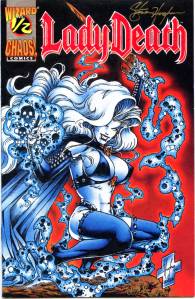
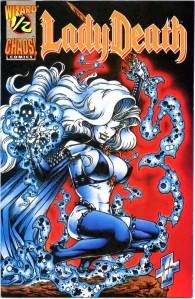
Lady Death was originally published by Chaos Comics and remains one of the best examples of the bad girl titles that took the American comic book industry by storm during the late 1990s. The earliest issues of Lady Death were written by Brian Pulido and illustrated by Steven Hughes. Lady Death was originally conceived as a violent anti-hero, but subsequent iterations have toned down the more controversial aspects of the character.


Doctor Solar Man of the Atom – Gold Key (1962)

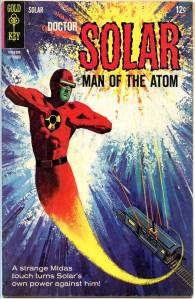
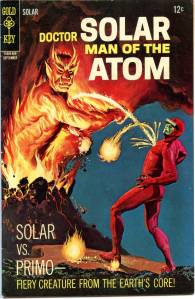
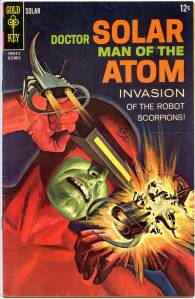
Doctor Solar premiered in issue #1 of Doctor Solar, Man of the Atom in Summer 1962 (cover date October 1962) in the first batch of comics released by Gold Key, with Solar being Gold Key’s first original character. Though Gold Key did not have as large a distribution network as Dell Comics, the Gold Key comics stood out on the newsstand shelves due to their cover art and a 12 cent price (Dell Comics sold for 15 cents). The first two issues of Solar appeared with cover paintings by Richard M. Powers; beyond the second issue the cover paintings were done by George Wilson. The interior artwork in the first several issues also had unique features: the superhero, Dr. Solar, did not have a costume until the fifth issue, rectangular word balloons and no black holding line around each panel. Following from practise of Dell Comics, and thanks to Western Publishing’s reputation of publishing other children-friendly books, Doctor Solar, Man of the Atom was able to be distributed without the Comics Code Authority symbol. The original creative team of writer Paul S. Newman and artist Bob Fujitani lasted until issue #5 when Frank Bolle took over the art work. With the exception of issue #7 written by Otto Binder, Newman wrote the comic book until issue #10 when Dick Wood took over for the remainder of the series. Other artists that contributed included Mel Crawford, Win Mortimer, Alden McWilliams (issues #20-23), Ernie Colón (issues #24-26), José Delbo (issue #27).

Grimjack (1984)

Grimjack is the main character of a comic book originally published by the American company First ComicsJohn Ostrander and Timothy Truman are credited as co-creators of the character, although Ostrander had been developing Grimjack with artist Lenin Delsol before Truman’s arrival on the project according to Ostrander’s own text piece in Grimjack #75. In that same essay, the writer also revealed having initially conceived the character to be the star of a series of prose stories, set in a post-apocalyptic Chicago.

Batman / Grendel (1993)

A two-part Batman/Grendel crossover, Devil’s Riddle and Devil’s Masque, was written and drawn by Wagner and colored by Wagner at the time of the Comico series, but was delayed by Comico’s bankruptcy. It was finally published by DC in 1993.

The story assumes that Hunter Rose and Batman live in the same fictional universe and are contemporaries. Bored with Argent the wolf and the NYPD, Hunter Rose comes to Gotham City to challenge the city’s protector to stop him before he commits an audacious crime. Hunter Rose becomes increasingly impressed with Batman but is still able to pull off his crime. However, Batman’s interference proves to be more trouble than he expected and Grendel winds up unintentionally endangering the life of a child and indirectly causing the death of a person he did not consider an enemy. Grendel and Batman’s final battle ends with the assassin just barely escaping Gotham, his arm broken by the Dark Knight in the process.

Although this story can be seen as out of continuity, Hunter Rose is depicted with a broken arm in the “Devil’s Advocate” short, featured inGrendel: Black, White, & Red.

Doomsday Squad (1986)

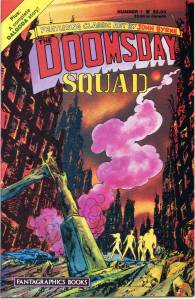
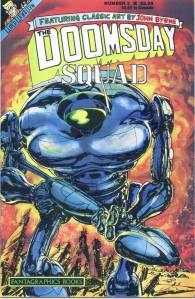
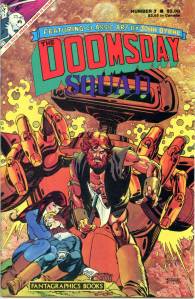
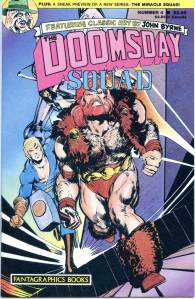
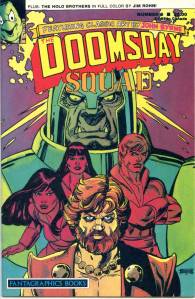
All six original Doomsday + 1 stories plus the two-part Charlton Bullseye story were reprinted as the Fantagraphics comic-book series The Doomsday Squad #1–7 (Aug. 1986 – June 1987), with new covers by Byrne (#1–2), Neal Adams (#4), and Gil Kane (the remainder). This series included a new backup feature each issue, including “Dalgoda” by writer Jan Strnad and artist Dennis Fujitake, “Keif Llama” by writer-artist Matt Howarth, “Captain Jack” by writer Mike Kazaleh and artist Marc Schirmeister as well as Usagi Yojimbo by Stan Sakai and Lloyd Llewellyn by Daniel Clowes.

THB (1994)

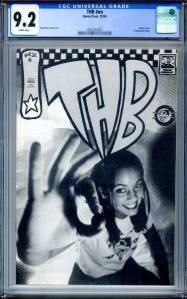
Paul Pope introduced THB in 1994, the same year he began work for Kodansha, Japan’s best-known manga publisher. Pope eventually developed the manga Supertrouble for Kodansha, which mined the “cutie-pie” girl adventure vein that THB exists in. Pope has self-published some of his work through his own Horse Press, with other work such as One-Trick Ripoff coming from Dark Horse Comics and Heavy Liquid and 100% published under DC ComicsVertigo imprint.

Pope’s work combines the precision and romance of the European artists he studies with the energy and page design of the manga tradition. His storytelling narratives continue to mature with well-paced, deftly-shaded combinations of science fiction, hardboiled crime stories and the Romeo and Juliet archetype. Pope’s two protagonist types are the silent, lanky outsider male of One-Trick Ripoff, Escapo and Heavy Liquid, or the resourceful, aggressive, humorous young teenage girls of THB.