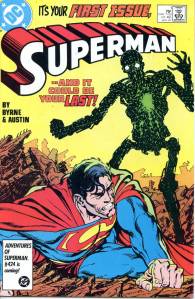
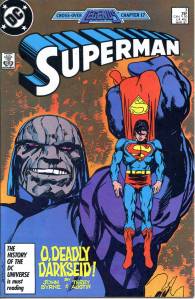
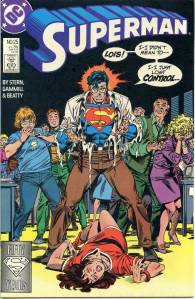
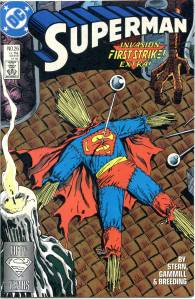
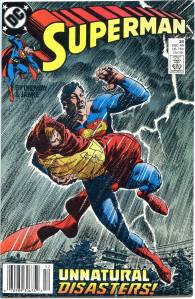
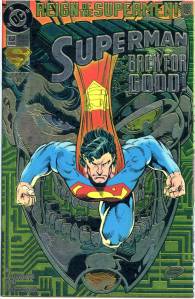
After that limited series, Action Comics returned to publication and Superman vol. 2, #1 was published. The original Superman series (volume 1) became The Adventures of Superman starting with issue #424. Superman vol. 2 continued publishing until April 2006 at which point DC restored The Adventures of Superman to its original title and canceled the second Superman series.
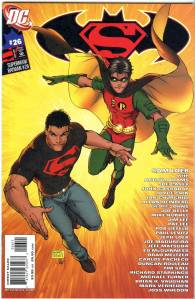
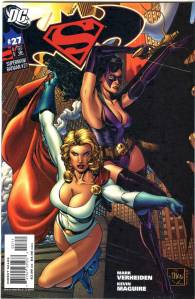
Superman/Batman was a monthly series published by DC Comics that features the publisher’s two most popular characters: Superman and Batman. Superman/Batman premiered in August 2003 and was an update of the previous series, World’s Finest Comics, in which Superman and Batman regularly joined forces.
Superman/Batman explored the camaraderie, antagonism, and friendship between its titular characters. Jeph Loeb, the series’ first writer, introduced a dual-narrator technique to present the characters’ often opposing viewpoints and estimations of each other, which subsequent series writers have maintained. Before the 1985 limited seriesCrisis on Infinite Earths, the two iconic characters were depicted as the best of friends. Frank Miller‘s landmark series The Dark Knight Returns was the first DC story that depicts the heroes at odds with each other, as opposed to pre-Crisis incarnations. This dynamic became DC Universecanon with John Byrne‘s The Man of Steel, a Superman reboot published in 1986.
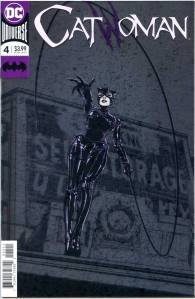
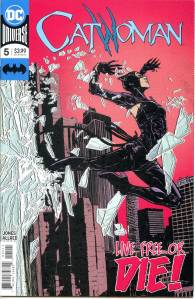
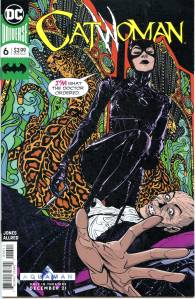
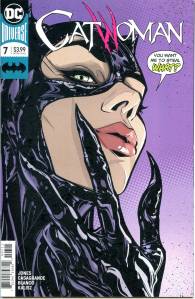
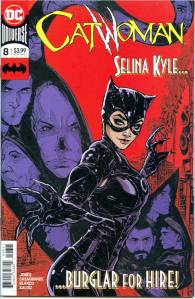
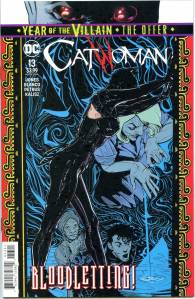
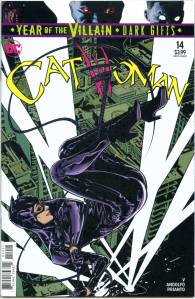
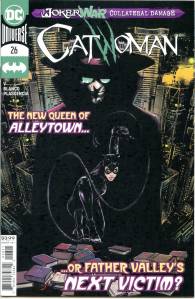
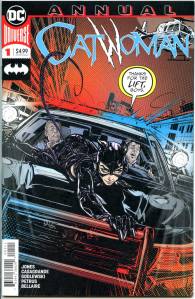
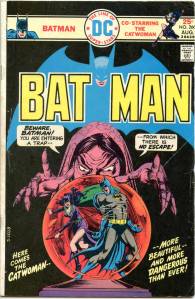
On the day of their wedding, Selina decides to call off the wedding as she realizes that marrying Bruce would ultimately take away what makes him Batman. This is later revealed to be due to the manipulations of Holly under the instructions of Bane as to finally break Batman of both spirit and will. Subsequently, Selina leaves Gotham and starts a new life in the city of Villa Hermosa, California (Catwoman (vol. 5) #1). She faces opposition from the power-hungry Creel family who run Villa Hermosa, specifically First Lady Raina Creel.
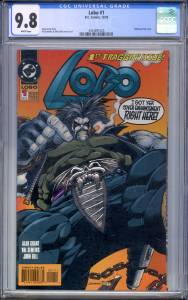
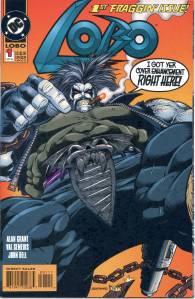
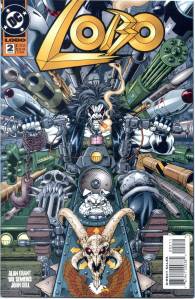
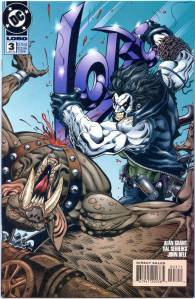
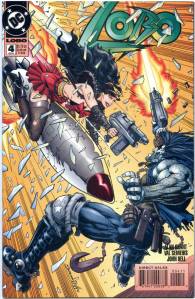
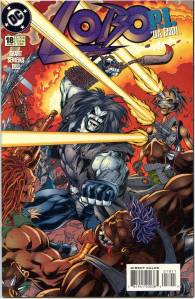
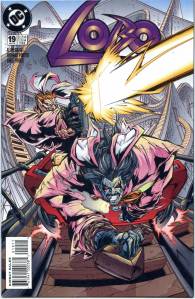
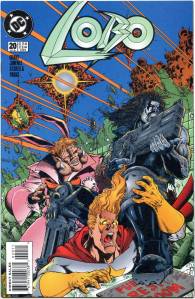
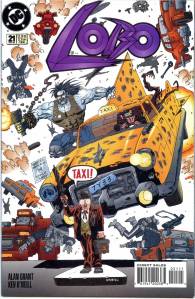
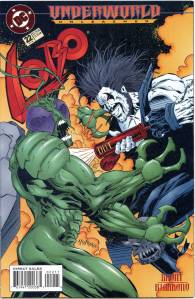
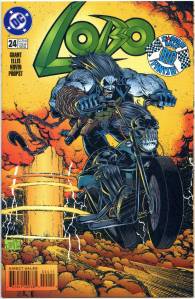
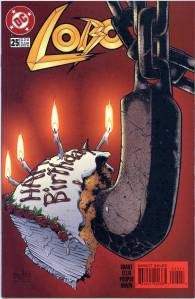
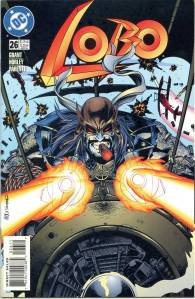
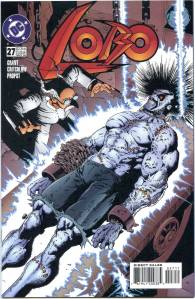
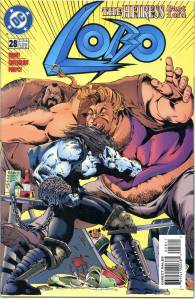
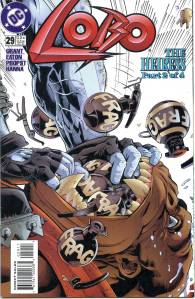
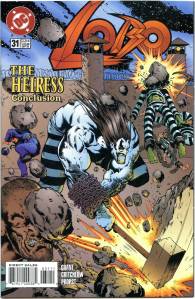
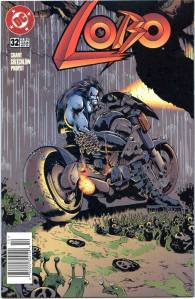
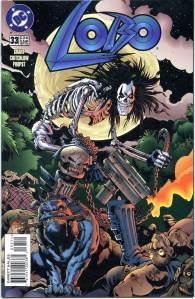
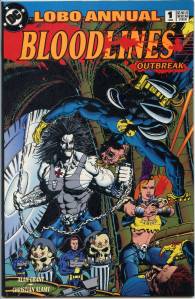
Lobo starred in his own DC title for 64 issues, from 1993 to 1999. Lobo was first introduced as a hardened villain in the 1980s, but soon fell out of use with writers. He remained in limbo until his revival as an anti-hero biker with his own comic in the early 1990s. Writers attempted to use Lobo as a parody of the 1990s trend towards “grim and gritty” superhero stories, epitomized by such Marvel Comics characters as Cable, Wolverine, and Punisher, but he was instead enthusiastically accepted by fans of the trend. This popularity led to the character having a much higher profile in DC Comics stories from then on, as well as starring roles in various series in the decades since.
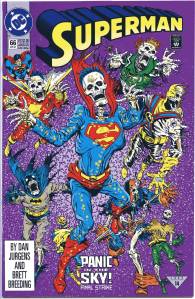
The Justice League has long protected Earth from all manner of foreign and alien invaders over the years, always keeping a vigilant eye to the skies for the next threat. But what if the threat was already walking the Earth…hiding in plain sight…watching…waiting for their moment to strike…
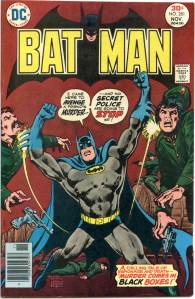
Starting in 1969, writer Dennis O’Neil and artist Neal Adams made a deliberate effort to distance Batman from the campy portrayal of the 1960s TV series and to return the character to his roots as a “grim avenger of the night”. O’Neil said his idea was “simply to take it back to where it started. I went to the DC library and read some of the early stories. I tried to get a sense of what Kane and Finger were after.”
O’Neil and Adams first collaborated on the story “The Secret of the Waiting Graves” (Detective Comics #395, January 1970). Few stories were true collaborations between O’Neil, Adams, Schwartz, and inker Dick Giordano, and in actuality these men were mixed and matched with various other creators during the 1970s; nevertheless the influence of their work was “tremendous”.Giordano said: “We went back to a grimmer, darker Batman, and I think that’s why these stories did so well…” While the work of O’Neil and Adams was popular with fans, the acclaim did little to improve declining sales; the same held true with a similarly acclaimed run by writer Steve Englehart and penciler Marshall Rogers in Detective Comics #471–476 (August 1977 – April 1978), which went on to influence the 1989 movie Batman and be adapted for Batman: The Animated Series, which debuted in 1992.Regardless, circulation continued to drop through the 1970s and 1980s, hitting an all-time low in 1985.
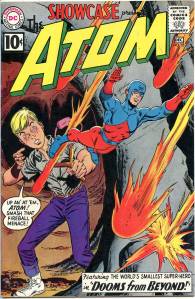
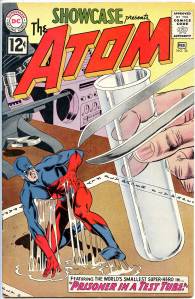
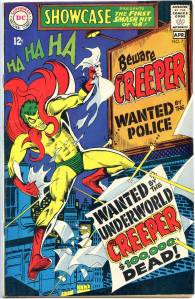
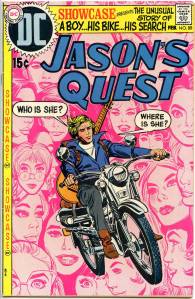
Showcase has been the title of several comic anthology series published by DC Comics. The general theme of these series has been to feature new and minor characters as a way to gauge reader interest in them, without the difficulty and risk of featuring “untested” characters in their own ongoing titles. The original series ran from March-April 1956 to September 1970 suspending publication with issue #93, and then was revived for eleven issues from August 1977 to September 1978.
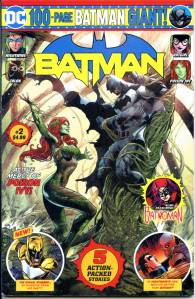
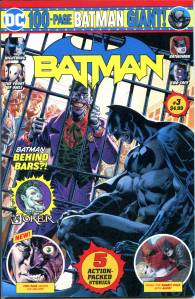
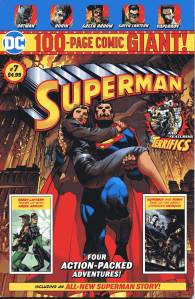
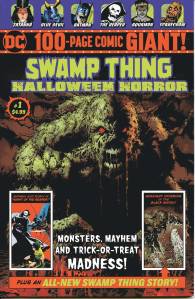
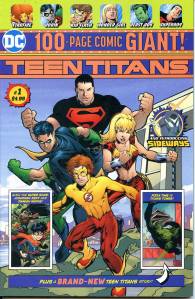
The Giant line of comics mixes all-new original material by some of DC’s top creators with reprints for a 100-page package.
Creators working on the new material include such fan-favorites as Tom King, Brian Michael Bendis and the Harley Quinn writing team of Jimmy Palmiotti and Amanda Conner, each working on characters outside of their traditional range in the regular DC line, with Bendis working on his first solo Batman material in September — a 12-part story beginning in Batman Giant No. 3 — and Tom King taking on Superman with artist Andy Kubert for their own yearlong epic beginning in Superman Giant No. 3. Not to be left behind, Palmiotti and Conner will launch a 12-part Wonder Woman story in the third Justice League issue.
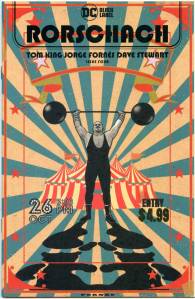
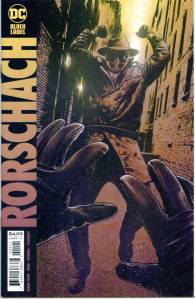
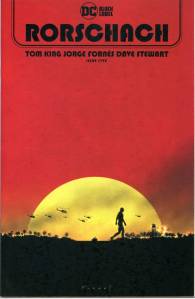
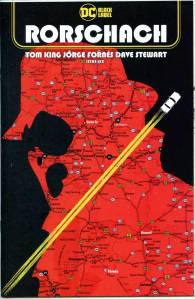
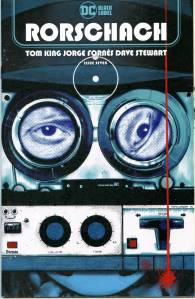
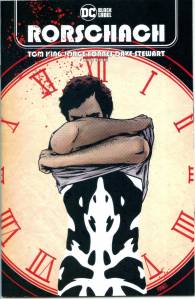
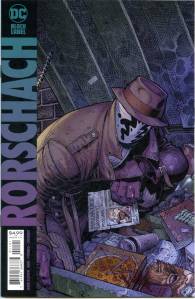
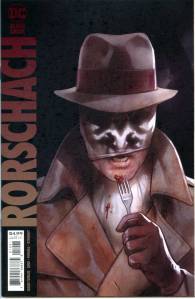
Thirty-five years after the death of Rorschach, right-wing vigilante Laura “The Kid” Cummings brainwashes two elderly comic book creators, Wil Myerson and Frank Miller, into believing that they are Rorschach’s reincarnation, before attempting to assassinate Robert Redford‘s political opponent, being killed themselves in the process.

















































 EHT Comics