The JSA remained inactive for some time after the events of “Zero Hour“, but the surviving members (the Flash, Wildcat, and Alan Scott, (now going by the name Sentinel) have remained active throughout the DC Universe, having been placed as reserve JLI members, as evidenced in Justice League Europe #50.
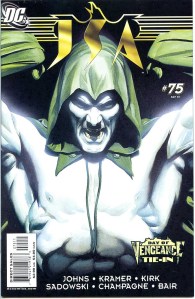
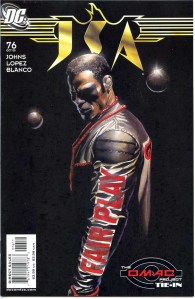
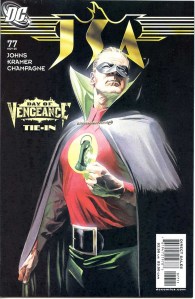
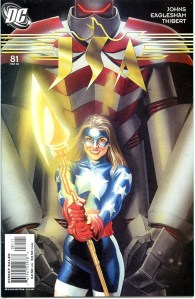
The Justice Society was revived as a monthly series called JSA in 1999 which mixed the few remaining original members with younger counterparts. This incarnation of the team focused on the theme of generational legacy and of carrying on the heroic example established by their predecessors. The series was launched by James Robinson and David S. Goyer. Goyer later co-wrote the series with Geoff Johns, who continued to write the series solo after Goyer’s departure. The series featured the art of Stephen Sadowski, Leonard Kirk, and Don Kramer, among others. It featured a story by Pulitzer Prize winner Michael Chabon.
During the events of Infinite Crisis, some of the surviving Golden Age characters, such as Wildcat and the Flash, are transported to the new “Earth-Two”, as created by Alexander Luthor, and seem to recall the existence of the original one, albeit vaguely.
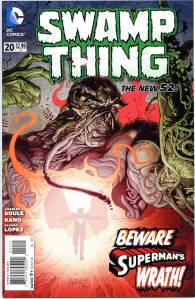
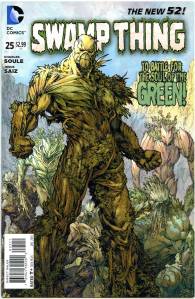
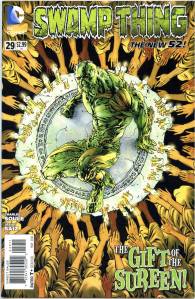
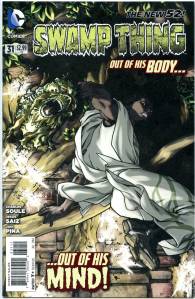
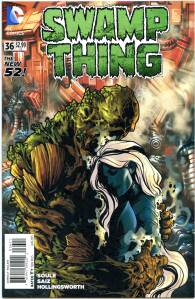
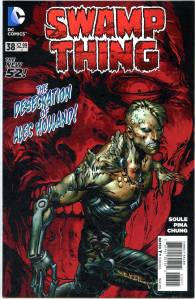
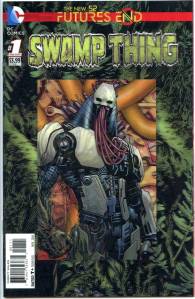
Swamp Thing (Volume 5) is one of “The New 52” ongoing series published after Flashpoint. It tells the story of Alec Holland‘s transformation into Swamp Thing following his resurrection from death.
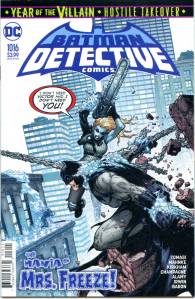
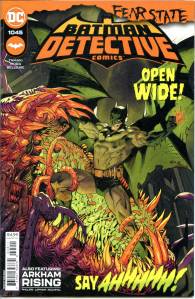
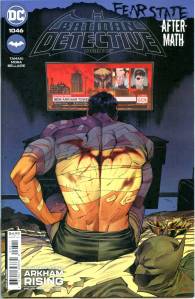
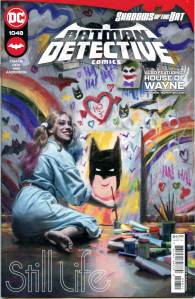
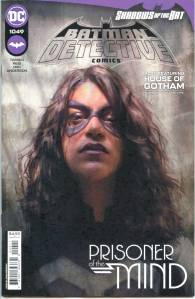
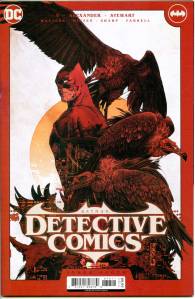
The next regular writer after James Tynion IV was Peter Tomasi who began on the series with issue #994, published December 2018. Tomasi’s run as writer continued for two years until issue #1033, published December 2020.
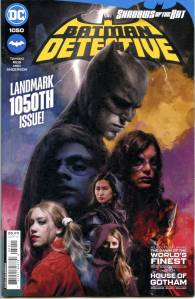
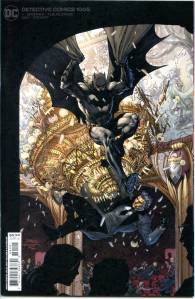
On March 27, 2019, DC Comics released the series’ 1,000th issue, marking the second American comic book in history to reach that milestone after Action Comics in 2018. The issue, which coincided with Batman’s 80th anniversary, is an anthology featuring several stories from a variety of different creative teams.
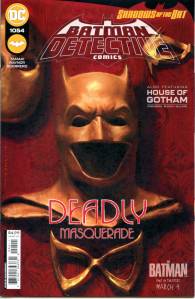
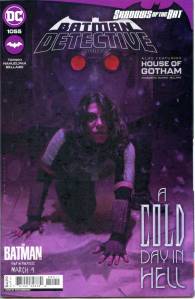
Writer Mariko Tamaki began on the series with issue #1034 as part of the Infinite Frontier line-wide relaunch. In April 2022, it was announced that Ram V and Rafael Albuquerque would serve as the new creative team starting with issue #1062.
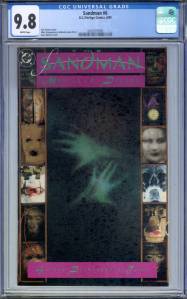
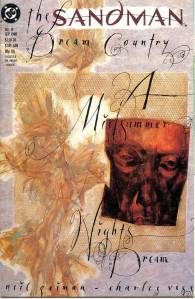
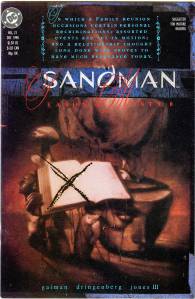
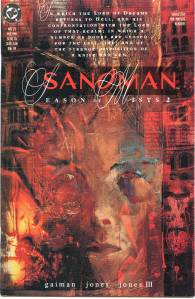
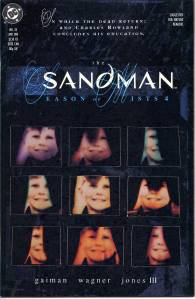
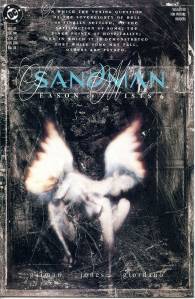
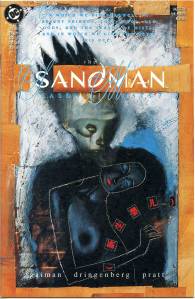
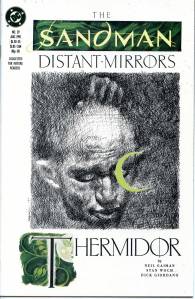
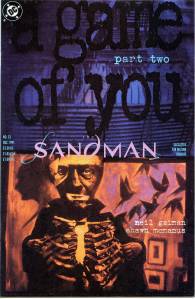
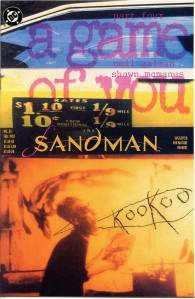
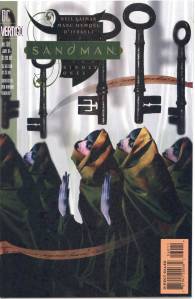
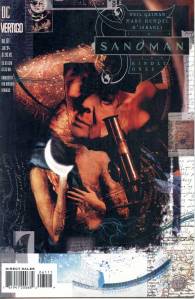
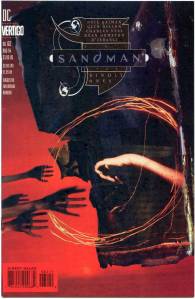
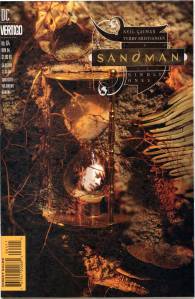
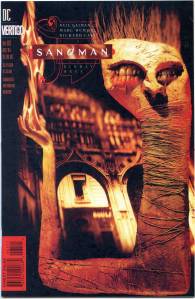
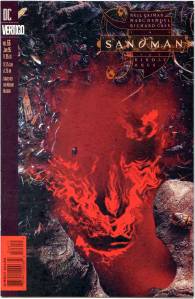
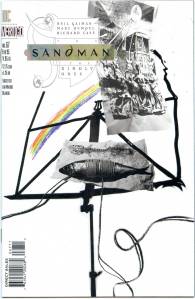
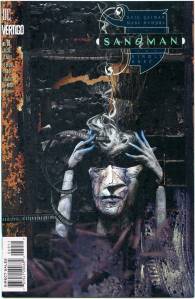
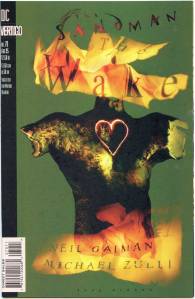
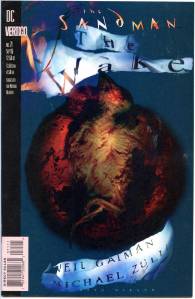
The main character of The Sandman is Dream, also known as Morpheus and other names, who is one of the seven Endless. The other Endless are Destiny, Death, Desire, Despair, Delirium, who was once Delight, and Destruction, who turned his back on his duties. The series is famous for Gaiman’s trademark use of anthropomorphic personification of various metaphysical entities, while also blending mythology and history in its horror setting within the DC Universe.The Sandman is a story about stories and how Morpheus, the Lord of Dreams, is captured and subsequently learns that sometimes change is inevitable. The Sandman was Vertigo’s flagship title, and is available as a series of ten trade paperbacks, a recolored five-volume Absolute hardcover edition with slipcase, in a black-and-white Annotated edition, and is available for digital download. Critically acclaimed,The Sandman was one of the first few graphic novels ever to be on the New York Times Best Seller list, along with Maus, Watchmen and The Dark Knight Returns. It was one of five graphic novels to make Entertainment Weekly‘s “100 best reads from 1983 to 2008,” ranking at No. 46. Norman Mailer described the series as “a comic strip for intellectuals.” The series is noted for having a large influence over the fantasy genre and graphic novel medium since then.
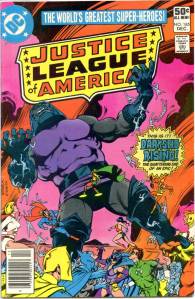
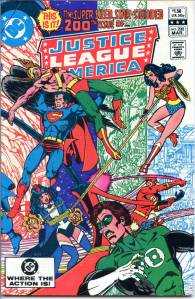
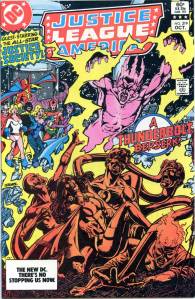
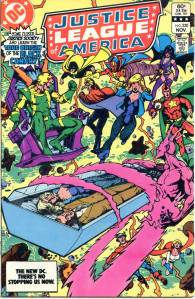
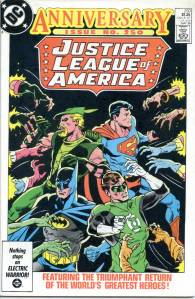
In the early 80’s, George Pérez, Don Heck, and Rich Buckler would rotate as artist on the title. The double-sized anniversary issue #200 (March 1982) was a “jam” featuring a story written by Conway, a framing sequence drawn by Pérez, and chapters drawn by Pat Broderick, Jim Aparo, Dick Giordano, Gil Kane, Carmine Infantino, Brian Bolland, and Joe Kubert. Bolland’s chapter gave the artist his “first stab at drawing Batman.” Pérez would leave the title with issue #200 to concentrate on The New Teen Titans although he would contribute covers to the JLAthrough issue #220 (November 1983). The 1982 team-up with the Justice Society in issues #207–209 crossed over with All-Star Squadron #14–15. A Justice League story by Gerry Conway and Rich Buckler originally intended for publication as an issue of All-New Collectors’ Edition saw print in Justice League of America #210–212 (January–March 1983).
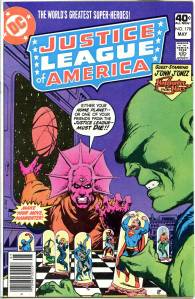
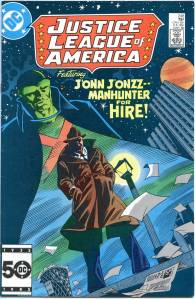
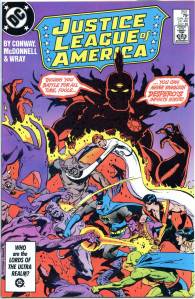
Seeking to capitalize on the popularity of their other team books, which focused upon heroes in their late teens/early 20s, Gerry Conway and artist Chuck Patton revamped the Justice League series. After most of the original heroes fail to help fend off an invasion of Martians, Aquaman dissolves the League and rewrites its charter to allow only heroes who will devote their full-time to the roster. The new team initially consists of Aquaman, Zatanna, Martian Manhunter, Elongated Man, the Vixen, and a trio of teenage heroes Gypsy, Steel, and Vibe. Aquaman leaves the team after a year, due to resolving marital problems, and his role as leader is assumed by the Martian Manhunter.
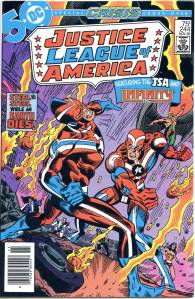
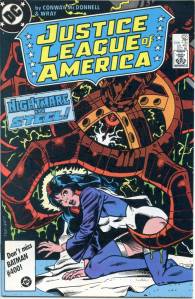
The final storyline for the original Justice League of America series (#258–261), by writer J. M. DeMatteis and artist Luke McDonnell, concludes with the murders of Vibe and Steel at the hands of robots created by long-time League nemesis Professor Ivo, and the resignations of Vixen, Gypsy, and the Elongated Man during the events of DC’s Legends miniseries, which sees the team disband.
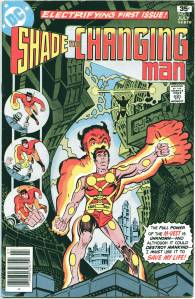
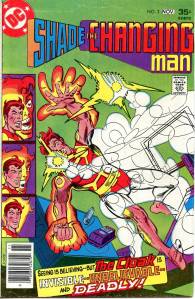
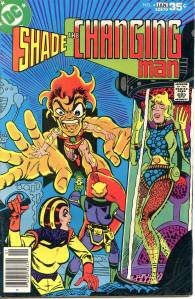
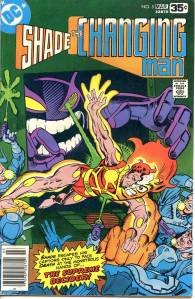
Shade, the Changing Man told the story of a fugitive from the militant planet Meta in another dimension. Shade (whose full name is Rac Shade) was powered by a stolen “M-vest” (or Miraco-Vest, named for its inventor) which protected him with a force field and enabled him to project the illusion of becoming a large grotesque version of himself. The character was the first Ditko had created, or helped to create, for a mainstream publisher for many years. Prior to rejoining DC Comics, Ditko had worked on characters such as his Mr. A. title. Shade was very much a return to mainstream superheroics, although Shade indicated no particular connection with the DC Universe (although the letters columns stated that there is no reason it could not be shown to be there). Michael Fleisher scripted the series based on Ditko’s plotting and art.
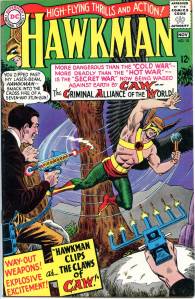
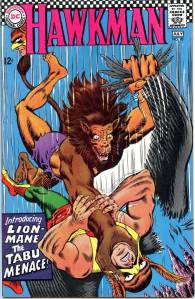
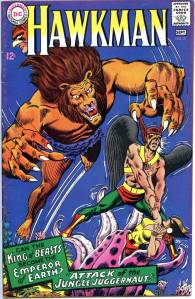
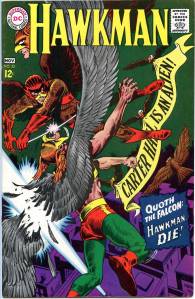
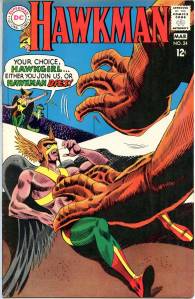
Several incarnations of Hawkman have appeared in DC Comics, all of them characterized by the use of archaic weaponry and by large, artificial wings, attached to a harness made from the special Nth metal that allows flight. Most incarnations of Hawkman work closely with a partner/romantic interest named Hawkgirl or Hawkwoman.
Since DC’s continuity was rewritten in the 1985 series Crisis on Infinite Earths, Hawkman’s history has become muddled with several new versions of the character appearing throughout the years, some associated with ancient Egypt and some with the fictional planet Thanagar. These versions of the character have starred in several series of various durations.
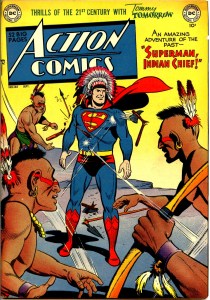
The major event many cite as marking the beginning of the Golden Age was the 1938 debut of Superman in Action Comics #1, published by the predecessor of modern-day DC Comics. The creation of Superman made comic books into a major industry. Some date the start to earlier events in the 1930s: The Overstreet Comic Book Price Guide‘s regular publication The Golden Age Quarterly lists comic books from 1933 onwards (1933 saw the publication of the first comic book in the size that would subsequently define the format); some historians, such Roger Sabin, date it to the publication of the first comic books featuring entirely original stories rather than re-prints of comic strips from newspapers (1935) by the company that would become DC Comics.
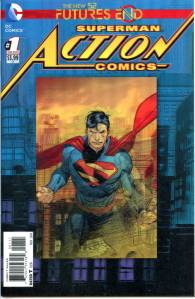
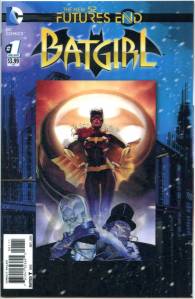
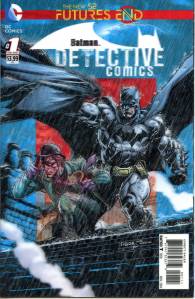
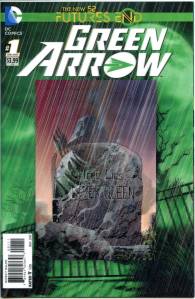
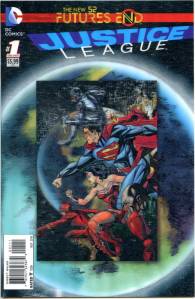
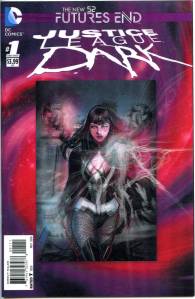
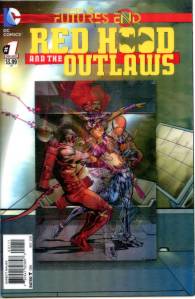
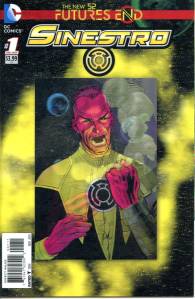
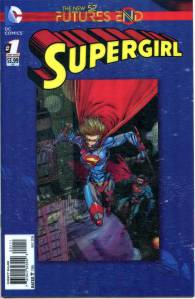
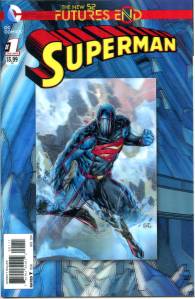
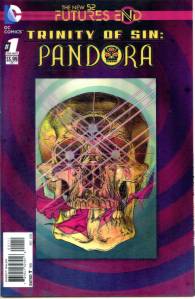
In February 2014, DC announced that as part of the celebration of The New 52’s third anniversary, all ongoing titles published in September 2014 feature stories that tie in to The New 52: Futures End. DiDio stated “One of the things we wanted to do was not just look at it through the lens of the weekly series, but also take a month and flash forward, and see what the potential futures of all our characters might be in that month. So in that month, you’ll get a chance to see where, in the next five years, our characters might finish up or might end up being.” He added that like the “Villains Month” event in September 2013, these titles also feature 3Dlenticular covers, in addition to the 2D ones, saying, “The covers now will also have the ability to have a ‘flicker’ effect. That means that the images change and show the transformation going on… There is a level of change that is taking place with our characters during the course of this story.”
Futures End – Action Comics #1 NM $4
Futures End – Batgirl NM $8
Futures End – Constantine #1 NM $6
Futures End Detective Comics #1 NM $4
Futures End – Green Arrow #1 NM $4
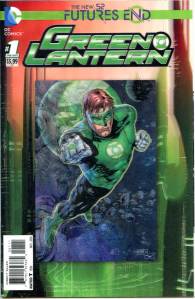
Futures End – Green Lantern #1 NM $4
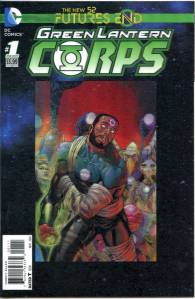
Futures End – Green Lantern Corps #1 NM $4
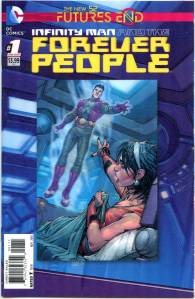
Futures End Infinity Man and the Forever People #1 NM $4



























































 EHT Comics