Knight Terrors (2023)

Knight Terrors is a 2023 DC Comics crossover event written by Joshua Williamson and drawn by Howard Porter. Other creators include Guillem March and Chris Bachalo. The event was announced in February during a ComicsPRO convention on Pittsburgh.

Williamson said: “I love horror comics, and it’s been a blast bringing the energy to Dawn of DCKnight Terrors showcases the horror side of our heroes as a brand-new villain confronts them with their worst nightmares. It’s a fun and horrific event that brings together all of the heroes and villains of DC, along with some surprises!”

Along with the core 4-issue miniseries there are various 2-issue tie-in miniseries focusing on different characters during the event. These titles replaced the main ongoing series, with many written by the same creatives working on the ongoing series.

Legends (1986)

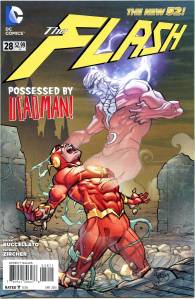
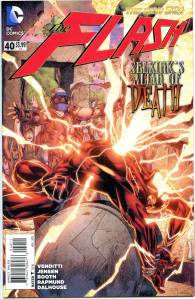
Legends served mainly as a launching pad for several new comic series, including the latter-day Flash title, Keith Giffen and J. M. DeMatteis‘ comedy/action take on the Justice League, and the villain-based black ops Suicide Squad. The series also saw the post-Crisis introduction into the DC Universe of Captain Marvel (who was spun off in the miniseries Shazam!: The New Beginning) as well as Wonder Woman, who had been rebooted by DC Comics at the same time Legends was being published.

Infinite Crisis (2005)

“Infinite Crisis” is a 2005–2006 comic book storyline published by DC Comics, consisting of an eponymous, seven-issue comic book limited series written by Geoff Johns and illustrated by Phil Jimenez, George Pérez, Ivan Reis, and Jerry Ordway, and a number of tie-in books. The main miniseries debuted in October 2005, and each issue was released with two variant covers: one by Pérez, and one by Jim Lee and Sandra Hope.

The series storyline was a sequel to DC’s 1985 limited series Crisis on Infinite Earths, which “rebooted” much of the DC continuity in an effort to fix 50 years of contradictory character history. It revisited characters and concepts from that earlier Crisis, including the existence of DC’s Multiverse. Some of the characters featured were alternate versions of comic icons such as an alternate Superman named Kal-L, who came from a parallel universe called Earth-Two. A major theme was the nature of heroism, contrasting the often dark and conflicted modern-day heroes with memories of “lighter” and ostensibly more noble and collegial heroes of American comic books’ earlier days.

Swamp Thing V5 (2011)

Swamp Thing (Volume 5) is one of “The New 52” ongoing series published after Flashpoint. It tells the story of Alec Holland‘s transformation into Swamp Thing following his resurrection from death.

Amalgam Comics (1996)

On two separate occasions – April 1996 and June 1997 – Marvel and DC co-published issues under the Amalgam Comics imprint. The issues were presented as if the imprint had existed for decades, with stories and editorial comments referring to a fictional history stretching back to the Golden Age of Comics, including retcons and reboots. For example, they referred to Secret Crisis of the Infinity Hour (an amalgamation of Marvel’s Secret Wars, DC’s Crisis on Infinite Earths, Marvel’s The Infinity Gauntlet, and DC’s Zero Hour), which featured the well-known cover of Crisis on Infinite Earths #7, but with Super-Soldier holding his sidekick’s body, instead of Superman holding Supergirl. Several issues included fake letter columns to provide the illusion of background to the stories, with the “fans'” hometowns formed by amalgamating the names of existing cities.

Challengers of the Unknown (1960’s)

The Challengers of the Unknown is a fictional group of adventurers appearing in comic books  published by DC Comics. The quartet of adventurers explored paranormal occurrences while facing several fantastic menaces. The characters were created by Joe Simon and JJack Kirby during the end of their company, Mainline Comics. Following the end of the Challengers comic, DC has revived the characters in different incarnations over the years. Some have claimed that Kirby reworked the basic concept of the series with Stan Lee in 1961 to create The Fantastic Four, the first creation that marked the rise of Marvel Comics.

Batman: The Killing Joke (1988)

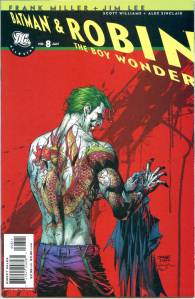
Batman: The Killing Joke is a 1988 DC Comics one-shot graphic novel featuring the characters Batman and the Joker written by Alan Moore and illustrated by Brian BollandThe Killing Joke provides an origin story for the supervillain the Joker, loosely adapted from the 1951 story “The Man Behind the Red Hood!“, which was written by Batman co-creator Bill Finger. The Joker’s origin is presented via flashback, while simultaneously depicting his attempt to drive Jim Gordon insane and Batman’s desperate attempt to stop him.

Created by Moore, Bolland, and Higgins as their own take on the Joker’s source and psychology, the story became famous for its origin of the Joker as a tragic character; a family man and failed comedian who suffered “one bad day” that finally drove him insane. Moore stated that he attempted to show the similarities and contrasts between Batman and the Joker. The story’s effects on the mainstream Batman continuity also included the shooting and paralysis of Barbara Gordon (a.k.a. Batgirl), an event that eventually leads her to develop the identity of Oracle, secret data broker for the DC Universe‘s superhero community and leader of the superhero team Birds of Prey.

Superman (1970’s)

The early 1970s were a time of change for the Man of Steel. As Clark Kent shifted from being a newspaper reporter to a TV newscaster, his alter ego saw the destruction of all remaining Kryptonite on Earth! This period also featured many new villains, including Terra-Man, and the dramatic reintroductions of such foes as Lex Luthor — in green and purple armor!

Futures End – One Shots (2014)

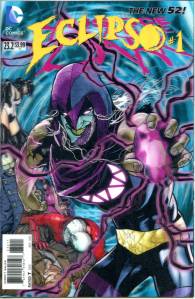
In February 2014, DC announced that as part of the celebration of The New 52’s third anniversary, all ongoing titles published in September 2014 feature stories that tie in to The New 52: Futures End. DiDio stated “One of the things we wanted to do was not just look at it through the lens of the weekly series, but also take a month and flash forward, and see what the potential futures of all our characters might be in that month. So in that month, you’ll get a chance to see where, in the next five years, our characters might finish up or might end up being.” He added that like the “Villains Month” event in September 2013, these titles also feature 3D lenticular covers, in addition to the 2D ones, saying, “The covers now will also have the ability to have a ‘flicker’ effect. That means that the images change and show the transformation going on… There is a level of change that is taking place with our characters during the course of this story.”

Birds of Prey: Manhunt (1996)

The title series began with Chuck Dixon’s one shot Black Canary/Oracle: Birds of Prey (cover date 1996 / published December 1995). Initially, the two heroines featured were Barbara Gordon (formerly “Batgirl“) and Dinah Lance (currently “Black Canary”). From the beginning, Canary was written as passionate and idealistic. In an interview with Comics Bulletin, Dixon described this choice as a fertile clash of values: “Dinah’s more idealistic approach is at the heart of this book.