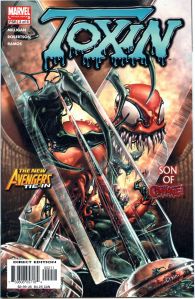
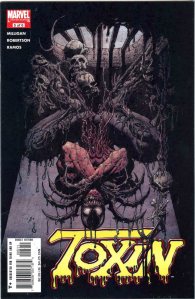
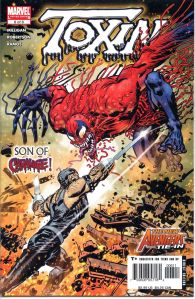
Toxin or the Toxin symbiote is the third major symbiote of the Spider-Man series, the ninth known to have appeared in the comics outside of the Planet of the Symbiotes storyline, and the first symbiote that Spider-Man considers an ally, despite temporary alliances with Venom on numerous occasions. The first host of the Toxin symbiote is former NYPD police officer Patrick Mulligan. Toxin later bonded to Eddie Brock as his second host after Patrick Mulligan was killed.
A Dame to Kill For is a comic book limited series written and drawn by Frank Miller and first published by Dark Horse Comics in 1993. It is the second story in Miller’s Sin City series, and the first to be published in miniseries format. It has since been reprinted in graphic novel format in four separate editions.
In his review for the Journal of Adolescent & Adult Literacy, James Blasingame said that even though A Dame To Kill For is a quick read, it has a complex story. He says, “All of the elements of a good novel are present, plot; beginning, middle, ending; dramatic crescendo; fully developed characters; complex constructions of narrative perspective; and, despite Miller’s graphic style, not so black-and-white socially troubling questions about the nature of good and evil, justice, and redemption.”
Sin City – A Dame to Kill For Special Edition NM $9
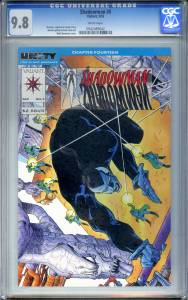
Shadowman debuted in 1992 as a flagship title in the Valiant Universe and became one of the industry’s most popular comic books. After one year in publication, Shadowman was selling over 100,000 comics books a month. By its second year, Shadowman was outselling long-standing industry stalwarts from Marvel Comics and DC Comics.
Shadowman continued strongly with sales in the hundreds of thousands of books per month (ultimately selling more than 5 million copies altogether) until 1996 when Acclaim Entertainment, which bought Valiant for $65 million, started a new Shadowman series under the Acclaim Comics banner.
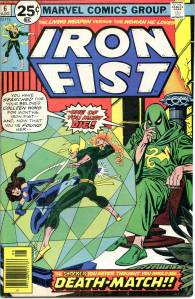
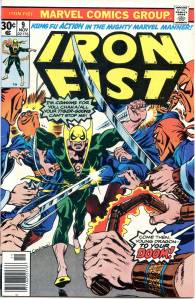
Iron Fist was spun off from Marvel Premiere into the solo series Iron Fist, which ran 15 issues (November 1975 – September 1977). The solo series was written by Claremont and pencilled by Byrne. A subplot involving the Steel Serpent left unresolved by the cancellation of the series was wrapped up in issues #63–64 of Marvel Team-Up, the latter of which featured Rand kiss Misty Knight, marking the first interracial kiss and first long-term interracial couple in Marvel Comics history, as well as the first couple with an age difference in which the woman was older than her man.
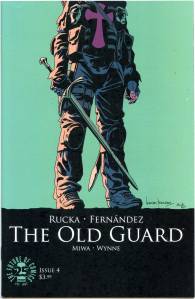
Greg Rucka and Leandro Fernandez team up together to introduce THE OLD GUARD, the story of old soldiers who never die…and yet cannot seem to fade away. Trapped in an immortality without explanation, Andromache of Scythia – ‘Andy’ – and her comrades ply their trade for those who can find-and afford-their services. But in the 21st century, immortality is a hard secret to keep, and when you live long enough, you learn that there are many fates worse than death.
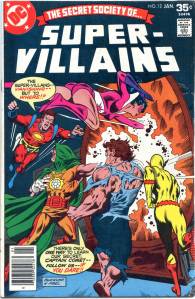
Due to the delays caused by having to redo the first issue from scratch, Conway assigned David Anthony Kraft to script the next three issues of Secret Society of Super Villains over his plots. After issue #4, both Conway and Kraft abruptly left DC, leading to a mad scramble to produce a fill-in issue.
Jack C. Harris took over as editor, and Conway returned as writer only with issue #8, but artists on the series rotated nearly as often as the lineup of the titular supergroup, with Rich Buckler, Mike Vosburg, and Dick Ayers all contributing short stints as pencilers, while inkers changed from issue to issue. Harris felt that the series’ mediocre sales might have been partly his fault: “The cover concepts were one of my editorial duties. Rich Buckler turned my ideas into the best he could do, but I never felt as if my ideas were good enough for his art. I think there was a ‘sameness’ to my ideas which might have hurt the title in that casual readers might have missed buying an issue because they thought they’d already seen it”. Secret Society of Super Villains was cancelled with issue #15 as part of the DC Implosion.
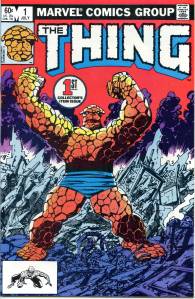
The cancellation of Marvel Two-in-One led to the Thing’s first completely solo series, which ran for 36 issues. The Thing was originally written by John Byrne and later, Mike Carlin. The series also featured art by Ron Wilson and later by Paul Neary. It elaborated on Ben Grimm’s poor childhood on Yancy Street in its early issues, and chronicled the Thing’s later foray into the world of professional wrestling. It also featured a major storyline offshoot from Marvel’s Secret Wars event, in which the Thing elects to remain on the Beyonder‘s Battleworld after discovering that the planet enables him to return to human form at will. A full third of the series’ stories take place on Battleworld.
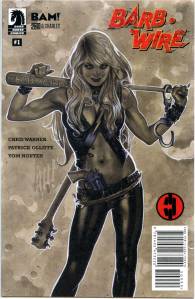
Nail-hard tough and drop-dead gorgeous, Barb Wire is the baddest bounty hunter on the mean streets of Steel Harbor, where gangsters can lift bulldozers and leap rusting factories in a single bound. The hunting is stupid good and the bounties are hella big – if Barb lives long enough to collect!
Created by Todd McFarlane and Robert Kirkman, the series debuted in October 2009 and ended in December 2012 after 28 issues. The comic was originally written by Kirkman with pencils by Ryan Ottley, layouts by Greg Capullo, and inks by McFarlane, to a mixed to positive critical reception.Joe Casey and Nathan Fox took over as the book’s creative team as of Haunt #19 to a universally negative reception, abandoning the original storyline and supporting cast and serving as a tie-in to the pair’s Spawn series, in which Haunt is featured as a supporting character.
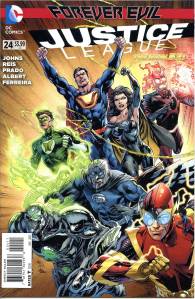
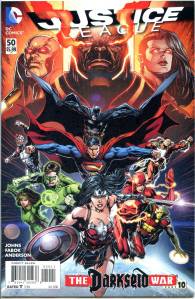
In April of 2015, DC began “Justice League: The Darkseid War”, which would be the final installment in Geoff Johns five year run of Justice League. The event consisted of 10 Justice League issues, 6 one-shots, and one Special issue. The story took hidden elements from John’s run as well as answering all questions posed since the beginning.