The House of Secrets (1971)

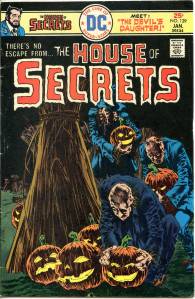
The House of Secrets was revived in 1969 after a 3 year absence. Now its horror and suspense tales were introduced by a host named Abel, who would also host the satirical comic Plop!. His brother Cain hosted House of Mystery. Swamp Thing first appeared in House of Secrets #92 (July 1971) in a stand-alone horror story set in the early 20th century written by Len Wein and drawn by Bernie Wrightson. The woman appearing on the cover of this issue was modeled after future comics writer Louise Simonson.

This revival, sporting many covers by Neal Adams, Bernie Wrightson, and Michael Kaluta, ran through issue #154 (Nov. 1978), with three months passing between #140 (April 1976) and #141 (July 1976). It was then ‘merged’ into The Unexpected with issue #189, through issue #199. The series was 68 ad-free pages, allowing all three portions to be full-length issues.

The House of Secrets also came to be the name of the actual edifice in which Abel lives. Writer Mike Friedrich and artist Jerry Grandenetti introduced the house and explained its origins. The Sandman series revealed it exists both in the real world of the DC Universe and in the Dreaming, as a repository for secrets of all kinds.

Death of Doctor Strange (2022)

Doctor Stephen Strange was the world’s greatest neurosurgeon and the Earth’s Sorcerer Supreme, defending the world against invasions from other dimensions and supernatural threats. He has lost and regained the role several times and journeyed to the strangest of places, even met Eternity itself, but he has always been there to defend this dimension against threats of every size and shape imaginable.
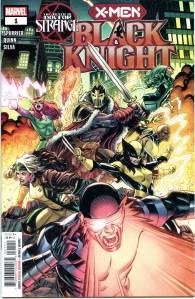
And now he’s dead.

Who will protect the Earth? Who will keep the supernatural evils at bay?

And who killed Doctor Strange?

The Thing from Another World (1991)

The Thing from Another World is the first of the comic series published by Dark Horse Comics. The series acted as a continuation of the 1982 film The Thing, with three stories (The Thing from Another World, The Thing from Another World: Climate of Fear and The Thing from Another World: Eternal Vows) directly following its events, and a serialized visual novel (The Thing from Another World: Questionable Research) which ignored the preceding stories and acted as a separate stand-alone sequel to the film.

Superman (Golden Age)

The major event many cite as marking the beginning of the Golden Age was the 1938 debut of Superman in Action Comics #1, published by the predecessor of modern-day DC Comics. The creation of Superman made comic books into a major industry. Some date the start to earlier events in the 1930s: The Overstreet Comic Book Price Guide‘s regular publication The Golden Age Quarterly lists comic books from 1933 onwards (1933 saw the publication of the first comic book in the size that would subsequently define the format); some historians, such Roger Sabin, date it to the publication of the first comic books featuring entirely original stories rather than re-prints of comic strips from newspapers (1935) by the company that would become DC Comics.

Giant Size Creatures/Werewolf (1974)

The Werewolf by Night character (birth name Jacob Russoff, legal name Jacob Russell, nicknamed Jack) first appeared in Marvel Spotlight #2 (Feb. 1972) and was based on an idea by Roy Thomas. The series name was suggested by Stan Lee and the debut story was crafted by Gerry Conway and Mike Ploog. The character made additional appearances in Marvel Spotlight #3 and #4 and then graduated to his own eponymous series in September 1972. Jack Russell co-starred with Tigra in Giant Size Creatures #1 (July 1974), which was the first appearance of Greer Grant as Tigra instead of the Cat. That series was retitled Giant-Size Werewolf with its second issue.

Seduction of the Innocent (1985)

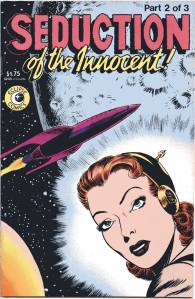
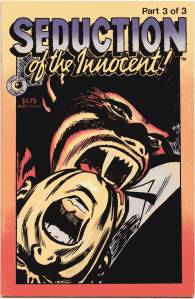
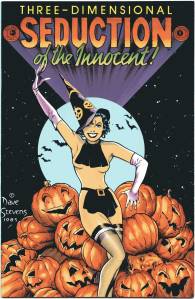
In homage to the great pre-Code horror comics, Eclipse Comics presented its own Seduction of the Innocent, reprinting classics from now-forgotten National Comics and Toby Publishing.

Before Watchmen: Dr. Manhattan (2012)

The story explores the different universes that Doctor Manhattan alias Jon Osterman simultaneously perceives. It also adds a notable new element to Osterman’s backstory by revealing him to be a half-Jewish German immigrant who escaped with his father from the Third Reich to America; in the original Watchmen series, he was not implied to be anything other than American. It debuted to positive reviews.

Star Wars: Darth Maul (2017)

Darth Maul’s time as apprentice to Darth Sidious has long been cloaked in shadows, but at last his tale of revenge will be reveled. From writer Cullen Bunn and artist Luke Ross comes a tale of rage unleashed as Darth Maul prepares for his first encounter with the Jedi.

Spawn (2010’s)

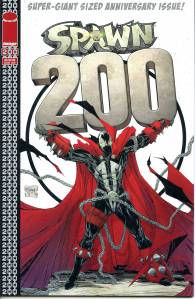
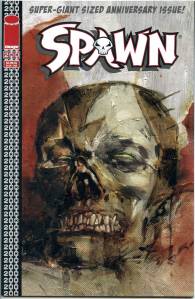
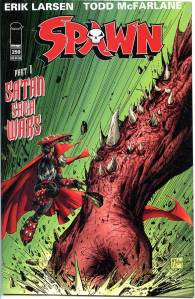
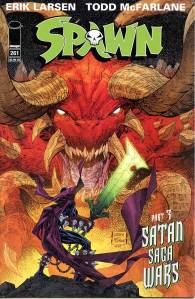
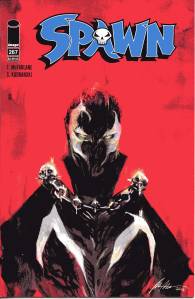
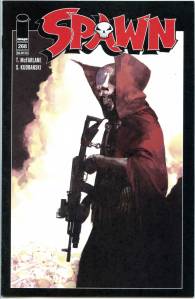
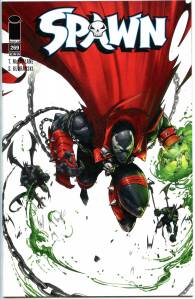
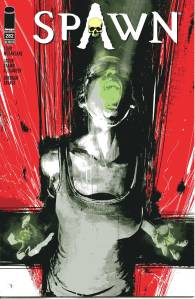
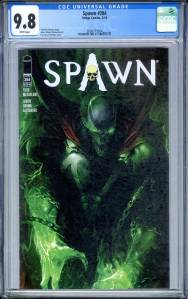
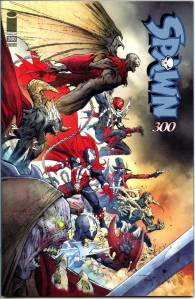
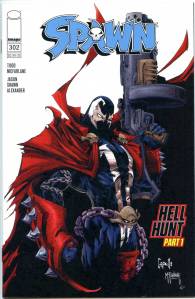
By issue #191 in May 2009, with estimated sales of 19,803 copies, Spawn had dropped below Top 100 titles sold monthly to comic shops as reported by Diamond Comic Distributors. As of August 2010 Spawn no longer was ranked in the top 300 sales figures chart reported by Diamond Comic Distributors. On the day of its release in 2011, issue #200 sold out. This issue featured work by Greg Capullo, David Finch, Michael Golden, Jim Lee, Rob Liefeld, Marc Silvestri, Danny Miki, and Ashley Wood. A second printing was released the next month. Despite its remarkable sales, it received a negative review from IGN.

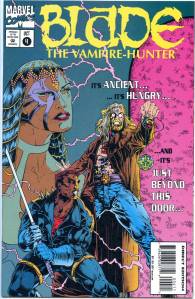
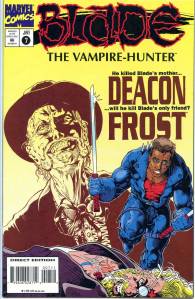
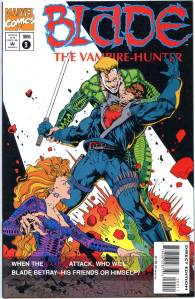
Blade: The Vampire-Hunter (1994)

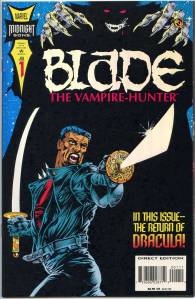
Following the cancellation of Nightstalkers, Blade debuted in his first color-comics series, Blade: The Vampire Hunter #1–10 (July 1994 – April 1995), written by Ian Edginton (with the last two issues by Terry Kavanagh) and penciled by Doug Wheatley.