Ghost Rider V3 (1990’s)

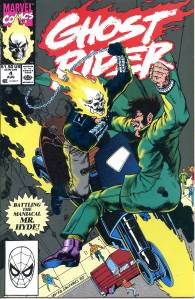
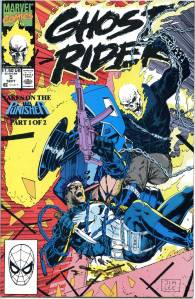
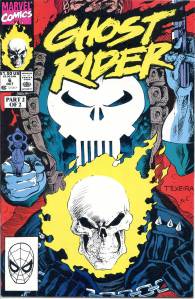
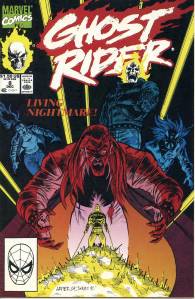
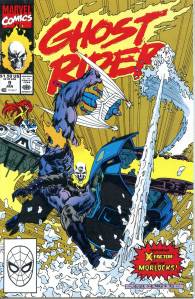
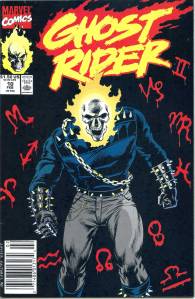
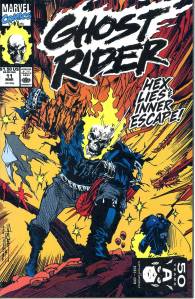
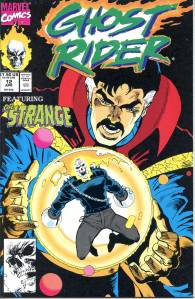
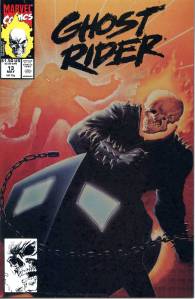
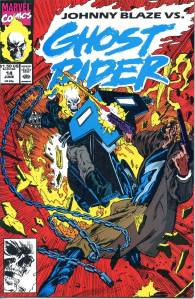
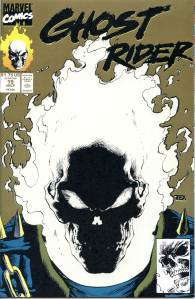
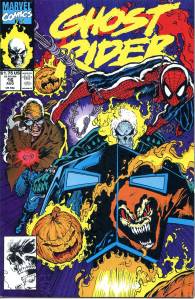
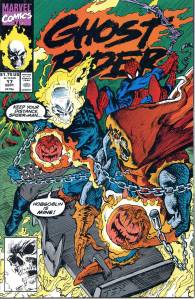
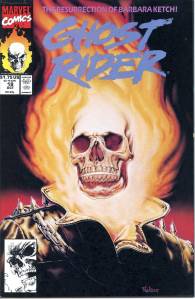
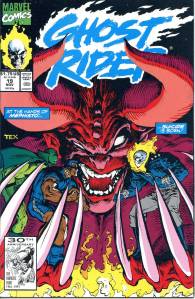
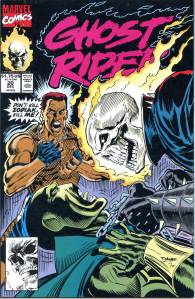
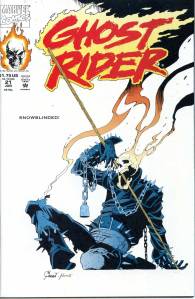
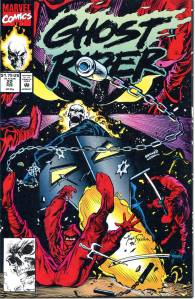
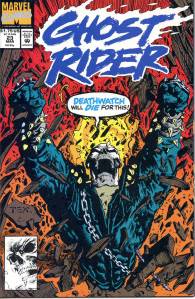
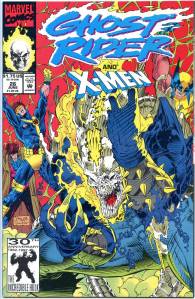
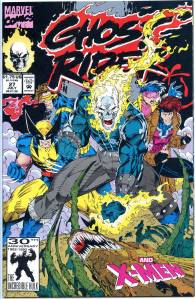
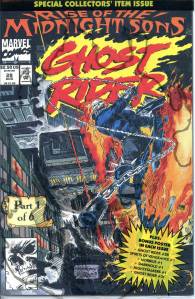
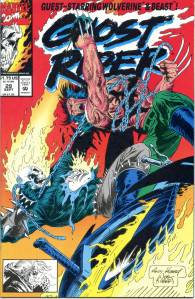
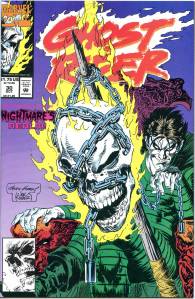
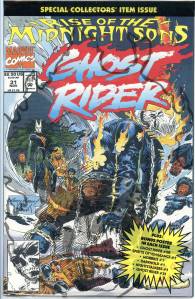
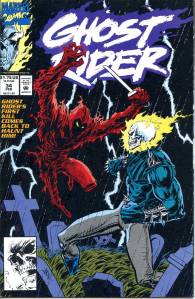
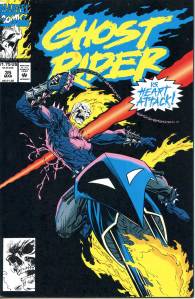
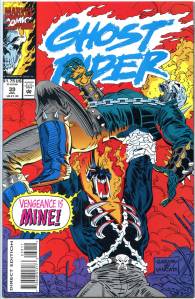
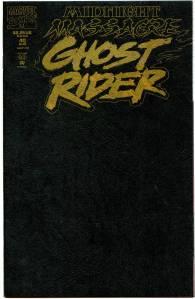
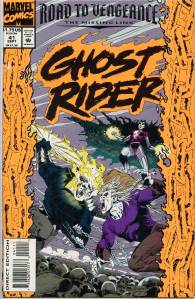
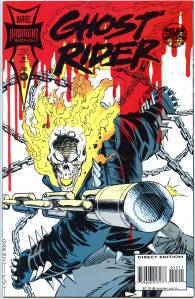
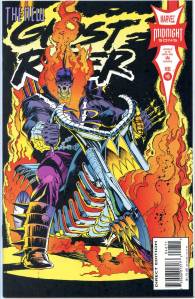
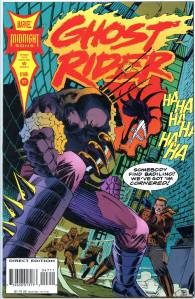
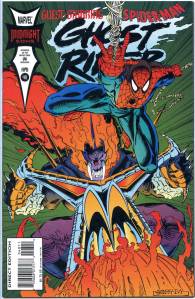
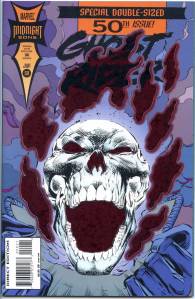
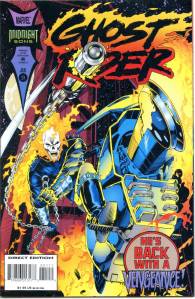
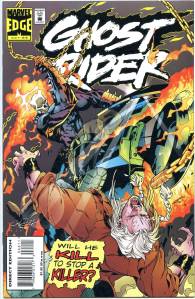
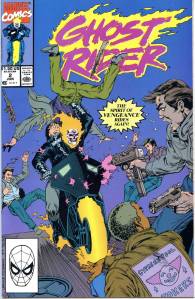
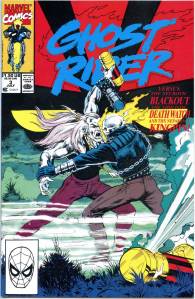
Daniel Ketch debuted in Ghost Rider vol. 3, #1 (May 1990). This Ghost Rider was nearly identical to the previous, although his costume was now a black leather biker jacket with spiked shoulder-pads, grey leather pants, and a mystic chain he wore across his chest, which responded to his mental commands and served as his primary melee weapon. His new motorcycle resembled a futuristic machine and the front of it could lower to serve as a battering ram. Like the original Ghost Rider’s bike, the wheels were composed of mystic hellfire. Unlike the relationship between the previous Ghost Rider and the demon with which he was bonded, Ketch and his demon — who in vol. 2, #91 (December 1997) is revealed to be Marvel’s incarnation of the Angel of Death/Judgment — are cooperative with each other. At the close of the series with vol. 2, #93 (Feb. 1998), Ketch apparently died. The following year, however, Peter Parker: Spider-Man #93 (July 1999) revealed Ketch was still alive. Nearly a decade later, Marvel published the long-completed final issue as Ghost Rider Finale (Jan. 2007), which reprints the last issue and the previously unpublished #94.
OMAC (1974)

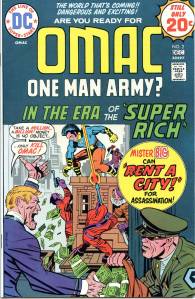
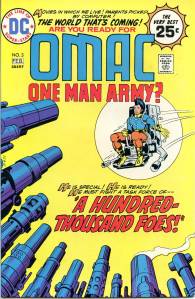
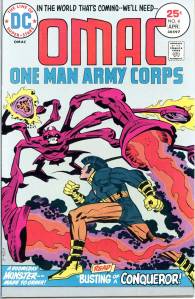
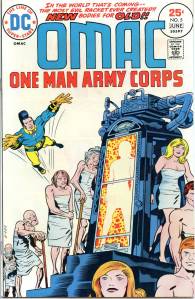
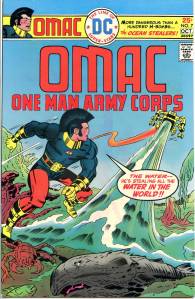
OMAC (Buddy Blank) was created in 1974 by Jack Kirby and published by DC Comics. The character was created towards the end of Kirby’s contract with the publisher, following the cancellation of his New Gods series and was reportedly developed strictly due to Kirby needing to fill his contractual quota of 15 pages a week. As envisioned by Kirby, OMAC is essentially Captain America set in the future, an idea Kirby had toyed with some years earlier while at Marvel Comics, but had never realized.
Set in the near future (“The World That’s Coming”), OMAC is a corporate nobody named Buddy Blank who is changed via a “computer-hormonal operation done by remote control” by an A.I. satellite called Brother Eye into the super-powered One-Man Army Corps (OMAC).

Journey into Mystery (Silver Age)

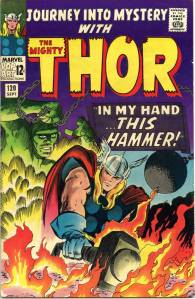
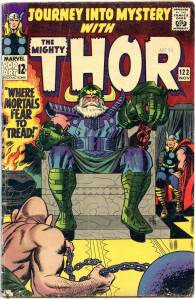
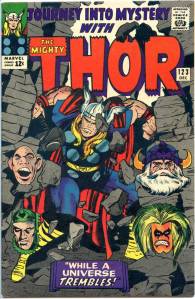
Journey into Mystery was initially published by Atlas Comics, then by its successor, Marvel Comics. Initially a horror comics anthology, it segued to giant-monster and science fiction stories in the late 1950s. Beginning with issue #83 (cover dated August 1962), it ran the superhero feature “The Mighty Thor“, created by writers Stan Lee and Larry Lieber and artist Jack Kirby, and inspired by the mythological Norse thunder god. The series, which was renamed for its superhero star with issue #126 (March 1966), has been revived three times: in the 1970s as a horror anthology, and in the 1990s and 2010s with characters from Marvel’s Thor mythos.

Tomb Raider (1999)

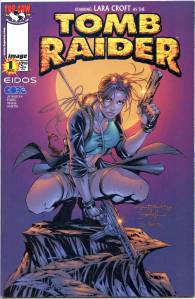
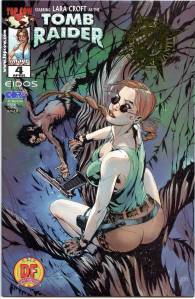
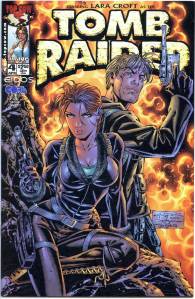
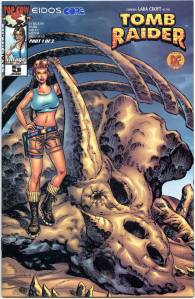
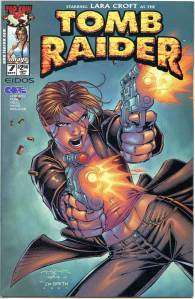
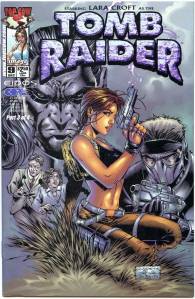
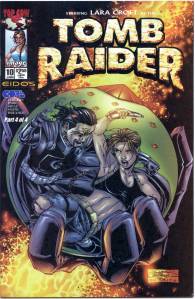
The Top Cow comics are primarily based on the same continuity as the games by Core Design, in which Lara’s plane crashes when she is twenty-one years old (rather than the latter games by Crystal Dynamics, the plane crash happening when she was only nine years old), but the exact details are changed. In the comic, Lara is accompanied by both her parents and her fiancé, the plane trip taken to celebrate her impending marriage (in the game series, Lara’s plane is chartered to take on a skiing holiday). Writers Dan JurgensJohn Nay Riber, and James Bonny worked on the series, which also featured the art of Andy ParkMichael TurnerBilly Tan, and Adam Hughes, amongst others.

Usagi Yojimbo V3 (Dark Horse)

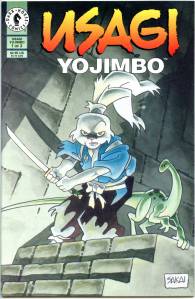
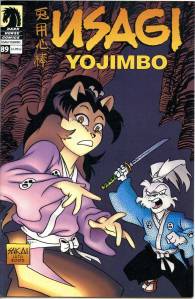
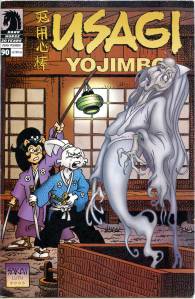
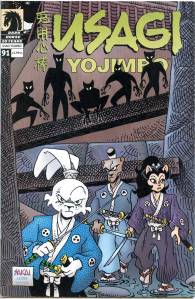
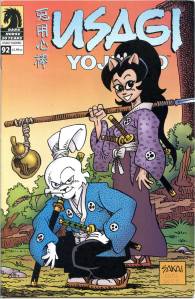
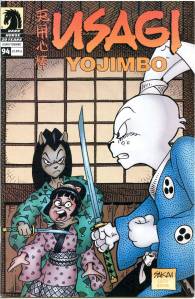
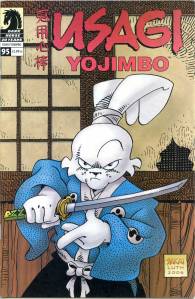
Usagi first appeared in the anthology Albedo Anthropomorphics in 1984, and later in the Fantagraphics Books anthropomorphic anthology Critters, before appearing in his own series in 1987.[14] The Usagi Yojimbo series has been published by three different companies. The first publisher was Fantagraphics (volume one; 38 regular issues, plus one Summer Special and three Color Specials). The second was Mirage Comics (volume two; 16 issues). The third is Dark Horse Comics, by which Usagi Yojimbo is still being published (as volume three, over 160 issues), and who also released a fourth Color Special. A fourth publisher, Radio Comix, published two issues of The Art of Usagi Yojimbo which contained a selection of unpublished drawings, convention sketches, and other miscellaneous Usagi Yojimbo artwork. The first issue also included an original Usagi Yojimbo short story. In 2004, Dark Horse Comics published a Twentieth Anniversary hardcover volume also entitled The Art of Usagi Yojimbo.

Beware the Creeper (1968)

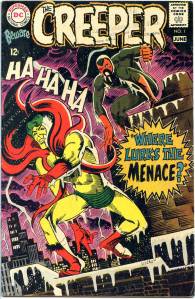
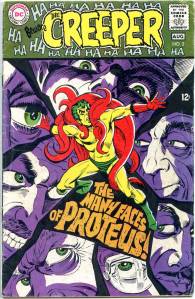
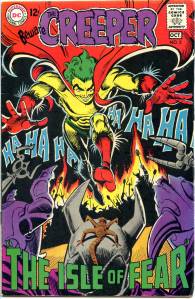
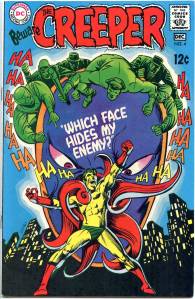
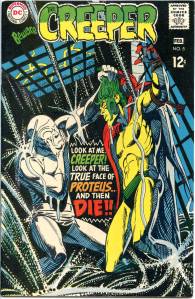
Following his debut in Showcase, the Creeper was given his own series Beware the Creeper, written by Dennis O’Neil; Steve Ditko plotted the first issue. It lasted six issues Most pitted him against a chameleonic villain called Proteus, whose true identity was revealed just before his violent death in the final issue.

Thanos V2 (2016)

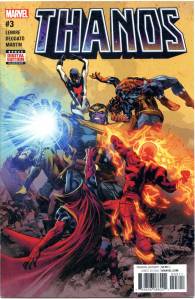
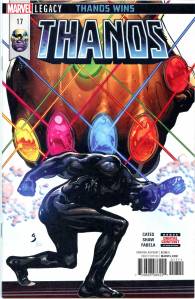
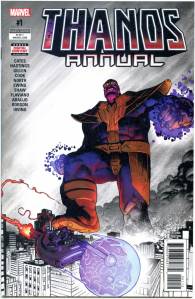
EVIL HAS BEEN UNLEASHED ON THE UNIVERSE. Thanos, possibly the most evil individual in the Marvel Universe, is back…and he’s out for vengeance on all who would oppose him. Unfortunately for the Mad Titan, he’s also heading for an unexpected reckoning…with his family. Take an ongoing walk on the dark side of the galaxy, following the deadly trail of destruction left in the wake of…THANOS!

Captain Marvel Adventures (1946)

Whiz Comics #2 (cover-dated Feb. 1940) was published in late 1939. The comic’s lead feature introduced audiences to Billy Batson, an orphaned boy who, by speaking the name of the ancient wizard Shazam, is struck by a magic lightning bolt and transformed into the adult superhero Captain Marvel. Shazam’s name was an acronym derived from  the six immortal elders who grant Captain Marvel his superpowers: Solomon, Hercules, Atlas, Zeus, Achilles and Mercury.

In addition to introducing the main character, his alter ego, and his mentor, Captain Marvel’s first adventure in Whiz Comics #2 also introduced his archenemy, the evil Doctor Sivana, and found Billy Batson talking his way into a job as an on-air radio reporter with station WHIZ. Captain Marvel was an instant success, with Whiz Comics #2 selling over 500,000 copies. By 1941, he had his own solo series, Captain Marvel Adventures, while he continued to appear in Whiz Comics, as well as periodic appearances in other Fawcett books, including Master Comics.

The Flash V4: New 52 (2011)

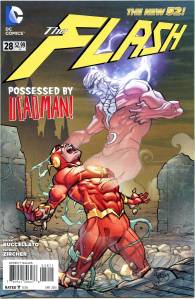
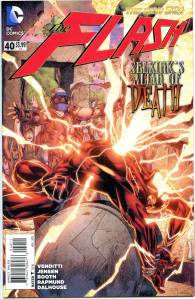
In September 2011, The New 52 rebooted DC’s continuity. In this new timeline, DC Comics relaunched The Flash with issue #1, with writing and art handled by Francis Manapul and Brian Buccellato. As with all of the titles associated with the DC relaunch, Barry Allen appears to be about five years younger than the previous incarnation of the character. Superheroes at large have appeared only in the past five years, and are viewed with at best, suspicion, and at worst, outright hostility. In this new continuity, Barry’s marriage to Iris West never took place, and he is instead in a relationship with longtime co-worker Patty Spivot. In this new series, the Flash draws deeper into the Speed Force, enhancing his mental abilities while still trying to get a full grasp on his powers, which he doesn’t yet exert total control over.

As revealed in issue #0 of this series, Barry Allen’s father was placed in prison for the murder of his mother. While the evidence seems to indicate his father’s guilt, Barry makes proving his father’s innocence a priority. The murder occurred shortly after Barry returned victorious from a school spelling bee, and Barry placed the trophy he won on his mother’s grave in her memory. Barry is also part of the main cast of the relaunched Justice League series, making his debut in the series’ second issue.

House of X (2019)

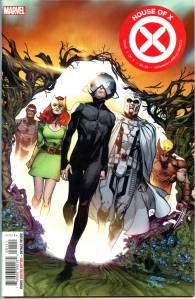
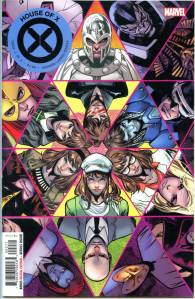
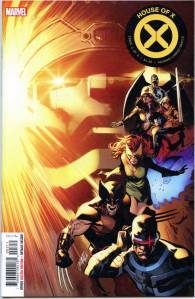
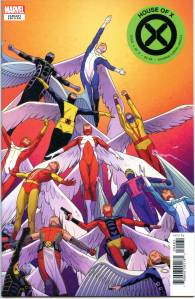
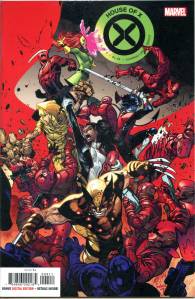
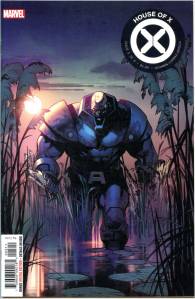
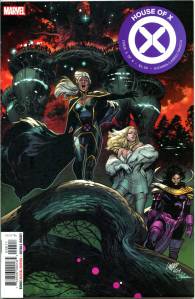
Jonathan Hickman wrote a story arc in the Avengers and New Avengers comic, ending in the 2015 crossover Secret Wars. His return was announced in March 2019. Some days later, it was detailed that he would write two comic books, House of X and Powers of X, with penciling by Pepe Larraz and R.B. Silva. Marvel Editor in Chief C. B. Cebulski said that “We are excited to have Jon back with the Marvel family, and we could not have asked for a better creative team to help usher the X-Men into a whole new era”

Both comics were released as a company wide relaunch of the X-Men. All the ongoing X-Men comics were cancelled: Uncanny X-MenMr. and Mrs. XX-ForceX-23, and the Age of X-Man tie-in miniseries.