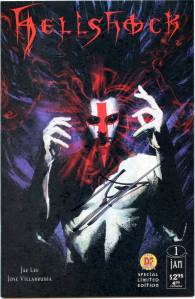
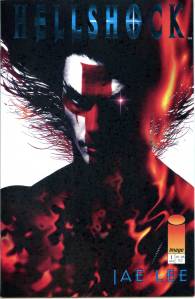
In the confines of a psychiatric hospital a suicidal young woman meets an enigmatic stranger who believes he is an angelic presence not of this earth gifted with the powers of GOD. Is she being seduced into a cult … or is she bearing witness to a miracle?
Hellshock #1 Limited Edition Signed Jae Lee NM $14Hellshock #1 NM $3
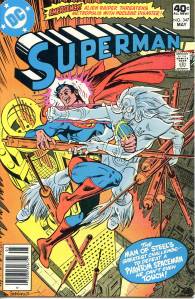
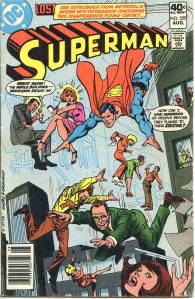
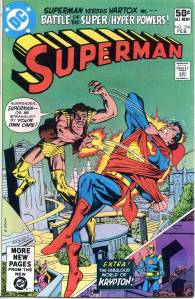
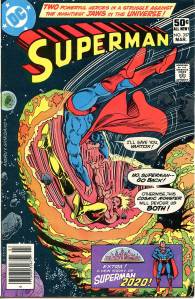
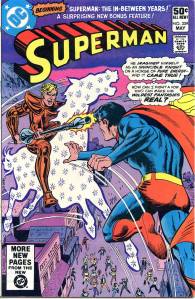
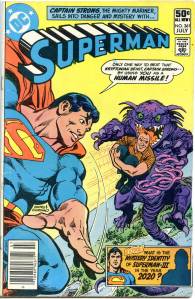
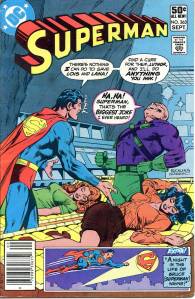
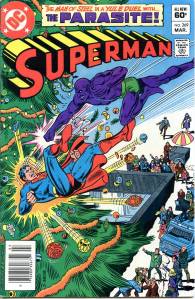
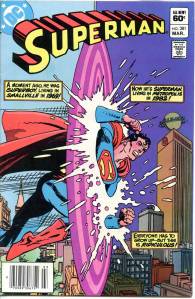
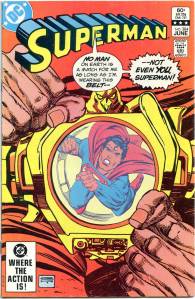
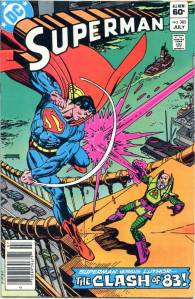
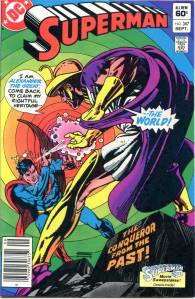
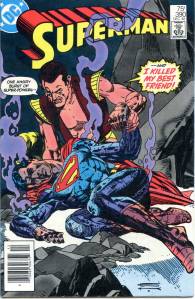
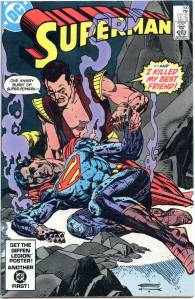
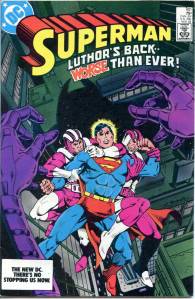
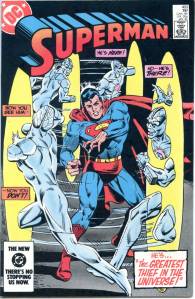
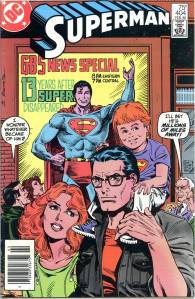
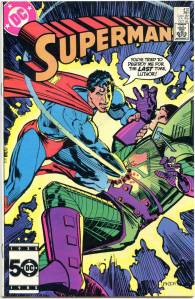
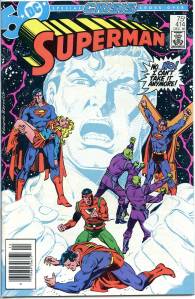
The 1980s saw radical revisions of Superman. DC decided to remove the multiverse in a bid to simplify its comics line. This led to the rewriting of the back story of the characters DC published, Superman included. John Byrne rewrote Superman, removing many established conventions and characters from continuity, including Superboy and Supergirl. Byrne also re-established Superman’s adoptive parents, The Kents, as characters. In the previous continuity, the characters had been written as having died early in Superman’s life (about the time of Clark Kent’s graduation from high school).
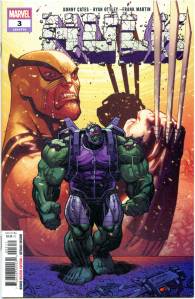
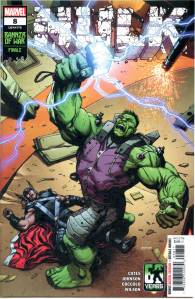
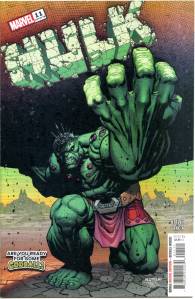
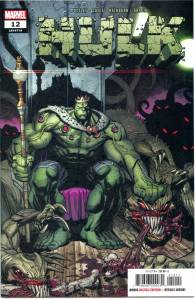
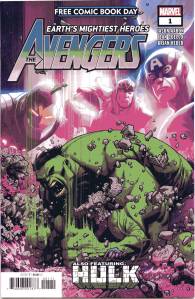
The uncontrollable rage of the Hulk has reached an all-new level, and nobody – including the Avengers – is prepared to handle it. But is it really the Hulk that people should be afraid of, or is there something missing to this puzzle? Join the creative team of Donny Cates and Ryan Ottley as they look to the stars for the next era of HULK!
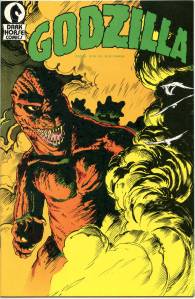
In 1987, Dark Horse Comics acquired the rights to Godzilla and for the next 12 years published various comic books and trade paperbacks based on the character. These ran the gamut from back-up stories in anthology titles, to one-shots, to miniseries, to an ongoing series, as well as various reprints in the trade paperback format.
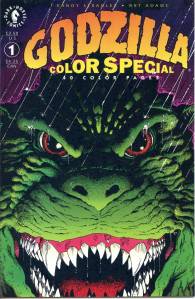
In 1992, an illustration of Godzilla (provided by Arthur Adams) was published in San Diego Comic Con Comics #1. Also that same year the one-shot issue Godzilla Color Special #1 was published. It would be reprinted as simply Dark Horse Classics: Godzilla #1 in 1998.
Godzilla #6 VF-NM $9Godzilla Color Special #1 NM $14
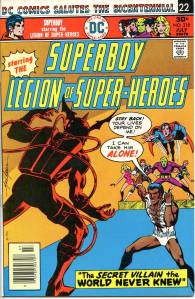
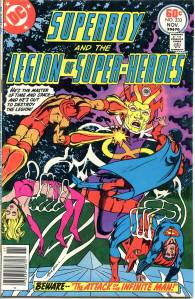
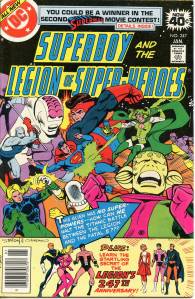
Superboy became Superboy starring the Legion of Super-Heroes with issue #197 (August 1973). Crafted by Bates and Cockrum, the feature proved popular and saw such events as the wedding of Bouncing Boy and Duo Damsel in Superboy #200 (Feb 1974). Cockrum was replaced on art by Mike Grell as of issue #203 (August 1974) which featured the death of Invisible Kid. With #231 (September 1977), the book’s title officially changed to Superboy and the Legion of Super-Heroes and also became a “giant-size” title. At this point, the book was written by longtime fan Paul Levitz and drawn by James Sherman, although Gerry Conway frequently wrote as well. Saturn Girl and Lightning Lad were married in All-New Collectors’ Edition #C-55 (1978), a treasury-sized special written by Levitz and drawn by Grell. In #241–245 (July–December 1978) Levitz and Sherman (and then Joe Staton) produced what was at that time the most ambitious Legion storyline: “Earthwar“, a galactic war between the United Planets and the Khunds, with several other villains lurking in the background. During this period, Karate Kid was spun off into his own 20th Century-based self-titled series, which lasted 15 issues. Levitz left the book, to be replaced full-time by Gerry Conway.
Superboy departed from the Legion due to a plot of a villain, and the book was renamed simply Legion of Super-Heroes starting with issue #259 (January 1980). Editor Jack C. Harris hired Steve Ditko as guest artist on several issues, a decision which garnered a mixed reaction from the title’s readership. Jimmy Janes became the regular artist in a lengthy tale by Conway (and later Roy Thomas) involving Ultra Boy’s disappearance during a mission, and his long odyssey to rejoin the team. This story told the tale of the Legionnaire Reflecto (only glimpsed during the “Adult Legion” stories in Adventure Comics), featured villainy by the Time Trapper and Grimbor the Chainsman, and saw Superboy rejoin the team.
Superboy and the Legion of Super-Heroes #204 FN $5Superboy and the Legion of Super-heroes #218 VF- $5Superboy and the Legion of Super-heroes #219 NM- $12Superboy and the Legion of Super-Heroes #233 VF $6Superboy and the Legion of Super-Heroes #237 VF+ $8Superboy and the Legion of Super-Heroes #245 VF+ $7Superboy and the Legion of Super-Heroes #247 VF+ $7Superboy and the Legion of Super-Heroes #250 VF-NM $8Superboy and the Legion of Super-Heroes #253 F $3Superboy and the Legion of Super-Heroes #257 F $3Legion of Super-heroes #259 VF $7
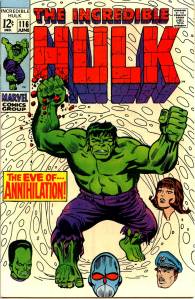
The Hulk first appeared in The Incredible Hulk #1 (cover dated May 1962), written by writer-editor Stan Lee, penciled and co-plotted by Jack Kirby, and inked by Paul Reinman. Lee cites influence from Frankensteinand Dr. Jekyll and Mr. Hyde in the Hulk’s creation. The Hulk’s original series was canceled with issue #6 (March 1963).
In the debut, Lee chose gray for the Hulk because he wanted a color that did not suggest any particular ethnic group.Colorist Stan Goldberg, however, had problems with the gray coloring, resulting in different shades of grey, and even green, in the issue. After seeing the first published issue, Lee chose to change the skin color to green. Green was used in retellings of the origin, with even reprints of the original story being recolored for the next two decades, until The Incredible Hulk vol. 2, #302 (December 1984) reintroduced the gray Hulk in flashbacks set close to the origin story. Since then, reprints of the first issue have displayed the original gray coloring, with the fictional canon specifying that the Hulk’s skin had initially been grey. An exception is the early trade paperback, Origins of Marvel Comics, from 1974, which explains the difficulties in keeping the gray color consistent in a Stan Lee written prologue, and reprints the origin story keeping the gray coloration.
Lee gave the Hulk’s alter ego the alliterative name Bruce Banner because he found he had less difficulty remembering alliterative names. Despite this, in later stories he misremembered the character’s name and referred to him as “Bob Banner”, an error which readers quickly picked up on. The discrepancy was resolved by giving the character the official full name of Robert Bruce Banner.
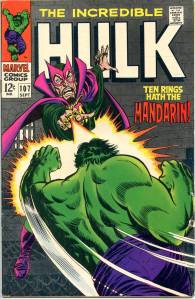
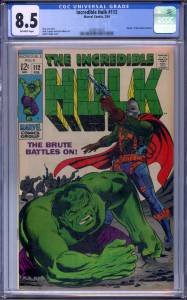
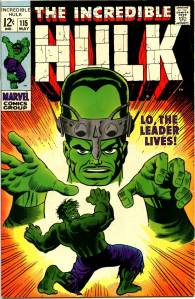
Incredible Hulk #107 VF- $49Incredible Hulk #112 CGC 8.5 Off-White Pages $89Incredible Hulk #115 VF-NM $89Incredible Hulk #116 VF+ $74
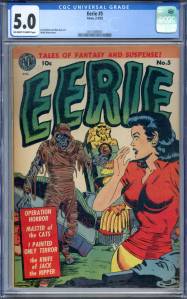
In 1951, Eerie #1, cover-dated May/June 1951, was published by Avon and saw a run of seventeen issues. The first issue of Eerie reprinted “The Strange Case of Henpecked Harry” from one-shot Eerie of 1947 as “The Subway Horror”, and issue 12 printed a Dracula story based on the Bram Stoker novel. Several covers featured large-breasted women in bondage. Artists Joe Orlando and Wallace Wood were associated with the series. The title saw a run of seventeen issues, ceasing publication with its August/September 1954 issue. Eerie then morphed into Strange Worlds with #18, October/November 1954.
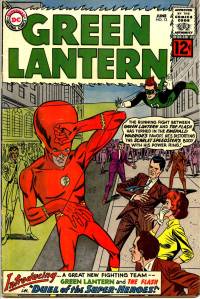
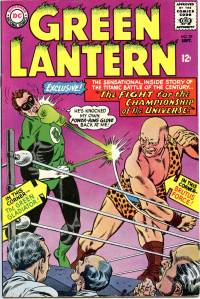
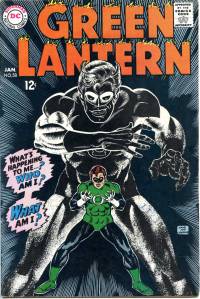
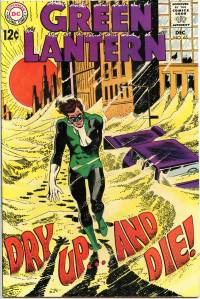
Following the successful revival of the Flash in Showcase #4 (Oct. 1956), a new Green Lantern was introduced in Showcase #22 (September–October 1959).
This Green Lantern was Hal Jordan, a test pilot who was given a power ring by a dying alien, Abin Sur, and who became a member of the Green Lantern Corps, an interstellar organization of police overseen by the Guardians of the Universe. The Corps’ rings were powerless against anything colored yellow, due to a yellow-colored “impurity,” or “dopant,” in the master power generator located on Oa, where the Guardians maintained their headquarters; the yellow dopant was described as being a “necessary” one, for without it, the master generator could not function as such.
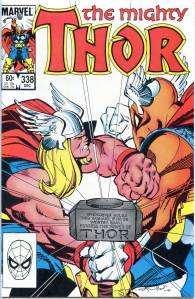
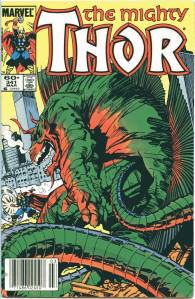
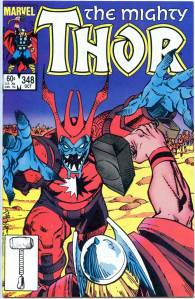
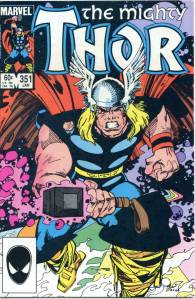
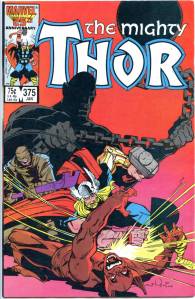
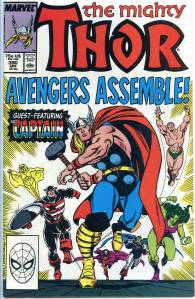
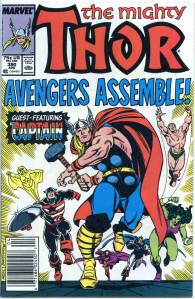
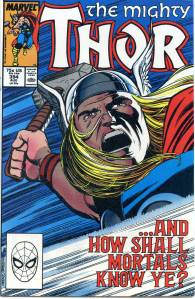
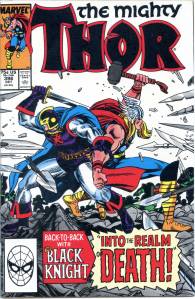
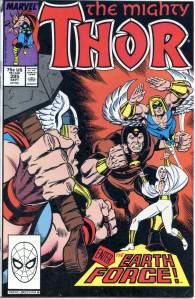
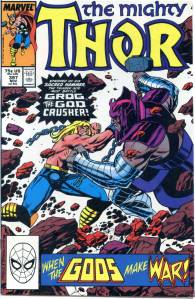
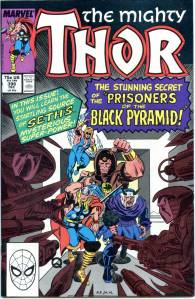
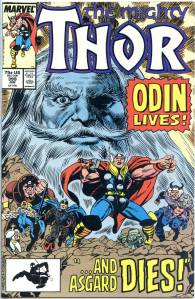
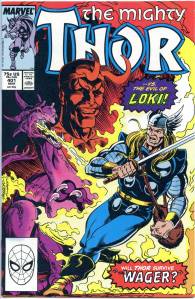
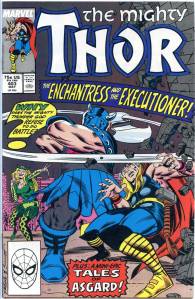
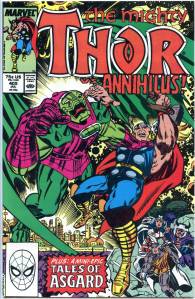
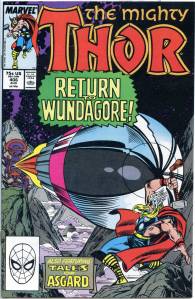
Walt Simonson took over both writing and art as of #337 (Nov. 1983). His stories placed a greater emphasis on the character’s mythological origins. Simonson’s run as writer-artist lasted until #367 (May 1986), although he continued to write – and occasionally draw – the book until issue #382 (Aug. 1987). Simonson’s run, which introduced the character Beta Ray Bill, was regarded as a popular and critical success.Simonson’s later stories were drawn by Sal Buscema, who describes Simonson’s stories as “very stimulating. It was a pleasure working on his plots, because they were a lot of fun to illustrate. He had a lot of great ideas, and he took Thor in a totally new direction.” Asked why he was leaving Thor, Simonson said that he felt the series was due for a change in creative direction, and that he wanted to reduce his work load for a time. After Simonson’s departure, Marvel’s editor-in-chief at the time, Tom DeFalco, became the writer. Working primarily with artist Ron Frenz, DeFalco stayed on the book until #459 (Feb. 1993).