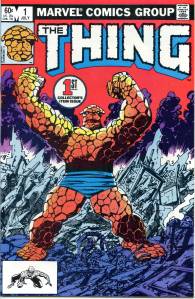
The cancellation of Marvel Two-in-One led to the Thing’s first completely solo series, which ran for 36 issues. The Thing was originally written by John Byrne and later, Mike Carlin. The series also featured art by Ron Wilson and later by Paul Neary. It elaborated on Ben Grimm’s poor childhood on Yancy Street in its early issues, and chronicled the Thing’s later foray into the world of professional wrestling. It also featured a major storyline offshoot from Marvel’s Secret Wars event, in which the Thing elects to remain on the Beyonder‘s Battleworld after discovering that the planet enables him to return to human form at will. A full third of the series’ stories take place on Battleworld.
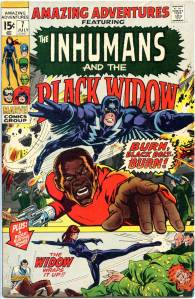
Amazing Adventures was a split title featuring the Inhumans (initially both written and drawn by Jack Kirby, later drawn by Neal Adams) and the Black Widow (initially by writer Gary Friedrich and pencilerJohn Buscema). The Widow was dropped after vol. 2, #8, and full-length Inhumans stories ran for two issues before that feature, too, was dropped.
Vol. 2, #11 (March 1972) introduced solo stories of erstwhile X-Men member the Beast, in which he was mutated into his modern-day blue-furred (originally grey-furred) form. The initial story was by writer Gerry Conway, penciler Tom Sutton, and inkerSyd Shores. Steve Englehart became the feature’s writer with issue #12 and added Patsy Walker and her then-husband, “Buzz” Baxter, to the Beast’s supporting cast in issue #13.
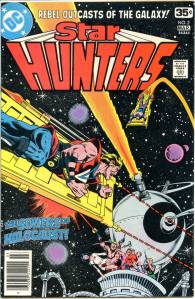
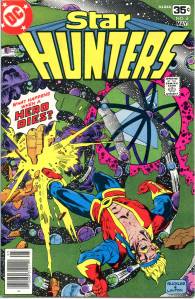
The Star Hunters were infected by the Corporation controlling Earth with a virus which would cause their genes to mutate if they set foot on the planet again without receiving an antidote which the Corporation would only give to them on completion of their mission – to learn the true origins of man.
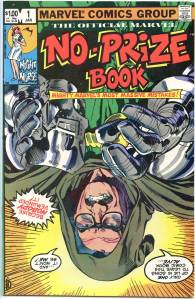
In late 1982 (cover dated January 1983), Marvel published a humorous one-shot comic featuring some of their most notorious goofs. Subtitled “Mighty Marvel’s Most Massive Mistakes”, the book was organized and spearheaded by Jim Owsley and had a cover which was deliberately printed upside-down. In the comic’s story Lee, with the help of artists Bob Camp and Vince Colletta, exposes and pokes fun at typos, misspellings and other errors.
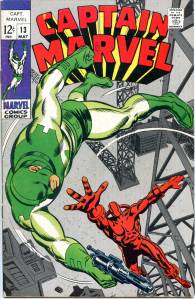
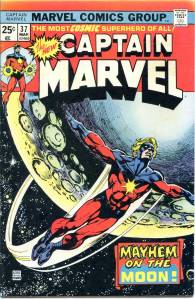
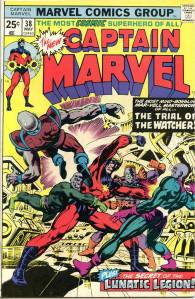
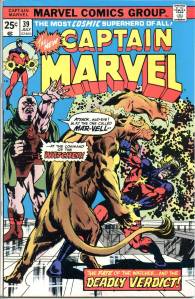
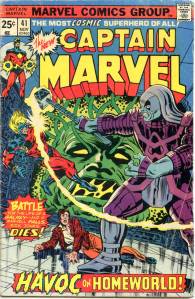
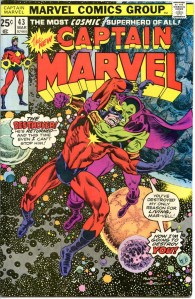
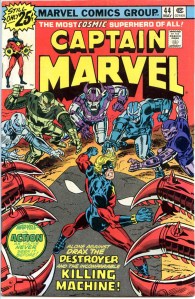
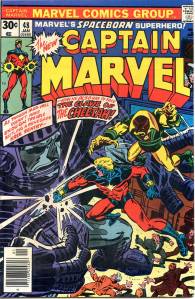
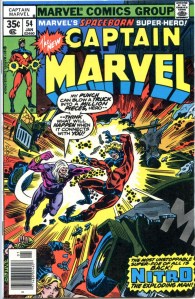
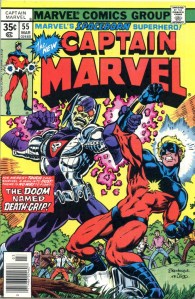
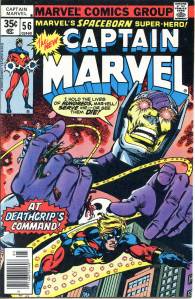
The first Captain Marvel was created by Stan Lee and Gene Colan in Marvel Super-Heroes #12 (December 1967). This character is an alien military officer, Captain Mar-Vell of the Kree Imperial Militia, who is sent to observe the planet Earth as it is developing technology to travel into space. Mar-Vell eventually wearies of his superiors’ malign intent and allies himself with Earth, and the Kree Empire brands him a traitor. From then on, Mar-Vell fights to protect Earth from all threats.
He was later revamped by Roy Thomas and Gil Kane. Having been exiled to the Negative Zone by the Supreme Intelligence, the only way Mar-Vell can temporarily escape is to exchange atoms with Rick Jones by means of special wristbands called Nega-Bands. He is also given superpowers and his Kree military uniform is replaced with a form fitting costume.
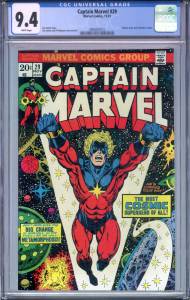
With the title’s sales still flagging, Marvel allowed Jim Starlin to conceptually revamp the character, although his appearance was little changed. Mar-Vell is freed from the Negative Zone and becomes a cosmic champion, the “Protector of the Universe” appointed by the cosmic entity Eon. Together, Mar-Vell and Rick continue to battle against evil, most notably battling the Death-worshipping Thanos. Mar-Vell became a close ally of the Titans, and one of their number, Elysius, became his lover.
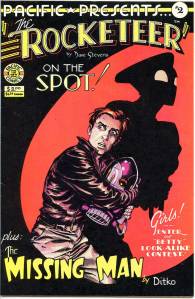
The Rocketeer’s first adventure appeared in 1982 as a backup feature in issues #2 and #3 of Mike Grell‘s Starslayer series from Pacific Comics. Two more installments appeared in Pacific’s showcase comic Pacific Presents #1 and 2. The fourth chapter ended in a cliffhanger that was later concluded in a special Rocketeer issue released by Eclipse Comics. The complete story was then collected by Eclipse in a single volume titled The Rocketeer. It was published in three versions: a trade paperback edition, a trade hardcover, and a signed, limited edition hardcover. Noted fantasy author Harlan Ellison, a fan of the Rocketeer and also an acquaintance of Dave Stevens, wrote the introduction to the collection; both Dave Stevens and Harlan Ellison signed the limited edition on a specially bound-in bookplate.
The story was continued in the Rocketeer Adventure Magazine. Two issues were published by Comico Comics in 1988 and 1989; the third installment was not published until 1995, six years later by Dark Horse Comics. All three issues were then collected by Dark Horse into a glossy trade paperback titled The Rocketeer: Cliff’s New York Adventure that quickly went out-of-print.
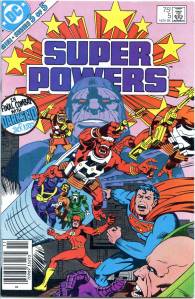
Once the line was on the market, a vigorous merchandising campaign took place, with DC Comics and Kenner striving for the Super Powers logo to become ubiquitous. DC Comics produced three comic book mini-series featuring characters from the toyline, one during each year of the toyline’s existence. The first series of comics in 1984 was plotted by Jack Kirby, who also provided covers, and went on to pencil the second series. (These two series were collected and reprinted in 2013 in The Jack Kirby Omnibus Vol. 2, in 2018 in Super Powers by Jack Kirby, and in 2019 in DC Universe: Bronze Age Omnibus by Jack Kirby). The third and final series was penciled by Carmine Infantino.
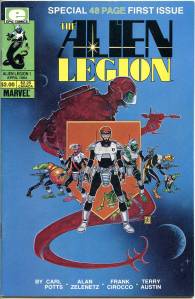
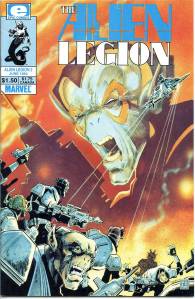
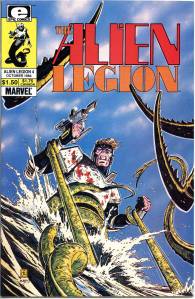
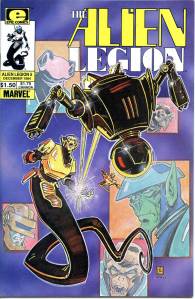
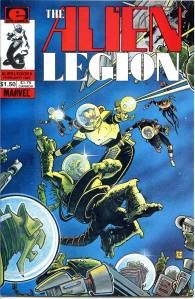
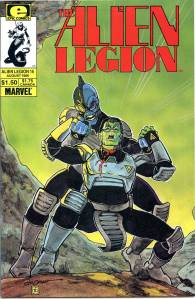
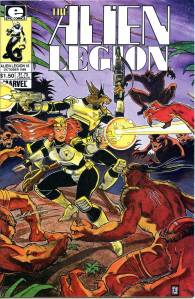
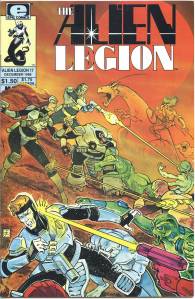
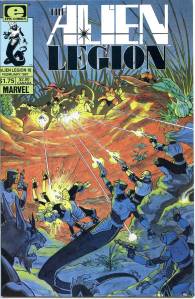
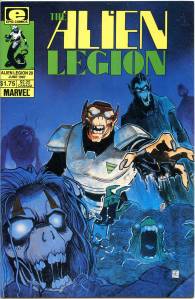
The franchise debuted with Marvel/Epic Comics’ The Alien Legion #1-20 (cover-dated April 1984 – June 1987). The 18-issue Alien Legion (Oct. 1987 – Aug. 1990), minus the “The”, followed, generally scripted by Chuck Dixon and penciled by Larry Stroman. Afterward came the three-issue Dixon-Stroman miniseries Alien Legion: On The Edge (Nov. 1990 – Jan. 1991); the two-issue Dixon-Stroman Alien Legion: Tenants of Hell (1991); the one-shot cover-titled Alien Legion: Grimrod and copyrighted Alien Legion: Jugger Grimrod (Aug. 1992), by Dixon and artist Mike McMahon; the single-issue Alien Legion: Binary Deep (Sept. 1993), by Dixon and Argentine artist Enrique Alcatena; and the three-issue miniseries Alien Legion: One Planet at a Time (April–July 1993), by Dixon and penciler Hoang Nguyen.
Additionally, Marvel/Epic published two spinoffs: Marvel Graphic Novel #25 (cover-titled Marvel Graphic Novel: The Alien Legion), released in 1986 and containing the story “A Grey Day To Die” by writers Potts and Zelenetz, penciler Cirocco, and the first series’ regular inker, Terry Austin; and the one-shot crossover with another series Law Dog and Grimrod: Terror at the Crossroads (1993)
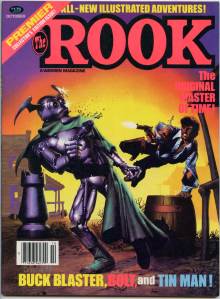
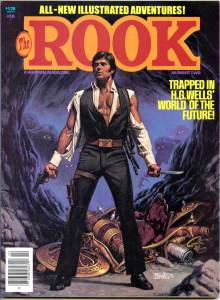
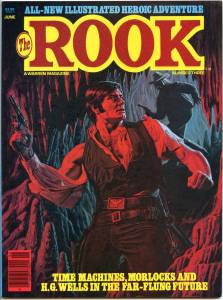
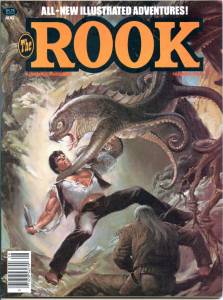
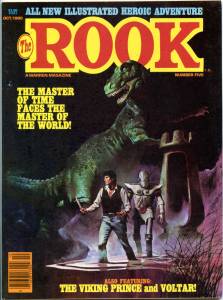
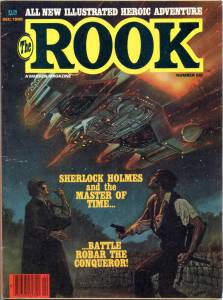
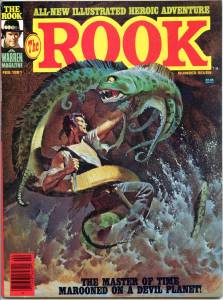
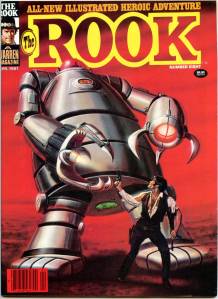
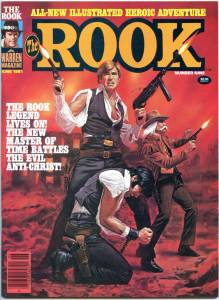
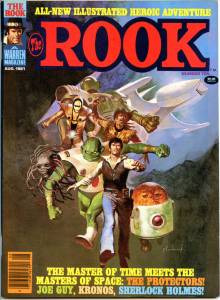
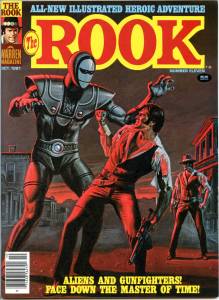
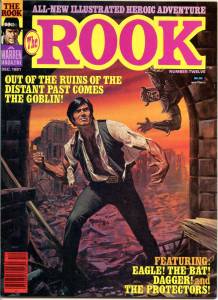
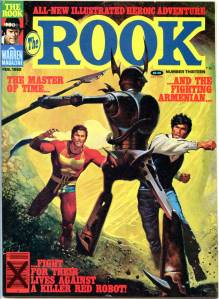
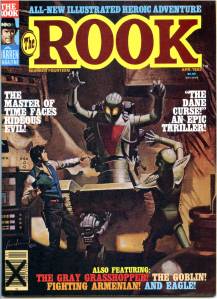
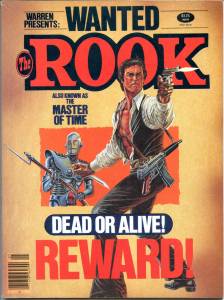
The Rook is a fictional, time-traveling comic book adventure hero. He first appeared in March 1977 in American company Warren Publishing‘s Eerie, Vampirella & Warren Presents magazines. In the 1980s, the Rook became popular and gained his own comic magazine title of the same name, The Rook Magazine.
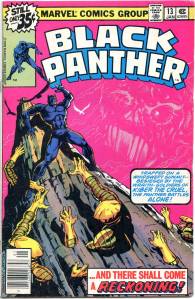
Though popular with college students, the overall sales of Jungle Action were low, and Marvel relaunched the Black Panther in a self-titled series, bringing in the character’s co-creator Jack Kirby—newly returned to Marvel after having decamped to rival DC Comics for a time— as writer, penciler, and editor. However, Kirby wanted to work on new characters and was unhappy at being assigned a series starring a character he had already worked with extensively. He left the series after only 12 issues and was replaced by Ed Hannigan (writer), Jerry Bingham (penciler), and Roger Stern(editor). Black Panther ran 15 issues (Jan. 1977 – May 1979). Due to the series’s cancellation, the contents of what would have been Black Panther#16-18 were published in Marvel Premiere #51-53.
















 EHT Comics