The series was launched with an April 1985 cover dated issue by writer Louise Simonson and penciller Greg LaRocque and featured the return of Spider-Man’s alien black costume, which attempted to rebond with Peter Parker. Peter managed to rid himself of the costume again using church bells and the alien was presumed to have died after that. The first issue featured a cover painting by artist Charles Vess.
In issue #18 (September 1986), Peter Parker is pushed in front of an oncoming train. He thinks to himself that this should not have happened, as his spider-sense would have warned him of the danger. Writer David Michelinie has said that he wrote this as the first “teaser” appearance of the characterVenom, whom he was planning to introduce at a later date. Venom is an amalgam of reporter Eddie Brock and the alien costume. The costume could nullify Spider-Man’s spider-sense, and this was the first clue of a puzzle that Michelinie was planning to weave to introduce Venom.
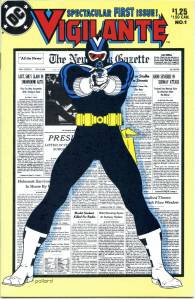
Vigilante was an ongoing series published from November of 1983 to February 1988. The series featured the honorable Adrian Chase, who was first introduced in the pages of New Teen Titans Annual #2. Spanning a total of fifty issues and two Annuals, the series ended with the death of the main character.
DC Comics was a hotbed of experimentation during the 1970s, and in 1975 the character became the first villain to feature as the title character in a comic book series, The Joker. The series followed the character’s interactions with other supervillains, and the first issue was written by O’Neil. Stories balanced between emphasizing the Joker’s criminality and making him a likable protagonist whom readers could support. Although he murdered thugs and civilians, he never fought Batman; this made The Joker a series in which the character’s villainy prevailed over rival villains, instead of a struggle between good and evil. Because the Comics Code Authority mandated punishment for villains, each issue ended with the Joker being apprehended, limiting the scope of each story.
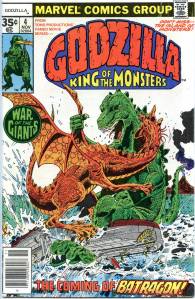
From 1977-79, Godzilla starred in a 24-issue run of comics written by Doug Moench, drawn by Herb Trimpe and published by Marvel Comics entitled Godzilla, King of the Monsters. The series thrusts Godzilla completely into the Marvel Universe. In a nod to King Kong vs. Godzilla, Godzilla first appears by bursting out of an iceberg near Alaska; although how the prehistoric creature came to be trapped again in ice is never revealed (although it is stated in the issue that this “will doubtless be determined in the future.”). Over the course of the series, he crosses the continental United States and eventually ends up in New York City.
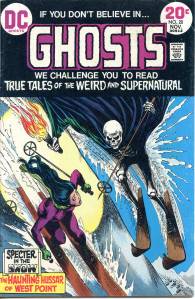
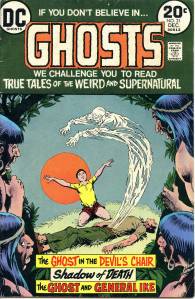
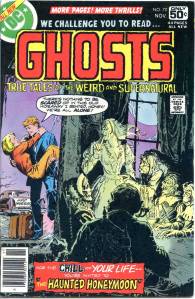
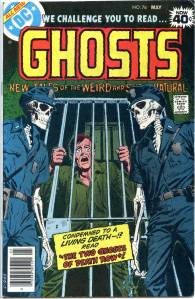
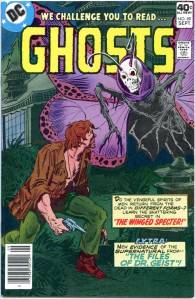
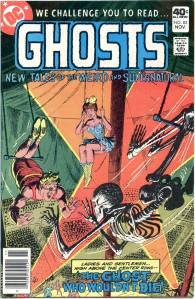
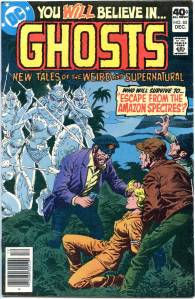
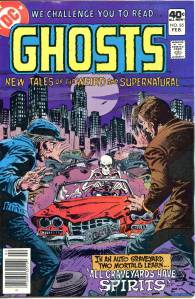
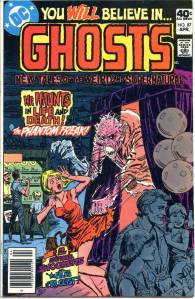
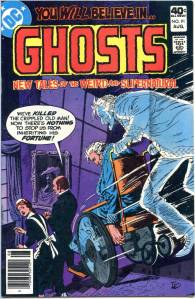
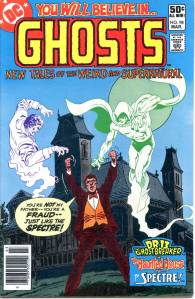
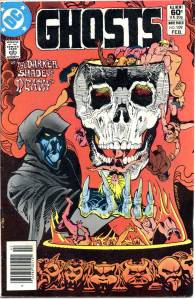
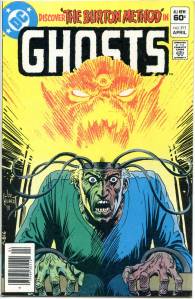
Each issue of Ghosts carried multiple stories of the supernatural. The stories were prefaced by a short description introducing the premise and ended with a summation of how a mysterious justice was dealt to the evildoers of the tale. The first issue of this series carried the singular title Ghost in its indicia, but everywhere else, including advance promotional house ads and even on its own cover, it was the plural Ghosts, as even the indicia would read from #2 on. Limited Collectors’ Edition #C–32 (Dec. 1974–Jan. 1975) reprinted stories from Ghosts #1, 3–6 and featured new material by Leo Dorfman and artists Gerry Talaoc, E. R. Cruz, and Frank Redondo.
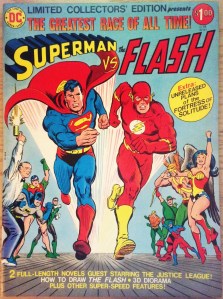
Limited Collectors’ Edition was launched with a collection of Rudolph the Red-Nosed Reindeer stories which went on sale October 24, 1972. DC Comics vice president Sol Harrison had suggested the format stating that “We could create a tabloid size comic that would stand out on the newsstand.”Limited Collectors’ Edition shared its numbering with two other treasury format series, Famous First Edition and All-New Collectors’ Edition. The final issues of the latter two series were tie-ins to the release of Superman: The Movie. DC later published treasuries as part of DC Special Series in 1981 and as a number of one-shots from 1999 to 2003 primarily produced by Paul Dini and Alex Ross.
DC Limited Collectors Edition V5 C48 – Superman Vs Flash VF- $35
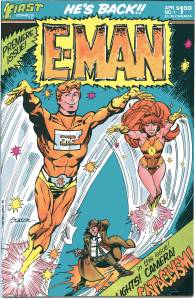
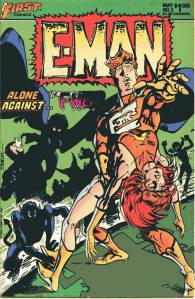
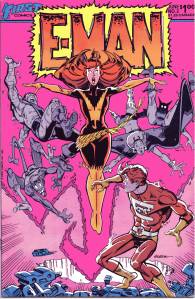
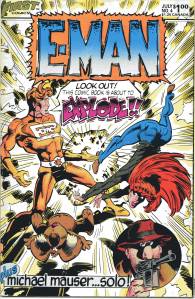
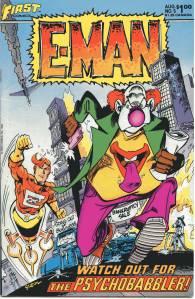
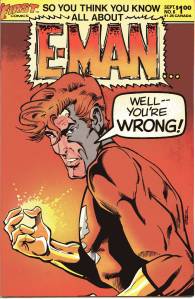
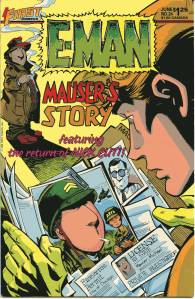
When Staton became art director at First Comics, the publisher acquired the rights to the character from Charlton and launched a series. Cuti was asked to write the title, but his obligations to DC Comics prevented him from accepting. The series was initially written by Martin Pasko, who had previously worked with Staton on Plastic Man and Metal Men. After Pasko’s run, Staton and Paul Kupperberg wrote the series until Cuti took over as writer with issue #24.
As a direct-market publisher not distributed to newsstands, the First series was not obligated to seek Comics Code Authority approval and could address more mature topics than Code-approved comics. Where the Charlton series featured broad whimsical themes, the First Comics series engaged in more specific satire directed at targets including the X-Men, Steven Spielberg, and Scientology.
The first 10 issues each contained a one-page parody of the Hostess snack advertisements that ran in comics through the 1970s and 1980s. These parodies were written and drawn by different creators and featured characters from across the independent comics industry.
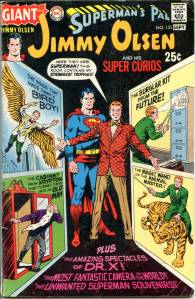
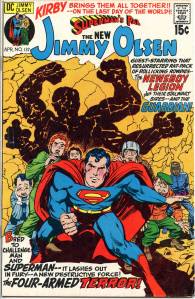
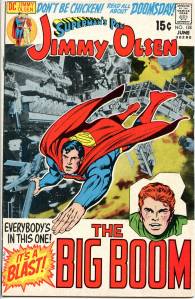
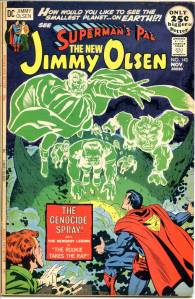
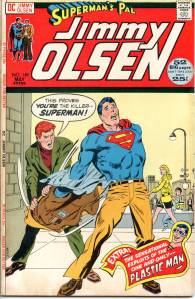
Superman’s Pal, Jimmy Olsen is a series published by DC Comics from September–October 1954 until March 1974, spanning a total of 163 issues.Featuring the adventures of Superman supporting character Jimmy Olsen, it contains stories often of humorous nature.
The 1952 television series Adventures of Superman co-starred actor Jack Larson, who appeared regularly as Jimmy Olsen. Largely because of the popularity of Larson and his portrayal of the character, National Comics Publications (DC Comics) decided to create a regular title featuring Jimmy as the leading character.Curt Swan was the main artist on the series for its first decade.
Many of the issues include Jimmy undergoing a transformation of some form.
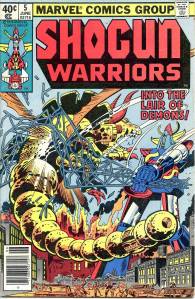
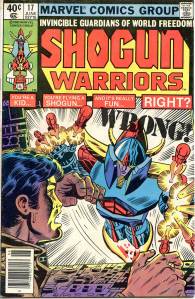
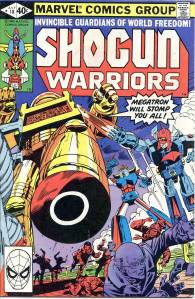
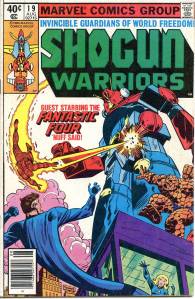
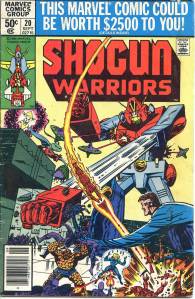
The Shogun Warriors characters were licensed by Marvel Comics to create a comic book series written by Doug Moench and drawn by Herb Trimpe. The series was composed of 20 issues that were published from February 1979 to September 1980. In the comic book series, the Shogun Warriors were created by a mysterious group called the Followers of the Light, and human operators were chosen from all around the world to operate the massive robots in order to battle evil.