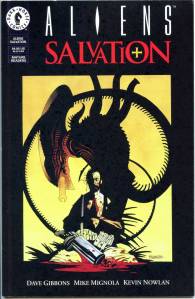
Aliens: Salvation (1993)

Selkirk, a God-fearing crewman aboard the space freighter Nova Maru, is forced at gunpoint to abandon ship with his captain. They crash-land on a small planet, but it is soon apparent that they have not entirely escaped the Nova Maru’s dreadful cargoDave Gibbons‘ tale is fully realized by artists Mike Mignola and Kevin Nowlan.

Blackest Night (2009)

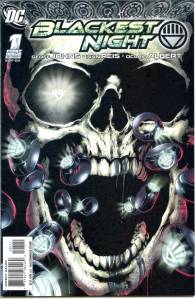
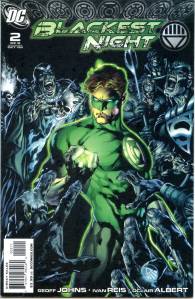
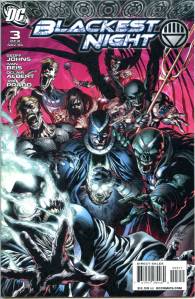
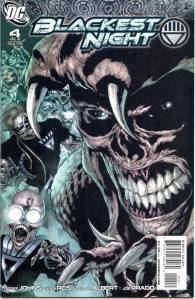
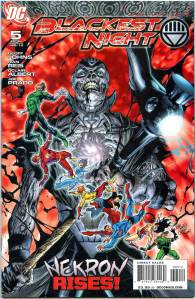
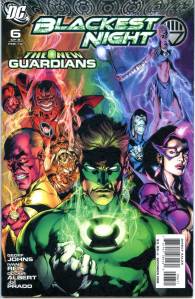
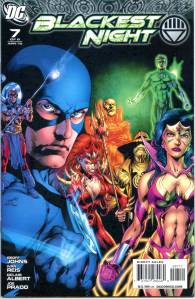
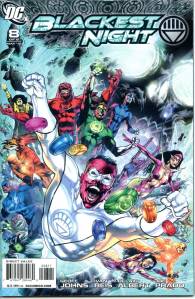
Blackest Night involves Nekron, a personified force of death who reanimates deceased superheroes and seeks to eliminate all life and emotion from the universe. Geoff Johns has identified the series’ central theme as emotion. The crossover was published for eight months as a limited series and in both the Green Lantern and Green Lantern Corps comic titles. Various other limited series and tie-ins, including an audio drama from Darker Projects, were published.

Terminator – The Burning Earth (1990)

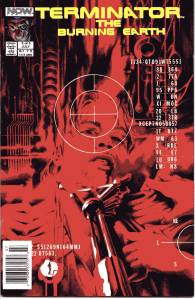
The story is set as part of the background history of John Connor‘s future war with the machines. It is also set after the events of the 17 part The Terminator (1988–1989) series also penned by Fortier. The story starts with members of the resistance fighting against the machines with John (nicknamed Bear) giving a commentary on how the war has been. Later he is seen having what could only be described as a loss of faith as he is shown putting a pistol to his mouth. However, after watching two lone fighters (one injured) firing on an oncoming Hunter Killer tank only to be run over, John regains his resolve to never stop and never give up.

Transmetropolitan (1997)

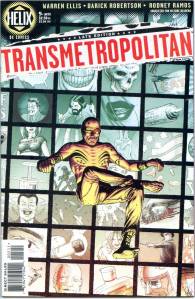
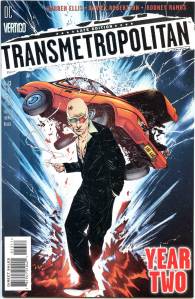
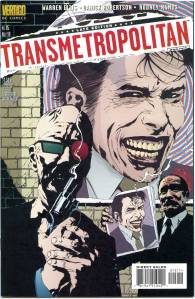
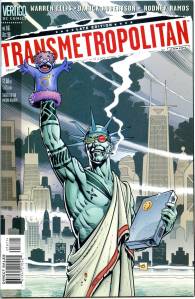
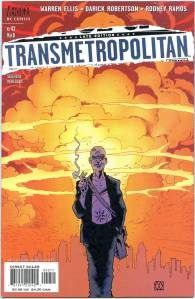
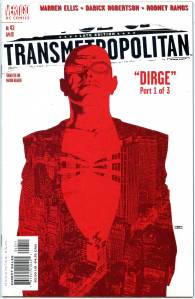
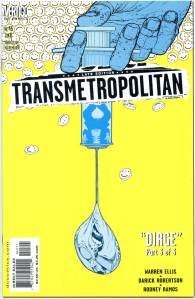
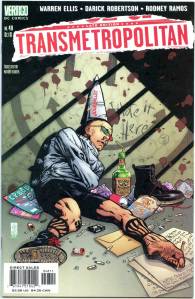
Transmetropolitan is a cyberpunk transhumanist comic book series written by Warren Ellis and co-created and designed by Darick Robertson; it was published by the American company DC Comics in 1997–2002. The series was originally part of the short-lived DC Comics imprint Helix, but upon the end of the book’s first year the series was moved to the Vertigo imprint after DC Comics shut down their Helix imprint. Transmetropolitan chronicles the battles of Spider Jerusalem, infamous renegade gonzo journalist of the future.

Secret Empire (2017)

Secret Empire” is a 2017 Marvel Comics storyline. This limited series event addresses the aftermath of the crossover event Avengers: Standoff! and the ongoing series Captain America: Steve Rogers, in which Captain America has been replaced by an evil version of himself loyal to Hydra, who has been acting as a sleeper agent and covertly setting the stage to establish Hydra as the main world power.

Hellboy: Seed of Destruction (1993)

Before Hellboy was published independently at Dark Horse Comics, the concept was initially pitched to a board of directors for DC Comics, who loved it, but did not like the idea of it involving “Hell”.

The early stories were conceived and drawn by Mignola with a script written by John Byrne and some later stories have been crafted by creators other than Mignola, including Christopher Golden, Guy Davis, Ryan Sook, and Duncan Fegredo. The increasing commitments from the Hellboy franchise meant that the 2008 one-shot In the Chapel of Moloch was the first Hellboy comic Mignola had provided the script and art for since The Island in 2005.

Batman (1940’s)

In early 1939, the success of Superman in Action Comics prompted editors at National Comics Publications (the future DC Comics) to request more superheroes for its titles. In response, Bob Kane created “the Bat-Man”. Collaborator Bill Finger recalled that “Kane had an idea for a character called ‘Batman,’ and he’d like me to see the drawings. I went over to Kane’s, and he had drawn a character who looked very much like Superman with kind of … reddish tights, I believe, with boots … no gloves, no gauntlets … with a small domino mask, swinging on a rope. He had two stiff wings that were sticking out, looking like bat wings. And under it was a big sign … BATMAN”. The bat-wing-like cape was suggested by Bob Kane, inspired by Leonardo Da Vinci‘s sketch of an ornithopter flying device as a child.

Finger suggested giving the character a cowl instead of a simple domino mask, a cape instead of wings, and gloves; he also recommended removing the red sections from the original costume. Finger said he devised the name Bruce Wayne for the character’s secret identity: “Bruce Wayne’s first name came from Robert Bruce, the Scottish patriot. Wayne, being a playboy, was a man of gentry. I searched for a name that would suggest colonialism. I tried Adams, Hancock … then I thought of Mad Anthony Wayne.” He later said his suggestions were influenced by Lee Falk‘s popular The Phantom, a syndicated newspaper comic-strip character with which Kane was also familiar.
Fantastic Four (1980’s)

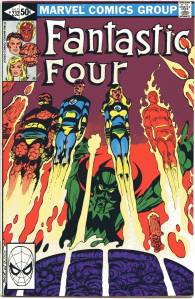
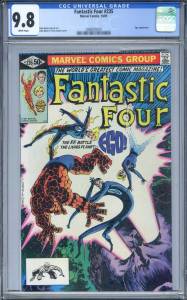
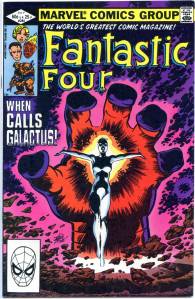
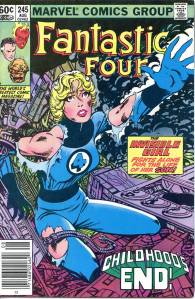
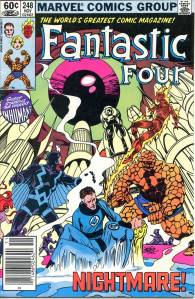
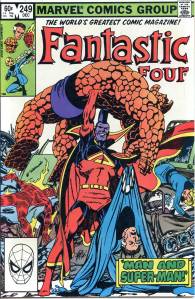
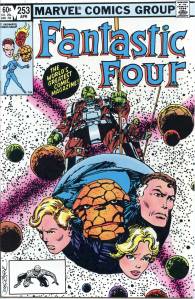
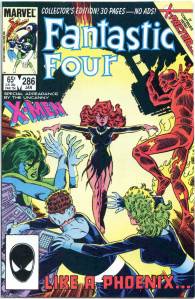
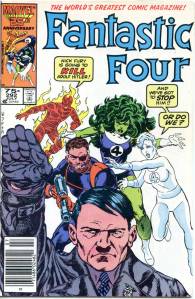
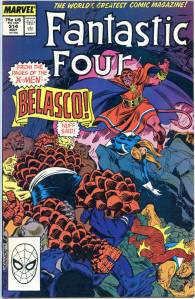
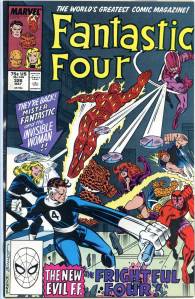
John Byrne revitalized the slumping title with his run. Originally, Byrne was slated to write with Sienkiewicz providing the art. Sienkiewicz left to do Moon Knight, and Byrne subsequently became writer, artist, and inker. Various editors were assigned to the comic; eventually Bob Budiansky became the regular editor. Byrne told Jim Shooter that he could not work with Budiansky, although they ultimately continued to work together. In 2006, Byrne said “that’s my paranoia. I look back and I think that was Shooter trying to force me off the book”. Byrne left following issue #293 (Aug. 1986) in the middle of a story arc, explaining he could not recapture the fun he had previously had on the series. One of Byrne’s changes was making the Invisible Girl into the Invisible Woman: assertive and confident. During this period, fans came to recognize that she was quite powerful, whereas previously, she had been primarily seen as a superpowered mother and wife in the tradition of television moms like those played by Donna Reed and Florence Henderson.

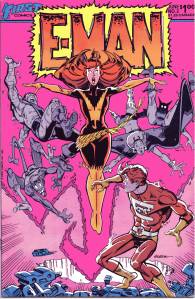
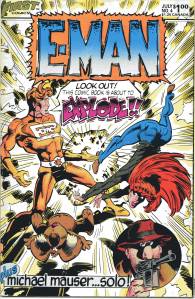
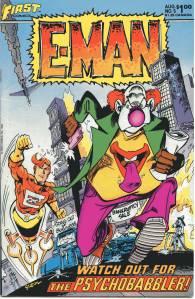
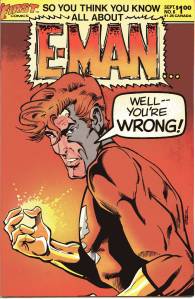
E-Man (1983) First Comics

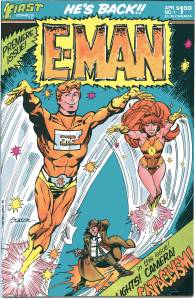
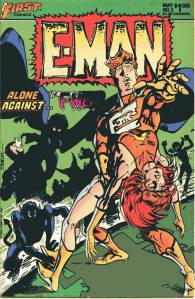
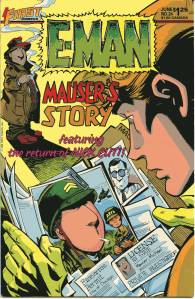
When Staton became art director at First Comics, the publisher acquired the rights to the character from Charlton and launched a series. Cuti was asked to write the title, but his obligations to DC Comics prevented him from accepting. The series was initially written by Martin Pasko, who had previously worked with Staton on Plastic Man and Metal Men. After Pasko’s run, Staton and Paul Kupperberg wrote the series until Cuti took over as writer with issue #24.

As a direct-market publisher not distributed to newsstands, the First series was not obligated to seek Comics Code Authority approval and could address more mature topics than Code-approved comics. Where the Charlton series featured broad whimsical themes, the First Comics series engaged in more specific satire directed at targets including the X-MenSteven Spielberg, and Scientology.

The first 10 issues each contained a one-page parody of the Hostess snack advertisements that ran in comics through the 1970s and 1980s. These parodies were written and drawn by different creators and featured characters from across the independent comics industry.

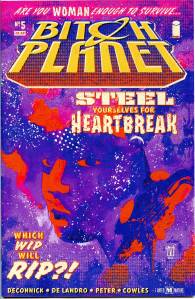
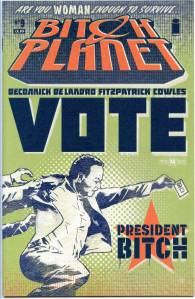
Bitch Planet (2014)

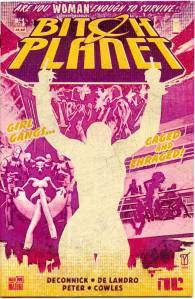
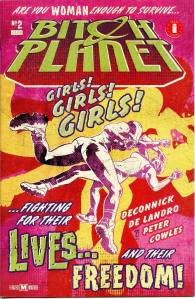
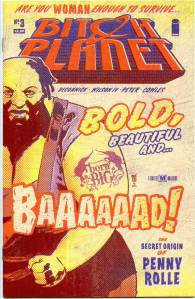
The series focuses on a number of women who have been imprisoned at an off-planet prison known as the Auxiliary Compliance Outpost for being “non-compliant.” Narrative arcs move back and forth through time, presenting how the women were arrested in the first place as well as their various experiences within the prison.