Justice League of America (Silver Age)

The initial Justice League lineup included seven of DC Comics’ superheroes who were regularly published at that time: SupermanBatman, Aquaman, Flash, Green Lantern, Martian Manhunter, and Wonder Woman. Rarely featured in most of the stories, Superman and Batman did not even appear on the cover most of the time. Three of DC’s other surviving or revived characters, Green Arrow, the Atom, and Hawkman were added to the roster over the next four years.

The title’s early success was indirectly responsible for the creation of the Fantastic Four. In his autobiography Stan Lee relates how in 1961, during a round of golf, DC publisher Jack Liebowitz mentioned to Marvel-Timely owner Martin Goodman how well DC’s new book (Justice League) was selling. Later that day Goodman, a publishing trend-follower aware of the JLA’s strong sales, told Lee, his comics editor, to come up with a team of superheroes for Marvel.

The Infernal Man-Thing (2012)

Steve Gerber’s posthumous Man-Thing story “The Screenplay of the Living Dead Man”, with art by Kevin Nowlan, originally planned as a 1980s graphic novel before being left uncompleted by the artist, was revived in the 2010s and appeared as a three-issue miniseries cover-titled The Infernal Man-Thing (Early Sept.-Oct. 2012). The story was a sequel to Gerber’s “Song-Cry of the Living Dead Man” in Man-Thing #12 (Dec. 1974).

Reborn (2016)

Mark Millar & Greg Capullo join forces to create the smash hit sci-fi / fantasy story: REBORN. Where do you go when you die? Not heaven or hell; somewhere else. Somewhere you have to fight to survive. Somewhere the people from the past are waiting for you—the good and the bad.

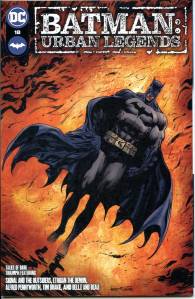
Batman and the Monster Men (2006)

Batman and the Monster Men is a limited series written and drawn by Matt Wagner with colors by Dave Stewart, published by DC Comics in 2006. It, along with its sequel Batman and the Mad Monk, are set in between the events of Batman: Year One and Batman: The Man Who Laughs. It is the first part of Matt Wagner‘s two-part Dark Moon Rising series, which are expanded and modernized versions of early Batman stories.

Amazing Spider-Man V1 (2000’s)

 Amazing Spider-Man reverted completely to its original numbering for #500 (Dec. 2003). Mike Deodato, Jr. penciled the series from mid-2004 until 2006. That year Peter Parker revealed his Spider-Man identity on live television in the company-crossover storyline “Civil War“, in which the superhero community is split over whether to conform to the federal government’s new Superhuman Registration Act. This knowledge was erased from the world with the event of the four-part, crossover story arc, “One More Day“, written partially by J. Michael Straczynski and illustrated by Joe Quesada, running through The Amazing Spider-Man #544-545 (Nov.-Dec. 2007), Friendly Neighborhood Spider-Man #24 (Nov. 2007) and The Sensational Spider-Man #41 (Dec. 2007), the final issues of those two titles. Here, the demon Mephisto makes a Faustian bargain with Parker and Mary Jane, offering to save Parker’s dying Aunt May if the couple will allow their marriage to have never existed, rewriting that portion of their pasts. This story arc marked the end of Straczynski’s tenure as writer.

Stranger Things (2018)

The first series in the line explores the adventures of Will Byers (Noah Schnapp) after he was transported to the horrific extra-dimensional Upside Down at the beginning of season 1. Viewers only saw Will reappear in that season’s finale when he was finally found by his mother Joyce (Winona Ryder), but obviously a lot happened in the interim. This four-issue Stranger Things miniseries — written by Jody Houser, illustrated by Stefano Martino, inked by Keith Champagne, colored by Lauren Affe, and lettered by Nate Piekos — will finally give fans a look at what happened to Will in the Upside Down.

The Defenders V1 (1970’s)

The Defenders had a rotating line-up from 1972 until 1986, with Dr. Strange and the Hulk being more or less constant members along with a number of other mainstays such as Valkyrie, NighthawkHellcatthe GargoyleBeast, the Son of Satan and Luke Cage, and a large number of temporary members. The publication was retitled near the end of the run as The New Defenders but featured none of the original members and only Valkyrie, the Beast and the Gargoyle of the former long-term members. The concept was modified in the 1993–95 series Secret Defenders, in which Dr. Strange assembled different teams for each individual mission. Later, the original team were reunited in a short-lived series by Kurt Busiek and Erik Larsen. In the 2000s, Marvel published a new miniseries featuring the classic line-up. Writer Matt Fraction and artist Terry Dodson launched a new Defenders series in December 2011.

Suicide Squad V5 – Rebirth (2016)

Using the end of the New 52 initiative as a launching point, DC Comics began a second relaunch of its entire line of titles called DC Rebirth in 2016. Suicide Squad (vol. 5) #1 (August 2016) was the debut bimonthly relaunch of the team’s comic book title which consisted of Amanda WallerDeadshotRick FlagCaptain BoomerangHarley QuinnKiller CrocKatana & Enchantress. The Suicide Squad was given a new look, reflecting the team’s appearance in the DC Extended Universe.

Tower of Shadows (1969)

Designed to compete with DC Comics‘ successful launches of House of Mystery and House of Secrets,[2] Tower of Shadows, like its companion comic Chamber of Darkness, sold poorly despite the roster of artists featured. After its first few issues, the title, published bimonthly, began including reprints of “pre-superhero Marvel” monster stories and other SF/fantasy tales from Marvel’s 1950s and early 1960s predecessor, Atlas Comics. After the ninth issue, the title changed to Creatures on the Loose, and the comic became a mix of reprints and occasional sword and sorcery/SF series.

Superboy V1 (1960’s)

Four years after his debut, Superboy became only the sixth DC superhero to receive his own comic book when Superboy #1 (March–April 1949) was published. The series became the first new DC superhero title to succeed since World War II. Superboy saw the debuts of the first Superbaby story, (about Clark’s adventures as a super-powered toddler), and of Clark’s two closest friends: Lana Lang, who also serves as a romantic interest for Superboy; and Pete Ross, who later discovers and helps protect Clark’s secret identity. Other notable stories to appear in Superboy include the story of the first Bizarro and the first appearances of Legion of Super-Heroes members Mon-El and Ultra Boy.