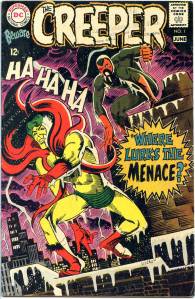
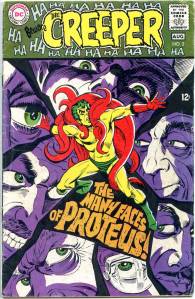
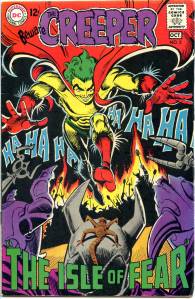
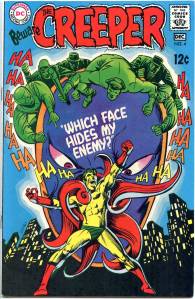
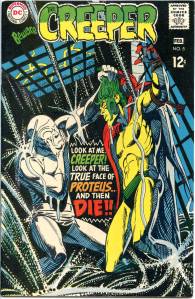
Following his debut in Showcase, the Creeper was given his own series Beware the Creeper, written by Dennis O’Neil; Steve Ditko plotted the first issue. It lasted six issues Most pitted him against a chameleonic villain called Proteus, whose true identity was revealed just before his violent death in the final issue.
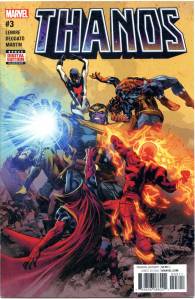
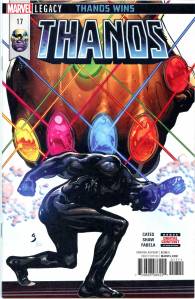
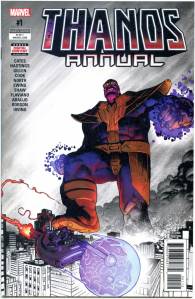
EVIL HAS BEEN UNLEASHED ON THE UNIVERSE. Thanos, possibly the most evil individual in the Marvel Universe, is back…and he’s out for vengeance on all who would oppose him. Unfortunately for the Mad Titan, he’s also heading for an unexpected reckoning…with his family. Take an ongoing walk on the dark side of the galaxy, following the deadly trail of destruction left in the wake of…THANOS!
Whiz Comics #2 (cover-dated Feb. 1940) was published in late 1939. The comic’s lead feature introduced audiences to Billy Batson, an orphaned boy who, by speaking the name of the ancient wizard Shazam, is struck by a magic lightning bolt and transformed into the adult superhero Captain Marvel. Shazam’s name was an acronym derived from the six immortal elders who grant Captain Marvel his superpowers: Solomon, Hercules, Atlas, Zeus, Achilles and Mercury.
In addition to introducing the main character, his alter ego, and his mentor, Captain Marvel’s first adventure in Whiz Comics #2 also introduced his archenemy, the evil Doctor Sivana, and found Billy Batson talking his way into a job as an on-air radio reporter with station WHIZ. Captain Marvel was an instant success, with Whiz Comics #2 selling over 500,000 copies. By 1941, he had his own solo series, Captain Marvel Adventures, while he continued to appear in Whiz Comics, as well as periodic appearances in other Fawcett books, including Master Comics.
Captain Marvel Adventures #115 CGC 7.5 Off-White to White $495
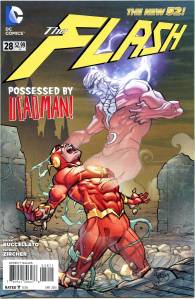
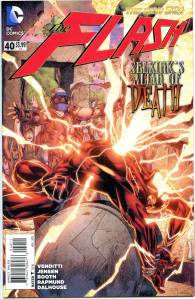
In September 2011, The New 52 rebooted DC’s continuity. In this new timeline, DC Comics relaunched The Flash with issue #1, with writing and art handled by Francis Manapul and Brian Buccellato. As with all of the titles associated with the DC relaunch, Barry Allen appears to be about five years younger than the previous incarnation of the character. Superheroes at large have appeared only in the past five years, and are viewed with at best, suspicion, and at worst, outright hostility. In this new continuity, Barry’s marriage to Iris West never took place, and he is instead in a relationship with longtime co-worker Patty Spivot. In this new series, the Flash draws deeper into the Speed Force, enhancing his mental abilities while still trying to get a full grasp on his powers, which he doesn’t yet exert total control over.
As revealed in issue #0 of this series, Barry Allen’s father was placed in prison for the murder of his mother. While the evidence seems to indicate his father’s guilt, Barry makes proving his father’s innocence a priority. The murder occurred shortly after Barry returned victorious from a school spelling bee, and Barry placed the trophy he won on his mother’s grave in her memory. Barry is also part of the main cast of the relaunched Justice League series, making his debut in the series’ second issue.
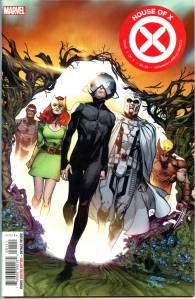
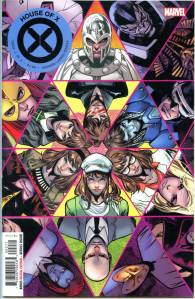
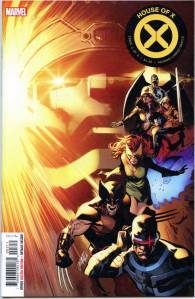
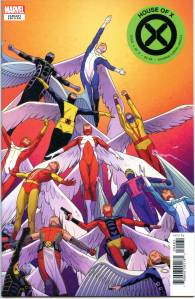
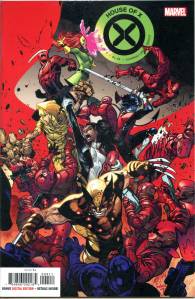
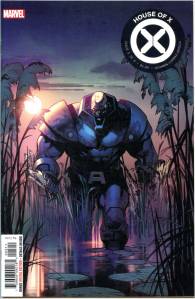
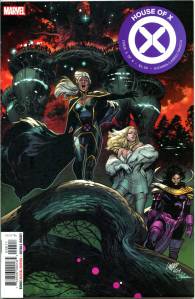
Jonathan Hickman wrote a story arc in the Avengers and New Avengers comic, ending in the 2015 crossover Secret Wars. His return was announced in March 2019. Some days later, it was detailed that he would write two comic books, House of X and Powers of X, with penciling by Pepe Larraz and R.B. Silva. Marvel Editor in Chief C. B. Cebulski said that “We are excited to have Jon back with the Marvel family, and we could not have asked for a better creative team to help usher the X-Men into a whole new era”
Both comics were released as a company wide relaunch of the X-Men. All the ongoing X-Men comics were cancelled: Uncanny X-Men, Mr. and Mrs. X, X-Force, X-23, and the Age of X-Man tie-in miniseries.
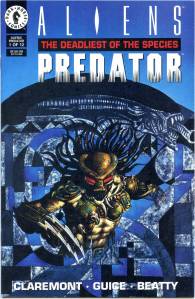
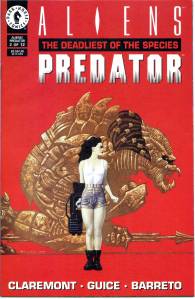
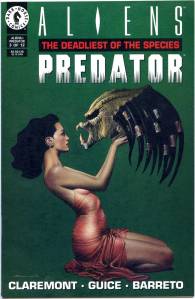
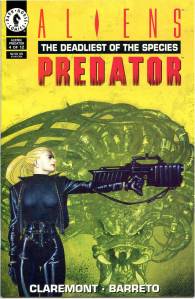
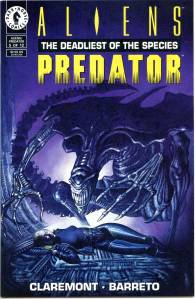
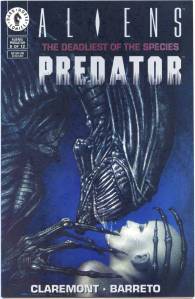
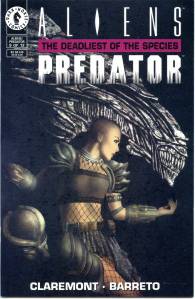
The Story takes place in the futuristic Alien vs. Predator universe, where Earth has been overrun by Aliens, and the social elite have taken refuge in gigantic skyliners. Caryn Delacroix is the protagonist, with an unclear past regarding both the Aliens and Predators throughout most of the comic. An artificial intelligence serves as the primary antagonist, while the Xenomorphs and the Predator are many times in cooperation with Delacroix and her companions for parts of the series, in particular a Predator called “Big Mama”.
Aliens – Predator – Deadliest of the Species #1 NM- $5
Aliens – Predator – The Deadliest of the Species #2 NM $6
Aliens – Predator – Deadliest of Species #3 NM- $6
Aliens – Predator – Deadliest of Species #4 NM $7
Aliens – Predator – Deadliest of Species #5 NM $7
Aliens – Predator – Deadliest of Species #8 NM $7
Aliens – Predator – The Deadliest of the Species #9 NM $6
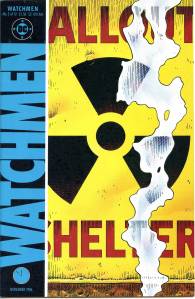
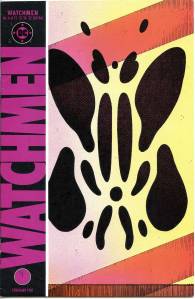
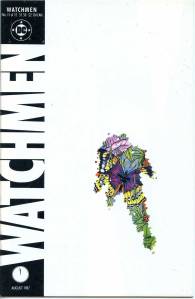
The series was created by a British collaboration consisting of writer Alan Moore, artist Dave Gibbons, and coloristJohn Higgins. Watchmen originated from a story proposal Moore submitted to DC featuring superhero characters that the company had acquired from Charlton Comics. As Moore’s proposed story would have left many of the characters unusable for future stories, managing editor Dick Giordano convinced Moore to create original characters instead.
Moore used the story as a means to reflect contemporary anxieties and to deconstruct and parody the superhero concept. Watchmen depicts an alternate history where superheroes emerged in the 1940s and 1960s and their presence changed history so that the United States won the Vietnam War and the Watergate scandal was never exposed. In 1985, the country is edging toward World War III with the Soviet Union, freelance costumed vigilantes have been outlawed and most former superheroes are in retirement or working for the government. The story focuses on the personal development and moral struggles of the protagonists as an investigation into the murder of a government-sponsored superhero pulls them out of retirement.
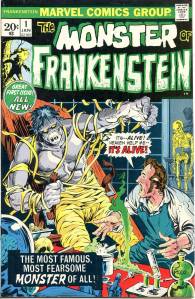
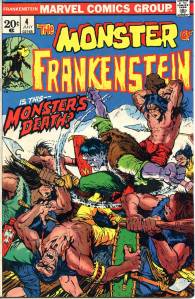
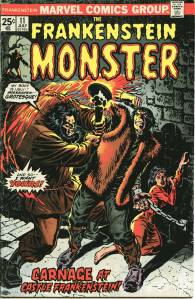
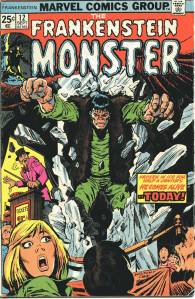
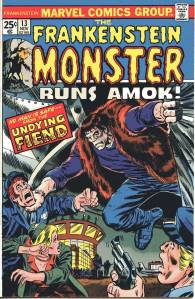
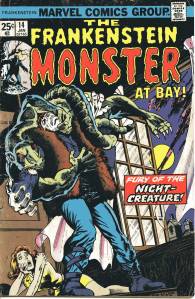
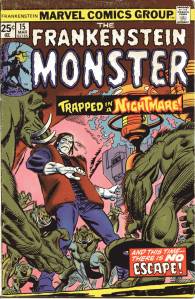
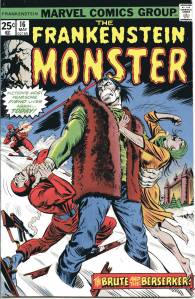
The character received an ongoing series, titled Frankenstein in the postal indicia and initially The Monster of Frankenstein (issues #1-5) and later The Frankenstein Monster as the cover logo, that ran 18 issues (Jan. 1973 – Sept. 1975).This series began with a four-issue retelling of the original novel, by writer Gary Friedrich and artist Mike Ploog. Several more issues continued his story into the 1890s, until he was placed in suspended animation and revived in modern times.
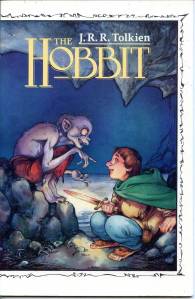
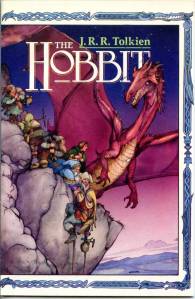
Unwin Paperbacks released a one-volume edition in 1990, with cover artwork by the original illustrator David Wenzel.
Del Rey Books released a reprint collected in one volume in 2001. Its cover, illustrated by Donato Giancola, was awarded the Association of Science Fiction Artists Award for Best Cover Illustration in 2002.
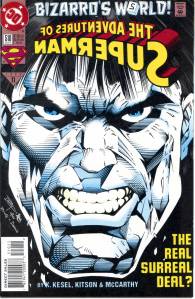
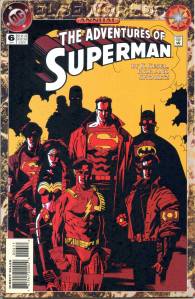
Writer/artist Dan Jurgens worked on the title from 1989–1991. Hank Henshaw, a character who would later become the Cyborg Superman, first appeared in issue #466 (May 1990). By the late 1980s, the plots of the Superman books were often linked. To coordinate the storyline and sequence of event, from January 1991 to January 2002, “triangle numbers” (or “shield numbers”) appeared on the cover of each Superman comic book. During these years, the Superman storylines ran with the story continuing through the titles Superman, Action Comics and later in two further series, Superman: The Man of Steel and Superman: The Man of Tomorrow.












 EHT Comics