Star Wars Infinities: The Empire Strikes Back (2003)

Star Wars Infinities: The Empire Strikes Back is a 2003 four-part story arc in the Star Wars Infinities series of comic books. It is an alternate telling of the 1980 film The Empire Strikes Back in which Luke Skywalker freezes to death during the blizzard on Hoth. The comic is not a direct sequel to Star Wars Infinities: A New Hope, but rather a sequel to the events after the actual film version of A New Hope.

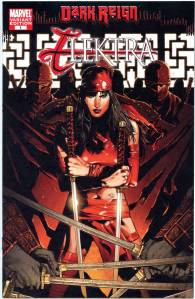
Dark Reign: Elektra (2009)

She’s the deadliest woman in the world… and she’s never been in worse shape. Broken, beaten, and tortured by alien scientists, Elektra stumbles to freedom in the aftermath of the Skrull invasion. Now she struggles and fights to stay barely alive, and to clear her name for atrocities committed by an impostor. A lot of people want Elektra killed… and in her state, that shouldn’t be too difficult!

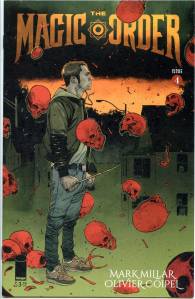
The Magic Order (2018)

The Magic Order is written by Mark Millar and illustrated by Olivier Coipel. The first comic in the series was published on 13 June 2018. It is published by Image Comics and the property of Netflix which bought Millarworld in 2017. It consists of six issues. The series is R-rated adult fantasy. The comic is the first comic book series released by Millarworld since being acquired by Netflix and marks the start of phase 2 of Millarworld.

The comic is centered on the Magic Order, which is a group of five families of magicians entrusted to keep the world safe from supernatural problems. However, the order is in danger as its members are being targeted and picked off one by one. They must now find this enemy and stop the murders. The members of the Magic Order live among normal people. By day, they act as neighbors, friends, or lovers. By night, they are sorcerers, magicians and wizards who protect us from the forces of evil.

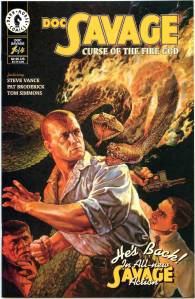
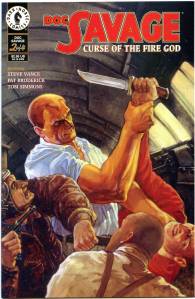
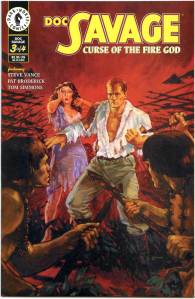
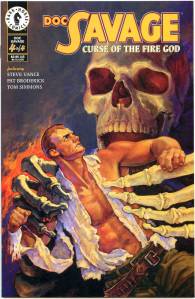
Doc Savage: Curse of the Fire Gods (1995)

In the rain forests of South America, the only thing standing between Doc Savage and his injured teammates is . . . two giant, fiery snakes! Can the Man of Bronze save himself, let alone his friends?

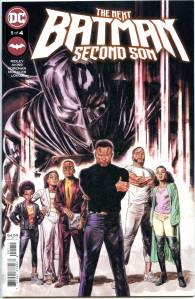
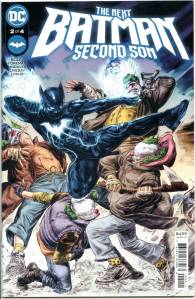
The Next Batman: Second Son (2021)

Readers now know that after the events of Future State, Tim Fox is the next Batman…but what’s his origin story? Why has he been estranged from Lucius Fox and his family for so long? Connected to the dramatic events of March’s Infinite Frontier #1, these questions and many more will be explored in this digital first miniseries!

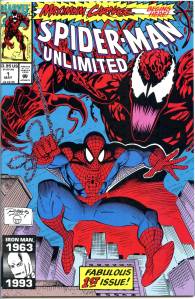
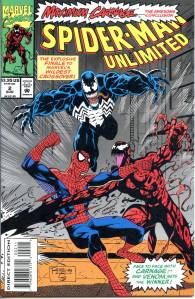
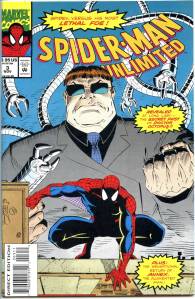
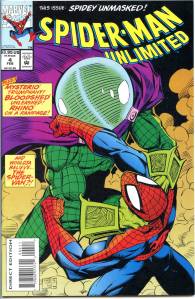
Spider-Man Unlimited V1 (1993)

Originally announced under the title Spider-Man Giant Size, the 1993 series was a quarterly series with double-length stories, which at the time was notable for being printed on glossy stock paper (a practice discontinued in later issues before being adopted by the entire Marvel line in the 2000s). Earlier issues played a part in Spider-Man crossovers; the first issue was the first part of Maximum Carnage and the second issue was the last part of Maximum Carnage. Issues #7-14 formed part of the Clone Saga. Later in the series, the focus shifted to stand-alone stories. Ron Lim penciled the lead story in the first 8 issues of the book. Most of the later issues were written by Christopher Golden and drawn by Joe Bennett.

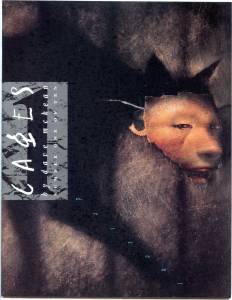
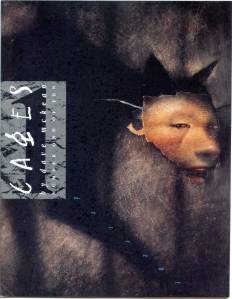
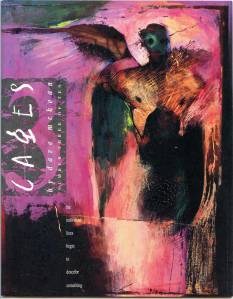
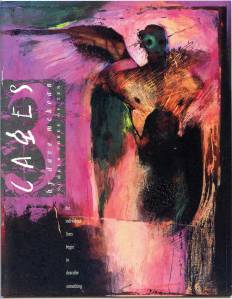
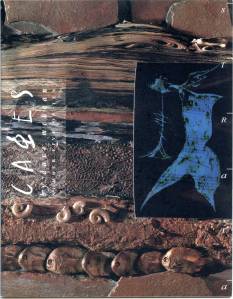
Cages (1990)

Cages is a ten-issue comic book limited series by Dave McKean. It was published between 1990 and 1996, and later collected as a single volume.

Cages is a story about artists, belief, creativity and cats, illustrated in a stripped-down pen and ink style.

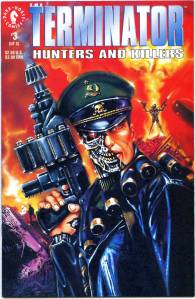
Terminator: Hunters and Killers (1991)

In 1991 Dark Horse published the limited series Hunters and Killers, set during the war, where special Terminators with ceramic skeletons and genuine organs are created to impersonate leaders in the Russian resistance.

XYZ Comics (1972)

XYZ Comics —“The Last Word in Comics!”— was first published in 1972. This classic underground comic book leads off with “Cubist Be Bop Comics,” a stream-of-consciousness tour de force lasting eight-pages. “Girls, Girls, Girls” follows, Robert Crumb’s analytic look at female anatomy that results from reducio absurdem. Several short pieces featuring Bo Bo Bolinski, “Comical Comics,” Boingy Baxter, John Q. Public and the tongue-in-cheek nostalgia of “Remember Keep on Truckin’?” are followed by the autobiographical “The Many Faces of R. Crumb.” XYZ ends withRobert’s “Fuzzy the Bunny,” a thinly-disguised piece about his older brother Charles, who suffered from mental illness (as seen in theTerry Zwigoff documentary Crumb).

Batgirl V1 (2000)

The first Batgirl monthly comic was published in 2000, with Cassandra Cain as the title character. Raised by assassin David Cain, Cassandra Cain was not taught spoken language, but instead was taught to “read” physical movement. Subsequently, Cain’s only form of communication was body language. The parts of the character’s brain normally used for speech were trained so Cain could read other people’s body language and predict, with uncanny accuracy, their next move. This also caused her brain to develop learning functions different from most, a form of dyslexia that hampers her abilities to read and write.

Despite Cain’s disability, author Andersen Gabrych describes the character’s unique form of language as the key factor in what makes Cain an excellent detective; the ability to walk into a room and “know” something is wrong based on body language. During the first arc of the Batgirl comic book series entitled “Silent Running”, Cassandra Cain encounters a psychic who “reprograms” her brain, enabling her to comprehend verbal language, while simultaneously losing the ability to predict movements. This issue is resolved during the second arc of the series, “A Knight Alone”, when Batgirl encounters the assassin Lady Shiva who agrees to teach her how to predict movement once again. Six years after its debut, DC Comics cancelled the Batgirl comic book series with issue #73 (2006), ending with Cain relinquishing her role as Batgirl.