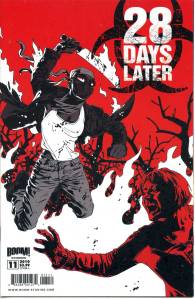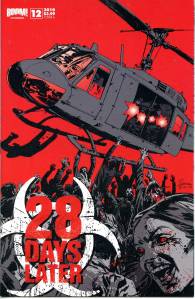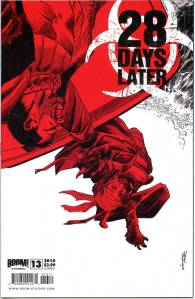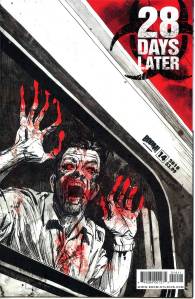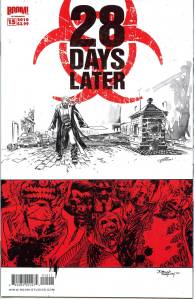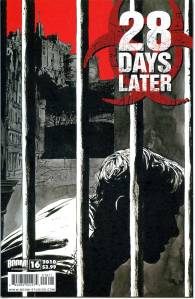
28 Days Later (2009)

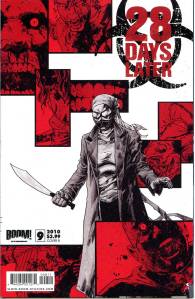
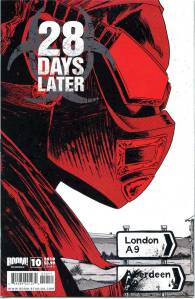
The series follows on from the events of 28 Days Later, initially taking place in the gap between it and the sequel, 28 Weeks Later, much like the graphic novel 28 Days Later: The Aftermath, and as such references the upcoming American NATO occupation. Issues 22, 23 and 24 directly reference events from the second movie, and takes place in the same time frame, ending with the Rage Virus spreading into mainland Europe.
 

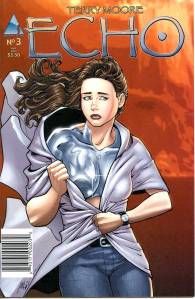
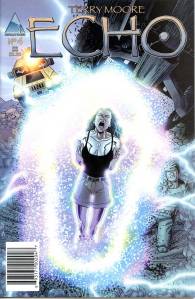
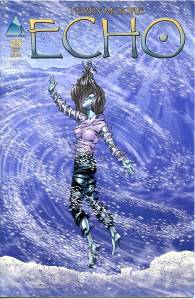
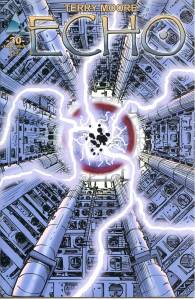
Echo (2008)

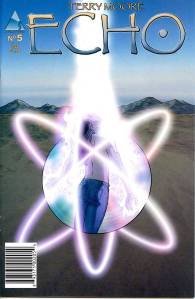
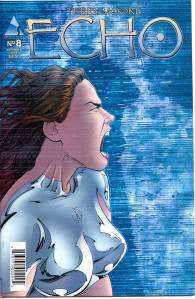
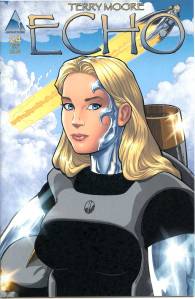
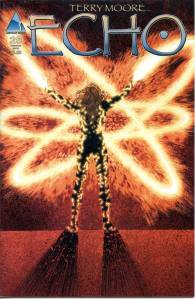
Echo‘s story revolves around Julie, a young photographer who inadvertently discovers a high-techbattle suit. Terry Moore has said the premise of Echo is a woman living in today’s America who is dealing with a sudden unbelievable change to her daily life.

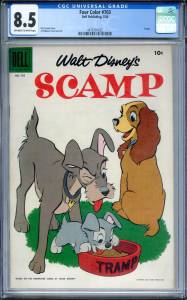
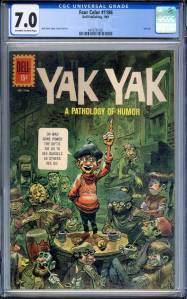
Four Color (1939-1962)

Four Color, also known as Four Color Comics and One Shots, was a long-running American comic book anthology series published by Dell Comics between 1939 and 1968. The title is a reference to the four basic colors used when printing comic books (cyan, magenta, yellow and black at the time).
More than 1,000 issues were published, usually with multiple titles released every month. An exact accounting of the actual number of unique issues produced is difficult because occasional issue numbers were skipped and a number of reprint issues were also included. Nonetheless, the Overstreet Comic Book Price Guide lists well over 1,000 individual issues, ending with #1354. It currently holds the record for most issues produced of an American comic book; its nearest rivals, Action Comics and Detective Comics, ended their initial runs in 2011 at 904 issues and 881 issues, respectively. The first 25 issues are known as “series 1”; after they were published, the numbering began again and “series 2” began. Four Color published many of the first comics featuring characters licensed from Walt Disney.

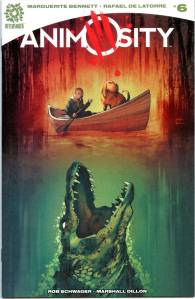
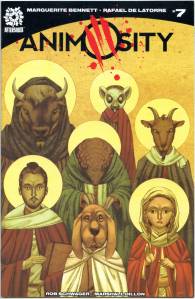
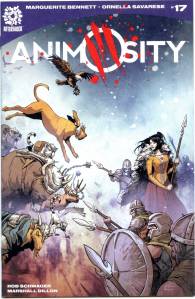
Animosity(2016)

One day, the Animals woke up. They started thinking. They started talking. They started taking revenge. Now, a dog and his girl are trying to get away–out of New York City, and all the way to San Francisco, to the only person who might be able to protect and save her. A new kind of road trip, a new kind of black comedy, and a new kind of coming-of-age.

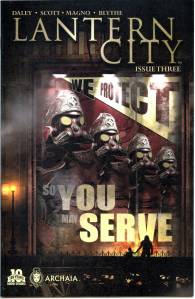
Lantern City (2015)

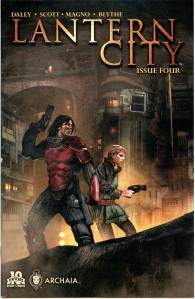
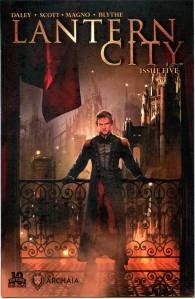
Sander Jorve is a reluctant hero shaped by a tough upbringing, trying to do his best for his family and a working-class revolution he supports. When asked by his wife’s brother, Kendal Kornick, to do the unthinkable and go undercover as a member of the Lantern City Guard, a relentless oppressive police force working for the Grey Empire, Sander must risk his family and his own identity for the chance to make a better world.

Devil May Cry (2004)

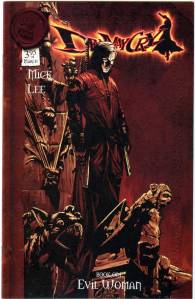
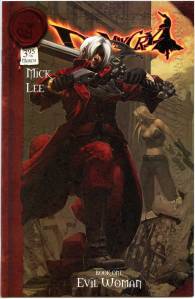
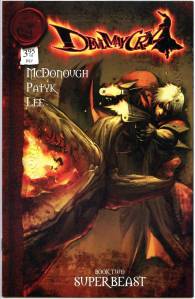
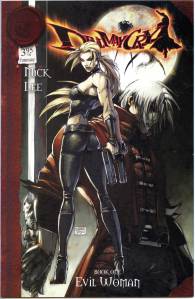
Devil May Cry is a comic adaptation of the first game, published by a Canadian publisher Dreamwave Productions in 2004. It was written by Brad Mick with art by Pat Lee, and additional cover images were provided by Michael Turner and Jae Lee. Three issues of the comics were released, but it was left unfinished when the company went bankrupt in 2005.

Creepy – Harris (1992)

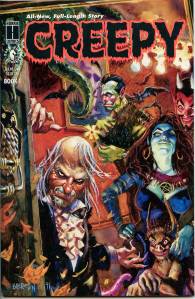
Harris Comics brings the old Warren magazine back from the dead, as it were, in this monstrous 1993 title. Creepy follows a familiar format, telling horror stories interspersed with comments from ghoulish hosts—in this case a sadistic couple of cousins. The stories hark back to the great EC horror titles such as Tales From the Crypt, featuring all number of vampires, witches, demons, and dark sorcery. And of course, there’s always Vampirella.

If there is one way in which Creepy sets itself apart from old-style horror, it’s that in classic horror comics, evil was (almost) always punished, and good always won out in the end. Creepy, on the other hand, makes no such distinction—preferring, as it might say, to be an “equal opportunity destroyer.”

Cerebus in Hell Presents: (2017)

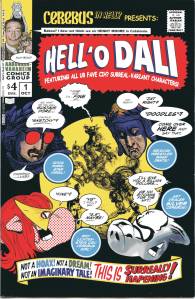
Where has Cerebus been since he died twelve years ago? Is he in hell? Purgatory? Limbo? Some strange 1980 disco with links to Close Encounters of the Third Kind and Henry Kissinger? Some ancient Greek disco with links to Plato, Socrates, Aristotle? Some 1990s disco with links to The Stone Roses, the Happy Mondays, and Oasis? Is he stuck inside his own Cerebus Online Disco Twitter-feed? Well, wherever he is, he deserves it, so feel free to laugh at his misfortune!

Doomsday +1 (1975)

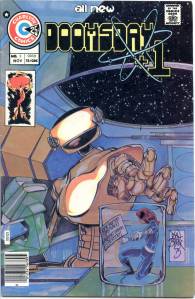
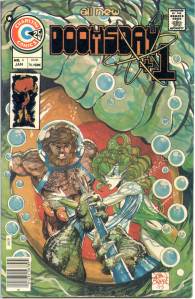
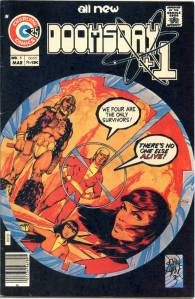
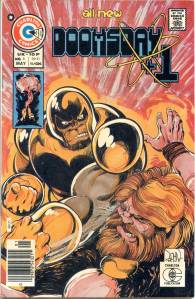
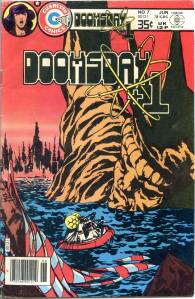
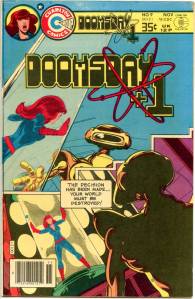
The series takes place in a near future in which a South American despot named Rykos launches his sole two atomic missiles on New York City in the U.S. and Moscow in the U.S.S.R. The two superpowers, each believing the other has launched a first strike, retaliate. By the time American president Cole and a Russian premier with the first name Mikhail have realized their errors, their fully automated nuclear-missile systems can not be countermanded.

Only hours before the apocalypse begins, a Saturn VI rocket launches bearing three astronauts: Captain Boyd Ellis, United States Air Force; his fiancée, Jill Malden; and Japanese physicist Ikei Yashida. Weeks later, after the post-apocalyptic radiation has subsided to safe levels, their space capsule lands upon a melting Greenland ice field, where the three ally themselves with Kuno, a 3rd-century Goth revived from his ice-encased suspended animation.

The four encounter a Russian scientist/cyborg in Canada, where they commandeer a futuristic jet plane; undersea dwellers; and brutish U.S. military survivors, among others.

Love and Rockets V2 (2001)

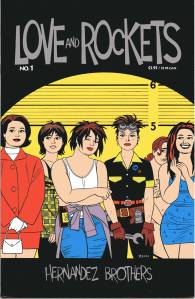
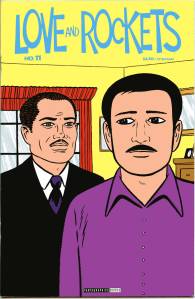
Love and Rockets, reuniting all three Hernandez Brothers! Jaime picks up the newly-divorced Maggie’s story as she returns to the old neighborhood to try to reconnect with her past; in the first issue she meets up with everyone’s favorite Hoppers resident, Izzy Ortiz. Gilbert launches a thrilling new graphic novel, “Julio’s Day,” about a man’s life from 1900 to 2000. Every person gets his day… or does he? Finally, Gilbert (artist) and Mario (writer) collaborate on “Me for the Unknown,” a tale of political intrigue, dumping on the little guy, psychosis, and violent revenge reminiscent of some of their earliest L&R stories (or their Mister X “Tales of Somnopolis” stories).