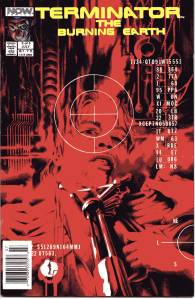
The story is set as part of the background history of John Connor‘s future war with the machines. It is also set after the events of the 17 part The Terminator (1988–1989) series also penned by Fortier. The story starts with members of the resistance fighting against the machines with John (nicknamed Bear) giving a commentary on how the war has been. Later he is seen having what could only be described as a loss of faith as he is shown putting a pistol to his mouth. However, after watching two lone fighters (one injured) firing on an oncoming Hunter Killer tank only to be run over, John regains his resolve to never stop and never give up.
Category: Independent
Tales from the Crypt (1950)
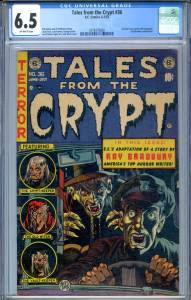
Tales from the Crypt was an American bi-monthly horror comic anthology series published by EC Comics from 1950 to 1955, producing 27 issues (the first issue with the title was #20, previously having been International Comics (#1–5); International Crime Patrol (#6); Crime Patrol (#7–16) and The Crypt of Terror (#17–19) for a total of 46 issues in the series). Along with its sister titles, The Haunt of Fear and The Vault of Horror, Tales from the Crypt was popular, but in the late 1940s and early 1950s comic books came under attack from parents, clergymen, schoolteachers and others who believed the books contributed to illiteracy and juvenile delinquency. In April and June 1954, highly publicized congressional subcommittee hearings on the effects of comic books upon children left the industry shaken. With the subsequent imposition of a highly restrictive Comics Code, EC Comics publisher Bill Gaines cancelled Tales from the Crypt and its two companion horror titles, along with the company’s remaining crime and science fiction series in September 1954.
Moebius: Tueur de Monde (Killer of the World) 1985
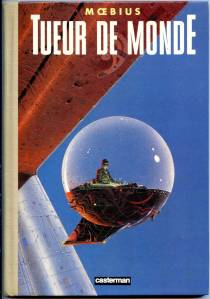
Tueur de Monde (translation: Killer of the World) follows a space traveller named Fildegar, a human crew member on a tubular vessel called the Laché Tout (Drop Everything), a floating greenhouse filled with fields of flowers. When Fildegar is not nurturing the flora inside the ship, he passes his time painting frescoes on the corridor walls, gazing into the ship’s central crystal and on rare occasions filing away old photographs which often reminds Fildegar of past memories. Suddenly Fildegar’s ship enters an unknown galaxy and discovers a planet called Bar-Jona inhabited by the contemplative creatures the Tragos. After landing on the planet’s surface and greeting it’s indigenous population, Fildegar inexplicably becomes pulled by some mysterious force and finds himself gazing up at a giant fungi.
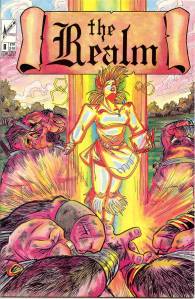
The Realm (1986)
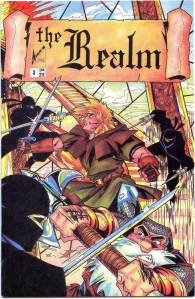
Four normal modern day teenagers are plunged into a world they thought only existed in novels and film. They are whisked away to a magical land where dragons roam the skies, orcs and hobgoblins terrorize travelers, and kingdoms wage war for dominance. It is a world where man is just one race, joining other races such as elves, trolls, dwarves, changelings, and the dreaded night creatures who steal the night. Not a typical “dungeons and dragons” world, for this story follows the adventures of these teens into the unknown as we watch the world unfold with their eyes. It is a world that is foreign to them. We learn as they learn. And what hope do these teens have in this strange Middle Earth world? How can they survive against wizards, dwarves, halflings, dragons, and trolls if they had a hard time making it in high school?
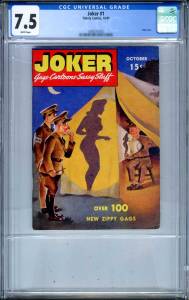
Joker V1 – Timely Comics (1941)
Stan Lee makes an appearance in the one-shot digest Joker, on three separate pages. (The only person to sign their text material.) This title would re-start shortly after as a large bedsheet (Life Magazine size) and run 4 more issues as Volume #1-4 on a quarterly basis. It will also concurrently become a comic book at the same time.
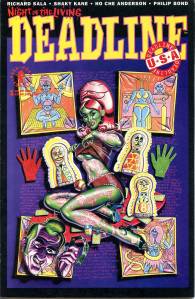
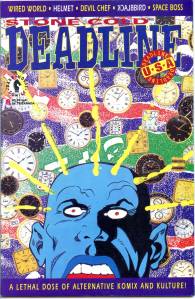
Deadline USA (1992)
You’ve seen him on MTVs Liquid Television–Richard Sala continues his all-new, ultraterrifying 13 O’clock! He’s harder than hard-boiled, he’s Johnny Nemo by the ultrascientific Peter Milligan and Brett Ewins! It’s sex, it’s rock n’ roll, but is it drugs? It’s Doe, the latest graphic vortex from Harvey Award ultranominee Ho Che Anderson! They play the game, God makes the rules! They’re the A-Men by the ultraconservative Shaky Kane! Plus work by Julie Hollings, Philip Bond, Alec Stevens, D’Israeli and never forget GWAR, puny human! And an ultraspecial music feature! And another ultraschizophrenic cover painting from the corkscrewed psyche of Mitch O’Connell!
Panic (1954)
Panic was a bi-monthly humor comic that was published by Bill Gaines‘ EC Comics line during the mid-1950s as a companion to Harvey Kurtzman‘s Mad, which was being heavily imitated by other comic publishers.
Panic was edited by Al Feldstein (who became the editor of Mad a few years later). Beginning with its first issue (February–March 1954), Panic had a 12-issue run over two years. Feldstein was the primary cover artist, with stories illustrated by Jack Davis, Will Elder, Jack Kamen, Joe Orlando, Basil Wolverton and Wally Wood. Some story ideas were by Nick Meglin, later the co-editor of Mad. Scripts were by Feldstein, Elder and Jack Mendelsohn, later a co-screenwriter of Yellow Submarine (1968) and an Emmy-nominated TV comedy writer.
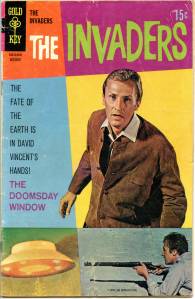
The Invaders (1967)
Comic book version of the 1960s TV series about one man’s crusade to convince people that an advance guard of alien creatures had infiltrated the world’s population and were preparing to conquer Earth.
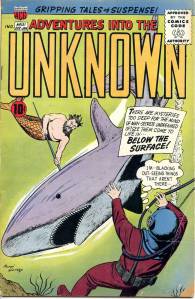
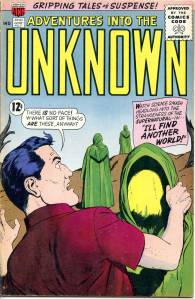
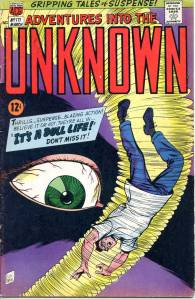
Adventures into the Unknown (1960’s)
Adventures Into the Unknown was best known as the medium’s first ongoing horror-comics title. Published by the American Comics Group, initially under the imprint B&I Publishing, it ran 174 issues (cover-dated Fall 1948 – Aug. 1967). The first two issues, which included art by Fred Guardineer and others, featured horror stories of ghosts, werewolves, haunted houses, killer puppets, and other supernatural beings and locales. The premiere included a seven-page abridged adaptation of Horace Walpole‘s seminal gothic novel The Castle of Otranto, by an unknown writer and artist Al Ulmer.
Unlike many American horror comics of the Golden Age, it weathered the public criticism of the early 1950s and survived the aftermath of the Senate Subcommittee on Juvenile Delinquency hearings of April and June 1954 when the comics industry attempted self-regulation with a highly restrictive Comics Code.
Caliber Presents (1989)
The original Caliber Presents anthology title was one of Caliber Comic’s inaugural releases in the 1990s and featured predominantly new creators, many of which went onto successful careers in the comics’ industry.