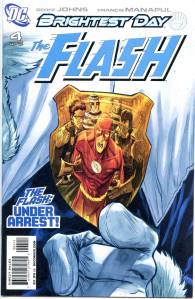
Barry Allen is back on the road in this 12 issue series that proceeds the Flash: Rebirth. Ready to go, and tying into the arc of the Brightest Day, Barry begins his journey by regaining his old position at the Central City Police Department’s crime lab and returning to memory lane by hitting the books to finally uncover his mothers true murderer.
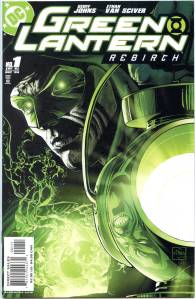
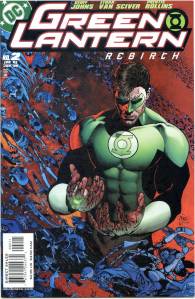
Green Lantern: Rebirth was a six-issue monthly limited series written by Geoff Johns and illustrated by Ethan Van Sciver. Published by DC Comics between October 2004 and May 2005, the series featured characters from throughout the sixty-year history of Green Lantern comics.
The storyline follows the “rebirth” of the Silver Age Green Lantern Hal Jordan as he overcomes fear itself in the form of the cosmic entity Parallax. The series starred various members of the intergalactic police force known as the Green Lantern Corps, Kyle Rayner, John Stewart and Guy Gardner. It revived elements of the Green Lantern mythos including the Guardians of the Universe, Kilowog and the villain Sinestro, while introducing new concepts such as the emotional spectrum. In addition, the GLC power ring’s flaw of being unable to directly affect the color yellow is significantly weakened, allowing experienced Corps members to overcome it if they can conquer their fear.
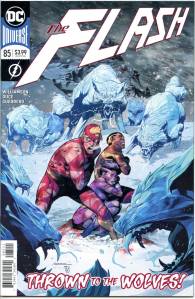
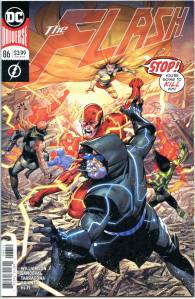
First, Barry Allen has to become the Flash. Then, he has to save the entire Speed Force? Barry faces off against the Turtle and Captain Cold as he attempts to keep the Speed Force from collapsing — but he won’t have to do it alone…
The Fastest Man Alive might be slowing down, but is there another speedster who could come to his aid? An unlikely ally might be Barry’s only chance at saving the Speed Force!
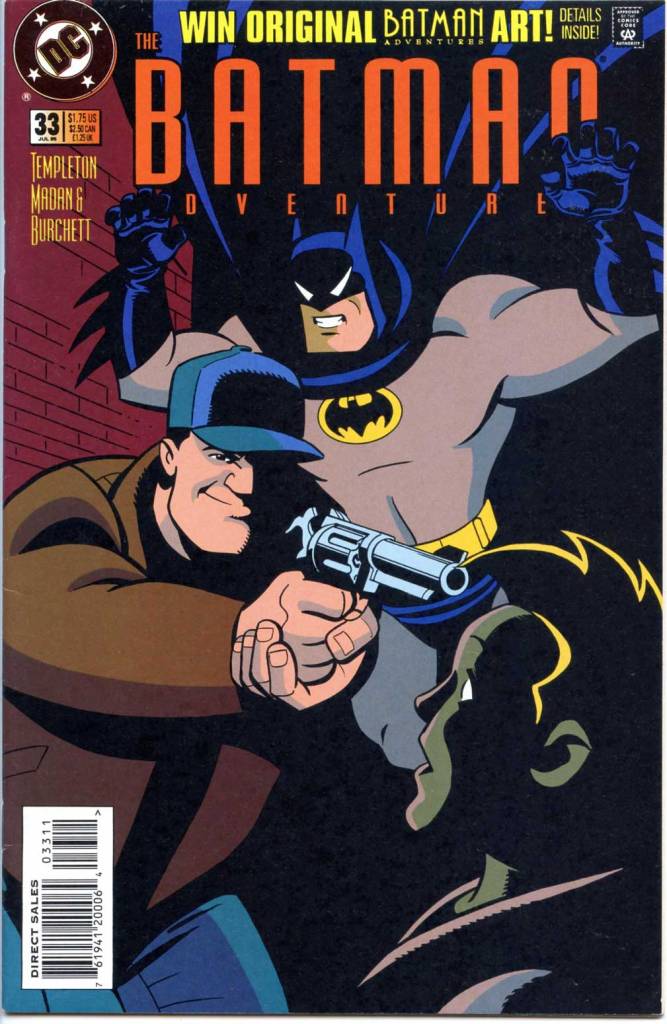
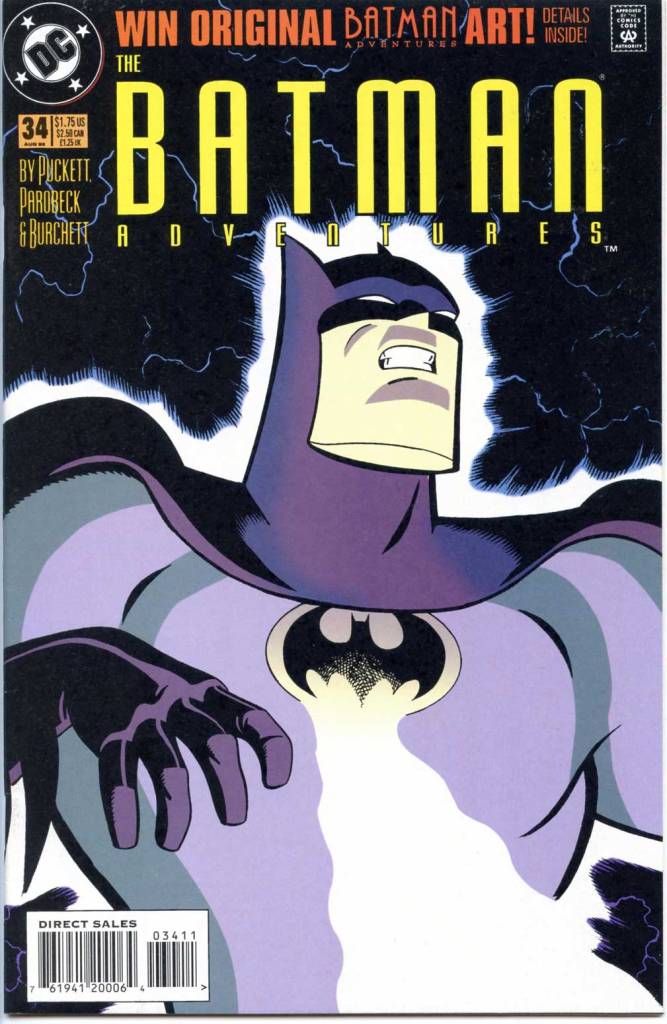
Based on Batman: The Animated Series, the first series ran for 36 issues, 2 annuals, and 3 specials (Mad Love and Holiday Special, which were both adapted into episodes for The New Batman Adventures, plus an adaptation of the Batman: Mask of the Phantasm movie). The first annual introduces Roxy Rocket, who would later appear in The New Batman Adventures episode “The Ultimate Thrill” and the Superman: The Animated Series episode “Knight Time”. Most of the issues were written by Kelley Puckett, and illustrated by Mike Parobeck and Rick Burchett, though Ty Templeton did the writing and art on a few issues. Mad Love was written by Paul Dini and illustrated by Bruce Timm, while the holiday special was written and illustrated by a number of creative people who had worked on the animated series, including Paul Dini, Bruce Timm, Glen Murakami, Dan Riba, and Kevin Altieri.
Man-Bat was the second ongoing comic series featuring a Batman villain, the first one being Joker (Volume 1). Man-Bat started publication in 1975, but was prematurely cancelled after the second issue by DC Comics Publisher, Carmine Infantino. The Man-Bat stories featured in this series were later moved as back-up features on Detective Comics (Volume 1) and later Batman Family (Volume 1).
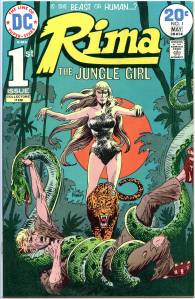
Rima starred in a seven-issue comic book series, DC Comics‘ Rima the Jungle Girl (May 1974 – May 1975), adapted by DC writer-editor Robert Kanigher with artwork by penciler–inkerNestor Redondo and covers by Joe Kubert. A variation of the character debuted in a six-issue DC Comics limited series May 2010 to Mar 2011 First Wave, written by Eisner Award–winning writer Brian Azzarello.
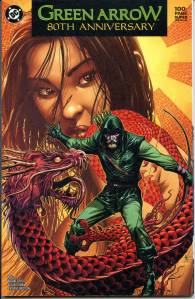
Celebrating the Emerald Archer’s 80th Anniversary! For the last eight decades Green Arrow has been one of the premier (and loudest) characters in the DCU, always at the forefront of where the superhero genre is headed. This over-sized anniversary issue follows in those footsteps, as an all-star lineup of Green Arrow creators, alongside some of the gifted creators of the modern era who have been inpsired by Oliver Queen, unite to pay tribute to the Battling Bowman. See what the past, present and future have in store for Oliver Queen, Black Canary, Connor Hawke, Arsenal, Red Arrow, Speedy, and more in this epic special!
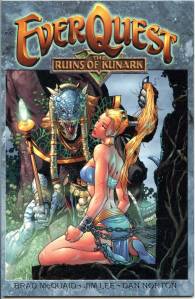
Journey to the land of Kunark alongside High Elven Princess Firiona Vie, as she and her comrades-in-arms must stop an unholy alliance. The great Elven Armies stand ready to defend the realm. But will they be enough to vanquish the rising darkness that threatens all of Norrath?
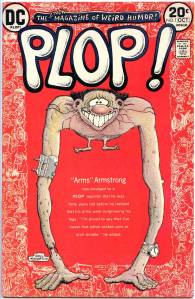
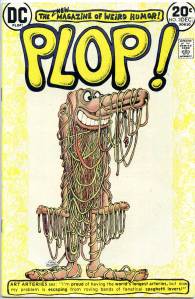
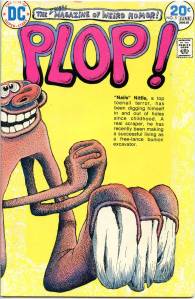
According to Steve Skeates, Plop! was based around a horror / humor story he wrote called “The Poster Plague”, which was published in House of Mystery.
The title initially was intended to be called Zany. A number of the one-panel cartoons published in the comic included the visible prefix ZA, in reference to the originally intended title. Sergio Aragonés credits publisher Carmine Infantino with coming up with the final title: “Joe Orlando and I were sitting in a restaurant talking with Carmine Infantino. They wanted a magazine that was different, something about black humor. Carmine came up with the name. We were talking about it and he said, ‘What will we call it?’ And I said, ‘We can call it anything, because if the magazine is good, then it will stay.’ And he said, ‘No, we can’t call it, for instance … PLOP!’ And I said, ‘Yes, we can.’ And so I started making sketches of things going PLOP! and they laughed and decided the name was good.
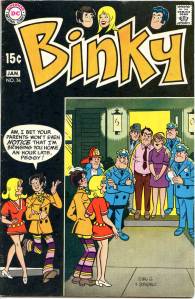
The adventures of teenager Binky Biggs started in DC Comics’ Leave It to Binky #1 (cover-dated March 1948), which ran for 60 issues through 1958. The series was revived by issue #61 (July 1968). With issue #72 (May 1970), the title was shortened to Binky and the series ran until issue #81 (Nov. 1971). Issue #82 was published in Summer 1977.
A spin-off title, Binky’s Buddies, ran 12 issues (Feb. 1969 – Dec. 1970).