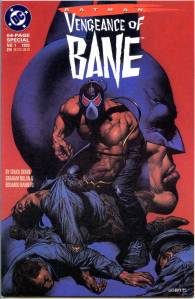
Chuck Dixon, Doug Moench and Graham Nolan created the character of Bane for the Knightfall storyline. Both Dixon and Moench wrote the character’s first appearance in Vengeance of Bane, with art by Graham Nolan. They developed the concept of Bane after an initial idea by Batman editor Dennis O’Neil.
O’Neil had previously created Bane’s birthplace of Santa Prisca in The Question and the drug Venom in the storyline of the same name (published in the pages of Legends of the Dark Knight #16–20, and later reprinted as a trade paperback). In the pages of Azrael, O’Neil introduced Bane’s perception of Venom as both an addiction and the weakness responsible for his earlier defeats.
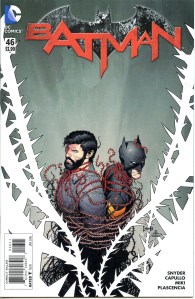
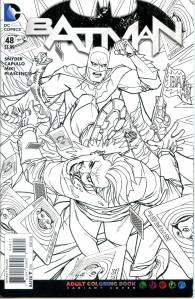
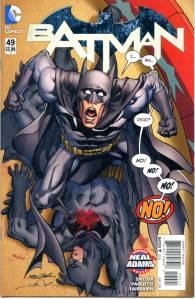
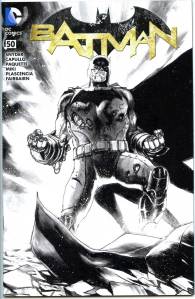
Since the beginning of The New 52, Scott Snyder has been the writer of the flagship Batman title. His first major story arc was “Night of the Owls“, where Batman confronts the Court of Owls, a secret society that has controlled Gotham for centuries. The second story arc was “Death of the Family“, where the Joker returns to Gotham and simultaneously attacks each member of the Batman family. The third story arc was “Batman: Zero Year“, which redefined Batman’s origin in The New 52. It followed Batman #0, published in June 2012, which explored the character’s early years. The final storyline before the Convergence (2015) event was Endgame, depicting the supposed final battle between Batman and the Joker when he unleashes the deadly Endgame virus onto Gotham City. The storyline ends with Batman and the Joker’s supposed deaths. Starting with #41, Commissioner James Gordon takes over Bruce’s mantle as a new, state-sanctioned, mecha Batman, debuting in the Free Comic Book Day special comic Divergence. However, Bruce Wayne is soon revealed to be alive, albeit now suffering almost total amnesia of his life as Batman and only remembering his life as Bruce Wayne through what he has learned from Alfred. Bruce Wayne finds happiness and proposes to his girlfriend, Julie, but Mr. Bloom heavily injures Jim Gordon and takes control of Gotham City and threatens to destroy the city by energizing a particle reactor to create a “strange star” to swallow the city. Bruce Wayne discovers the truth that he was Batman and after talking to a stranger who smiles a lot (it is heavily implied that this is the amnesic Joker) he forces Alfred to implant his memories as Batman, but at the cost of his memories as the reborn Bruce Wayne. He returns and helps Jim Gordon defeat Mr. Bloom and shut down the reactor. Gordon gets his job back as the commissioner, and the government Batman project is shuttered.
Batman: Beyond the White Knight takes place 12 years after the events which are described in the previous volume Batman: Curse of the White Knight, which ended with Bruce Wayne exposed as Batman to the general public and donating his entire fortune to the people of Gotham City, and then turning himself in to the police. Since that, the city has evolved into a futuristic megalopolis known as “Neo-Gotham”. Following the murder of his father Warren, young Terry McGinnis — under the orders of his employer Derek Powers — steals a technologically advanced Batsuit to become the new Batman and avenge his father’s death. At the same time, a middle-aged Bruce escapes from prison in an attempt to rid Neo-Gotham of Batman for good, all while a civil war slowly rages through the city and Powers transforms into the supervillain Blight.
DC Comics was a hotbed of experimentation during the 1970s, and in 1975 the character became the first villain to feature as the title character in a comic book series, The Joker. The series followed the character’s interactions with other supervillains, and the first issue was written by O’Neil. Stories balanced between emphasizing the Joker’s criminality and making him a likable protagonist whom readers could support. Although he murdered thugs and civilians, he never fought Batman; this made The Joker a series in which the character’s villainy prevailed over rival villains, instead of a struggle between good and evil. Because the Comics Code Authority mandated punishment for villains, each issue ended with the Joker being apprehended, limiting the scope of each story.
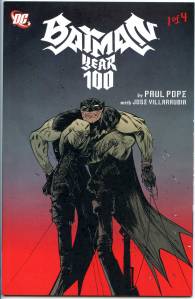
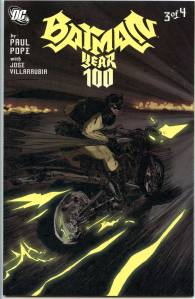
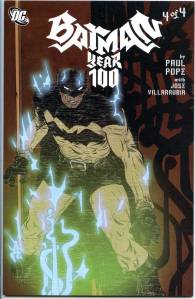
In the year 2039, Gotham City is very nearly a police state, its citizens subject to unwarranted search and seizure. The Gotham Police clash almost daily with Federal agents, who are pursuing the legendary “Batman.” Captain Gordon, the grandson of the original Commissioner Gordon, is also trying to find Batman, and find out what he knows about the murder of a Federal agent.
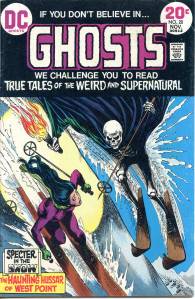
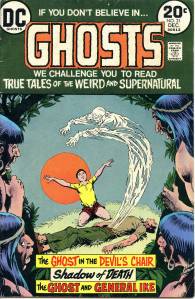
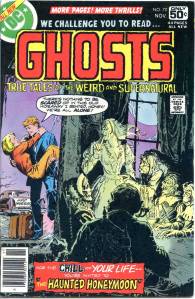
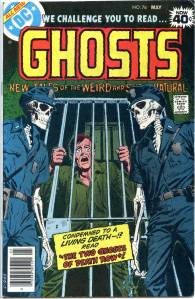
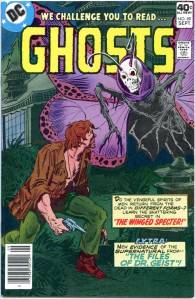
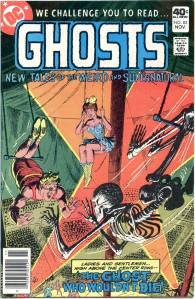
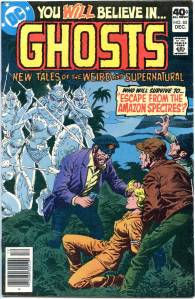
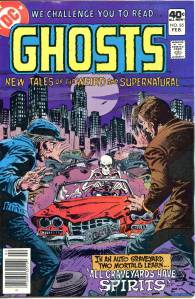
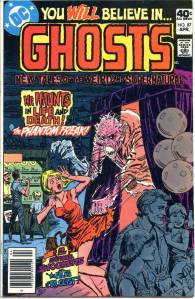
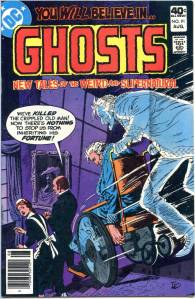
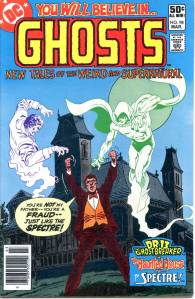
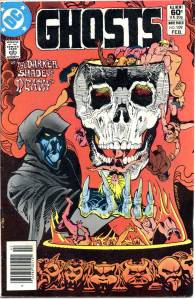
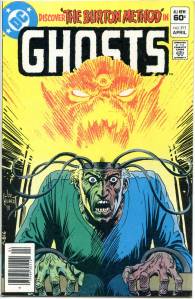
Each issue of Ghosts carried multiple stories of the supernatural. The stories were prefaced by a short description introducing the premise and ended with a summation of how a mysterious justice was dealt to the evildoers of the tale. The first issue of this series carried the singular title Ghost in its indicia, but everywhere else, including advance promotional house ads and even on its own cover, it was the plural Ghosts, as even the indicia would read from #2 on. Limited Collectors’ Edition #C–32 (Dec. 1974–Jan. 1975) reprinted stories from Ghosts #1, 3–6 and featured new material by Leo Dorfman and artists Gerry Talaoc, E. R. Cruz, and Frank Redondo.
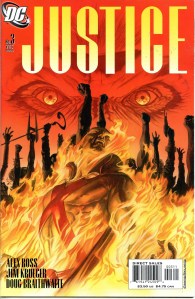
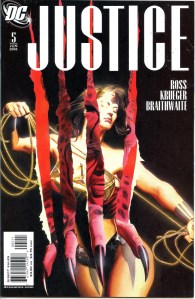
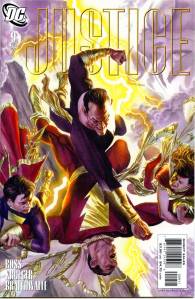
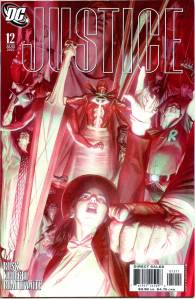
Ross had stated that, following Kingdom Come, he wanted to break away from the 1990s fixation with superhuman wars, and focused on The World’s Greatest Super-Heroes. It was only following that that he could return to the war stories he is known for, like Kingdom Come.
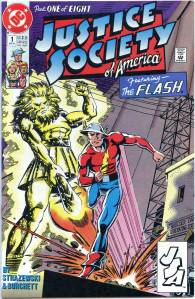
Fan interest resulted in the revival of the JSA in 1991. An eight-issue Justice Society of America limited series featuring a previously untold story set in the 1950s was published in 1991. In the final issues of the four-issue Armageddon: Inferno limited series, the JSA returns to the modern-day DC Universe when Waverider transported the “daemen” of the interdimensional Abraxis to Asgard as a substitute for the JSA in the Ragnarök cycle, allowing the team to return to Earth.
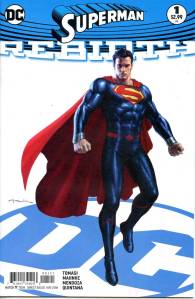
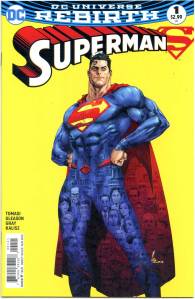
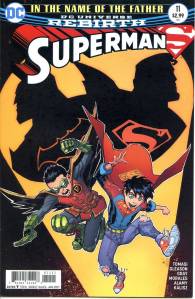
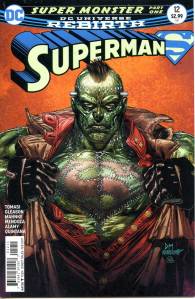
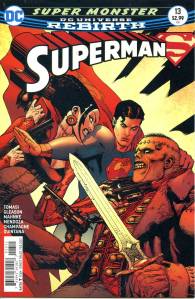
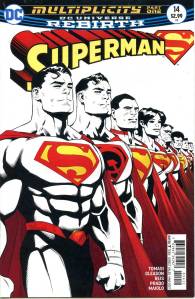
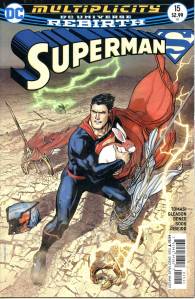
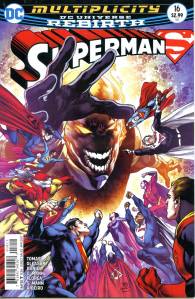
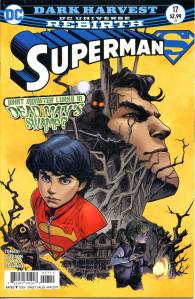
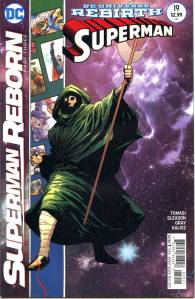
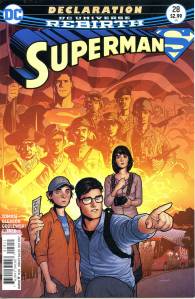
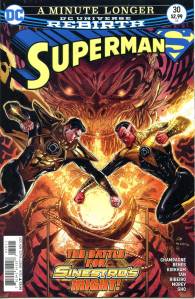
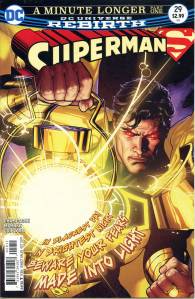
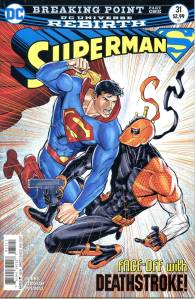
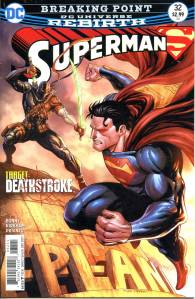
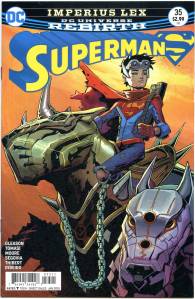
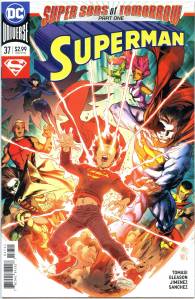
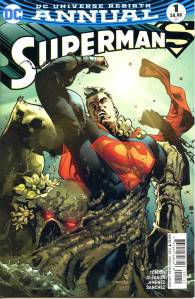
In June 2016, DC Comics once again relaunched its comic book titles with DC Rebirth. The publisher re-established the pre-New 52 Superman as the protagonist of the new comic books, with Lois Lane as his wife once more. He and Lois also conceive a biological son, Jonathan Samuel Kent, who eventually becomes Superboy. The story arc Superman Reborn smooths over the discrepancies between the two versions of the character. According to Mister Mxyzptlk, the creation of the New 52 caused Superman to be separated into two people: the New 52 character that served as the protagonist of the Superman books and the pre-Flashpoint character that took part in the Convergence event and sired Jon. Thanks to Jon, the new Superboy, the two Supermen merge into one complete version of Superman, rearranging their shared histories and accommodating them into the restored DC Universe. This complete Superman features a new suit that combines elements from the two eras. DC Comics ended the Rebirth branding in December 2017, opting to include everything under a larger “DC Universe” banner and naming. The continuity established by Rebirth continues across DC’s comic book titles, including volume one of Action Comics and the fourth volume of Superman.
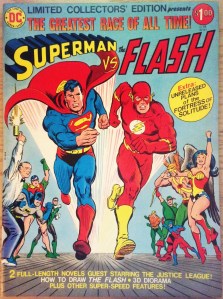
Limited Collectors’ Edition was launched with a collection of Rudolph the Red-Nosed Reindeer stories which went on sale October 24, 1972. DC Comics vice president Sol Harrison had suggested the format stating that “We could create a tabloid size comic that would stand out on the newsstand.”Limited Collectors’ Edition shared its numbering with two other treasury format series, Famous First Edition and All-New Collectors’ Edition. The final issues of the latter two series were tie-ins to the release of Superman: The Movie. DC later published treasuries as part of DC Special Series in 1981 and as a number of one-shots from 1999 to 2003 primarily produced by Paul Dini and Alex Ross.
DC Limited Collectors Edition V5 C48 – Superman Vs Flash VF- $35