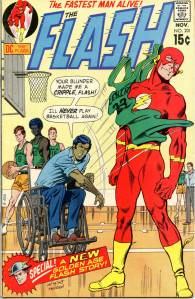
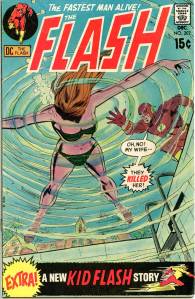
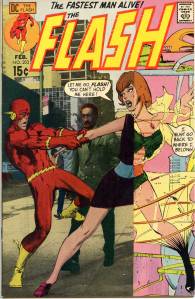
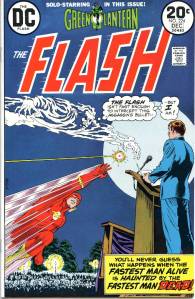
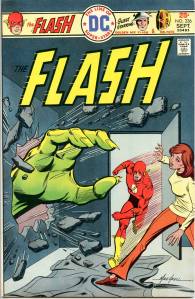
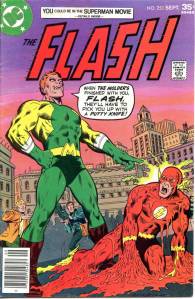
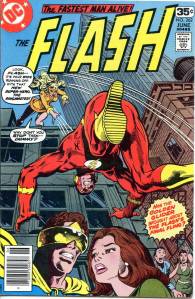
In 1956, DC Comics successfully revived superheroes, ushering in what became known as the Silver Age of comic books. Rather than bringing back the same Golden Age heroes, DC rethought them as new characters for the modern age. The Flash was the first revival, in the aptly named tryout comic book Showcase #4 (Oct. 1956).
This new Flash was Barry Allen, a police scientist who gained super-speed when bathed by chemicals after a shelf of them was struck by lightning. He adopted the name The Flash after reading a comic book featuring the Golden Age Flash.After several more appearances in Showcase, Allen’s character was given his own title, The Flash, the first issue of which was #105 (resuming where Flash Comics had left off).
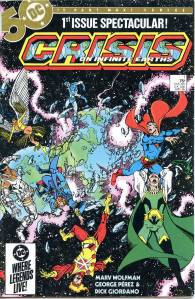
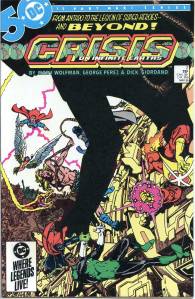
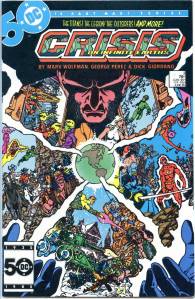
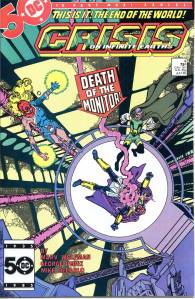
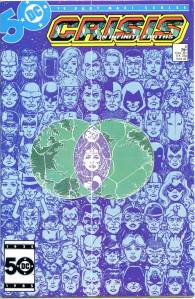
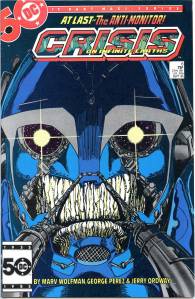
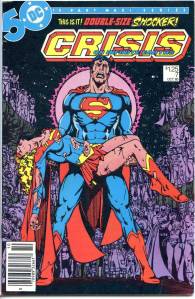
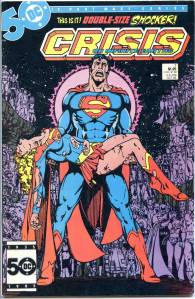
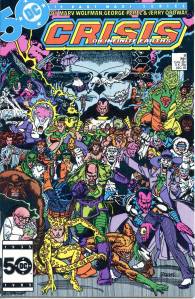
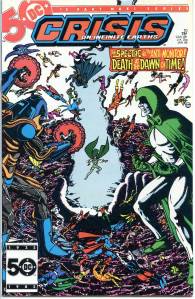
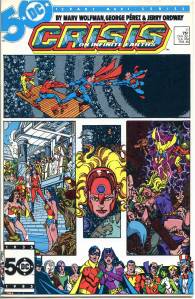
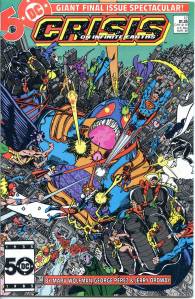
Crisis on Infinite Earths was published by DC Comics from 1985 to 1986, consisting of an eponymous 12-issue, limited series comic book and a number of tie-in books. It was produced by DC Comics to simplify its then-50-year-old continuity. The series was written by Marv Wolfman and illustrated by George Pérez (pencils and layouts), Mike DeCarlo, Dick Giordano and Jerry Ordway (inking and embellishing). The series removed the multiverse concept from the fictional DC Universe, depicting the death of long-standing characters Supergirl and the Barry Allen incarnation of the Flash. Continuity in the DC Universe is divided into pre-Crisis and post-Crisis periods. The Flash was later reborn.
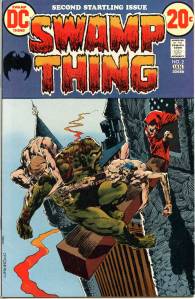
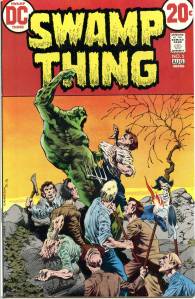
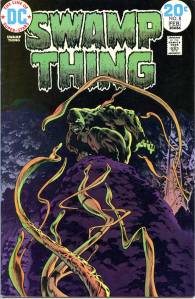
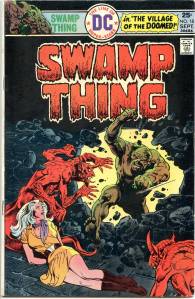
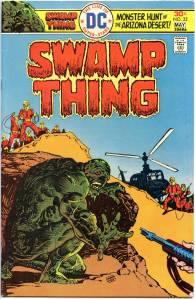
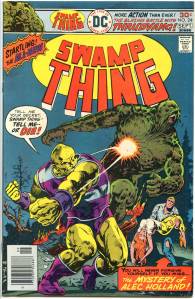
The Swamp Thing character first appeared in House of Secrets #92 (June–July 1971). After the success of the short story in the House of Secrets comic, the original creators were asked to write an ongoing series, depicting a more heroic, more contemporary creature. InSwamp Thing #1 (October–November 1972) Wein and Wrightson updated the time frame to the 1970s and featured a new version character: Alec Holland, a scientist working in the Louisiana swamps on a secret bio-restorative formula “that can make forests out of deserts”. Holland is killed by a bomb planted by agents of the mysterious Mr. E (Nathan Ellery), who wants the formula. Splashed with burning chemicals in the massive fire, Holland runs from the lab and falls into the muck-filled swamp, after which a creature resembling a humanoid plant appears. Roy Thomas and Gerry Conway, who co-created Man-Thing for Marvel Comics a year and a half earlier, thought that this origin was too similar to that of their character, and Wein himself had written a Man-Thing story that was published with a June 1972 cover date, but he refused to change the origin in spite of some cajoling by Conway, who was his roommate at the time. Marvel, however, never took the issue to court, realizing the similarity of both characters to The Heap.
Swamp Thing #2 VF signed Wrightson $159Swamp Thing #5 VF+ signed Wrightson $139Swamp Thing #6 VF+ signed Wrightson $119Swamp Thing #8 VF signed Wrightson $99Swamp Thing #9 VF+ signed Wrightson $139Swamp Thing V1 #18 FN+ $8Swamp Thing V1 #22 FN-VF $10Swamp Thing V1 #24 VG $6
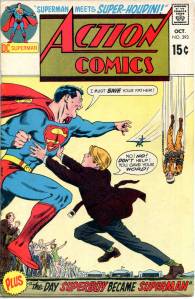
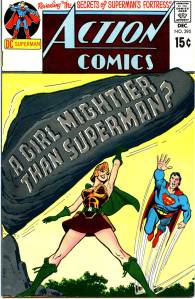
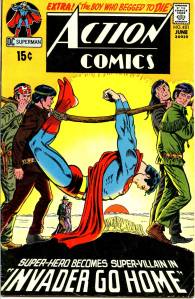
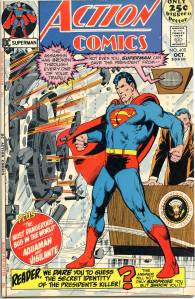
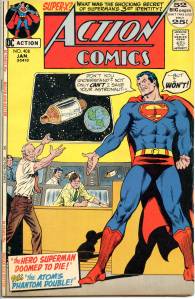
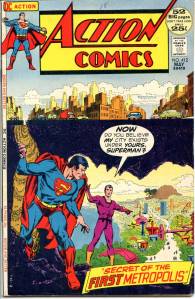
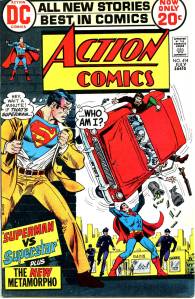
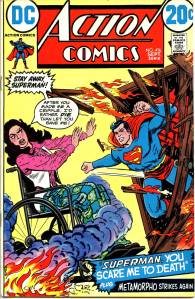
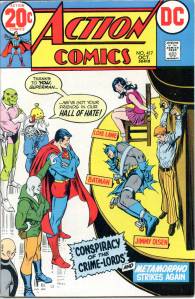
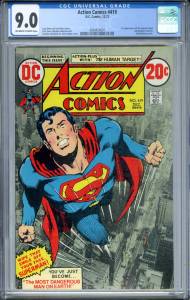
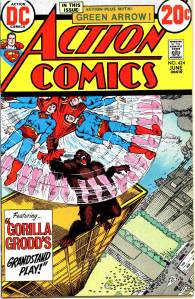
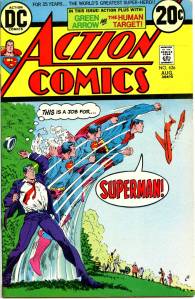
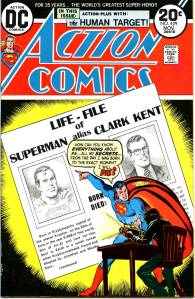
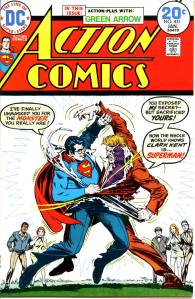
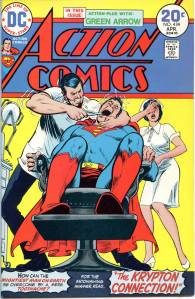
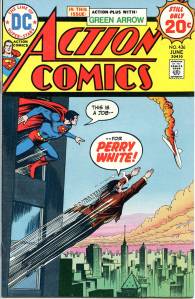
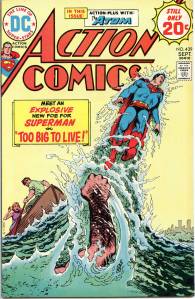
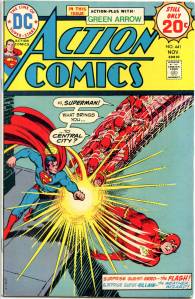
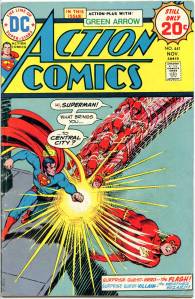
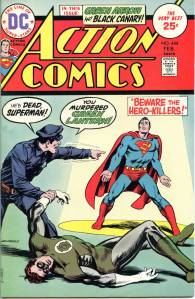
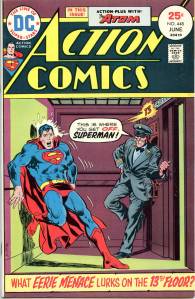
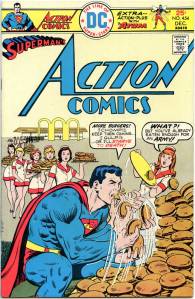
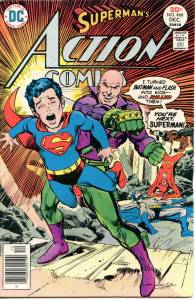
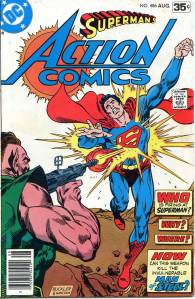
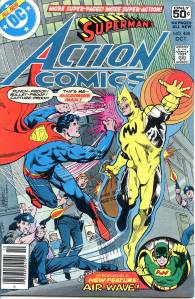
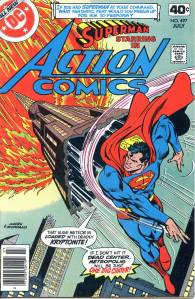
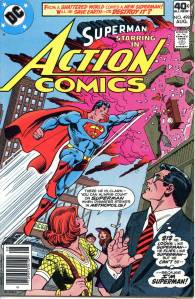
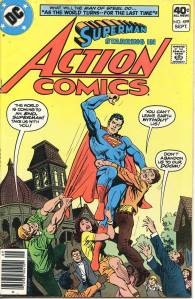
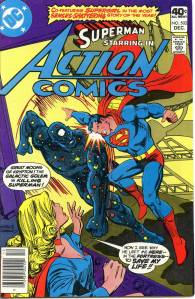
Mort Weisinger retired from DC in 1970 and his final issue of Action Comics was issue #392 (September 1970). Murray Boltinoff became the title’s editor until issue #418. Metamorpho was the backup feature in issues #413-418 after which the character had a brief run as the backup in World’s Finest Comics. Julius Schwartz became the editor of the series with issue #419 (December 1972) which also introduced the Human Target by Len Wein and Carmine Infantino in the back-up feature. Green Arrow became a backup feature in #421 and ran through #458, initially rotating with the Human Target and the Atom. Between issues #423 (April 1973) and #424 (June 1973), the series jumped ahead by one month due to DC’s decision to change the cover dates of its publishing line.
A new version of the Toyman was created by Cary Bates and Curt Swan in issue #432 (February 1974). Martin Pasko wrote issue #500 (October 1979) which featured a history of the Superman canon as it existed at the time and was published in the Dollar Comics format.
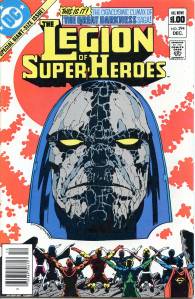
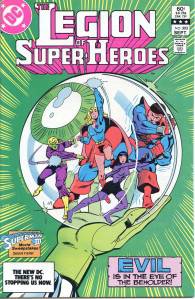
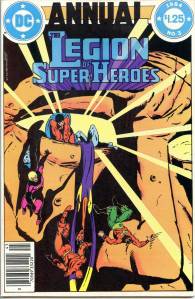
Paul Levitz returned to write the series with #284. Pat Broderick and Bruce Patterson illustrated the title for a short time before Keith Giffen began on pencils, with Patterson, and then Larry Mahlstedt, on inks. The creative team received enhanced popularity following “The Great Darkness Saga“, which ran from #287; #290–294; and Annual #3, featuring a full assault on the United Planets by Darkseid. Comics historian Les Daniels observed that “Working with artist Keith Giffen, Levitz completed the transformation of Legion into a science-fiction saga of considerable scope and depth.”
The Legion celebrated issue #300 (June 1983) by revisiting the “Adult Legion” storyline through a series of parallel world short stories illustrated by a number of popular Legion artists from previous years. The story served to free up Legion continuity from following the “Adult Legion” edict of previous issues.
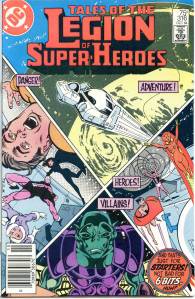
Legion of Super-Heroes #294 NM- $8Legion of Super-Heroes #303 NM- $3Legion of Super Heros Annual #3 VF-NM $3Tales of the Legion of Super-Heroes #316 VF $3
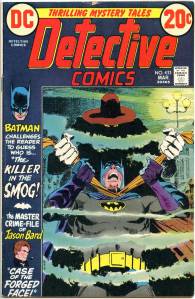
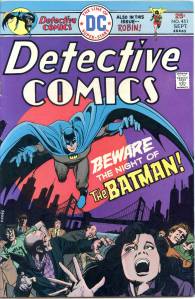
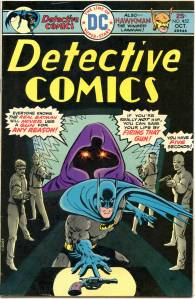
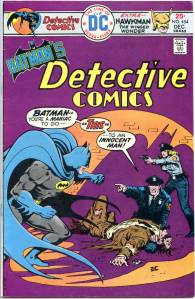
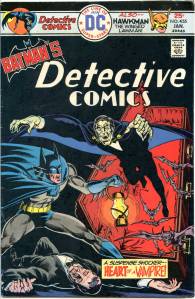
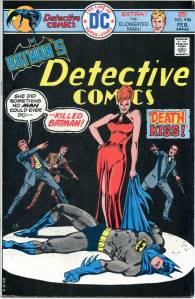
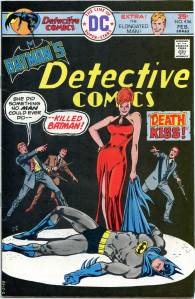
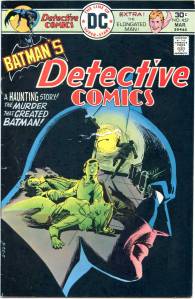
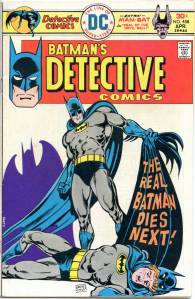
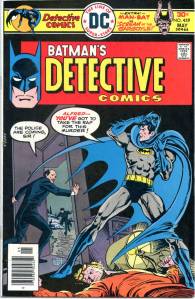
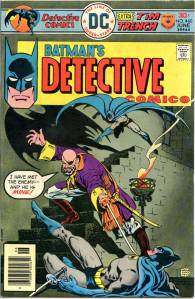
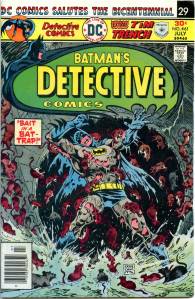
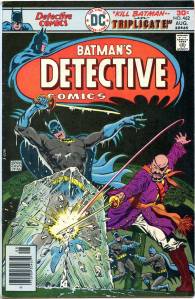
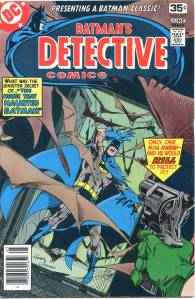
Writer Dennis O’Neil and artist Neal Adams had their first collaboration on Batman on the story “The Secret of the Waiting Graves” in issue #395 (Jan. 1970). The duo, under the direction of Schwartz, would revitalize the character with a series of noteworthy stories reestablishing Batman’s dark, brooding nature and taking the books away from the campy look and feel of the 1966–68 ABCTV series. Comics historian Les Daniels observed that “O’Neil’s interpretation of Batman as a vengeful obsessive-compulsive, which he modestly describes as a return to the roots, was actually an act of creative imagination that has influenced every subsequent version of the Dark Knight.” Adams introduced the Man-Bat with writer Frank Robbins in Detective Comics #400 (June 1970). O’Neil and artist Bob Brown crafted Batman’s first encounter with the League of Assassins in Detective Comics #405 (Nov. 1970) and created Talia al Ghul in issue #411 (May 1971).
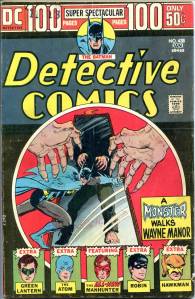
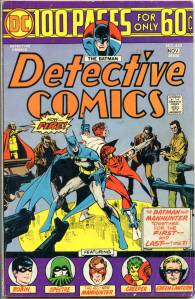
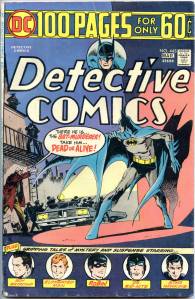
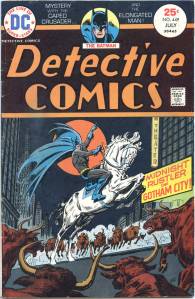
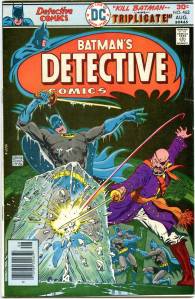
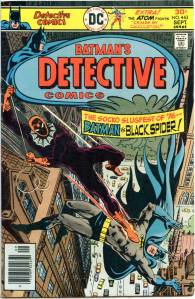
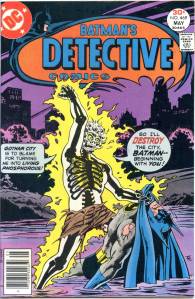
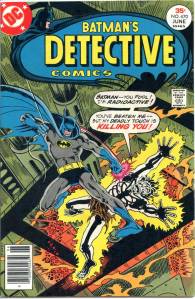
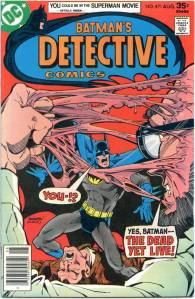
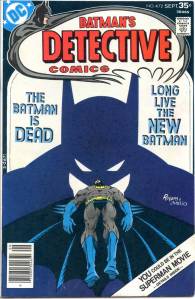
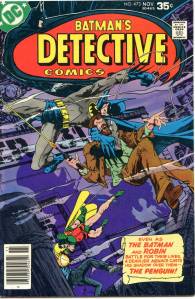
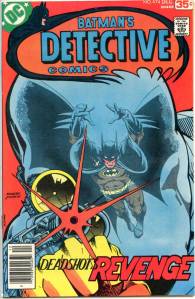
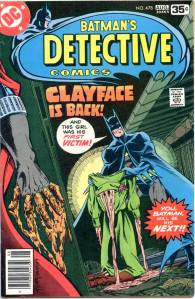
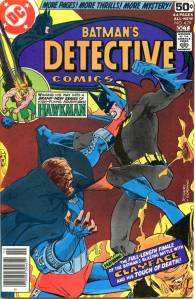
After publishing on a monthly schedule throughout its run, Detective Comics became a bi-monthly book from issues #435 (June–July 1973) to #445 (Feb.-March 1975). Issues #438 (Dec. 1973-Jan. 1974) to #445 (Feb.–March 1975) of the series were in the 100 Page Super Spectacular format. O’Neil and artist Dick Giordano created the Batman supporting character Leslie Thompkins in the story “There Is No Hope in Crime Alley” appearing in issue #457 (March 1976). Writer Steve Englehart and artist Marshall Rogers produced an acclaimed run of Batman stories in Detective Comics #471–476 (Aug. 1977 – April 1978), and provided one of the definitive interpretations that influenced the 1989 Batman movie and would be adapted for the 1990s animated series. The Englehart and Rogers pairing, was described in 2009 by comics writer and historian Robert Greenberger as “one of the greatest” creative teams to work on the Batman character. In their story “The Laughing Fish”, the Joker is brazen enough to disfigure fish with a rictus grin, then expects to be granted a federal trademark on them, only to start killing the bureaucrats who try to explain to him that obtaining such a claim on a natural resource is legally impossible. Writer Len Wein and Rogers co-created the third version of the supervillain Clayface in Detective Comics #478 (July–Aug. 1978). The original Katherine Kane also known as “Batwoman” was killed in the lead story in issue #485 (Aug.–Sept. 1979) by the League of Assassins.
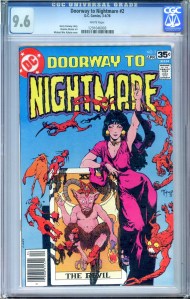
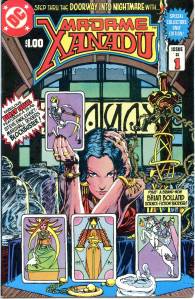
Doorway to Nightmare, introduced in 1978, was the last of the DC “Mystery” line of titles in the 1970s that became the forerunner of Vertigo. It did not have a consistent creative team—the intent was to create writer-artist pairings that had never occurred before, except for the cover art of Michael William Kaluta. Madame Xanadu, the star of the series, was not a host but an active participant, albeit never the main character in her stories.
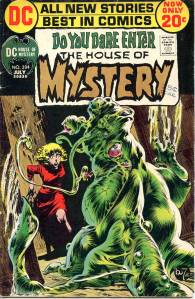
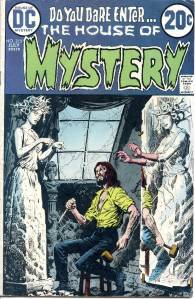
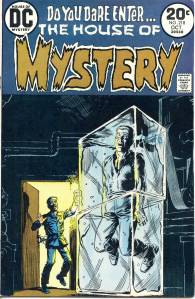
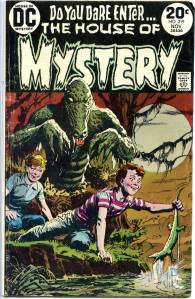
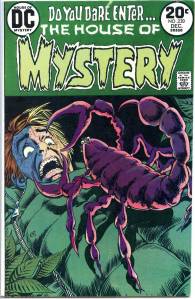
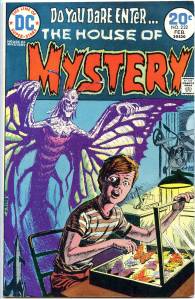
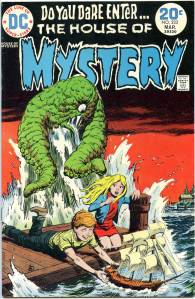
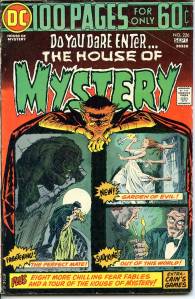
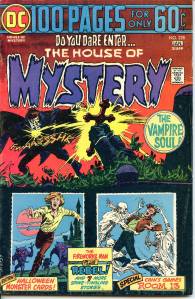
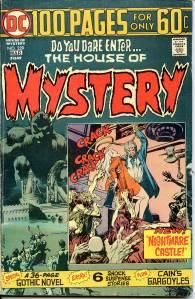
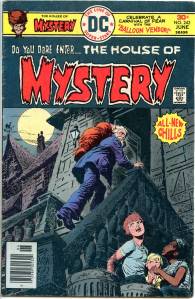
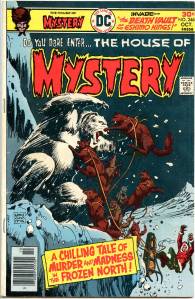
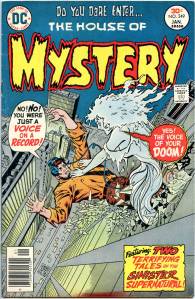
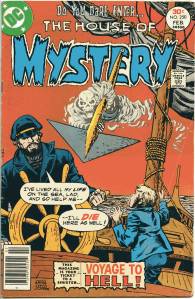
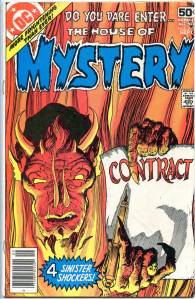
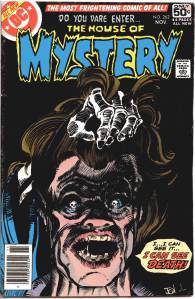
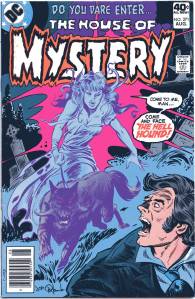
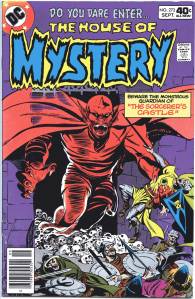
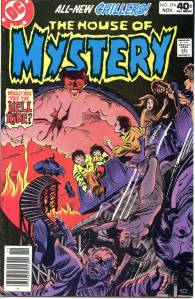
With issue #174, EC Comics veteran Joe Orlando was hired by DC to take over as editor of House of Mystery. As the Comics Code Authority was now being challenged by both DC and Marvel over content restrictions, the series returned to its overt horror themes. The first issue under Orlando would be a reprint issue of old horror/suspense stories, as the new direction would truly begin with #175 (July–August 1968). The issue would introduce a new figure to the series, Cain, the “able care taker” of the House of Mystery who would introduce nearly all stories that would run in the series before its cancellation. Cain would also host the spin-off humor series Plop! and later become a recurring character in Blue Devil and The Sandman.
Artist Bernie Wrightson‘s first professional comic work was the story “The Man Who Murdered Himself” which appeared in issue #179 (March–April 1969)
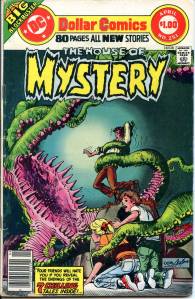
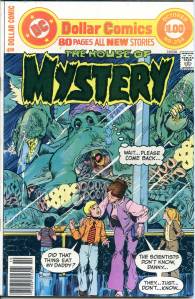
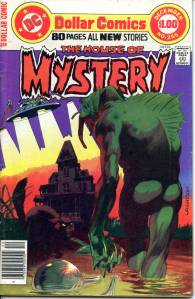
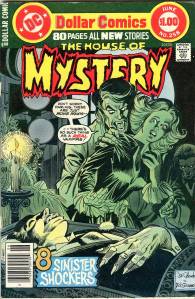
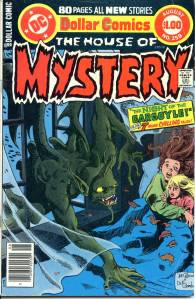
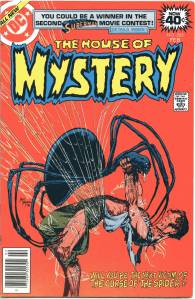
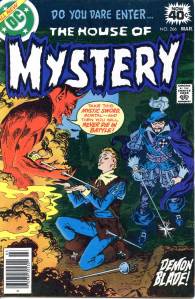
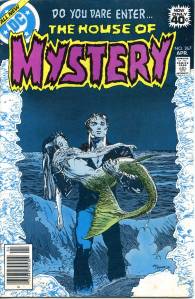
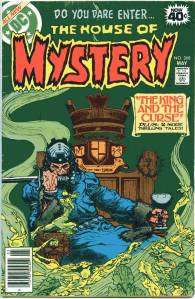
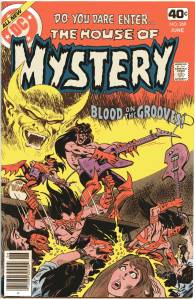
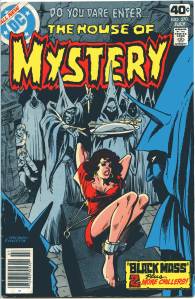
House of Mystery was in the Dollar Comics format for issues #251 (March–April 1977) to #259 (July–August 1978). House of Mystery featured stories by writers T. Casey Brennan (#260, 267, 268 and 274) and Scott Edelman (#257, 258, 260, 264, 266, 270, 272, 273). Orlando’s tenure as editor ended with #257 (March–April 1978).
House of Mystery #199 VG+ $14House of Mystery #204 FN $18House of Mystery #209 FN $24House of Mystery #215 FN+ $14House of Mystery #218 FN-VF $16House of Mystery #219 VG $8House of Mystery #220 FN+ $12House of Mystery #222 VF- $12House of Mystery #223 VF- $12House of Mystery #224 VG+ $14House of Mystery #226 VG+ $14House of Mystery #228 FN+ $24House of Mystery #229 FN $19House of Mystery #240 FN-VF $13House of Mystery #242 VG-FN $10House of Mystery #244 FN-VF $15House of Mystery #246 VG-FN $10House of Mystery #249 VG $5House of Mystery #250 FN-VF $10The House of Mystery #251 FN $11The House of Mystery #252 FN+ $12The House of Mystery #254 VF $16The House of Mystery #255 FN- $8House of Mystery #258 VF- $16The House of Mystery #259 FN+ $10House of Mystery #260 VG+ $7House of Mystery #262 FN $8House of Mystery #263 VF $6House of Mystery #265 FN- $6House of Mystery #266 VF-NM $10House of Mystery #267 VF+ $8House of Mystery #268 VG-FN $5House of Mystery #269 VF- $5House of Mystery #270 FN $6House of Mystery #271 VF- $5House of Mystery #272 FN $5House of Mystery #273 VF-NM $12House of Mystery #274 VF $6
Step thru the doorway into nightmare with Madame Xanadu in the 25-page “Dance For Two Demons.” Script by Steve Englehart, art by Marshall Rogers. Madame Xanadu centerfold by Michael W. Kaluta. Plus: A disease that transforms and corrupts is explored in the 7-page science fiction tale “Falling Down to Heaven…” Script by J.M. DeMatteis, art by Brian Bolland. Cover by Michael W. Kaluta.
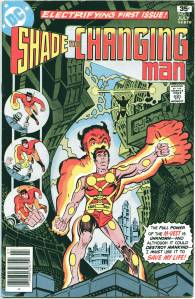
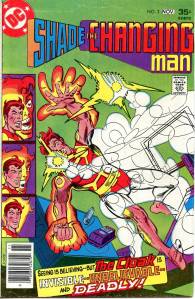
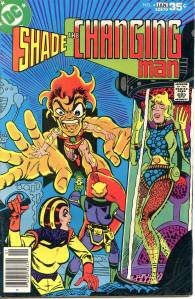
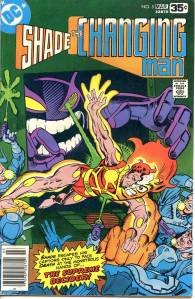
Shade, the Changing Man told the story of a fugitive from the militant planet Meta in another dimension. Shade (whose full name is Rac Shade) was powered by a stolen “M-vest” (or Miraco-Vest, named for its inventor) which protected him with a force field and enabled him to project the illusion of becoming a large grotesque version of himself. The character was the first Ditko had created, or helped to create, for a mainstream publisher for many years. Prior to rejoining DC Comics, Ditko had worked on characters such as his Mr. A. title. Shade was very much a return to mainstream superheroics, although Shade indicated no particular connection with the DC Universe (although the letters columns stated that there is no reason it could not be shown to be there). Michael Fleisher scripted the series based on Ditko’s plotting and art.