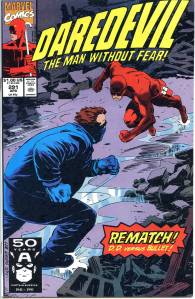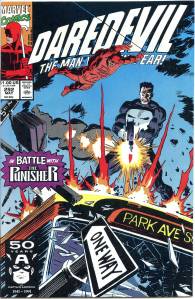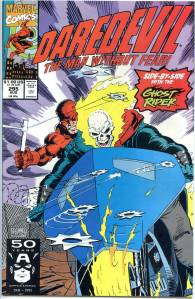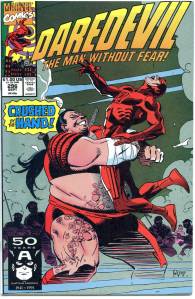
Daredevil (1990’s)

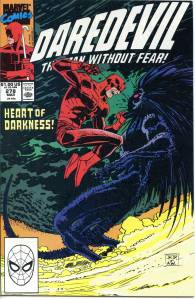
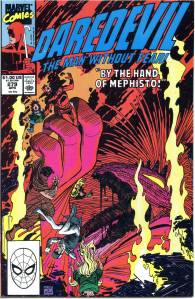
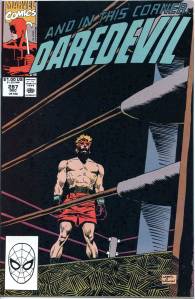
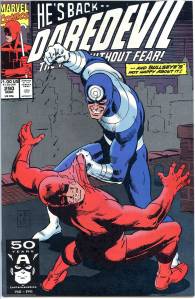
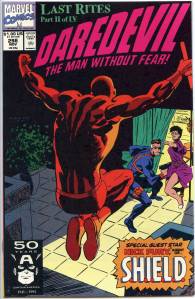
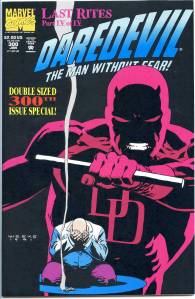
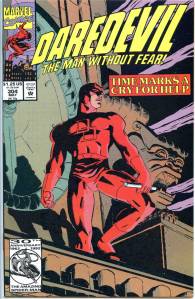
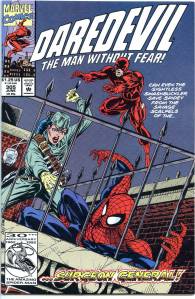
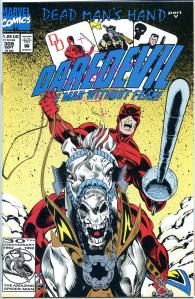
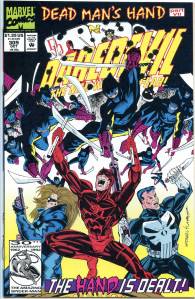
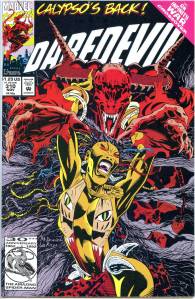
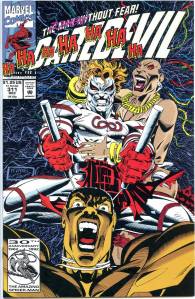
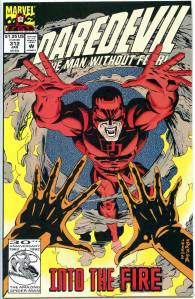
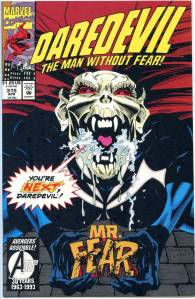
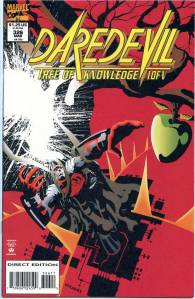
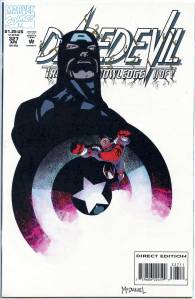
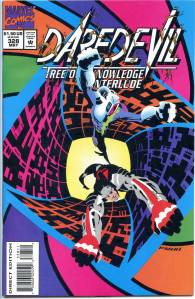
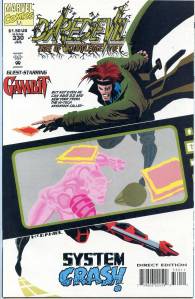
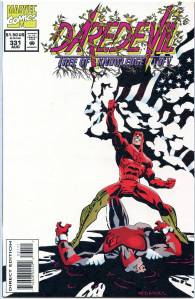
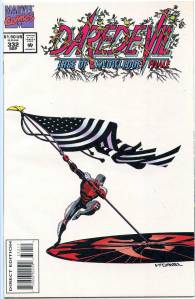
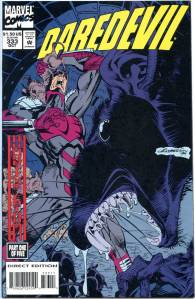
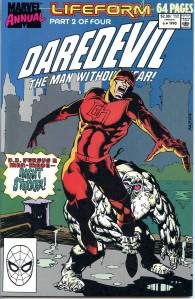
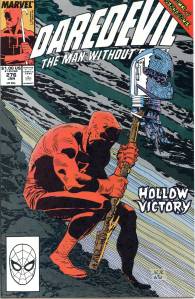
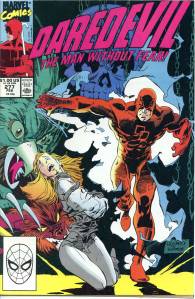
New writer D. G. Chichester and penciler Lee Weeks continued from where Nocenti left off, with Murdock resuming his friendship with Foggy Nelson, struggling to re-win the heart of Karen Page, appealing the revocation of his attorney’s license, and bonding more deeply than ever with Hell’s Kitchen. Chichester’s focus on Daredevil’s relationship with New York City went so far as to have two issues devoted entirely to Daredevil defending New Yorkers from ordinary criminals and even simple accidents. The critically acclaimed “Last Rites” arc from #297–300 saw Daredevil regaining his attorney’s license and finally bringing the Kingpin to justice.

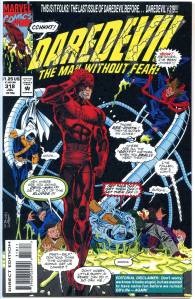
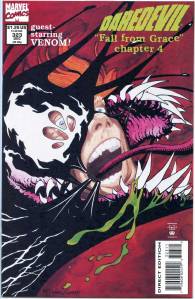
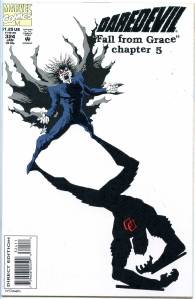
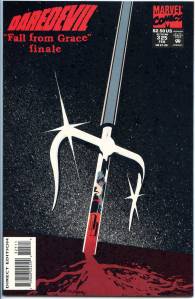
The creative team of Chichester and penciler Scott McDaniel changed the status quo with their “Fall From Grace” storyline in issues #319–325 (Aug. 1993 – Feb. 1994). Elektra, who was resurrected in #190 but had not been seen since, finally returned. An injured Daredevil creates a more protective costume from biomimetic materials: red and gray with white armor on the shoulders and knee pads. Revamped billy clubs could attach to form nunchucksor a bo staff. His secret identity becomes public knowledge, leading to him faking his own death and assuming the new identity of “Jack Batlin”. This new identity and costume lasts for several story arcs, while Murdock finds a way to convince the world that he is not, in fact, secretly Daredevil (courtesy of a double). A short stint by J. M. DeMatteis returned Daredevil to his traditional red costume and Matt Murdock identity.
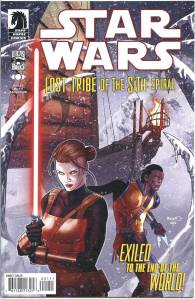
Star Wars Lost Tribe of the Sith: Spiral (2012)

On a planet ruled by a tribe of Sith—marooned thousands of years ago and cut off from the galaxy—the throne holder is about to be challenged by a power-hungry Sith rebel from the slums . . . and a thwarted royal Sith princess! Their few shared interests set them on a quest together—but most certainly not as partners!

The saga of the lost tribe continues in comics, following the release of John Jackson Miller’s Lost Tribe of the Sith: The Collected Stories.

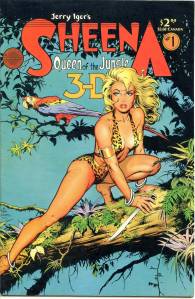
Sheena 3-D Special (1985)

The first issue of Blackthorne’s long-running 3-D series, featuring Jerry Igers classic jungle princess, hero of pulps, comics, and the big and small screens. Absent from comics for almost three decades, this presents some of her 1950s adventures in 3-D format, including one by legendary good-girl artist Matt Baker. But the main draw for many fans will be the stunning cover by beloved artist (and Rocketeer creator) Dave Stevens. Also featuring an introduction by creator Jerry Iger, a Snarzan the Ape spoof from Great Comics (1941) #1, and a Congo King story with art by legendary good-girl artist Matt Baker. Heroine in the Jungle; Sargasso of Lost Safaris; Snarzan the Ape in Mein Kemp Von Der Chungle; Congo King; Spoor of the Dancing Skeletons. 32 pages, B&W with 3-D effects.

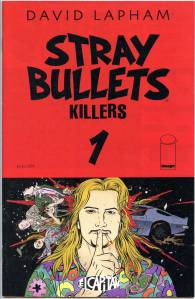
Stray Bullets: Killers (2014)

In March 2014, Image Comics ended the hiatus of Stray Bullets with the publication of the final issue of the HiJinks and Derring-Do arc, and the simultaneous launch of a new series and arc titled Stray Bullets: Killers. A giant-sized softcover trade paperback edition (The Uber Alles Edition) collecting all forty-one issues of the original series was also released by Image Comics.[2] Killers ran for eight issues throughout 2014.

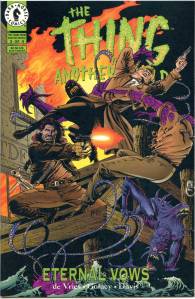
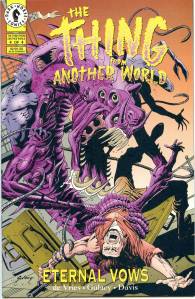
The Thing from Another World – Eternal Vows (1993)

Written by David DeVries, pencils by Paul Gulacy. An American fisherman is infected by a piece of the Thing left over at the end of the first story, and subsequently infects his New Zealander girlfriend, though this time the Things intend to quietly survive together rather than assimilating everything in sight. MacReady shows up once again to put an end to that plan.
Forgotten Realms (1989)

In 1989, DC Comics began publishing the Forgotten Realms comic series, written by Jeff Grubb. Each issue contained twenty-six pages, illustrated primarily by Rags Morales and Dave Simons. The 19 issues produced by Morales were his first professional works. Tom Raney illustrated issues #17 and #20. Elliot S. Maggin served as an editor for DC from 1989 to 1991 and oversaw the licensed TSR titles, including Forgotten Realms. Twenty-five issues were published in total, with the last being released in 1991.

Master of Kung Fu (1974)

The series began by introducing Shang-Chi as a man raised by his father Fu Manchu to be the ultimate assassin for the would-be world conqueror. In Shang-Chi’s first mission, he kills one of his father’s old enemies, Dr. Petrie, and learns of Fu Manchu’s true, evil nature. Disillusioned, Shang-Chi swears eternal opposition to his father’s ambitions and fights him as an agent of British intelligence, under the orders of Sir Denis Nayland Smith.

The series was an instant sales success. However, Englehart and Starlin would depart the series after their third issue, Master of Kung Fu # 17; Englehart over editorial disputes with then Marvel editor Roy Thomas while Starlin, who was unfamiliar with Fu Manchu up until working on the second issue of the series, left out of embarrassment over the racist nature of the Rohmer novels. Despite the title’s co-creators’ early departure, its success grew once writer Doug Moench and artist Paul Gulacy, began collaborating in issues #22. Comics historian Les Daniels observed that “Ingenious writing by Doug Moench and energetic art by Paul Gulacy brought Master of Kung Fu new life.” Their critically acclaimed run continued, with short gaps, until #51 when Gulacy was replaced by artist Jim Craig. Craig was later succeeded by Mike Zeck who became the regular penciller in issue #64 (1978).

Grafik Muzik (1990)

Madman first appeared as Frank Einstien in Creatures of the Id and Grafik Muzik published in 1990, but it wasn’t until March 1992 that the first Madman miniseries debuted from Tundra Publishing. The series gained further recognition with its move to Dark Horse Comics in April 1994, where it was relaunched as Madman Comics and went on to be nominated for several Harvey AwardsMadman Comics ran for 20 issues and ended in 2000. From 2007–2009, Image Comics published Madman: Atomic Comics for 17 issues.

Supergirl V2 (1982)

Supergirl (Volume 2) was published from November of 1982 until September of 1984, spanning a total of 23 issues. The series was initially entitled, the Daring New Adventures of Supergirl, but shortened the title to simply, Supergirl, with issue #13. This was the last regular comic series to feature the Pre-Crisis Kara Zor-El as Supergirl.

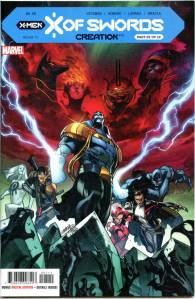
X of Swords (2020)

It is discovered that the first incarnation of the Horsemen are actually the biological children of Apocalypse and his wife Genesis who was also sent with Arakko. Following that, Apocalypse went to the Summoner and directed him to the portal to Otherworld where he could return to Arakko, while being accompanied by Unus and Banshee. However, what Apocalypse didn’t expect was that this was all an elaborated plan created by his own children so they could return and overthrow Krakoa with their fellow Arakki mutants and Daemon army. Apocalypse himself was soon attacked and critically injured by his daughter War, being forced to retreat back to Krakoa to heal their wounds and prepare for war between the two groups.