Frank Miller‘s limited series The Dark Knight Returns (February–June 1986), which tells the story of a 55-year old Batman coming out of retirement in a possible future, reinvigorated the character. The Dark Knight Returns was a financial success and has since become one of the medium’s most noted touchstones. The series also sparked a major resurgence in the character’s popularity.
That year Dennis O’Neil took over as editor of the Batman titles and set the template for the portrayal of Batman following DC’s status quo-altering miniseries Crisis on Infinite Earths. O’Neil operated under the assumption that he was hired to revamp the character and as a result tried to instill a different tone in the books than had gone before. One outcome of this new approach was the “Year One” storyline in Batman #404–407 (February–May 1987), in which Frank Miller and artist David Mazzucchelli redefined the character’s origins. Writer Alan Moore and artist Brian Bolland continued this dark trend with 1988’s 48-page one-shotBatman: The Killing Joke, in which the Joker, attempting to drive Commissioner Gordon insane, cripples Gordon’s daughter Barbara, and then kidnaps and tortures the commissioner, physically and psychologically.
The Batman comics garnered major attention in 1988 when DC Comics created a 900 number for readers to call to vote on whether Jason Todd, the second Robin, lived or died. Voters decided in favor of Jason’s death by a narrow margin of 28 votes (see Batman: A Death in the Family). The following year saw the release of Tim Burton‘s Batman feature film, which firmly brought the character back to the public’s attention, grossing millions of dollars at the box office, and millions more in merchandising.
This film adaptation includes one possible explanation of the title’s significance in story context: the narrative line, “Blade runner. You’re always movin’ on the edge.”
This was a reprint of issue 22 of the Marvel Comics Super Special series of titles, which by this time only printed Marvel’s movie adaptations, but without the feature content contained in the special.
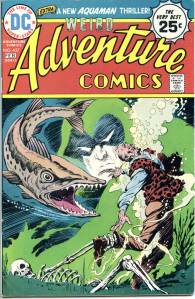
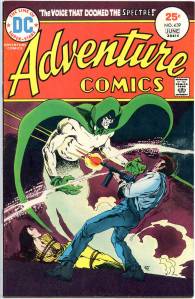
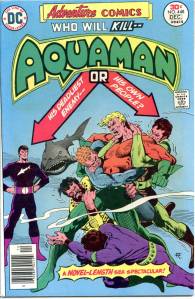
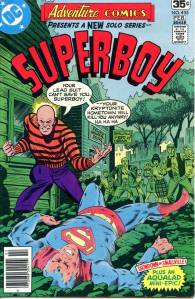
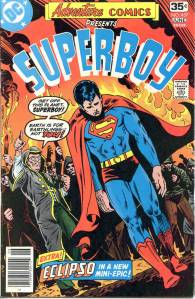
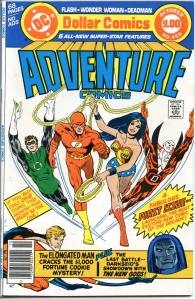
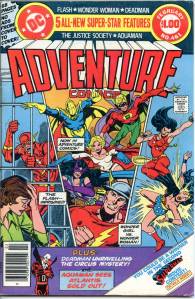
In the late 70’s conventional superheroes returned to the book, beginning behind the Spectre, first a three-issue run of Aquaman (issues #435–437, an early assignment for Mike Grell) and then a newly drawn 1940s Seven Soldiers of Victory script (issues #438–443). Aquaman was promoted to lead (issues #441–452), and backing him up were three-part story arcs featuring the Creeper (#445–447), the Martian Manhunter (#449–451), bracketed by issue-length Aquaman leads. He was awarded his own title and Superboy (#453–458) took over Adventure with Aqualad (#453–455) and Eclipso (#457–458) backups. Following this was a run as a Dollar Comic format giant-sized book (issues #459–466), including such features as the resolution of Return of the New Gods (cancelled in July–August 1978), “Deadman“, and the “Justice Society of America“.
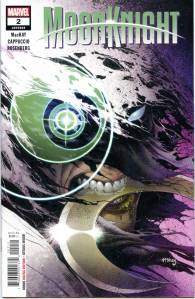
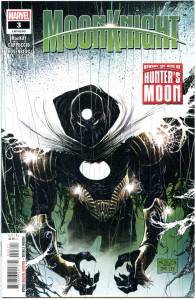
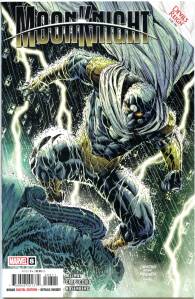
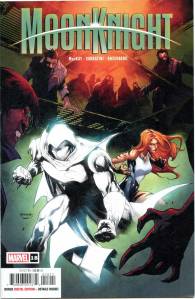
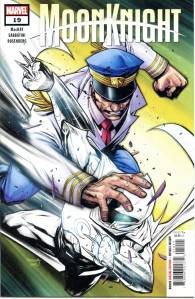
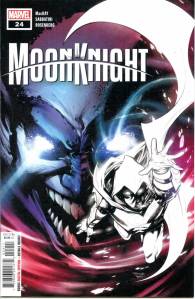
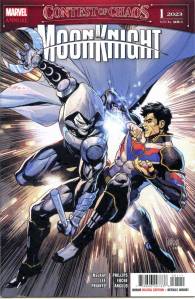
In 2021, the series Moon Knight vol. 10 launched under writer Jed MacKay, and artists Alessandro Capuccio and Rachelle Rosenberg. The new series has Marc Spector not only acting as the crimefighter Moon Knight but also (despite his Jewish background) adopting the role of high priest of “the Midnight Mission,” a congregation dedicated to Khonshu. In discussing his connection to Khonshu, Marc Spector now describes his four aspects as “the traveler”, “the pathfinder”, “the embracer”, “the defender of those who travel at night.” Once again, Marc Spector is depicted as being in regular therapy with a psychologist in order to help manage his psychological issues. The series also offers that Marc Spector may be immortal, as he has now been literally resurrected on multiple occasions and could be resurrected again in the future.
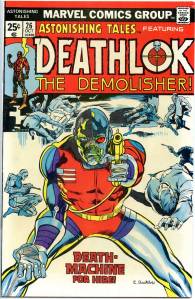
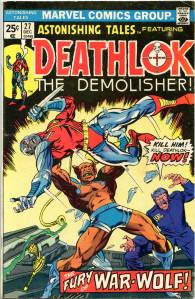
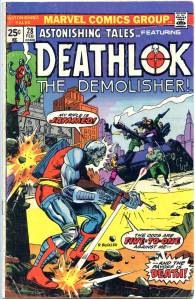
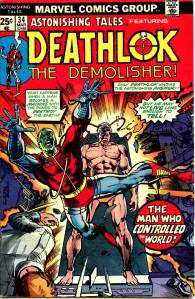
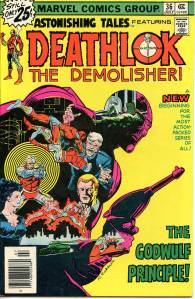
The final feature in Astonishing Tales starred and introduced Deathlok, a conflicted cyborg who predated the popular movie character RoboCop by several years and has become one of the most enduring Marvel characters among those introduced in the 1970s; at least two major iterations of the character, featuring different individuals, starred in series in the 1990s and 2000s. Created by artist Rich Buckler, who devised the initial concept, and writer Doug Moench, the feature ran from #25-28 and 30-36 (Aug. 1974 – Feb. 1975 and June 1975 – July 1976), the final issue. Bill Mantlo scripted issues #32-35, with Buckler himself scripting the finale. Buckler described Deathlok as “an extension of a paranoid fantasy. He was a representation of part of my outlook and world view. He was a culmination of many of the messages in some of the music of the time. He was part of some of the things going wrong in our country at the time. Maybe he was the science that was going wrong.Artist George Pérez made his professional comics debut with a two-page backup feature in issue #25.
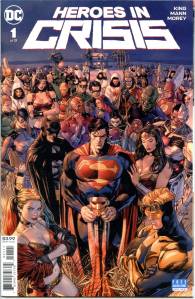
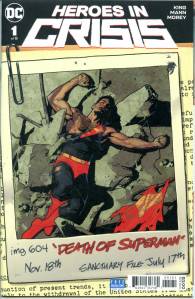
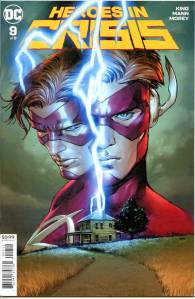
Heroes in Crisis primarily deals with the emotional cost of being a superhero and explores “what violence does to a society”, a common theme in King’s work. King, a former CIA counterterrorism officer, believed this was an important subject that needed to be discussed. King described this creative decision: “Comic books, throughout the whole history of the medium, have been reflective of history. In World War II, there were comics about fighting in World War II. In the seventies, the comics were about psychedelic escape. Today, our moment right now is a moment of violence and living with violence and our comics have to address that”.
Victor Von Doom – scientist, sorcerer, disfigured face, twisted soul – has been spending much of his time warning against a trillion-dollar global effort to create the first “artificial” black hole. Wrestling with visions of an entirely different life…a better future…DOCTOR DOOM finds himself at a crossroads. (what is he questioning?) A catastrophic act of terrorism kills thousands, and the prime suspect is… DOOM? Victor will have to push his unexplained thoughts aside and focus on remaining alive as the title of “Most Wanted Man” is thrust upon him….
Left with no homeland, no armies, no allies, indeed, nothing at all, will the reign of Doctor Doom come to an abrupt halt?
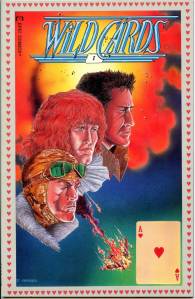
Wild Cards is a four-part comic book series covering events in the Wild Cards anthology. It recounts events previously published in print in novel format, and ties them all together in a story pitting Jay Ackroyd against the machinations of a mystery bomber.
First published in 1990 by Marvel Comics under the Epic Comics imprint Wild Cards ran from September to December of 1990.
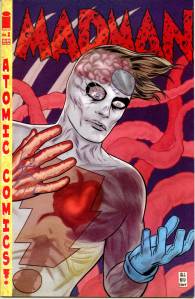
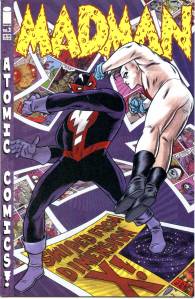
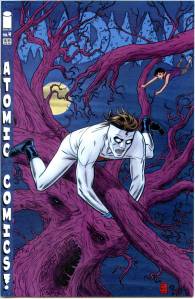
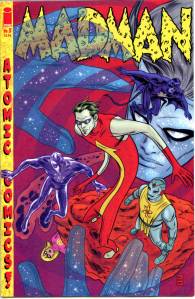
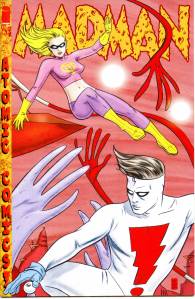
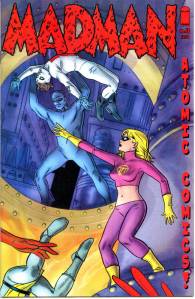
Making his return in this new series from Image Comics, Frank “Madman” Einstein faces his most terrifying challenge ever when his entire existence – not to mention the existence of everything else – is called into question! If fans have never experienced this legendary creation, Madman Atomic Comics marks the perfect opportunity to jump on board! This story also includes an innovative recap of every essential event in the Madman mythos.
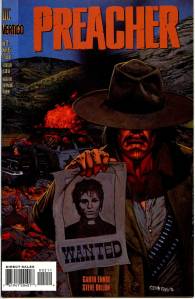
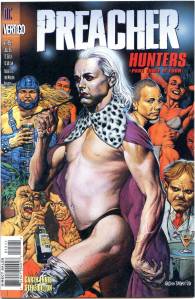
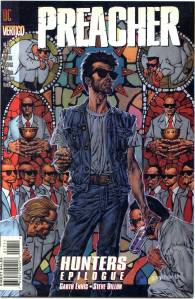
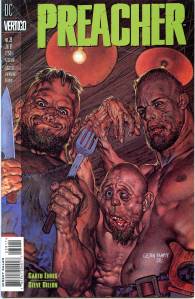
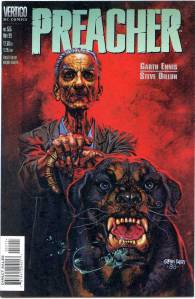
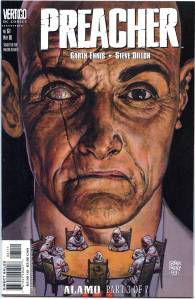
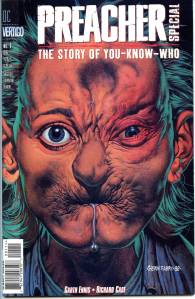
Preacher tells the story of Jesse Custer, a preacher in the small Texas town of Annville. Custer was accidentally possessed by the supernatural creature named Genesis in an incident which killed his entire congregation and flattened his church.
Custer, driven by a strong sense of right and wrong, goes on a journey across the United States attempting to (literally) find God, who abandoned Heaven the moment Genesis was born. He also begins to discover the truth about his new powers. They allow him, when he wills it, to command the obedience of those who hear and comprehend his words. He is joined by his old girlfriend Tulip O’Hare, as well as a hard-drinking Irish vampire named Cassidy.









































 EHT Comics