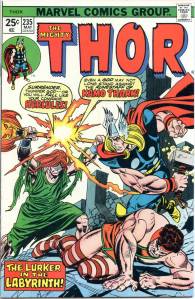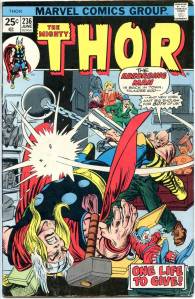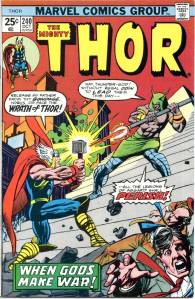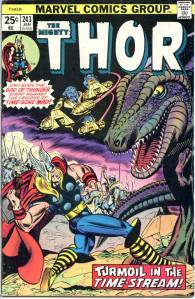
Thor (1970’s)

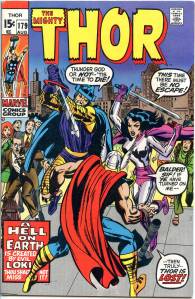
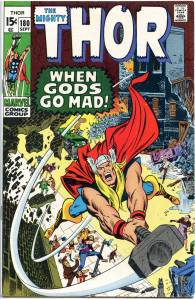
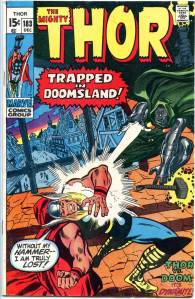
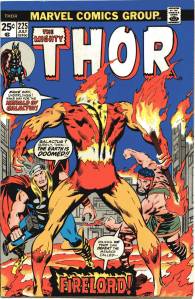
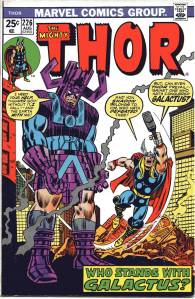
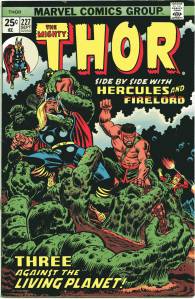
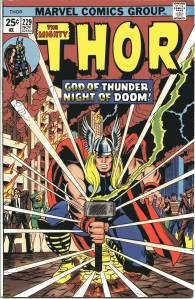
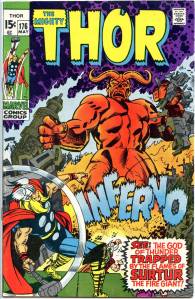
After Kirby left the title, Neal Adams penciled issues #180–181 (Sept.-Oct. 1970). John Buscema then became the regular artist the following issue. Buscema continued to draw the book almost without interruption until #278 (Dec. 1978). Lee stopped scripting soon after Kirby left, and during Buscema’s long stint on the book, the stories were mostly written by Gerry ConwayLen Wein, or Roy Thomas. Thomas continued to write the title after Buscema’s departure, working much of the time with the artist Keith Pollard; during this period Thomas integrated many elements of traditional Norse mythology into the title, with specific stories translated into comics form. Following Thomas’s tenure, Thor had a changing creative team.

In the mid-1970s, Marvel considered giving the character a second series as part of parent company Magazine Management‘s line of black-and-white comics magazines. A story written by Steve Englehart for the aborted project appeared in Thor Annual #5 (1976). A black-and-white Thor story appeared in Marvel Preview #10 (Winter 1977).
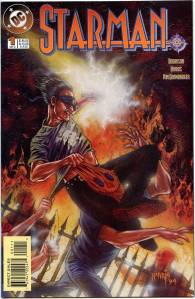
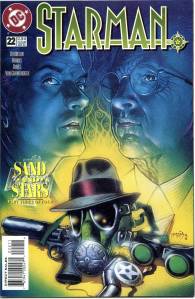
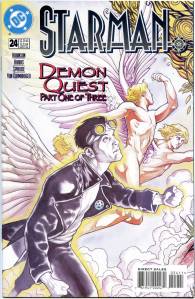
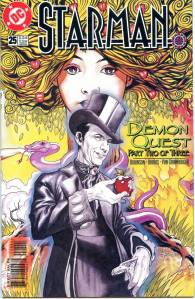
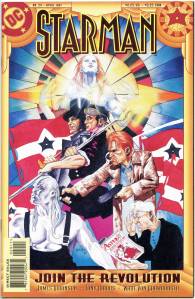
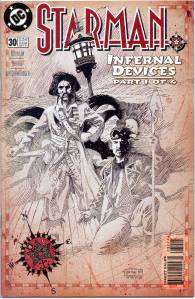
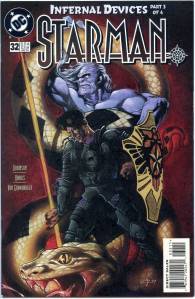
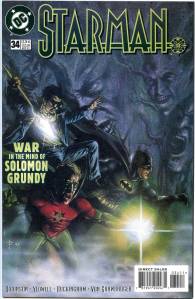
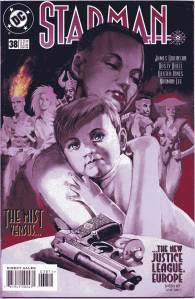
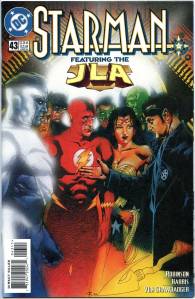
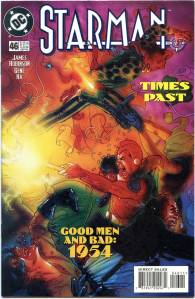
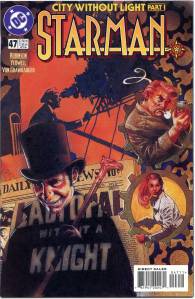
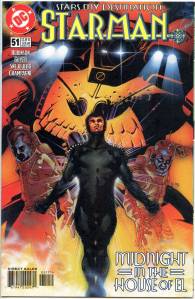
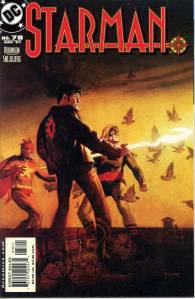
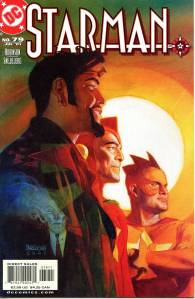
Starman V2 (1994)

In Zero Hour: Crisis in Time #1 (September 1994), writer James Robinson and artist Tony Harris introduced Jack Knight, the son of the first Starman. He wields a cosmically-powered staff, but refuses to wear a costume, instead preferring a T-shirt, leather jacket (with star emblem on the back), a Cracker Jack prize sheriff’s star, and light-shielding tank goggles. Jack briefly joined the JSA, but soon retired at the end of the Starman series, passing along his cosmic rod to the JSA’s young heroine, Stargirl. He starred in this critically acclaimed series from 1994 until 2001.

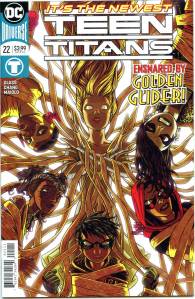
Teen Titans V6 (2016)

The June 2016 DC Rebirth relaunch established two Titans teams: the Titans, with Nightwing, The Flash (Wally West), Lilith, Arsenal, Donna Troy, the Bumblebee and Tempest; and the Teen Titans, consisting of Damian Wayne as Robin, Wallace West as Kid Flash, Jackson Hyde as Aqualad, Beast Boy, Starfire and Raven. Titans writer Dan Abnett confirmed in an interview with Newsarama that Titans characters the Hawk and the Dove, the Herald, Gnarrk and others would be appearing in the new series as well. After the Lazarus Contract event, Wallace West is fired from the Teen Titans and joins Defiance, Deathstroke’s version of the Titans. However, Wallace returns to the Teen Titans in issue #14. In Super Sons #7, Superboy (Jonathan Samuel Kent) acts as a temporary member.

X-Men Red V2 (2022)

Who can save the red planet? The mutants of Arakko spent millennia scarred by war — but on what was once called Mars, they’re learning to live in peace. Storm knows the red planet needs something greater than a queen. But Abigail Brand has other plans, along with an unstable Vulcan on her side and Cable keeping his own secrets. Welcome to X-Men Red. It’s a new world…and someone has to fight for it.

Batman – White Knight Presents – Generation Joker (2023)

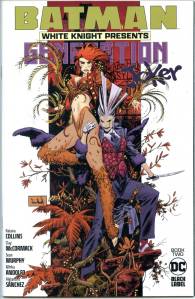
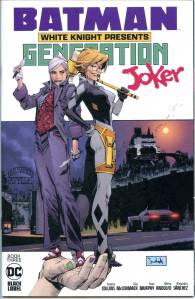
When the rebellious twins run away in a stolen Batmobile, only Joker Jack Napier’s quickly fading hologram has any hope of getting them home safely and keeping them out of the family business. But a life of crime isn’t the only temptation young Bryce and Jackie are facing: the kids uncover a dark secret that could bring their dad back to life for good!

With a wild array of Batman’s former enemies and allies on their tails, will the kids succeed in reviving the Dark Knight’s greatest foe?

Fantastic Four V6 (2018)

A new volume for the Fantastic Four was released in August 2018, written by Dan Slott, as part of Marvel’s Fresh Start event. The first issue of the new series was met with strong sales, and a positive critical reaction. When the Future Foundation is threatened by the Griever at the End of All Things, Mister Fantastic plays on her ego to convince her to provide him with equipment that will allow him to summon his teammates. When Human Torch and Thing are reunited with Mister Fantastic and Invisible Woman, the other superheroes that were part of the Fantastic Four at some point in their lives also arrived, including unexpectedly, X-Men‘s Iceman. With the gathered heroes assisted the Fantastic Four into causing so much damage to the Griever’s equipment, she is forced to retreat in her final telepod or be trapped in that universe. This left the heroes to salvage components from the broken ship to create their own teleport system to return to their universe.

Force Works (1994)

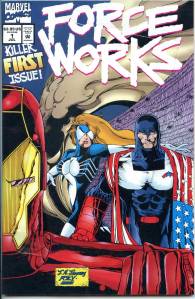
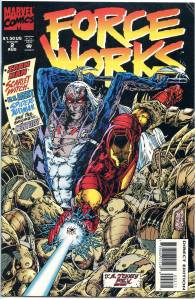
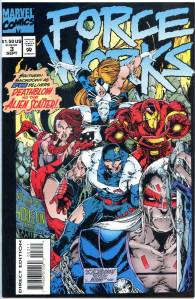
The first version of Force Works first appeared in the comic book series Force Works #1 (July 1994) where they were created by writers Dan Abnett and Andy Lanning and initially drawn by Tom Tenney.[1] The team was formed from the remains of the West Coast Avengers, after leader Iron Manleft the Avengers due to an internal dispute. Force Works maintained a different outlook than the Avengers, trying to preempt natural and man-made disasters.

The second version of Force Works was mentioned in Civil War #6.

Ultimate Origins (2008)

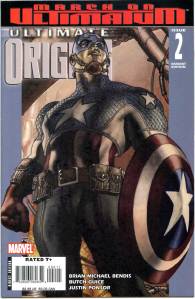
Ultimate Origins is a comic book limited series published by Marvel Comics, released in June 2008. It falls under Marvel’s Ultimate Marvel imprint. It is written by Brian Bendis and illustrated by Butch Guice. It is intended to be a chapter in the development of Ultimatum, a crossover event that begun in September 2008.

Jeph Loeb stated in an interview with Comic Book Resources: “What Ultimate Origin is going to do is sort of tell us how it all began. … The Ultimate Universe isn’t very old, so this isn’t a cosmic story. You’re not going to see the birth of a planet. What you’ll see is how the superhero community was introduced into the human population. So you’ll learn the importance of things like the Super Soldier program, which has been hinted at in Ultimate Spider-Man and Ultimates 1 and 2. Now, Brian is going to connect the dots.”

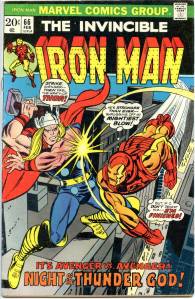
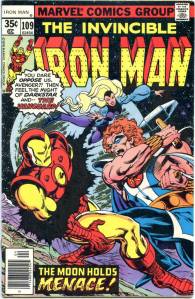
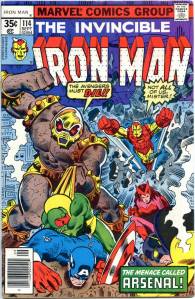
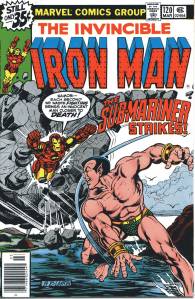
Iron Man (1970’s)

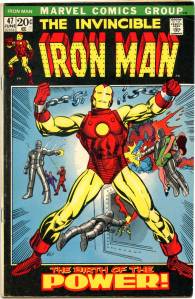
Writer Mike Friedrich and artist Jim Starlin‘s brief collaboration on the Iron Man series introduced Mentor, Starfox, and Thanos in issue #55 (Feb. 1973).  Friedrich scripted a metafictional story in which Iron Man visited the San Diego Comic Convention and met several Marvel Comics writers and artists. He then wrote the multi-issue “War of the Super-Villains” storyline which ran through 1975.

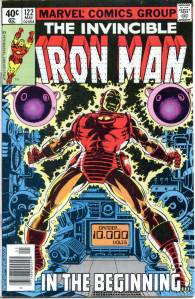
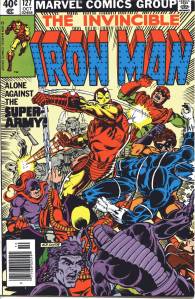
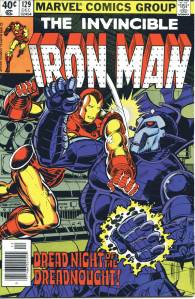
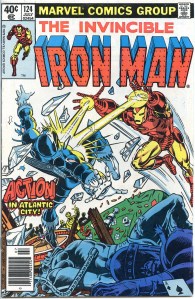
Writer David Michelinie, co-plotter/inker Bob Layton, and penciler John Romita Jr. became the creative team on the series with Iron Man #116 (Nov. 1978). Micheline and Layton established Tony Stark’s alcoholism with the story “Demon in a Bottle“, and introduced several supporting characters, including Stark’s bodyguard girlfriend Bethany Cabe;Stark’s personal pilot and confidant James Rhodes, who later became the superhero War Machine; and rival industrialist Justin Hammer, who was revealed to be the employer of numerous high-tech armed enemies Iron Man fought over the years. The duo also introduced the concept of Stark’s specialized armors as he acquired a dangerous vendetta with Doctor Doom. The team worked together through #154 (Jan. 1982), with Michelinie writing three issues without Layton.
Panic (1954)

Panic was a bi-monthly humor comic that was published by Bill Gaines‘ EC Comics line during the mid-1950s as a companion to Harvey Kurtzman‘s Mad, which was being heavily imitated by other comic publishers.

Panic was edited by Al Feldstein (who became the editor of Mad a few years later). Beginning with its first issue (February–March 1954), Panic had a 12-issue run over two years. Feldstein was the primary cover artist, with stories illustrated by Jack DavisWill ElderJack KamenJoe OrlandoBasil Wolverton and Wally Wood. Some story ideas were by Nick Meglin, later the co-editor of Mad. Scripts were by Feldstein, Elder and Jack Mendelsohn, later a co-screenwriter of Yellow Submarine (1968) and an Emmy-nominated TV comedy writer.