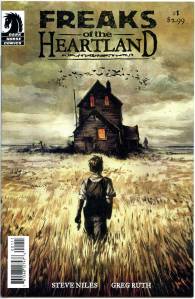
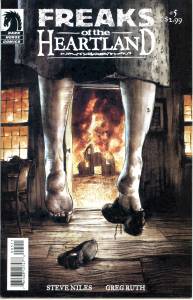
Trevor Owen has a younger brother who lives in the barn behind the house, too monstrous to be let into the house. The boy’s only six years old, but he towers over his older brother, and possesses monstrous strength. For years, Trevor has looked after his baby brother, keeping him from the light, but now that’s all about to change. His family’s profane secret is about to be revealed, uncovering the horrible truth of the small mid-western town the boys have grown up in.
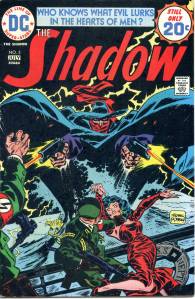
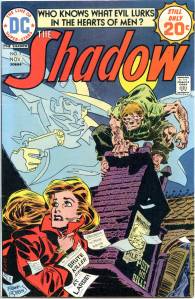
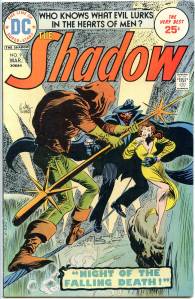
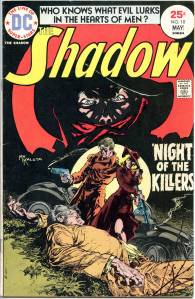
During the mid-1970s, DC Comics published an “atmospheric interpretation” of the character by writer Dennis O’Neil and artist Michael Kaluta in a 12-issue series (Nov. 1973 – Sept. 1975). Kaluta drew issues 1–4 and 6 and was followed by Frank Robbins and then E. R. Cruz. Attempting to be faithful to both the pulp-magazine and radio-drama character, the series guest-starred fellow pulp fiction hero the Avenger in issue #11.
“Menace of the Robot Raiders!” (Mystery In Space #53, October 1959) featured one of the most enduring and fondly remembered space heroes of the next ten years, Adam Strange, in a 10-page tale which led to the best known period for the Mystery In Space title. Adam Strange had begun in a three-issue run in Showcase #17 (November–December 1958), and although DC considered that those issues had not sold sufficiently to warrant granting him his own title, his return a year later in Mystery In Space#53 was to last an impressive 42 appearances over the next seven years. The Adam Strange space opera tales were crafted by Gardner Fox in the best Flash Gordon tradition, with the hero caught between two planets and a love a galaxy away, giant menacing robots, dust devils, perils on two worlds, and distinctive art by Carmine Infantino and Murphy Anderson who drew almost all issues until #92 (June 1964). A number of these stories are considered among the finest of the 1960s, including the full-issue tale “The Planet That Came to a Standstill!” (Mystery In Space #75, May 1962), which won comic fandoms Alley Award for the “Best Book-Length Story” of 1962, and was fairly unusual for the time inasmuch as it featured a cross-over with other major DC characters, the Justice League of America.
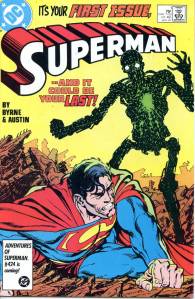
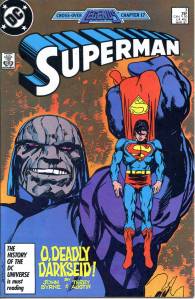
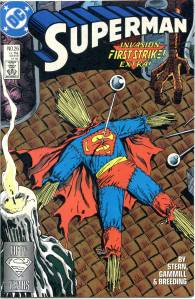
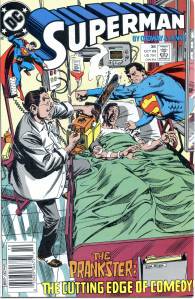
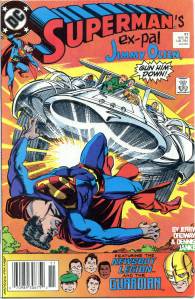
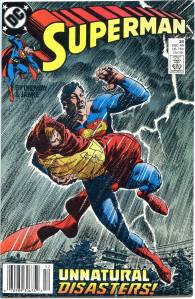
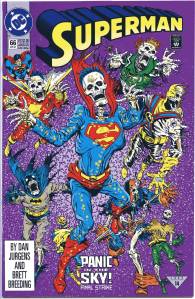
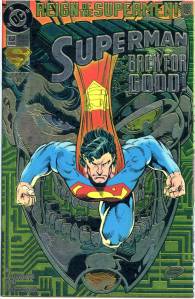
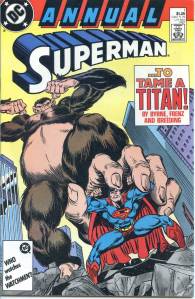
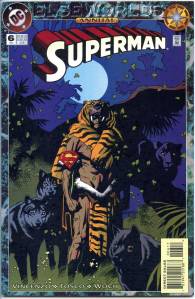
After that limited series, Action Comics returned to publication and Superman vol. 2, #1 was published. The original Superman series (volume 1) became The Adventures of Superman starting with issue #424. Superman vol. 2 continued publishing until April 2006 at which point DC restored The Adventures of Superman to its original title and canceled the second Superman series.
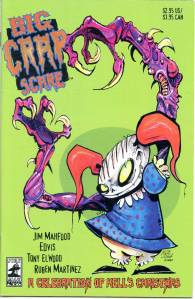
Big Crap Scare: A Celebration of Hell’s Christmas. A wonderful holiday anthology comic from the maniacs that brought you The Disposable Assassin! Bill Marvell by Mondy Carter & Ruben Martinez… Dr. Grave by Edvis… Zombie Kid by Jim Mahfood… Crazy Train by Rob Schrab & Tony Elwood.
Big Crap Scare – A Celebration of Hell’s Christmas NM- $22
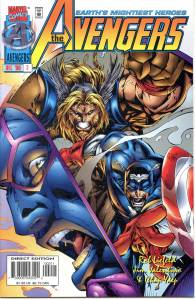
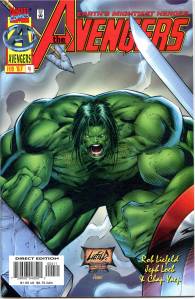
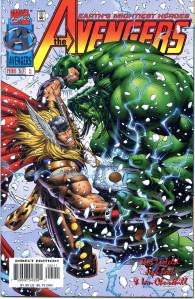
During the “Heroes Reborn” event, many of the Avengers together with the Fantastic Four and others, died trying to stop the psychic entity Onslaught, although it was revealed that Franklin Richards preserved those heroes in a pocket universe. Believing the main team to be gone, the Black Widow disbanded the Avengers, and only butler Edwin Jarvis remained to tend to the Mansion.
The previous continuity of the Marvel Universe was set aside as the heroes were “reborn” in the pocket universe created by Franklin Richards to save his parents and their friends, while the “Heroes Reborn” line ended and the heroes returned to the prime Marvel Universe. This restoration also undid recent changes to the team members such as the Wasp being mutated into an insectoid form, Hawkeye being rendered deaf, and Stark being replaced by his teenage self, attributed to Franklin’s childish perception recreating the heroes in the manner he was more familiar with.
The Justice League has long protected Earth from all manner of foreign and alien invaders over the years, always keeping a vigilant eye to the skies for the next threat. But what if the threat was already walking the Earth…hiding in plain sight…watching…waiting for their moment to strike…
Step into the thrilling pages of Spellbound, a classic Atlas comics series that captivated readers in the 1950s. Through the expert craftsmanship of writer Sol Brodsky and talented artists, Spellbound brings to life unforgettable characters and stunning visuals that will linger in your mind long after you close the cover. Don’t miss out on this captivating series that defined the golden age of Atlas comics.
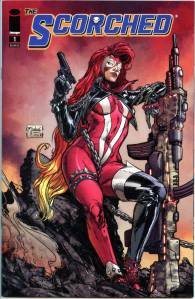
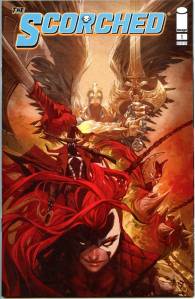
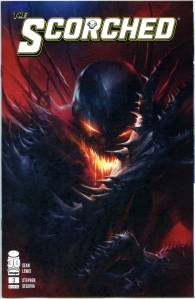
The Scorched is a team of Hellspawns protecting the world from supernatural threats, The team consists of Spawn, Jessica Priest aka She-Spawn II, Marc Rosen aka Medieval Spawn II, Gunslinger Spawn, Redeemer, and Eddie Frank the Reaper.
As the series continued, Soul Crusher, Natasha, Monolith, Haunt, Cy-gor, Overkill and Jim Dowing were added to the rotating cast.
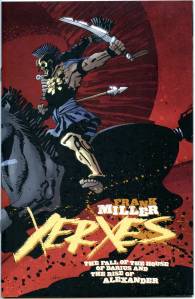
Xerxes: The Fall of the House of Darius and the Rise of Alexander is a 2018 historically inspired comic booklimited series written and illustrated by Frank Miller. It acts as a prequel and sequel to the events chronicled in Miller’s earlier series 300, a fictional retelling of the Battle of Thermopylae.
Parts of the series were loosely adapted for the 2014 film 300: Rise of an Empire, a sequel to the 2006 film adaptation of 300. However, the comic series was not actually published until 2018, four years after the film’s release.