Giant size reprint of classic Stan Lee and Jack Kirby backup stories from Journey into Mystery (Issues 97 thru 106).

Giant size reprint of classic Stan Lee and Jack Kirby backup stories from Journey into Mystery (Issues 97 thru 106).
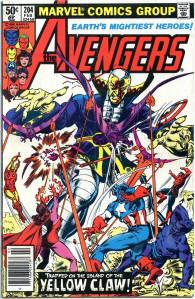
The first major development of the 80’s was the breakdown of Henry Pym, with his frequent changes of costume and name being symptomatic of an identity problem and an inferiority complex. After he abused his wife, failed to win back the confidence of the Avengers with a ruse and was duped by the villain Egghead, Pym was jailed. Pym would later outwit Egghead and defeated the latest incarnation of the Masters of Evil single-handedly, and proved his innocence. Pym reconciled with the Wasp, but they decided to remain apart. Pym retired from super-heroics, but returned years later.
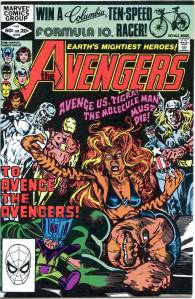
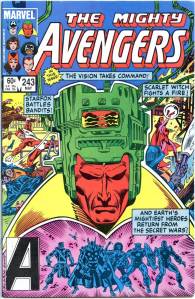
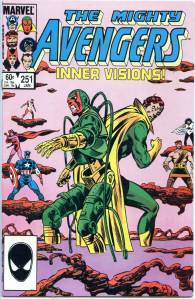
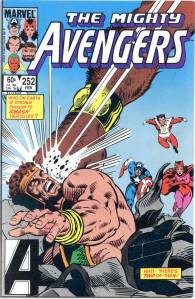
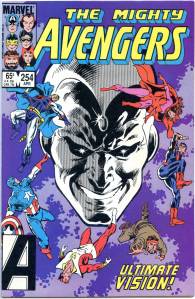
This was followed by several major storylines, such as “Ultimate Vision” in which the Vision took over the world’s computer systems in a misguided attempt to create world peace; the formation of the West Coast Avengers; and “Avengers Under Siege” which involved the second Baron Zemo and the Masters of Evil taking over the mansion and severely injuring Jarvis and Hercules. “Assault on Olympus” featured Hercules’ father, Zeus, blaming the Avengers for his son’s injuries and brought them to Olympus for trial, and the “Heavy Metal” arc saw the Super Adaptoid organized several robotic villains for an assault on the team. New members during the 1980s included Tigra; the She-Hulk; Monica Rambeau (then going by the name Captain Marvel); Starfox (the brother of Thanos); Hawkeye’s wife, Mockingbird; and Namor, while Henry Pym emerged from retirement to join the West Coast Avengers. Spider-Man was again offered membership, but failed to gain admission due to security concerns by the Avengers’ government liaison.
The villain Nebula falsely claimed to be the granddaughter of Thanos. The team relocated for a period to a floating island off the coast of New York called Hydrobase after Avengers Mansion was severely damaged during the events in “Under Siege”. Hydrobase was later sunk during the Acts of Vengeance crossover.


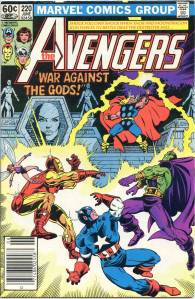













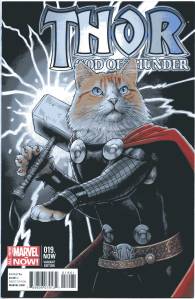
In October 2012, Thor became a regular character in Uncanny Avengers, beginning with issue #1. The following month, an ongoing series titled Thor: God of Thunder by writer Jason Aaron and artist Esad Ribić debuted as part of the Marvel NOW! relaunch.[49][50] This story arc was voted as the 8th best Thor story by Comicbook.com.
In the wake of the events following The Empire Strikes Back, it is a dark time for the heroes of the Rebellion. The Rebel fleet…scattered following a disastrous defeat at the Battle of Hoth. Han Solo…lost to the bounty hunter, Boba Fett, after being frozen in carbonite. And after being lured into a trap on Cloud City and bested in a vicious lightsaber duel against the evil Darth Vader, Luke Skywalker…learned the horrible truth about his past. Vader did not kill Luke’s father Anakin–Vader is Luke’s father! Now, after narrowly escaping the dark lord’s clutches, and wounded and reeling from the revelation, Luke, Princess Leia, Lando Calrissian, the Wookiee Chewbacca and the droids C-3PO and R2-D2 must fight their way back to the Rebel Alliance—for the fate of the entire galaxy is at stake! After so many losses is victory still possible? But, what Leia, Luke and their ragtag band of freedom fighters do not realize is that they have only traded one Imperial trap for another! Enter the cunning and vengeful Imperial Commander Zahra, at the helm of the Tarkin’s Will!


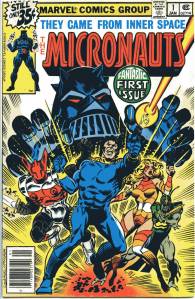
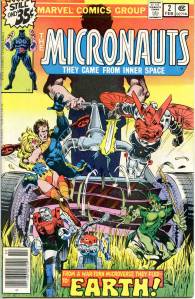
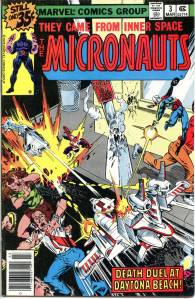
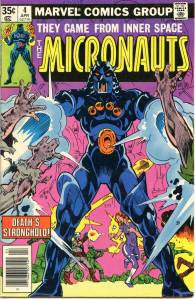
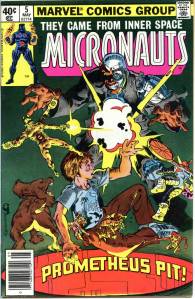
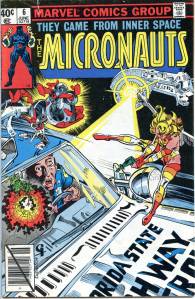
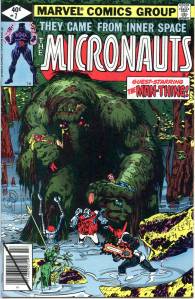
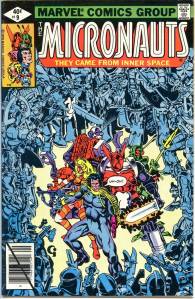
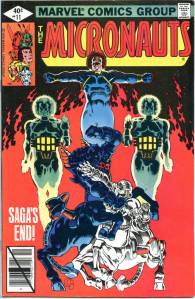
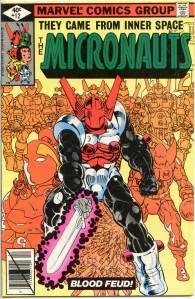
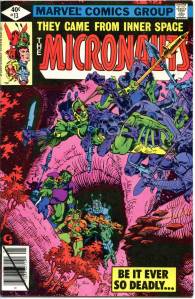
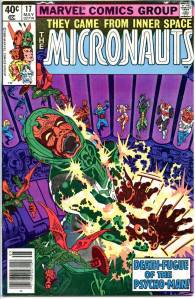
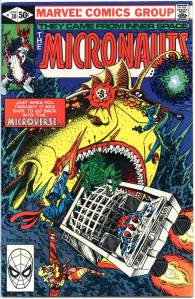
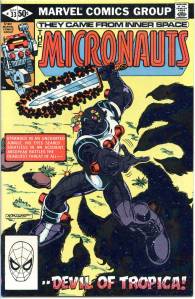
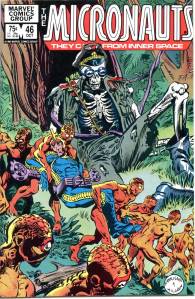
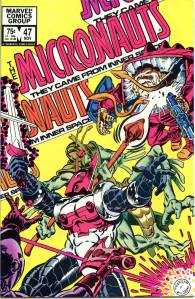
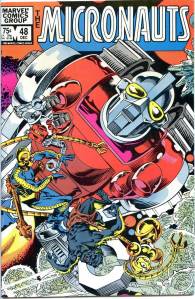
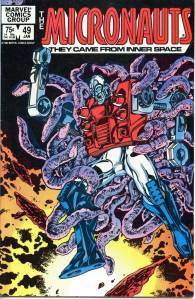
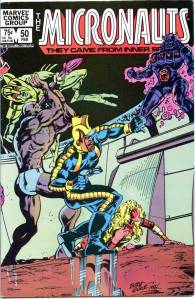
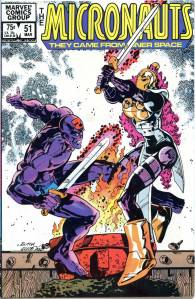
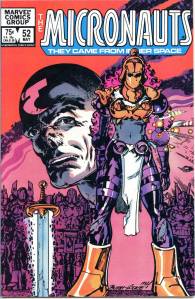
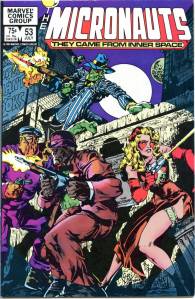
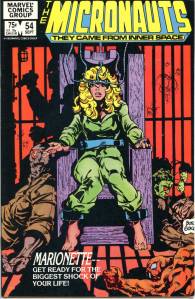
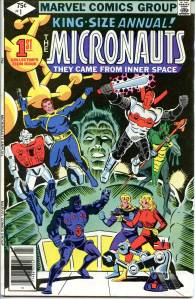
The Micronauts began life as comic book characters thanks to a fortuitous accident on Christmas 1977. Marvel Comics writer Bill Mantlo’s son Adam opened a new present, a line of the Mego Corporation‘s Micronauts action figures. Seeing the toys, Mantlo was instantly struck by inspiration to write their adventures. Convincing then Editor-in-chief Jim Shooter to get the comics license for these toys, Mantlo was hired to script their series.
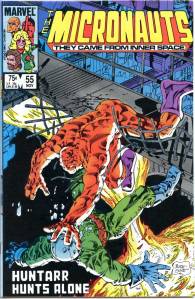
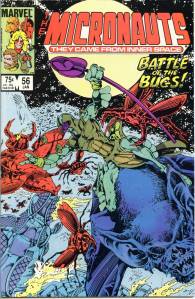
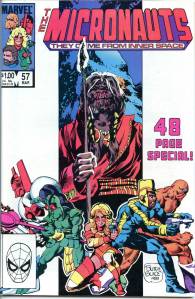
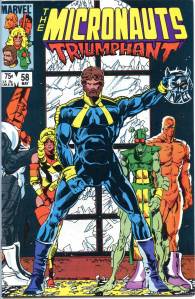
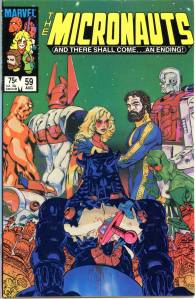
The first series of the Micronauts ran from January 1979 to August 1984 and included 59 issues and two Annuals. The series was written by Bill Mantlo and featured art by Michael Golden. Other artists on the series included Howard Chaykin, Steve Ditko, Rich Buckler, Pat Broderick, Val Mayerik, Keith Giffen, Greg LaRocque, Gil Kane, Luke McDonnell, Mike Vosburg, Butch Guice, and Kelley Jones. Micronauts, along with Moon Knight and Ka-Zar the Savage, became one of Marvel’s first ongoing series to be distributed exclusively to comic book stores beginning with issue #38 (Feb. 1982).

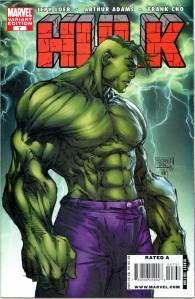
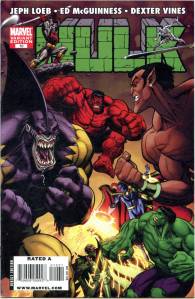
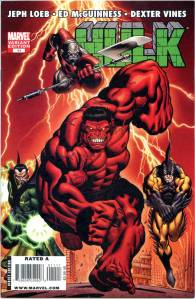
The first incarnation of Red Hulk (also known as Rulk) first appeared in the Hulk series that debuted in 2008. The 2010 “World War Hulks” storyline reveals that this being is United States Army General Thunderbolt Ross, the father-in-law and longtime nemesis of the original Hulk, Bruce Banner. The storyline reveals that Ross was given the ability to transform into Red Hulk by the organizations A.I.M. and the Intelligencia, and that he did this in order to be able to better fight the original Hulk.






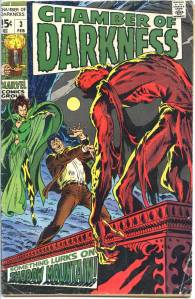
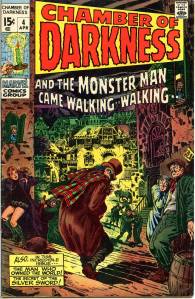
Chamber of Darkness is a horror/fantasy anthology comic book published by Marvel Comics that under this and a subsequent name ran from 1969-1974. It featured work by such notable creators as writer-editor Stan Lee, writers Gerry Conway and Archie Goodwin, and artists John Buscema, Johnny Craig, Jack Kirby, Tom Sutton, Barry Windsor-Smith (as Barry Smith), and Bernie Wrightson. Stories were generally hosted by either of the characters Digger, a gravedigger, or Headstone P. Gravely, in undertaker garb, or by one of the artists or writers.
After the eighth issue, the title changed to Monsters on the Prowl, and the comic became almost exclusively a reprint book.
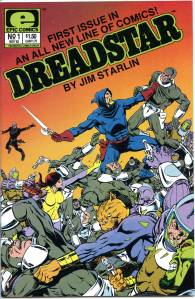
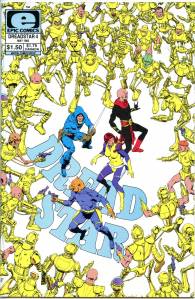
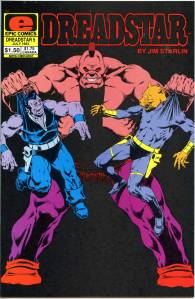
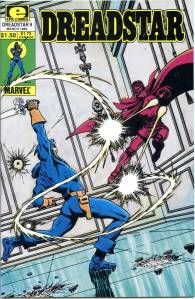
The series centered on the exploits of Vanth Dreadstar and his crew—powerful mystic Syzygy Darklock, the cybernetic telepath Willow, cat-like humanoid Oedi, and freebooter Skeevo. Vanth, newly arrived in the Empirical Galaxy after the events of Metamorphosis Odyssey, tries to live a pastoral existence on Oedi’s planet of peaceful cat-people, but his peace is disturbed by the arrival of Darklock, who wants him to get involved in the conflict between the two major forces in the galaxy, the Monarchy and the theocratical Instrumentality. Vanth refuses until the war comes to his planet, wiping out most of the population. Oedi survives and joins them; Willow and Skeevo join later, though the team is in place for the first issue.
Dreadstar takes the side of the Monarchy against the evil Lord High Papal of the Instrumentality, but his team end up becoming fugitives when the Monarchy falls, and go to great lengths to try to uncover a traitor in their midst. The transition to First Comics happened just when the traitor was about to be revealed, and the first issue published under First Comics, #27 contained this revelation.






Simon eventually took a break from being an Avenger to concentrate on his acting career. He desired to build a normal life for himself and to come to terms with who he was. In particular he wondered what kind of person he truly was and whether or not he was truly human, given his transformation into ionic energy.


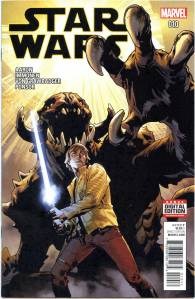
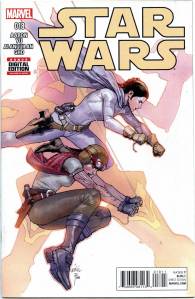
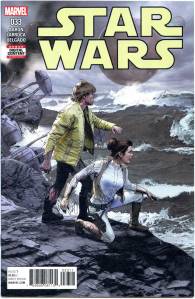
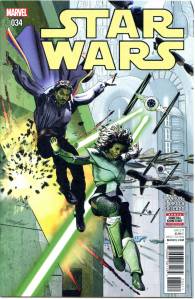
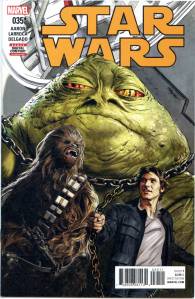
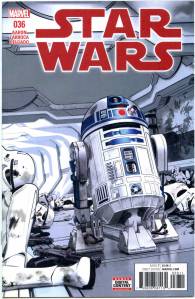
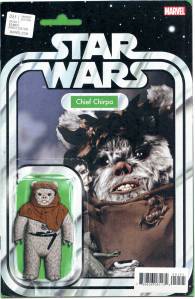
Star Wars was initially written by Jason Aaron with art by John Cassaday. The Marvel Comics series, which began publishing on January 14, 2015, and features the characters Luke Skywalker, Leia Organa, Han Solo, Chewbacca, C-3PO, and R2-D2, takes place between the events of Star Wars: Episode IV A New Hope and Star Wars: Episode V The Empire Strikes Back. The series concluded with issue 75, which was released on November 20, 2019, and was relaunched with another series of comics on January 1, 2020.



 EHT Comics