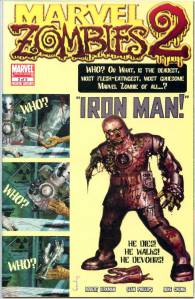
Forty years have passed and the zombies have come back home after eating just about everything else in the universe. Yum yum! What awaits them back on Earth, though, is beyond anything even these shambling monstrosities could have conceived! This is a new series featuring the amazing, irreverent take on the Marvel characters that became last year’s unexpected smash hit. They’re back and more stomach-churning than ever! The smash hit series is back, daring to ask: “Whose stomach are you in?”
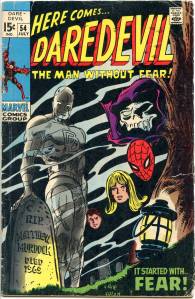
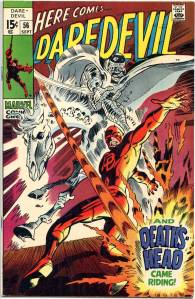
Daredevil debuted in Marvel Comics‘ Daredevil #1 (cover date April 1964), created by writer-editor Stan Lee and artist Bill Everett, with character design input from Jack Kirby, who devised Daredevil’s billy club. When Everett turned in his first-issue pencils extremely late, Marvel production manager Sol Brodsky and Spider-Man co-creator Steve Ditko inked a large variety of different backgrounds, a “lot of backgrounds and secondary figures on the fly and cobbled the cover and the splash page together from Kirby’s original concept drawing”.
Writer and comics historian Mark Evanier has concluded (but cannot confirm) that Kirby designed the basic image of Daredevil’s costume, though Everett modified it. The character’s original costume design was a combination of black, yellow, and red, reminiscent of acrobat tights. Wally Wood, known for his 1950s EC Comics stories, penciled and inked issues #5–10, introducing Daredevil’s modern red costume in issue #7.
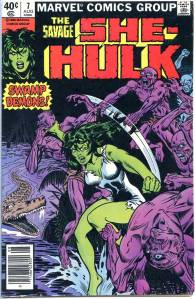
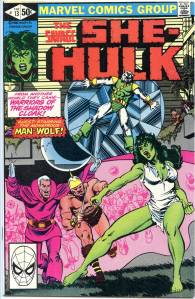
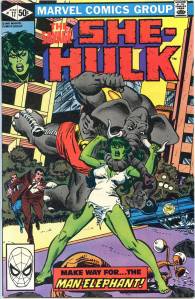
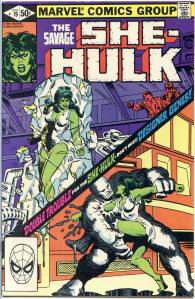
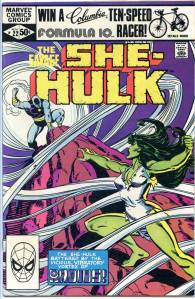
Jennifer Walters, the cousin of Bruce Banner (Hulk), is the small and somewhat shy daughter of Los Angeles County Sheriff William Morris Walters and Elaine (née Banner) Walters (who died in a car crash when Jennifer was seventeen). Operatives of Nicholas Trask, a crime boss who had crossed paths with her father, shot and seriously wounded her on a day that Bruce Banner happened to be in town for a visit. Since no other donors with her blood type were available, Banner provided his own blood for a transfusion; as they already shared the same blood type and DNA, his radioactive blood, combined with her anger transformed Jennifer into the green-skinned She-Hulk when the mobsters tried to finish her off at the hospital.
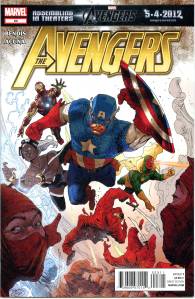
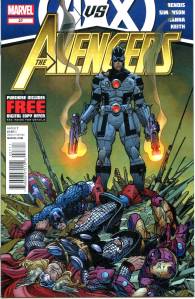
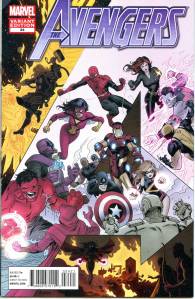
Iron Man, Thor and Captain America have been the Avengers’ heart and soul since the team’s earliest days. But in the wreckage of Asgard, they find themselves squabbling over old wounds. As unstable magics cast the heroes-at-odds into the scattered Nine Realms, they quickly realize the world in which they’re trapped is not how it should be. Can they come together and put it right? Then, as the three heroes re-forge the Avengers with the likes of Hawkeye, Spider-Man, Wolverine and Spider-Woman, Kang returns from the future bearing ill tidings of a force so powerful even he can’t conquer it!
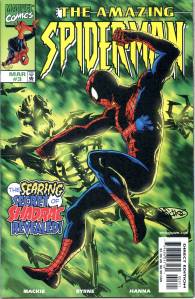
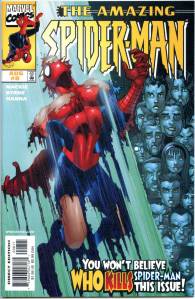
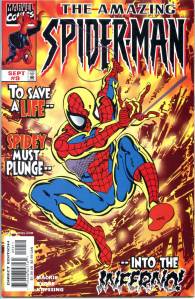
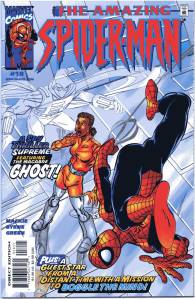
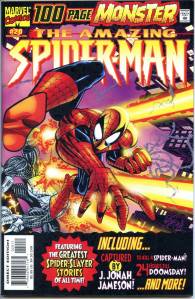
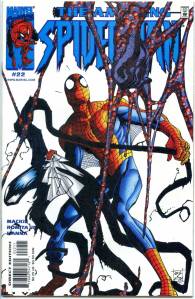
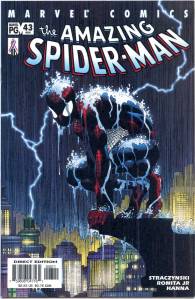
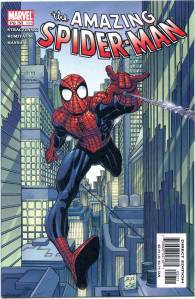
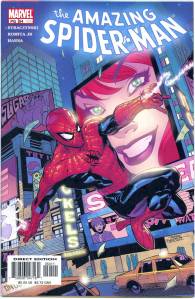
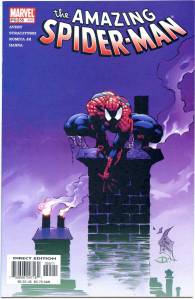
Marvel began The Amazing Spider-Man anew with (vol. 2) #1 (Jan. 1999). Howard Mackie wrote the first 29 issues. The relaunch included the Sandman being regressed to his criminal ways and the “death” of Mary Jane, which was ultimately reversed. Other elements included the introduction of a new Spider-Woman (who was spun off into her own short-lived series) and references to John Byrne’s miniseries Spider-Man: Chapter One, which was launched at the same time as the reboot. Byrne also penciled issues #1–18 (from 1999 to 2000) and wrote #13–14, John Romita Jr. took his place soon after in October 2000. Mackie’s run ended with The Amazing Spider-Man Annual 2001, which saw the return of Mary Jane, who then left Parker upon reuniting with him.
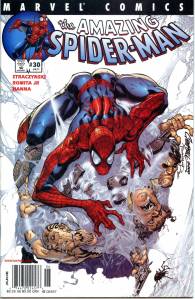
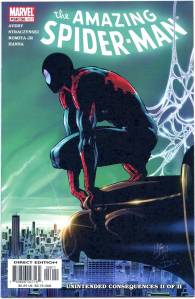
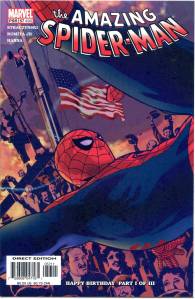
With issue #30 (June 2001), J. Michael Straczynski took over as writer and oversaw additional storylines – most notably his lengthy “Spider-Totem” arc, which raised the issue of whether Spider-Man’s powers were magic-based, rather than as the result of a radioactive spider’s bite. Additionally, Straczynski resurrected the plot point of Aunt May discovering her nephew was Spider-Man, and returned Mary Jane, with the couple reuniting in The Amazing Spider-Man (vol. 2) #50. Straczynski gave Spider-Man a new profession, having Parker teach at his former high school.
Issue #30 began a dual numbering system, with the original series numbering (#471) returned and placed alongside the volume two number on the cover. Other longtime, rebooted Marvel Comics titles, including Fantastic Four, likewise were given the dual numbering around this time. After (vol. 2) #58 (Nov. 2003), the title reverted completely to its original numbering for issue #500 (Dec. 2003). Mike Deodato, Jr. penciled the series from mid-2004 until 2006.
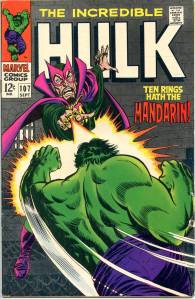
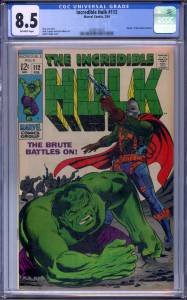
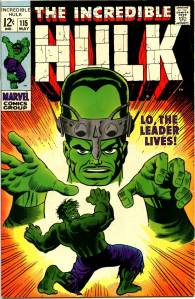
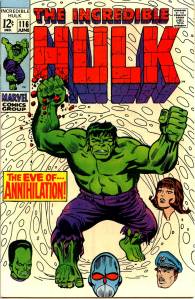
The Hulk first appeared in The Incredible Hulk #1 (cover dated May 1962), written by writer-editor Stan Lee, penciled and co-plotted by Jack Kirby, and inked by Paul Reinman. Lee cites influence from Frankensteinand Dr. Jekyll and Mr. Hyde in the Hulk’s creation. The Hulk’s original series was canceled with issue #6 (March 1963).
In the debut, Lee chose gray for the Hulk because he wanted a color that did not suggest any particular ethnic group.Colorist Stan Goldberg, however, had problems with the gray coloring, resulting in different shades of grey, and even green, in the issue. After seeing the first published issue, Lee chose to change the skin color to green. Green was used in retellings of the origin, with even reprints of the original story being recolored for the next two decades, until The Incredible Hulk vol. 2, #302 (December 1984) reintroduced the gray Hulk in flashbacks set close to the origin story. Since then, reprints of the first issue have displayed the original gray coloring, with the fictional canon specifying that the Hulk’s skin had initially been grey. An exception is the early trade paperback, Origins of Marvel Comics, from 1974, which explains the difficulties in keeping the gray color consistent in a Stan Lee written prologue, and reprints the origin story keeping the gray coloration.
Lee gave the Hulk’s alter ego the alliterative name Bruce Banner because he found he had less difficulty remembering alliterative names. Despite this, in later stories he misremembered the character’s name and referred to him as “Bob Banner”, an error which readers quickly picked up on. The discrepancy was resolved by giving the character the official full name of Robert Bruce Banner.
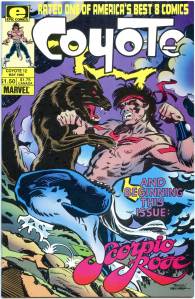
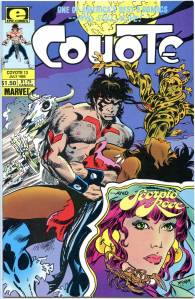
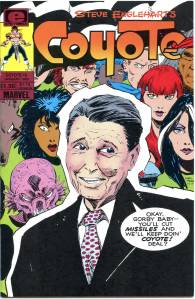
The characters first appeared in Eclipse Magazine #2-8. It would later be reprinted in a color trade paperback, I Am Coyote. Afterwards, a new comic book series started at Marvel ComicsEpic Comics line, that ran 16 issues. It was notable for the first published work of Todd McFarlane. According to Epic editor-in-chief Archie Goodwin, artist Steve Leialoha‘s departure after issue #2 caused deadline problems that the series never fully recovered from, leading to its early cancellation.
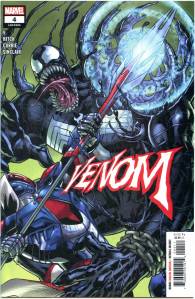
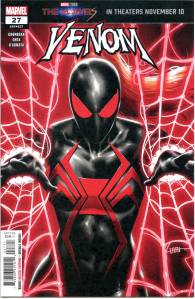
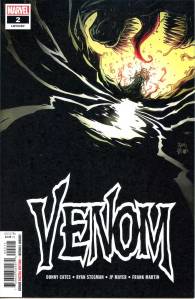
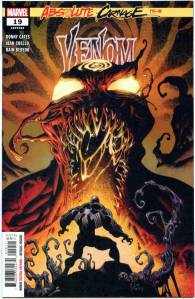
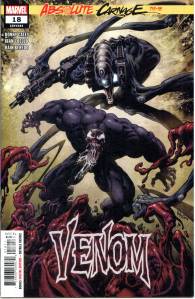
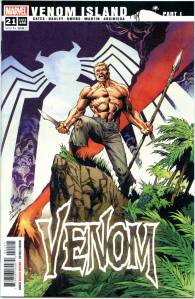
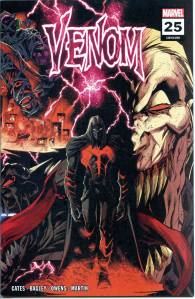
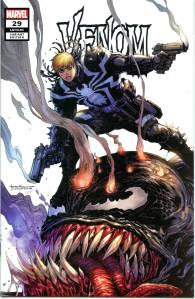
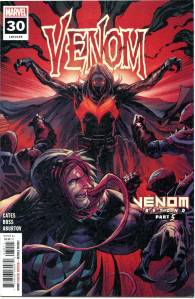
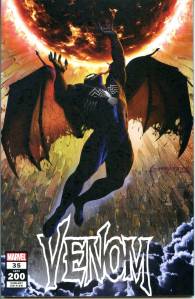
An all-new Venom from some of comics’ greatest talents! Marvel mainstay Al Ewing, who himself has just ended a character-redefining run on Immortal Hulk, is being joined by Ram V, a horror maestro all his own, to craft a mind-bending and gut-wrenching tale of symbiosis the likes of which the Marvel Universe has never seen! Aa if that wasn’t enough, they’ve been joined by Bryan Hitch, who is leaving it all on the page.
In the wake of S.H.I.E.L.D.’s collapse, an ancient and primordial evil has been awakened beneath the streets of New York. And with it, something equally evil has been awakened in that most wicked of web-slingers: Venom! The symbiote may still be a Lethal Protector of innocents in New York, but this never-before-seen threat could possibly force Venom to relinquish everything it holds dear – including its human host, Eddie Brock!
















 EHT Comics