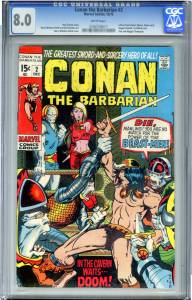
Marvel Comics introduced a fairly faithful version of Conan in 1970 with Conan the Barbarian, written by Roy Thomas with art initially by Barry Windsor-Smith, then John Buscema and Ernie Chan (aka Ernie Chua). The highly successful Conan the Barbarian series spawned the more adult, black-and-white Savage Sword of Conan in 1974, by Thomas, Buscema, and Alfredo Alcala. Savage Sword of Conan soon became one of the most popular comic series in the 1970s.
The Marvel Conan stories were also adapted as a newspaper comic strip which appeared daily and Sunday from September 4, 1978, to April 12, 1981. Originally written by Roy Thomas and illustrated by John Buscema, the strip was continued by several different Marvel artists and writers.
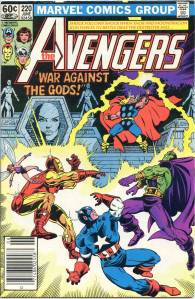
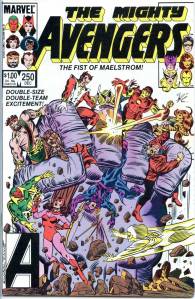
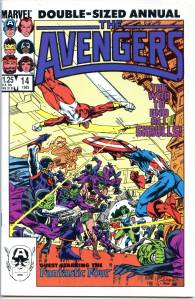
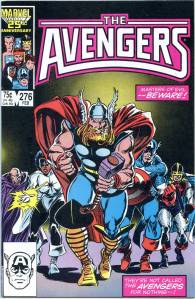
The first major development of the 80’s was the breakdown of Henry Pym, with his frequent changes of costume and name being symptomatic of an identity problem and an inferiority complex. After he abused his wife, failed to win back the confidence of the Avengers with a ruse and was duped by the villain Egghead, Pym was jailed. Pym would later outwit Egghead and defeated the latest incarnation of the Masters of Evil single-handedly, and proved his innocence. Pym reconciled with the Wasp, but they decided to remain apart. Pym retired from super-heroics, but returned years later.
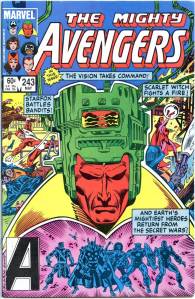
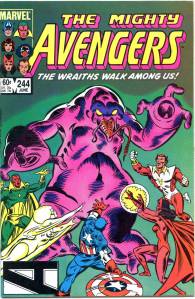
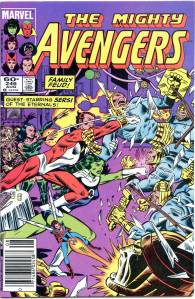
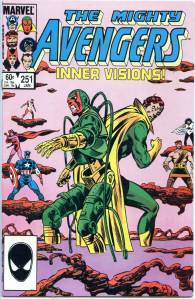
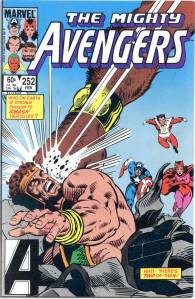
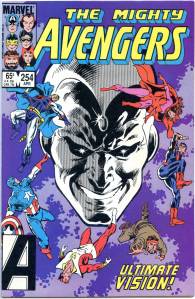
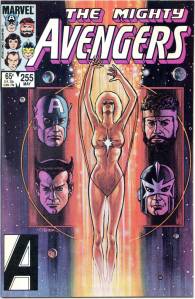
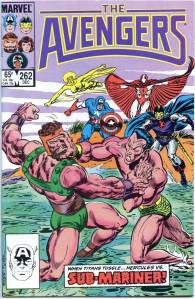
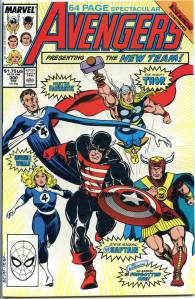
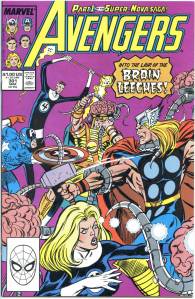
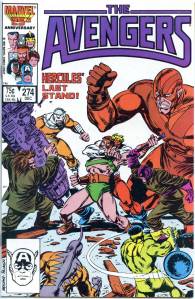
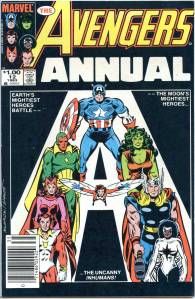
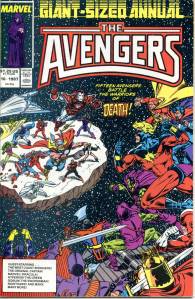
This was followed by several major storylines, such as “Ultimate Vision” in which the Vision took over the world’s computer systems in a misguided attempt to create world peace; the formation of the West Coast Avengers; and “Avengers Under Siege” which involved the second Baron Zemo and the Masters of Evil taking over the mansion and severely injuring Jarvis and Hercules. “Assault on Olympus” featured Hercules’ father, Zeus, blaming the Avengers for his son’s injuries and brought them to Olympus for trial, and the “Heavy Metal” arc saw the Super Adaptoid organized several robotic villains for an assault on the team. New members during the 1980s included Tigra; the She-Hulk;Monica Rambeau (then going by the name Captain Marvel);Starfox (the brother of Thanos); Hawkeye’s wife, Mockingbird; and Namor, while Henry Pym emerged from retirement to join the West Coast Avengers. Spider-Man was again offered membership, but failed to gain admission due to security concerns by the Avengers’ government liaison.
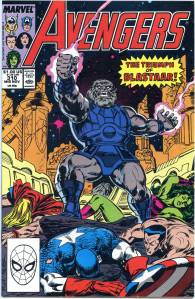
The villain Nebula falsely claimed to be the granddaughter of Thanos. The team relocated for a period to a floating island off the coast of New York called Hydrobase after Avengers Mansion was severely damaged during the events in “Under Siege”. Hydrobase was later sunk during the Acts of Vengeance crossover.
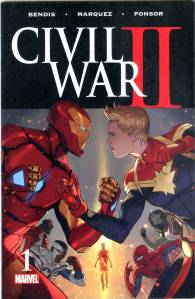
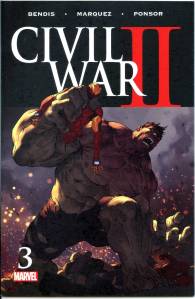
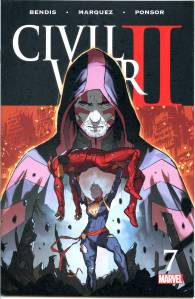
Civil War II, which debuted in June 2016, is a sequel to the 2006 “Civil War” storyline.
A new Inhuman, with the ability to profile the future, emerges and the ramifications ripple into every corner of the Marvel Universe. Lines are drawn, bodies fall, and the Marvel Universe will be rocked to it’s very core.
Civil War 2 #1 NM $6Civil War II #3 NM $5Civil War II #7 NM $5
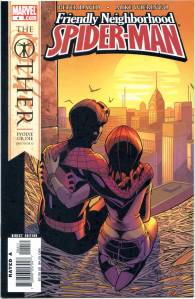
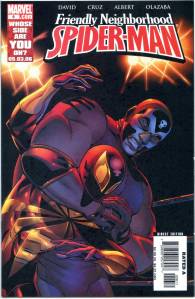
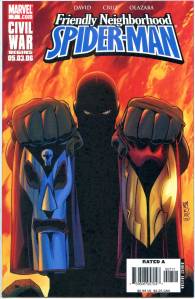
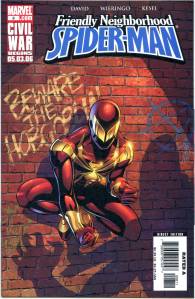
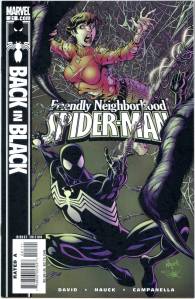
The title is derived from a trademark self-referential comment often made by Spider-Man (as in “just another service provided by your friendly neighborhood Spider-Man!”). The series began in October 2005 and was primarily written by Peter David. Friendly Neighborhood Spider-Man was canceled after issue #24, part 2 of J. Michael Straczynski and Joe Quesada‘s controversial “One More Day” storyline. Kurt Busiek has revealed that in 1995 he originally suggested “Friendly Neighborhood Spider-Man” as the title of the series which was eventually published as Untold Tales of Spider-Man.
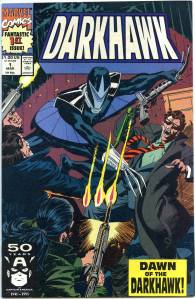
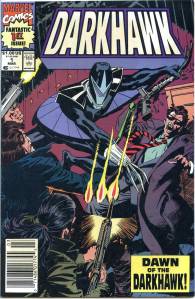
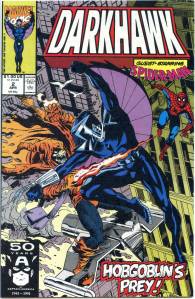
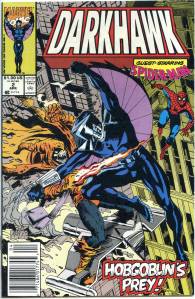
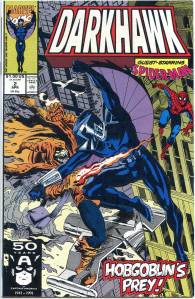
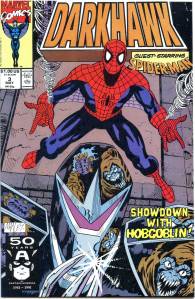
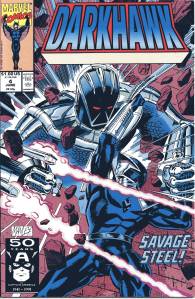
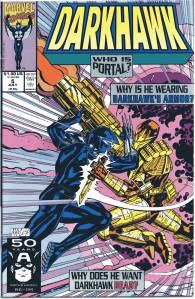
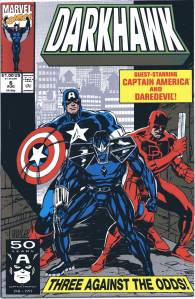
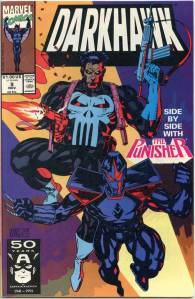
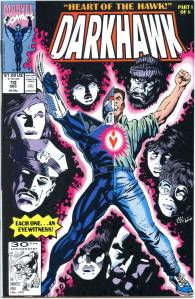
Darkhawk appeared in a self-titled monthly series for 50 issues that was published by Marvel Comics from March 1991 to March 1995, and included three standalone annuals. Although created by DeFalco and Manley, DeFalco was never credited as a writer of the series. The original writer was Danny Fingeroth.
After his own series ended, Darkhawk co-starred or cameoed in other titles over the following years, such as New Warriors, Avengers/JLA, and Iron Man, eventually resurfacing in Runaways Vol.2 #1-6, followed by Marvel Team Up Vol.3 #15 and the short-lived Loners series. New Warriors writer Fabian Nicieza said in 1992 that “People keep coming up to me and asking, ‘Is Darkhawk a member of the New Warriors or not?’ Well, yes and no. The New Warriors isn’t an official group with a rule book and charter and the like. They’re more of a club for super-powered teens. So if Darkhawk wants to hang out on a Friday evening and talk about his powers, then he’ll stop by the New Warriors’ crash pad.”
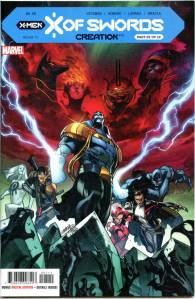
It is discovered that the first incarnation of the Horsemen are actually the biological children of Apocalypse and his wife Genesis who was also sent with Arakko. Following that, Apocalypse went to the Summoner and directed him to the portal to Otherworld where he could return to Arakko, while being accompanied by Unus and Banshee. However, what Apocalypse didn’t expect was that this was all an elaborated plan created by his own children so they could return and overthrow Krakoa with their fellow Arakki mutants and Daemon army. Apocalypse himself was soon attacked and critically injured by his daughter War, being forced to retreat back to Krakoa to heal their wounds and prepare for war between the two groups.
X of Swords – Creation #1 NM $7X of Swords – Stasis Variant NM $5X of Swords – Stasis #1 NM $5X of Swords – Destruction #1 NM $5
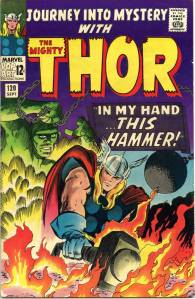
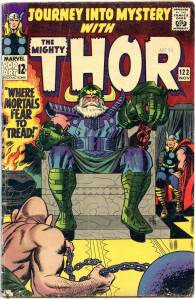
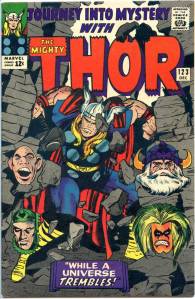
Journey into Mystery was initially published by Atlas Comics, then by its successor, Marvel Comics. Initially a horror comics anthology, it segued to giant-monster and science fiction stories in the late 1950s. Beginning with issue #83 (cover dated August 1962), it ran the superhero feature “The Mighty Thor“, created by writers Stan Lee and Larry Lieber and artist Jack Kirby, and inspired by the mythological Norsethunder god. The series, which was renamed for its superhero star with issue #126 (March 1966), has been revived three times: in the 1970s as a horror anthology, and in the 1990s and 2010s with characters from Marvel’s Thor mythos.
Journey into Mystery #120 FN+ $39Journey into Mystery #122 VG $24Journey into Mystery #123 VF- $65
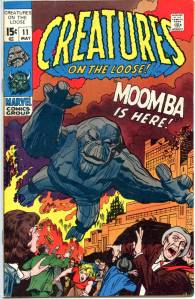
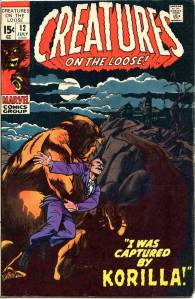
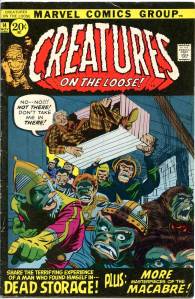
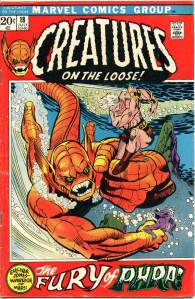
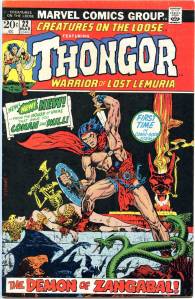
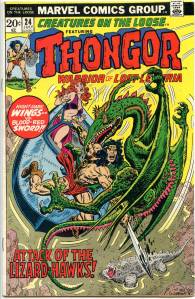
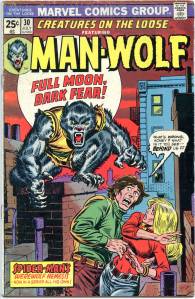
Tower of Shadows was re titled Creatures on the Loose with issue #10 (March 1971), this version led off with a seven-page King Kull story by Thomas and artist Bernie Wrightson. The book then became all-reprint until issue #16 (March 1972), when writer Thomas and the art team of Gil Kane and Bill Everett introduced the series “Gullivar Jones, Warrior of Mars”, starring an interplanetary Earthman created by author Edwin L. Arnold in his 1905 book Lieut. Gullivar Jones: His Vacation. Following another issue by Thomas and one by Gerry Conway, science fiction novelist George Alec Effinger wrote the final three installments.
Effinger continued as writer for the series that immediately followed, in issue #22 (March 1973): “Thongor! Warrior of Lost Lemuria!”, adapting asword-and-sorcery barbarian character created by author Lin Carter. Following writers Tony Isabella and Gardner Fox, Carter himself co-wrote (with Steve Gerber) the final two installments.
Thomas, Marvel’s associate editor at the time, recalled in 2007 that Thongor had been the company’s first choice when Marvel decided to published a licensed fantasy character, rather than the eventual hit Conan the Barbarian. Publisher Martin Goodman “authorized us to go after a character. I first went after Lin Carter’s Thongor, who was a quasi-Conan with elements of John Carter of Mars, partly became editor-in-chiefStan Lee liked that name the most … I soon got stalled by Lin Carter’s agent on Thongor (he was hoping I’d offer more than the $150 per issue I was authorized to offer), and I got a sudden impulse to go after Conan”.
Creatures on the Loose #11 FN+ $15Creatures on the Loose #12 FN+ $12Creatures on the Loose #14 FN $9Creatures on the Loose #18 FN $5Creatures on the Loose #22 FN+ $14Creatures on the Loose #24 FN-VF $7Creatures on the Loose #30 VG $18
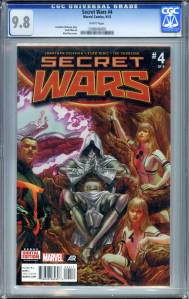
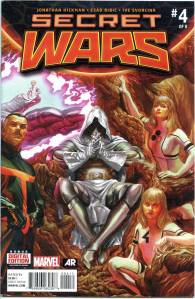
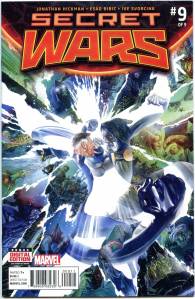
In May 2015, Marvel published a new Secret Wars miniseries, written by Jonathan Hickman and drawn by Esad Ribić, that picked up from where the “Time Runs Out” storyline running in Avengers and New Avengers at the time had ended. The storyline involved the Marvel Universe combining with other alternate universes, including the Ultimate Universe, as well as the 2099 Universe, to form Battleworld, a world which exhibits aspects of the various universes. The core limited series was nine issues long, and ran for eight months, ending in January 2016. One of the core miniseries, Ultimate End, had ended the Ultimate Marvel imprint after 15 years at the time. Ultimate End is written by Brian Michael Bendis and artist Mark Bagley, the team that began the Ultimate Marvel universe with Ultimate Spider-Man.