Writer-editor Jonathan Hickman and artist/co-plotter Pepe Larraz created the Quiet Council of Krakoa in House of X #6 (October 2019). The Council appeared in many comics in the Dawn of X and Reign of X relaunches, creating and enforcing the laws of Krakoa; prosecuting and delivering judgement on mutants accused of breaking those laws.
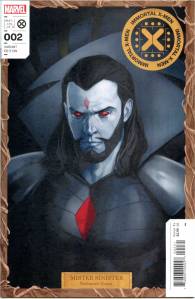
In March 2022, the council headlined Immortal X-Men as part of the Destiny of X relaunch. The series also served continuation of Inferno, vol. 2. It was written by Kieron Gillen and drawn by Lucas Werneck, building plot points for the event Sins of Sinister. After being briefly transformed into the Immoral X-Men limited series, Immortal X-Men continued from issue #11.
Victor Von Doom – scientist, sorcerer, disfigured face, twisted soul – has been spending much of his time warning against a trillion-dollar global effort to create the first “artificial” black hole. Wrestling with visions of an entirely different life…a better future…DOCTOR DOOM finds himself at a crossroads. (what is he questioning?) A catastrophic act of terrorism kills thousands, and the prime suspect is… DOOM? Victor will have to push his unexplained thoughts aside and focus on remaining alive as the title of “Most Wanted Man” is thrust upon him….
Left with no homeland, no armies, no allies, indeed, nothing at all, will the reign of Doctor Doom come to an abrupt halt?
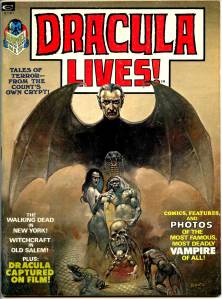
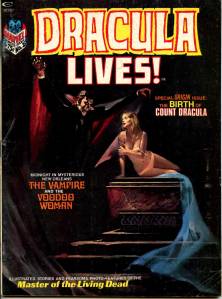
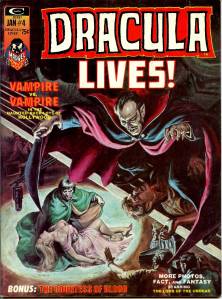
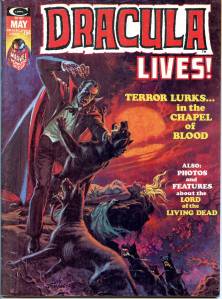
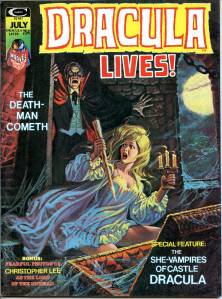
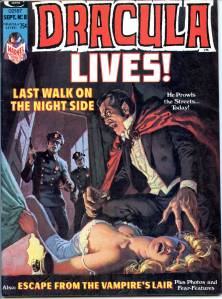
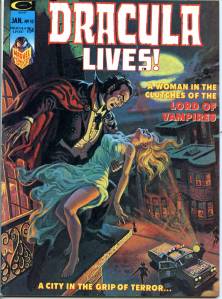
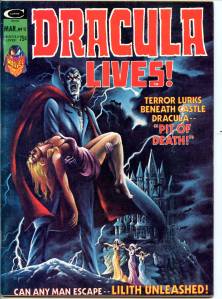
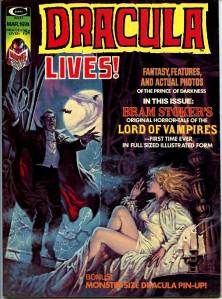
Running concurrently with the longer-running Marvel comic Tomb of Dracula, the continuities of the two titles occasionally overlapped, with storylines weaving between the two. Most of the time, however, the stories in Dracula Lives! were stand-alone tales by various creative teams. Later issues of Dracula Lives! featured a serialized adaptation of the original Bram Stoker novel, written by Roy Thomas and drawn by Dick Giordano.
The magazine format did not fall under the purview of the Comics Code, allowing the title to feature stronger content — such as moderate profanity, partial nudity, and more graphic violence — than Marvel’s “mainstream” titles. The larger format allowed the interior artists to “stretch out” a bit more. Painted covers of the series were done by artists like Boris Vallejo, Neal Adams, and Luis Dominguez. Dracula Lives!‘ text and photo articles were mostly of the Count’s various film appearances. The title of the magazine’s letter column was “Dracula Reads!”
One of Marvel’s revival Horror and Monster comics. It lasted for 38 issues, making it one of the longest running Monster Mags from Marvel in the 1970’s. The series contains stories from many comic legends including Jack Kirby, Steve Ditko, Gil Kane and Bernie Wrightson. Issues #6 contains a reprint of Tales to Astonish #13, which is the 1st appearance of Groot from Guardians of the Galaxy.
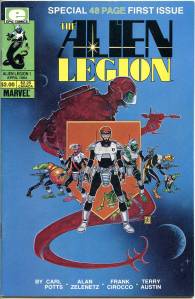
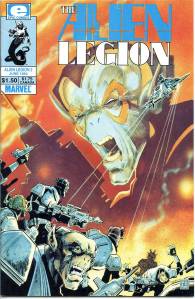
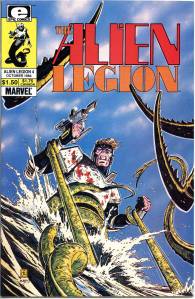
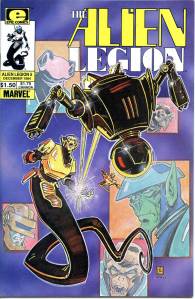
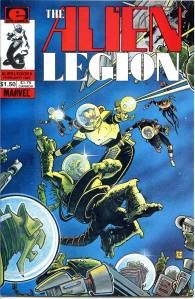
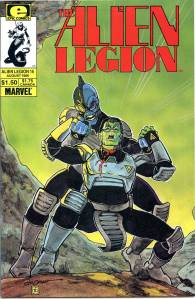
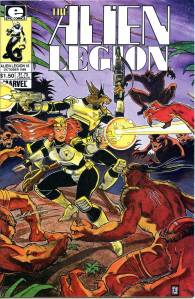
The franchise debuted with Marvel/Epic Comics’ The Alien Legion #1-20 (cover-dated April 1984 – June 1987). The 18-issue Alien Legion (Oct. 1987 – Aug. 1990), minus the “The”, followed, generally scripted by Chuck Dixon and penciled by Larry Stroman. Afterward came the three-issue Dixon-Stroman miniseries Alien Legion: On The Edge (Nov. 1990 – Jan. 1991); the two-issue Dixon-Stroman Alien Legion: Tenants of Hell (1991); the one-shot cover-titled Alien Legion: Grimrod and copyrighted Alien Legion: Jugger Grimrod (Aug. 1992), by Dixon and artist Mike McMahon; the single-issue Alien Legion: Binary Deep (Sept. 1993), by Dixon and Argentine artist Enrique Alcatena; and the three-issue miniseries Alien Legion: One Planet at a Time (April–July 1993), by Dixon and penciler Hoang Nguyen.
Additionally, Marvel/Epic published two spinoffs: Marvel Graphic Novel #25 (cover-titled Marvel Graphic Novel: The Alien Legion), released in 1986 and containing the story “A Grey Day To Die” by writers Potts and Zelenetz, penciler Cirocco, and the first series’ regular inker, Terry Austin; and the one-shot crossover with another series Law Dog and Grimrod: Terror at the Crossroads (1993)
Every thousand years, Dracula enters a chrysalis state for four days, leaving him in a vulnerable state. During this time the most powerful vampires from around the world gather in Transylvania to protect him. Now they are about to be joined by an eclectic team of vampire slayers that have gathered to take down the legendary Vampire King – including the best and most dangerous slayer of them all – Blade!
Tomb of Dracula V4 #1 NM $8Tomb of Dracula V4 #3 NM $5
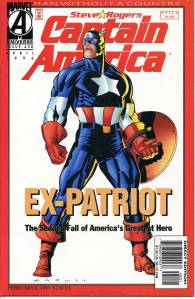
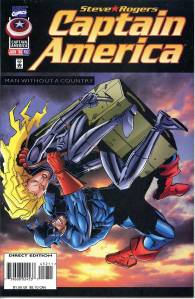
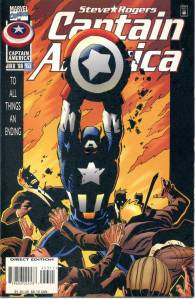
Following Mark Gruenwald’s departure from the series, Mark Waid took over and resurrected Sharon Carter as Cap’s love interest. The title was then relaunched under Rob Liefeld as Cap became part of the Heroes Reborn universe for 13 issues before another relaunch restored Waid to the title in an arc that saw Cap lose his shield for a time using an energy based shield as a temporary replacement.
Captain America #402 NM- $4Captain America #403 NM $5Captain America #404 NM $5Captain America #405 VF-NM $7Captain America #406 NM $5Captain America #407 NM $5Captain America #410 NM $5Captain America V1 #444 VF Signed by Mark Waid $4Captain America V1 #445 NM Signed by Mark Waid $8Captain America V1 #446 VF- Signed by Mark Waid $4Captain America V1 #447 NM $4Captain America V1 #448 VF- $3Captain America V1 #449 NM $4Captain America V1 #450 NM $9Captain America V1 #452 NM $4Captain America #453 VF+ $3
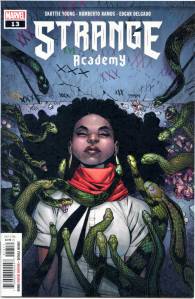
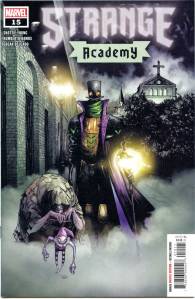
Strange Academy is a fictional school appearing in comics published by Marvel Comics. It was founded by Doctor Strange to train young people from many worlds with magical abilities in the use of sorcery and magical artifacts. The school first appears in Strange Academy #1 (March 2020) and was created by writer Skottie Young and artist Humberto Ramos.
Strange Academy #10 NM $5Strange Academy #13 NM $8Strange Academy #15 NM $5Strange Academy #17 NM $4
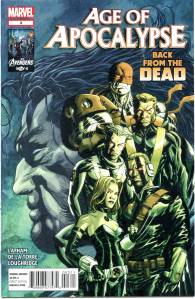
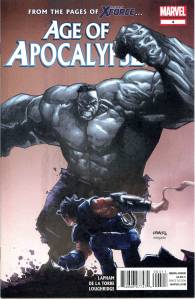
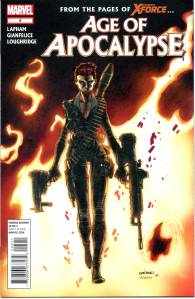
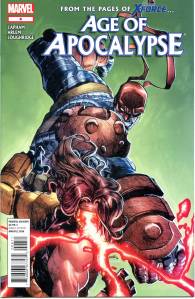
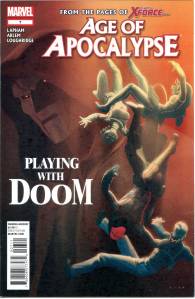
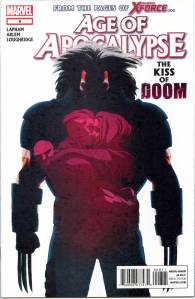
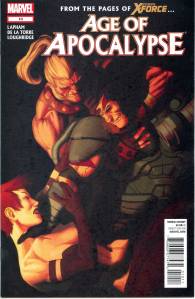
Jean Grey and Sabretooth return to Earth 616. Weapon X and his Black Legion attack the last human city where Weapon X slays both Magneto and Rogue, leaving Jean Grey and Sabretooth the last two X-Men alive. Jean telepathically nudges clones of the Scarlet Witch to recreate the Decimation and remove all mutants’ powers across the globe. However, this was only successful within a radius of 12 feet, so Jean Grey and Sabretooth are both left de-powered. The human coalition distracts Weapon X with a bomb long enough for the group to escape as the city explodes behind them. Harper Simons joins with the human team, the X-Terminated. Others who work with the X-Terminated are Doctor Moreau and Bolivar Trask.
Age of Apocalypse #3 NM $4Age of Apocalypse #4 NM $4Age of Apocalypse #5 NM $4Age of Apocalypse #6 NM $4Age of Ajpocalypse #7 NM $4Age of Apocalypse #8 NM $4Age of Apocalypse #10 NM $4
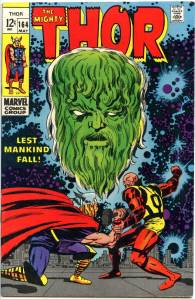
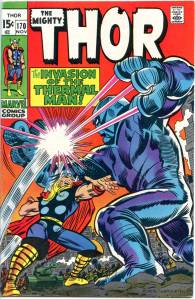
Thor debuted in the science fiction/fantasy anthology title Journey into Mystery #83 (cover-date Aug. 1962), and was created by editor-plotter Stan Lee, scripter Larry Lieber, and penciller-plotter Jack Kirby. A different version of the mythological Thor had appeared previously in Venus #12-13 (Feb.-April 1951).
In a 1984 interview Kirby said “I did a version of Thor for D.C. in the Fifties before I did him for Marvel. I created Thor at Marvel because I was forever enamored of legends, which is why I knew about Balder, Heimdall, and Odin. I tried to update Thor and put him into a superhero costume, but he was still Thor.” And in a 1992 interview, Kirby said “[I] knew the Thor legends very well, but I wanted to modernize them. I felt that might be a new thing for comics, taking the old legends and modernizing them.”
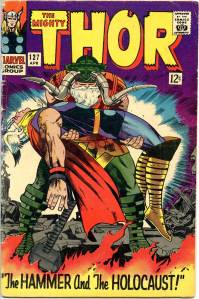
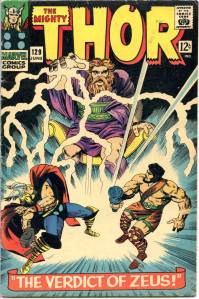
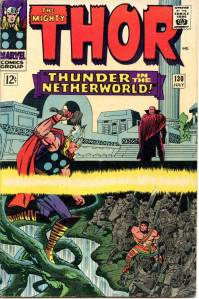
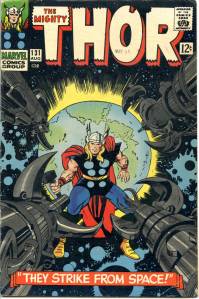
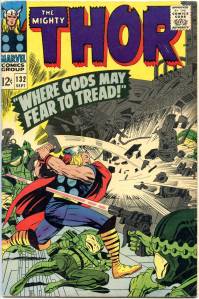
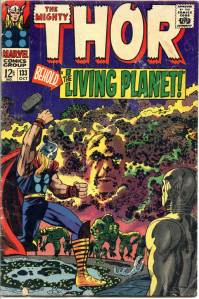
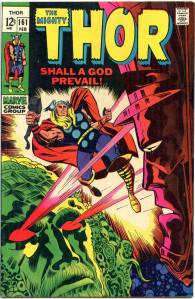
Journey into Mystery was retitled Thor (per the indicia, or The Mighty Thor per most covers)with issue #126 (March 1966). “Tales of Asgard” was replaced by a five-page featurette starring the Inhumans from #146–152 (Nov. 1967 – May 1968), after which featurettes were dropped and the Thor stories expanded to Marvel’s then-standard 20-page length.