X-Men: The End – Book 1(2004)

X-Men: The End is a 2004-2006 trilogy of miniseries published by Marvel Comics, detailing the last days of the X-Men and their adventures in an alternative future. The series, which was part of Marvel’s The End line of books, was written by Chris Claremont and drawn by Sean Chen, with cover art by Greg Land and Gene Ha.

The first part of the miniseries is titled Dreamers and Demons, the second Heroes and Martyrs, and the third Men and X-Men. As it was originally conceived, several years before its actual debut, this series would have re-teamed Chris Claremont and John Byrne, with Byrne providing plots and art and Claremont providing dialogue. Yet after a dispute with Marvel following the cancellation of Byrne’s ongoing series X-Men: The Hidden Years, Byrne left the publisher.

The story of X-Men: The End continues in the 2008 GeNext mini-series, then again in the 2009 mini-series, GeNext: United.

Isola (2018)

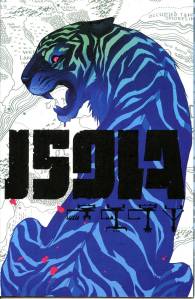
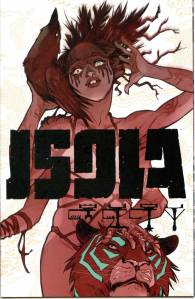
Isola was first announced at the 2016 Image Expo. Writer Brendan Fletcher explained he and writer/artist Karl Kerschl had been working towards the comic since elementary school. The story follows two women, Queen Olwyn, and Rook, her captain of the guard, on a journey to the island of Isola in hopes of reversing a curse that transformed the queen into a tiger. Kerschl and Fletcher cite the films of Hayao Miyazaki as an influence on the tone of Isola. Kerschl worked closely with colorist Michele Assarasakorn (MSassyK) to create a cinematic feel, mapping out colors in advance to reflect the characters’ journey.

Action Comics – New 52 (2011)

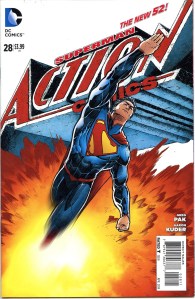
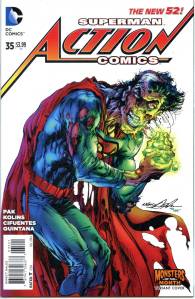
As with all of the books associated with the DC relaunch, Clark Kent appears to be about five years younger than the previous incarnation of the character (where it would focus on the early days of Superman’s career, whereas the main series would focus on the present). Superheroes at large have appeared only in the past five years, and are viewed with at best, suspicion, and at worst, outright hostility. The storyline in Action Comics takes place about a year before the events of Justice League #1, and was referred to by DC Co-Publisher Dan DiDio as “DC Universe Year Zero” while JL operates as “Year One.” The Man of Steel is not yet trusted by the citizens of Metropolis and wears a basic costume consisting of a caped T-shirt, jeans and work boots.

The Incredible Hulk – Future Imperfect (1992)

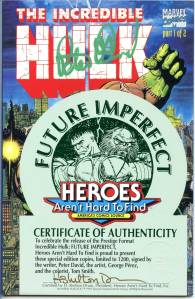
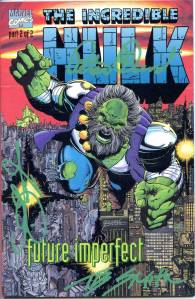
The Incredible Hulk travels to an apocalyptic future to face his ultimate challenge…himself. Meet the Maestro, the Hulk’s future imperfect self. Approximately a hundred years into the future, a nuclear war has killed almost all of Earth‘s superhumans and has taken the world to the brink of extinction. A future version of the Hulk called Maestro has seized control after being driven insane by the nuclear radiation he has absorbed and the bitterness he feels towards the world at his continued treatment. He has the intelligence of Bruce Banner and the absorbed radiation has significantly enhanced his strength. Can even the Green Goliath defeat a foe whose strength rivals his own? A foe who knows his every move before he even makes it?

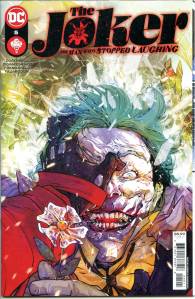
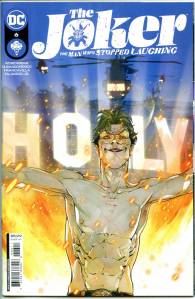
The Joker – The Man Who Stopped Laughing (2022)

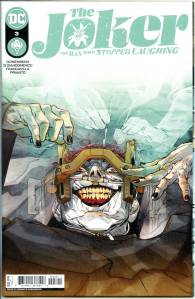
The world once again holds its breath as The Joker strikes again! But how far is he willing to go this time? From the twisted minds of Matthew Rosenberg (Task Force Z, What’s the Furthest Place from Here?) and Carmine Di Giandomenico (Batman: The Knight) comes a violent, mind-bending new series that picks up from the cataclysmic end of The Joker and follows the mayhem across the United States. With the Clown Prince of Crime setting out on his most bizarre caper yet, will a fan-favorite vigilante be able to prevent certain tragedy? Or is he in on the joke?

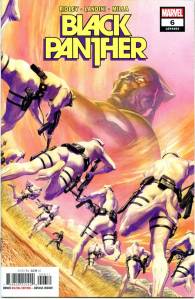
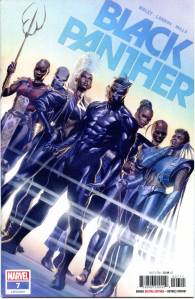
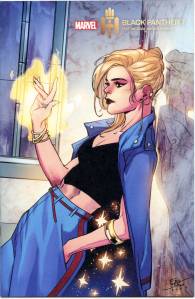
Black Panther V8 (2021)

Fresh from returning from his travels in space, Black Panther receives an unexpected and urgent message from a Wakandan secret agent! Now T’Challa must race the clock not only to save his agent, but also to keep his true agenda under wraps. Because if the truth comes out, it could cost T’Challa everything…

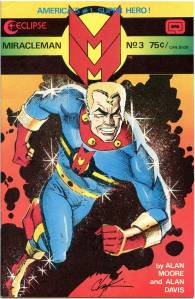
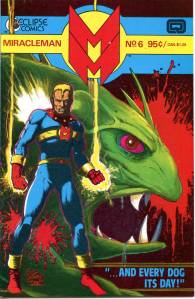
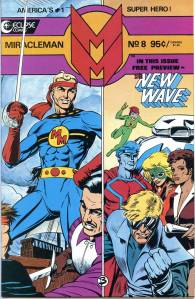
Miracleman – Eclipse (1980’s)

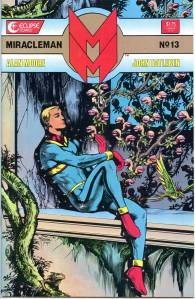
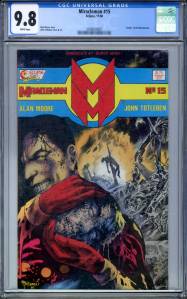
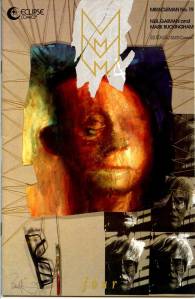
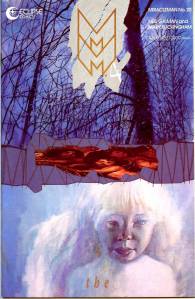
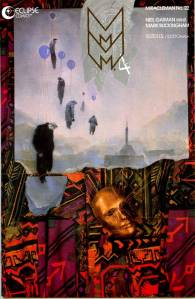
In August 1985, Eclipse began reprinting the Marvelman stories from Warrior, colored, and re-sized. They were renamed and re-lettered throughout as Miracleman to avoid further problems with Marvel Comics. Issues 1-6 reprinted all the Warrior content, after which Eclipse began publishing new Miracleman stories from Alan Moore and new artist Chuck Beckum (now better known as Chuck Austen), soon replaced by Rick Veitch and then John Totleben. Eclipse split the rights to the character, with 2/3 going to Eclipse and 1/3 split between the current writer and artist of the series. Moore wrote the series until issue 16.

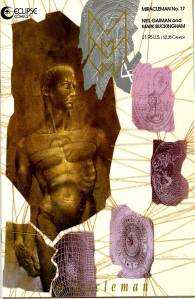
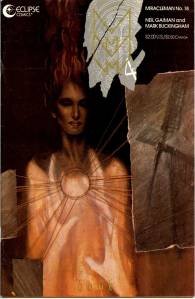
Writer Neil Gaiman picked up the series at #17 and developed it further in the 1990s, working with artist Mark Buckingham. He planned three books, consisting of six issues each; they would be titled “The Golden Age”, “The Silver Age” and “The Dark Age”.

Justice Society of America V3 (2006)

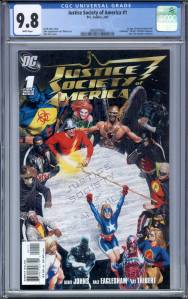
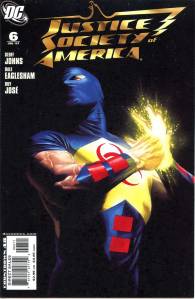
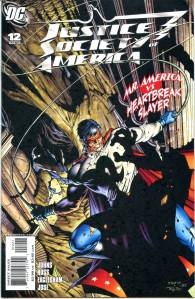
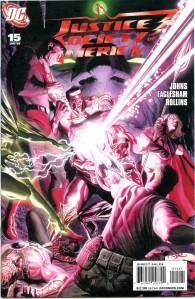
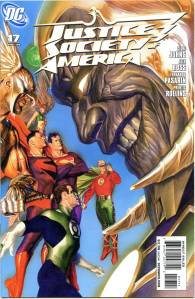
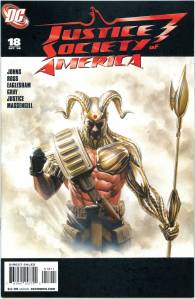
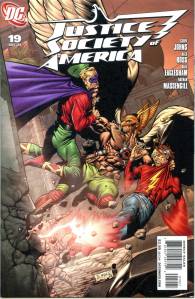
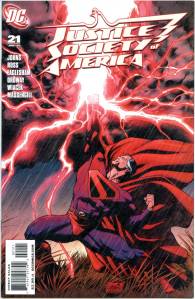
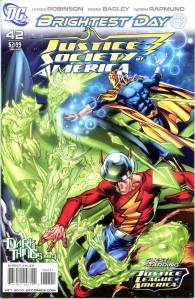
On December 6, 2006, a new series was launched with the creative team of Geoff Johns (writer), Dale Eaglesham (pencils), and Alex Ross (cover art). The beginning of the new series showed JSA veterans the Flash, Green Lantern, and Wildcat choosing members of the new generation of superheroes to train. Continuing a major theme from the previous JSA title, this new series focused on the team being the caretakers of the superhero legacy from one generation to the next.

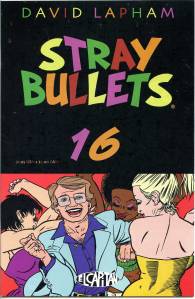
Stray Bullets (1995)

Stray Bullets is an independent American comic book series published in black and white (with color covers) by El Capitan Books. It is written and drawn by David Lapham.

The story deals with the often criminal and sometimes tragic misadventures of a large cast of characters and takes place from the mid-1970s through the mid-1990s.

In March 2014, Image Comics ended the hiatus of Stray Bullets with the publication of the final issue of the HiJinks and Derring-Do arc, and the simultaneous launch of a new arc entitled Killers. A giant-sized softcover trade paperback edition (The Uber Alles Edition) collecting all forty-one issues of the original series was also released by Image Comics. Killers ran for 8 issues throughout 2014, then after a brief hiatus, Lapham returned in early 2015 with Stray Bullets: Sunshines & Roses. Lapham plans to continue publishing Stray Bullets in this fashion at Image, with each arc treated as a discrete miniseries.

The series has been nominated for numerous awards. Stray Bullets won the 1996 Eisner Award for Best Writer/Artist, Drama, and the trade paperback collection Stray Bullets: Innocence of Nihilism won the 1997 Eisner Award for “Best Graphic Album-Reprint” the Comic Book Awards Almanac and was a top votegetter for the Comics Buyer’s Guide Fan Award for Favorite Reprint Graphic Novel/Album for the same year.

Prophet V1 (1993)

Rob Liefeld told Wizard magazine in 1994 that he was inspired by Gene Roddenberry and Steven Spielberg to create Prophet. The character first appeared in Youngblood #2, released by Image Comics in July 1992. Prophet was originally intended to appear in the pages of Marvel Comics‘ X-Force. Liefeld explained to Wizard: “He was going to show up around #6 or #7 in my original plans, and the cover to Youngblood #2 originally had X-Force members looking on instead of Youngblood members. I soon decided that I was going to work on stuff that was creator-owned, so I pulled the character of Prophet and saved him for later.”

The storyline in Youngblood led directly into Prophet’s own title, which lasted eleven issues (including a zero issue). A second series, written by Chuck Dixon, premiered in 1995 and lasted eight issues. A one-shot was released in 2000 by Awesome Comics.