Hate is a comic book by writer-artist Peter Bagge. First published by Fantagraphics in 1990 it ran for 30 issues, and was one of the best-selling alternative comics of the 1990s, at its height selling 30,000 copies an issue. In 2000 Bagge revived the series in Hate Annual, a yearly comic that continues the story after Hate in short stories, and includes writings on libertarianism, culture, and topical cartoons.
Hate follows the life of Buddy Bradley, in a continuation of events from Bagge’s strip “The Bradleys” from former publications Neat Stuff. It is set for the first half in Seattle and later in suburban New Jersey. Buddy has to deal with the end of adolescence, reluctantly growing up, his relationships with a host of unpleasant acquaintances he has to class as friends, working in dead-end jobs and having no direction in life. Bagge used memories of events from his own life as material.
The 1986 company-wide crossover “Legends” concluded with the formation of a new Justice League. The new team was dubbed “Justice League” then “Justice League International” (JLI) and was given a mandate with less of an American focus. The new series, written by Keith Giffen and J. M. DeMatteis with art by Kevin Maguire (and later Adam Hughes), added quirky humor to the team’s stories. In this incarnation, the membership consisted partly of heroes from Earths that, prior to their merging in the Crisis on Infinite Earths, were separate. The Giffen/DeMatteis team worked on Justice League for five years and closed out their run with the “Breakdowns” storyline in 1991 and 1992. The series’ humorous tone and high level of characterization proved very popular.
The series is set in the year 2099, in a dystopian possible future of the Marvel Universe, and features Kenshiro “Zero” Cochrane, a hacker who was killed but resurrected as the Ghost Rider — his mind controlling a powerful and well-armed robot. As with most of the Marvel 2099 titles, the protagonist was a futuristic version of a commercially successful Marvel Universe character. The series was heavily influenced by cyberpunk science fiction.
The character was created by Amy Reeder, Brandon Montclare and Natacha Bustos and first appeared in Moon Girl and Devil Dinosaur #1 (January 2016).
The genesis of the character came from Mark Paniccia and Emily Shaw who were a fans of the character Devil Dinosaur and had hired Montclare and Reeder to pen the basis for a new series that involved the character ending up in modern day. They came up with the idea of Devil Dinosaur interacting with a girl and fell in love with the idea of working with a hero who wasn’t a “regular cape-and-tights superhero”.
They also viewed the series as a direct sequel to the Moon-Boy and Devil Dinosaur series from Jack Kirby hence the first villains that Moon Girl and Devil Dinosaur face are the Killer-Folk.
Artist Natacha Bustos found the character a relief from the norm of other typical superheroes. She was primarily inspired by the clear diversity that Moon Girl and Devil Dinosaur promoted, further comparing the character Lunella to herself. She compared her story to a “Ghibli one” due to the immense relationship between the title characters.
The story deals with Smax and Toybox returning, via magical teleportation, to Jeff’s magically enchanted homeworld. Smax, now a city dweller, seems embarrassed by his unsophisticated, sword-and-sorcery roots. They attend Smax’s uncle’s funeral where Jeff introduces Robyn as his wife, though no such relationship exists. At this point Jeff’s sister Rexa Macksun is introduced, dressed in the typical garb of a female fantasy barbarian such as Red Sonja and just as tall and physically impressive as her brother with the same blue skin and white hair.
In June 2016, the DC Rebirth event relaunched DC Comics’ entire line of comic book titles. Batman was rebooted as starting with a one-shot issue entitled Batman: Rebirth #1 (August 2016). The series then began shipping twice-monthly as a third volume, starting with Batman vol. 3, #1 (August 2016). The third volume of Batman was written by Tom King, and artwork was provided by David Finch and Mikel Janín. The Batman series introduced two vigilantes, Gotham and Gotham Girl.
DC Comics ended the Rebirth branding in December 2017, opting to include everything under a larger “DC Universe” banner and naming. The continuity established by Rebirth continues across DC’s comic book titles, including volume one of Detective Comics and the third volume of Batman.
After Claremont’s run, the X-Men were divided into two color-coded squads, with a Blue team headlining the adjectiveless X-Men title, while the Gold team, consisting of Archangel, Colossus, Jean Grey, Iceman and Storm, appeared in Uncanny. This roster was later joined by Bishop, another refugee from the future.After Claremont’s departure, Jim Lee continued as plotter, while John Byrne scripted from #281 to #286. Byrne was replaced as scripter from #286 by Scott Lobdell, who was fully credited as writer from #289. The “X-Cutioner’s Song” crossover was released in the fall of 1992 and resulted in the outbreak of the Legacy virus, a mutant-specific plague which continued as a story element in X-Men comics until 2001.
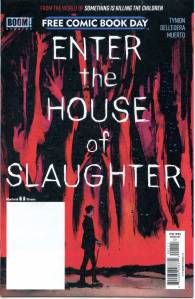
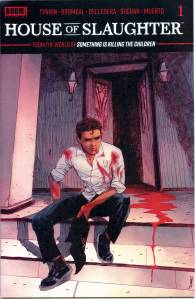
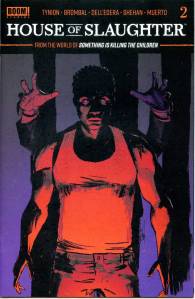
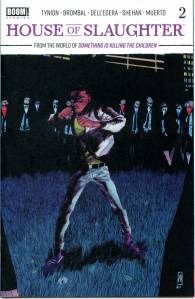
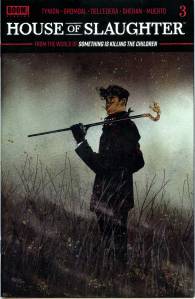
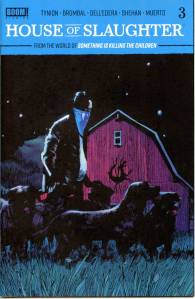
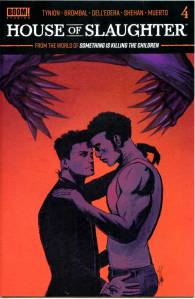
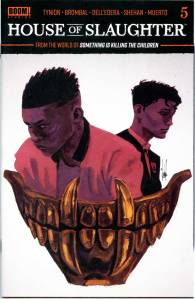
Everyone who was invited to the house knows Walter—well, they know him a little, anyway. Some met him in childhood; some met him months ago. And Walter’s always been a little…off. But after the hardest year of their lives, nobody was going to turn down Walter’s invitation to an astonishingly beautiful house in the woods, overlooking an enormous sylvan lake. It’s beautiful, it’s opulent, it’s private—so a week of putting up with Walter’s weird little schemes and nicknames in exchange for the vacation of a lifetime? Why not? All of them were at that moment in their lives when they could feel themselves pulling away from their other friends; wouldn’t a chance to reconnect be…nice?
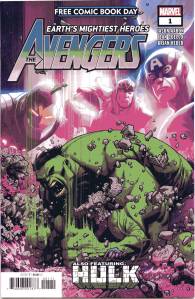
The uncontrollable rage of the Hulk has reached an all-new level, and nobody – including the Avengers – is prepared to handle it. But is it really the Hulk that people should be afraid of, or is there something missing to this puzzle? Join the creative team of Donny Cates and Ryan Ottley as they look to the stars for the next era of HULK!
With the publication of issue #226 (April 2006), the series was canceled as part of the company-wide Infinite Crisis event. The Adventures of Superman was returned to its original title, Superman, with issue #650 the following month.
In November 2011, a third volume of Superman was launched with issue #1 as part of The New 52 company-wide reboot.