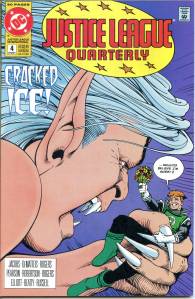
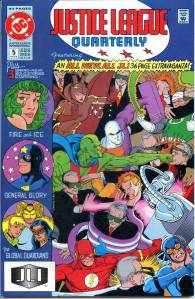
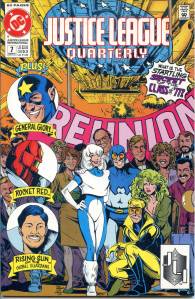
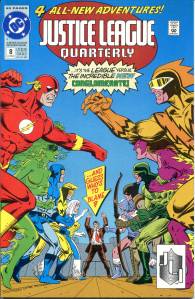
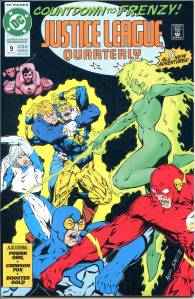
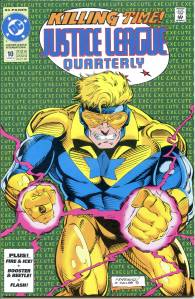
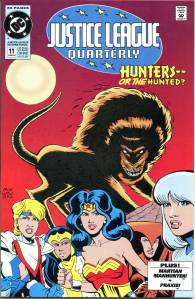
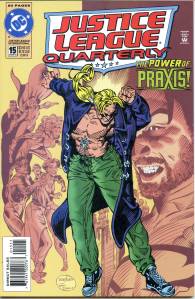
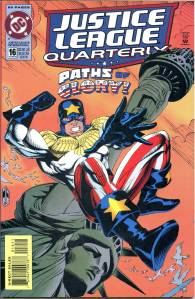
Justice League Quarterly (JLQ) was published from Winter 1990 to Winter 1994; it lasted 17 issues. It had a variable cast, pulling from the Justice League membership. The title centered on short stories featuring a differing number of characters, often solo stories, and in later issues often featured a pin-up section of members of the Justice League. Various writers and artists have worked on the title.
Simon eventually took a break from being an Avenger to concentrate on his acting career. He desired to build a normal life for himself and to come to terms with who he was. In particular he wondered what kind of person he truly was and whether or not he was truly human, given his transformation into ionic energy.
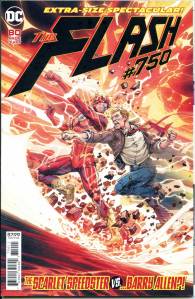
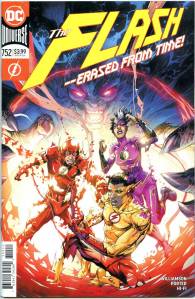
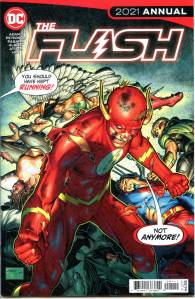
Meet Paradox: a new time-traveling villain with a tragic backstory who poses a big threat–and carries a big grudge against the Flash. He’s determined to destroy the Flash legacy at all costs, and he’s powerful enough to do it! With the Flash about to be erased from time and space, only one ally can help him defeat this seemingly insurmountable foe…Eobard Thawne, the Reverse-Flash? Can Barry Allen really trust his greatest enemy? And does he even have a choice?
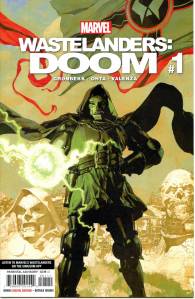
The Once and Future King! Doctor Doom helped wipe out the heroes on the Day the Villains Won, but even as he rules his domain in the Wastelands, a greater destiny calls to him. When a mysterious power blocks his oversight of a particular region, what he discovers will have ripple effects across the Wastelanders stories!
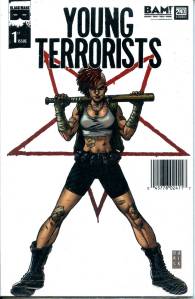
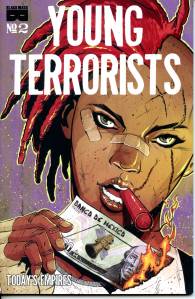
What if “The Smoking Man” from X-Files was a real person, and his daughter found out what he did for a living? The daughter of an assassinated globalist kingpin breaks out of an internment camp and leads her fellow escaped prisoners in a battle against an elitist conspiracy of shadow governments, megabanks, and military juntas in this edgy and subversive thriller that channels Fight Club by way of Girl With The Dragon Tattoo.
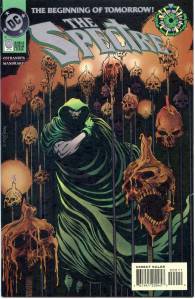
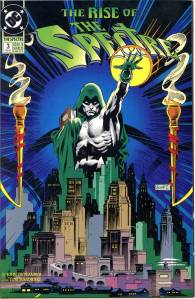
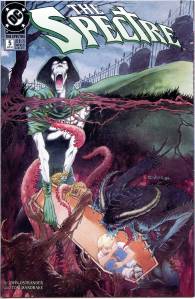
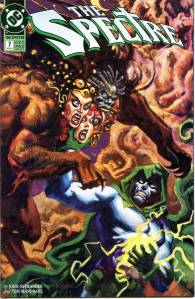
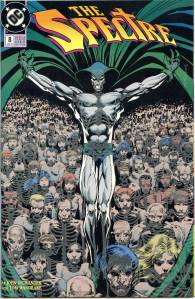
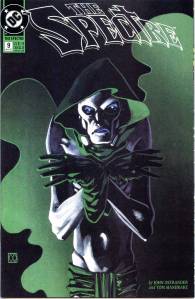
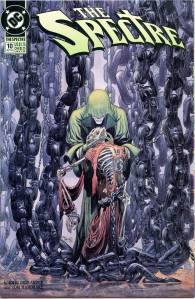
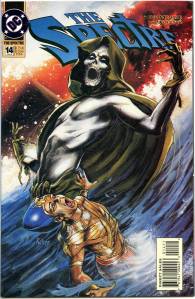
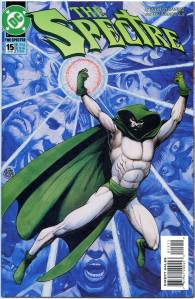
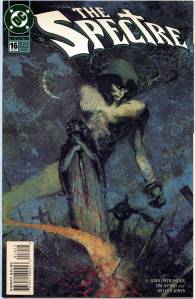
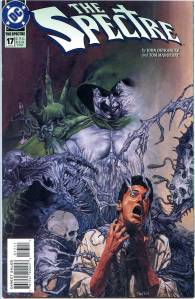
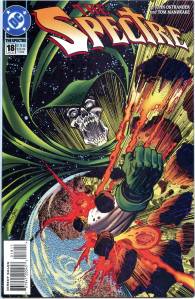
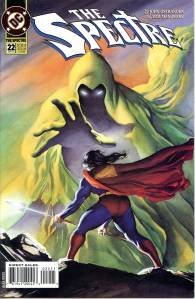
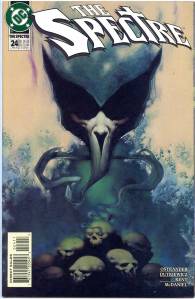
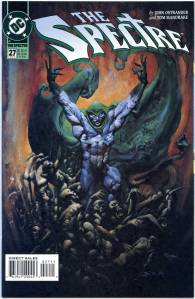
In 1992, the Spectre was again given his own series, this time written by writer and former theology student John Ostrander, who chose to re-examine the Spectre in his aspects as both the embodied Avenging Wrath of the Murdered Dead and as a brutal 1930s policeman.
Ostrander placed the Spectre in complex, morally-ambiguous situations that posed certain ethical questions, one example being: What vengeance should be wrought upon a woman who killed her abusive husband in his sleep?
Ostrander also added several new concepts into the Spectre’s history: He revealed that the Spectre was meant to exist as the embodiment of the Wrath of God, and Jim Corrigan was but the latest human spirit assigned to guide him while he existed on Earth. It was also shown that the Spectre was a fallen angel named Aztar who had participated in Lucifer‘s rebellion, but then repented, and that serving as the embodiment of God’s anger was its penance.
Furthermore, the Spectre was not the first embodiment of God’s anger, but was the replacement for the previously-minor DC character Eclipso. Ostrander chose to portray this as a distinction between the Spectre’s pursuit of vengeance and Eclipso’s pursuit of revenge. In a historical context, Eclipso was responsible for the biblical Flood, while the Spectre was the Angel of Death who slew the firstborn Egyptian children. Spectre and Eclipso have battled numerous times through history but neither entity can be fully destroyed.
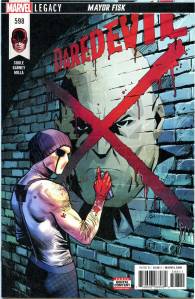
Following the release of Volume 5, Issue 28, much like with other Marvel series as part of the Marvel Legacy event, the Daredevil series official numbering was rebooted back to the original numbering which started with Issue 595 which was released on November 8, 2017, where Daredevil’s longtime nemesis the Kingpin became the Mayor of New York City and begins a campaign to make costumed vigilantes officially criminals. Although Murdock’s attempt to set up a sting operation results in his allies being arrested when the Kingpin turns this trap against him, Fisk’s legal manipulations work against him when he is attacked by the Hand, leaving Fisk in a coma and Murdock legally mayor of New York from his position as deputy mayor due to a loophole added by a prior administration that had not been amended, allowing Matt to take control of the city and release his fellow heroes to help him stop the Hand.
Talbot Engineering Inc. is under new management – and its brilliant chief scientist, Batya Zahn, will do just about anything to get her family off the icy moon where they’ve been conducting research on water conservation. But there’s more than glacial springs to find in this forgotten corner of the galaxy. When they discover an extraordinary organism buried in the ice, it doesn’t take long for tensions to heat up. What is hidden in the snow comes forth in the thaw – and no one will be welcoming this spring. But Zahn is not willing to give up her work to this unexpected threat without a fight, no matter what horrors emerge from the ice in the black of night.
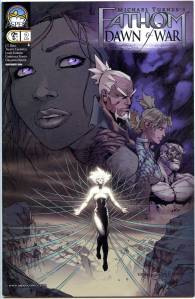
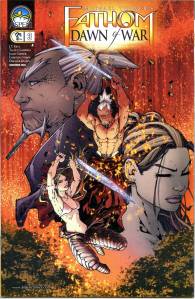
Fathom: Dawn of War bridges the gap between the original series and Fathom vol. 2. The story focuses on the Blue warrior Kiani, who is forced to side with the rebellious councilman Marqueses in order to save her master, Casque, from the clutches of human military scientists. Marqueses has engineered the situation in order to kidnap Casque and to secure the older warrior’s immense power for an offensive against the humans. Kiani tracks down Marqueses and saves Casque only to find he is part of the Black. The Black come for Casque, and he is forced to rejoin them, leaving Kiani angry and lost.
Dawn of War emphasizes Kiani’s loneliness and character development. It also introduces audiences further to the underwater world of the Blue.