Rima the Jungle Girl (1974)

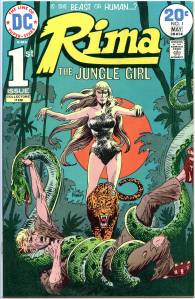
Rima starred in a seven-issue comic book series, DC Comics‘ Rima the Jungle Girl (May 1974 – May 1975), adapted by DC writer-editor Robert Kanigher with artwork by pencilerinker Nestor Redondo and covers by Joe Kubert. A variation of the character debuted in a six-issue DC Comics limited series May 2010 to Mar 2011 First Wave, written by Eisner Award–winning writer Brian Azzarello.

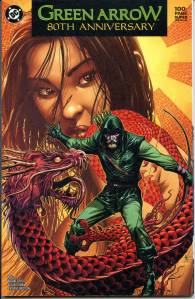
Green Arrow – 80th Anniversary (2021)

Celebrating the Emerald Archer’s 80th Anniversary! For the last eight decades Green Arrow has been one of the premier (and loudest) characters in the DCU, always at the forefront of where the superhero genre is headed. This over-sized anniversary issue follows in those footsteps, as an all-star lineup of Green Arrow creators, alongside some of the gifted creators of the modern era who have been inpsired by Oliver Queen, unite to pay tribute to the Battling Bowman. See what the past, present and future have in store for Oliver Queen, Black Canary, Connor Hawke, Arsenal, Red Arrow, Speedy, and more in this epic special!

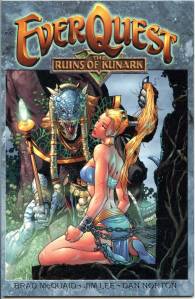
Everquest: The Ruins of Kunark (2001)

Journey to the land of Kunark alongside High Elven Princess Firiona Vie, as she and her comrades-in-arms must stop an unholy alliance. The great Elven Armies stand ready to defend the realm. But will they be enough to vanquish the rising darkness that threatens all of Norrath?

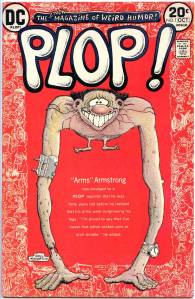
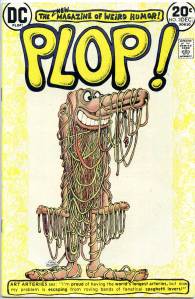
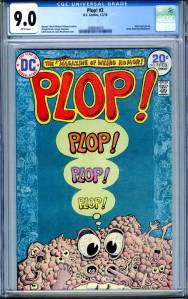
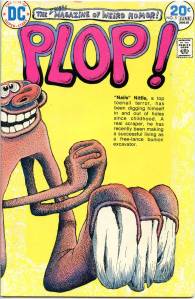
Plop! (1973)

According to Steve SkeatesPlop! was based around a horror / humor story he wrote called “The Poster Plague”, which was published in House of Mystery.

The title initially was intended to be called Zany. A number of the one-panel cartoons published in the comic included the visible prefix ZA, in reference to the originally intended title. Sergio Aragonés credits publisher Carmine Infantino with coming up with the final title: “Joe Orlando and I were sitting in a restaurant talking with Carmine Infantino. They wanted a magazine that was different, something about black humor. Carmine came up with the name. We were talking about it and he said, ‘What will we call it?’ And I said, ‘We can call it anything, because if the magazine is good, then it will stay.’ And he said, ‘No, we can’t call it, for instance … PLOP!’ And I said, ‘Yes, we can.’ And so I started making sketches of things going PLOP! and they laughed and decided the name was good.

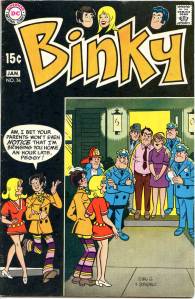
Binky (1968)

The adventures of teenager Binky Biggs started in DC Comics’ Leave It to Binky #1 (cover-dated March 1948), which ran for 60 issues through 1958. The series was revived by issue #61 (July 1968). With issue #72 (May 1970), the title was shortened to Binky and the series ran until issue #81 (Nov. 1971). Issue #82 was published in Summer 1977.

A spin-off title, Binky’s Buddies, ran 12 issues (Feb. 1969 – Dec. 1970).

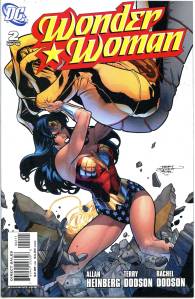
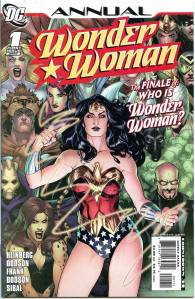
Wonder Woman V3 (2006)

Following Infinite Crisis, Wonder Woman was canceled and relaunched in 2006. It starts with Donna Troy as Wonder Woman and with Diana missing. When Diana returns she takes on the name of Diana Prince and becomes a secret agent for the Department of Metahuman Affairs. Her first assignment is to retrieve her kidnapped sister Donna Troy. After this was accomplished Diana took back the mantle of Wonder Woman.

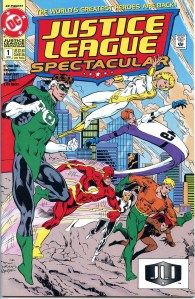
Justice League Spectacular (1992)

The release of Justice League Spectacular launched the revised Justice League titles with new writers and artists.The Justice League titles expanded to four by June 1993: Justice League America (formerly Justice League International), Justice League Europe (retitled as the second volume of Justice League International), Justice League Quarterly, and Justice League Task Force. In late 1994 Justice League International and Justice League Quarterly were cancelled and replaced by a new monthly title in January 1995, Extreme Justice.

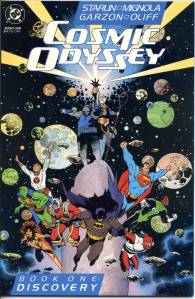
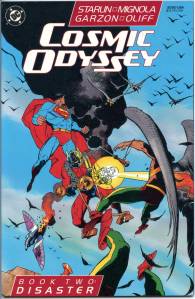
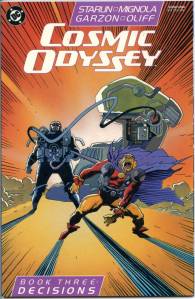
Cosmic Odyssey (1988)

Cosmic Odyssey is a science fiction mini-series, first published in 1988 by DC Comics. It was a four-issue limited series written by Jim Starlin, penciled by Mike Mignola and lettered by John Workman. The story tells a story spanning the DC Universe involving a wide variety of major characters including Superman, Batman, and the New Gods.

The series comprised four 48-page prestige format comic books.

Weird Mystery Tales (1972)

The Weird Mystery Tales ongoing series was launched in July–August 1972 and was originally hosted by Destiny. The hosting role was gradually taken over by Eve, who fully assumed the title with issue #15 (December 1974–January 1975). The title’s name was partially inspired by the sales success of Weird War Tales and Weird Western Tales. Early issues printed material by Jack Kirby that had been intended for his black-and-white, magazine-size DC comic series, Spirit World, which lasted only one issue. These stories featured Dr. E. Leopold Maas as host, sometimes with an appended hosting segment by Destiny.

Hardware (1993)

Curtis “Curt” Metcalf is a genius inventor who, in his Hardware identity, uses a variety of high-tech gadgets to fight organised crime. A central irony of the series (of which Metcalf is fully aware) is that Metcalf’s employer, respected businessman Edwin Alva—who provides the resources Metcalf uses to create Hardware’s hardware—is secretly the crime boss whom Hardware is trying to bring down.