Superman V3 (2011) “New 52”

In late July 2011, DC released The New 52, a free preview book giving solicitations and previews of all of the new titles launching from August 31, 2011. Notable continuity changes shown included Superman‘s two new looks: one which consists of jeans, a blue T-shirt with the “S” logo and a cape, the other consisting of Kryptonian battle armor that resembles his classic costume.

Forgotten Realms (1989)

In 1989, DC Comics began publishing the Forgotten Realms comic series, written by Jeff Grubb. Each issue contained twenty-six pages, illustrated primarily by Rags Morales and Dave Simons. The 19 issues produced by Morales were his first professional works. Tom Raney illustrated issues #17 and #20. Elliot S. Maggin served as an editor for DC from 1989 to 1991 and oversaw the licensed TSR titles, including Forgotten Realms. Twenty-five issues were published in total, with the last being released in 1991.

Supergirl V2 (1982)

Supergirl (Volume 2) was published from November of 1982 until September of 1984, spanning a total of 23 issues. The series was initially entitled, the Daring New Adventures of Supergirl, but shortened the title to simply, Supergirl, with issue #13. This was the last regular comic series to feature the Pre-Crisis Kara Zor-El as Supergirl.

The House of Mystery (1970’s)

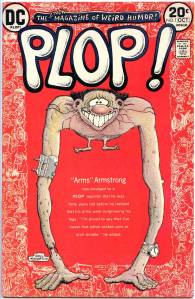
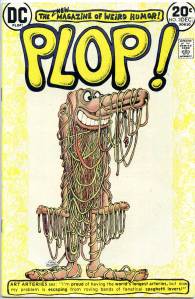
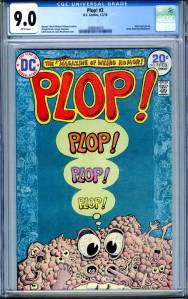
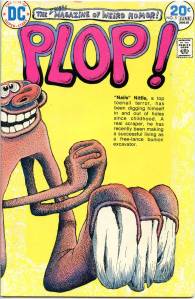
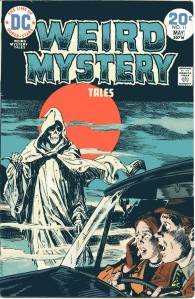
With issue #174, EC Comics veteran Joe Orlando was hired by DC to take over as editor of House of Mystery. As the Comics Code Authority was now being challenged by both DC and Marvel over content restrictions, the series returned to its overt horror themes. The first issue under Orlando would be a reprint issue of old horror/suspense stories, as the new direction would truly begin with #175 (July–August 1968). The issue would introduce a new figure to the series, Cain, the “able care taker” of the House of Mystery who would introduce nearly all stories that would run in the series before its cancellation. Cain would also host the spin-off humor series Plop! and later become a recurring character in Blue Devil and The Sandman.

Artist Bernie Wrightson‘s first professional comic work was the story “The Man Who Murdered Himself” which appeared in issue #179 (March–April 1969)

House of Mystery was in the Dollar Comics format for issues #251 (March–April 1977) to #259 (July–August 1978).  House of Mystery featured stories by writers T. Casey Brennan (#260, 267, 268 and 274) and Scott Edelman (#257, 258, 260, 264, 266, 270, 272, 273). Orlando’s tenure as editor ended with #257 (March–April 1978).

Countdown to Final Crisis (2007)

Countdown consists of 51 issues, number in reverse, published weekly for one year, crossing over with noteworthy and significant titles published by DC. The series covers much of the fictional DC Universe, told in parallel narratives, through the interconnecting stories of a cast of characters, and frequently crosses over with various other DC titles. Unlike the 52 limited series of the previous year, Countdown is not depicted as taking place in “real time” but presumably operates on the same floating timeline as DC Comics stories in general.

Legion of Super-Heroes V1 (1980’s)

Paul Levitz returned to write the series with #284. Pat Broderick and Bruce Patterson illustrated the title for a short time before Keith Giffen began on pencils, with Patterson, and then Larry Mahlstedt, on inks. The creative team received enhanced popularity following “The Great Darkness Saga“, which ran from #287; #290–294; and Annual #3, featuring a full assault on the United Planets by Darkseid. Comics historian Les Daniels observed that “Working with artist Keith Giffen, Levitz completed the transformation of Legion into a science-fiction saga of considerable scope and depth.”

The Legion celebrated issue #300 (June 1983) by revisiting the “Adult Legion” storyline through a series of parallel world short stories illustrated by a number of popular Legion artists from previous years. The story served to free up Legion continuity from following the “Adult Legion” edict of previous issues.

Superboy and the Legion of Super-Heroes (1970’s)

Superboy became Superboy starring the Legion of Super-Heroes with issue #197 (August 1973). Crafted by Bates and Cockrum, the feature proved popular and saw such events as the wedding of Bouncing Boy and Duo Damsel in Superboy #200 (Feb 1974). Cockrum was replaced on art by Mike Grell as of issue #203 (August 1974) which featured the death of Invisible Kid. With #231 (September 1977), the book’s title officially changed to Superboy and the Legion of Super-Heroes and also became a “giant-size” title. At this point, the book was written by longtime fan Paul Levitz and drawn by James Sherman, although Gerry Conway frequently wrote as well. Saturn Girl and Lightning Lad were married in All-New Collectors’ Edition #C-55 (1978), a treasury-sized special written by Levitz and drawn by Grell. In #241–245 (July–December 1978) Levitz and Sherman (and then Joe Staton) produced what was at that time the most ambitious Legion storyline: “Earthwar“, a galactic war between the United Planets and the Khunds, with several other villains lurking in the background. During this period, Karate Kid was spun off into his own 20th Century-based self-titled series, which lasted 15 issues. Levitz left the book, to be replaced full-time by Gerry Conway.

Superboy departed from the Legion due to a plot of a villain, and the book was renamed simply Legion of Super-Heroes starting with issue #259 (January 1980). Editor Jack C. Harris hired Steve Ditko as guest artist on several issues, a decision which garnered a mixed reaction from the title’s readership. Jimmy Janes became the regular artist in a lengthy tale by Conway (and later Roy Thomas) involving Ultra Boy’s disappearance during a mission, and his long odyssey to rejoin the team. This story told the tale of the Legionnaire Reflecto (only glimpsed during the “Adult Legion” stories in Adventure Comics), featured villainy by the Time Trapper and Grimbor the Chainsman, and saw Superboy rejoin the team.

The Literals (2009)

The Literals is an limited series by Bill Willingham published under DC’s Vertigo imprint. It was created to be parts Three, Six, and Nine of The Great Fables Crossover.

John Constantine: Hellblazer V1 (2020)

The second year of the Sandman Universe begins with the long-awaited arrival of one of DC’s most iconic characters…John Constantine, Hellblazer! John Constantine is back in London, back to his old tricks-and just in time, as things have become very dark indeed in his old stomping grounds.

Detective Comics V1 (2020’s)

The next regular writer after James Tynion IV was Peter Tomasi who began on the series with issue #994, published December 2018. Tomasi’s run as writer continued for two years until issue #1033, published December 2020.

On March 27, 2019, DC Comics released the series’ 1,000th issue, marking the second American comic book in history to reach that milestone after Action Comics in 2018. The issue, which coincided with Batman’s 80th anniversary, is an anthology featuring several stories from a variety of different creative teams.

Writer Mariko Tamaki began on the series with issue #1034 as part of the Infinite Frontier line-wide relaunch. In April 2022, it was announced that Ram V and Rafael Albuquerque would serve as the new creative team starting with issue #1062.