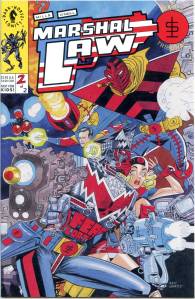
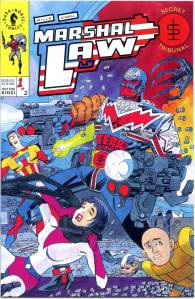
Written by Pat Mills. Art and cover by Kevin O’Neil. Marshal Law investigates the mysterious death of Luminous Lad during his indoctrination to the youthful League of Heroes, and you had better believe those spandex punks are quaking with fear and loathing! Teamed with the Secret Tribunal, comics’ toughest hero-hunter goes face-to-face with an otherworldly threat from beyond the stars. Be here when the good Marshal handles first contact the old fashioned way — with guns blazing!
Tag: Comic
Evil Ernie Vs the Movie Monsters (1997)
In the same vain as the Evil Ernie Vs the Super Heroes series this pits Ernie in a what-if situation where Ernie gets to battle some of the all time greatest movie monsters in a very one sided confrontation.
Royal City (2017)
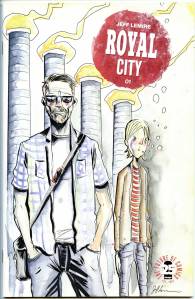
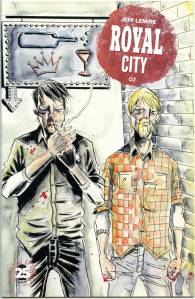
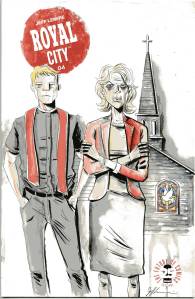
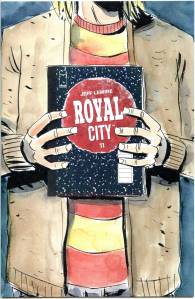
Royal City charts the lives, loves, and losses of a troubled family and a vanishing town across three decades. Patrick Pike, a fading literary star who reluctantly returns to the once-thriving factory town where he grew up, is quickly drawn back into the dramas of his two adult siblings, his overbearing mother, and his brow-beaten father, all of whom are still haunted by different versions of his youngest brother, Tommy, who drowned decades ago.
Aliens: Earth War (1990)
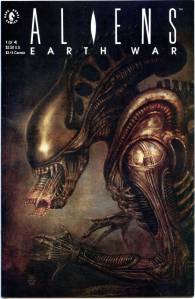
Aliens: Earth War was a continuation of the events from Aliens (series 1) (1988) and Aliens (series 2) (1989), originally featuring the continuing adventures of the characters Newt and Dwayne Hicks from the film Aliens, and also reintroducing Alien-film-franchise heroine Lt. Ellen Ripley.
For later printings, after the release of the film Alien³, the story was retitled Aliens: The Female War, and the names/identities of the lead characters were changed to Billie and Wilks, since Newt and Hicks were killed off at the start of the film, and the Ellen Ripley who appears in the story is said to be a synthetic version of Ripley, who was killed off at the film’s end. As such, the story, as Aliens: The Female War, the story still stands as part of Aliens comics/novel continuity; and Billie, Wilks, and the Ellen Ripley synthetic have all become completely separate characters.
The Terminator Special (1998)
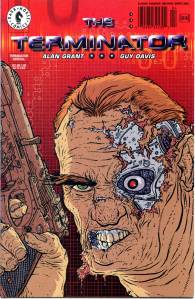
Written by Alan Grant. Art by Guy Davis. Cover by Geof Darrow. In a nightmarish future, John Connor will lead the remnants of humanity against the cybernetic killing machines known as Terminators. But as a boy in our present, he has his whole life ahead of him — unless the Terminators get to him first. In the unforgiving wastelands of Death Valley, a new chapter is about to unfold. A new pair of Terminators have been sent from the future to find the boy. What’s at stake for the lowlife bounty hunter named Van Dirk? And, can humanity’s future be saved, or does Skynet have another ace up its sleeve?
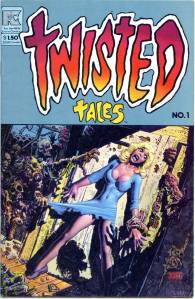
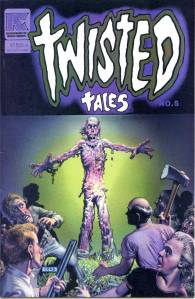
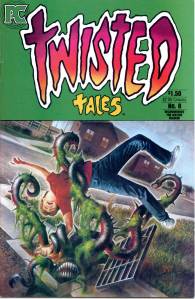
Twisted Tales (1982)
Twisted Tales was published bi-monthly by Pacific Comics from November 1982 to May 1984 (eight issues). After Pacific went bankrupt, two final issues were published by Eclipse Comics in November and December 1984. In August 1986, Blackthorne Publishing released Twisted Tales 3-D #1 (#7 in their 3-D series), with reprints of stories taken from earlier issues. In November 1987 a Twisted Tales trade paperback was released by Eclipse Comics with a Dave Stevens cover, featuring previously unpublished stories and art.
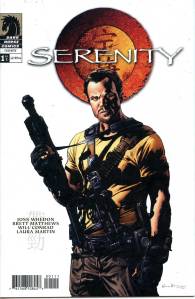
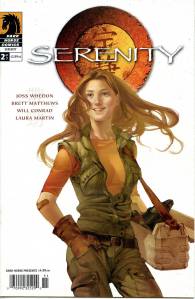
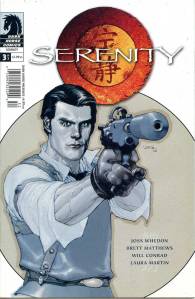
Serenity (2005)
Joss Whedon pens a three issue miniseries based on the film with Brett Matthews.
The crew of Serenity once again find themselves broke and on the wrong side of a number of very large firearms, making the first issue a case study in how to mix intense, Whedon-style character interaction with cinematic action and violence. Artist Will Conrad and colorist Laura Martin paint a rough and wild world of adventure across a strange and dangerous universe.
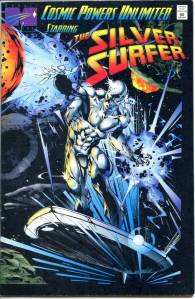
Cosmic Powers Unlimited (1995)
Cosmic Powers Unlimited was part of Marvel’s mid 90’s line of ‘Unlimited’ books alongside Spider-Man, X-Men, Fantastic Four & 2099 Unlimited. Each book was published quarterly, was giant-sized and was published on better quality paper stock.
Cosmic Powers Unlimited was an anthology series exclusively featuring Marvel’s Cosmic characters; each issue having a lead story then one or more shorter backups. Each issue’s lead story featured either the Silver Surfer solo or the Surfer with Quasar and Beta Ray Bill as the Star Masters. Characters featured in backup features included: Jack of Hearts, Ganymede, Sundragon, Drax the Destroyer, Moondragon, Pip the Troll, Thanos, Captain Mar-Vell and Her / Kismet.
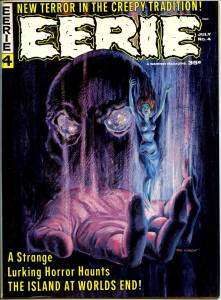
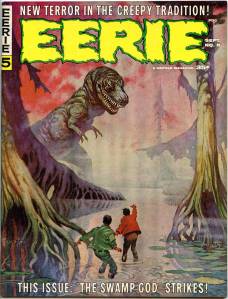
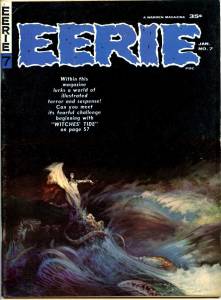
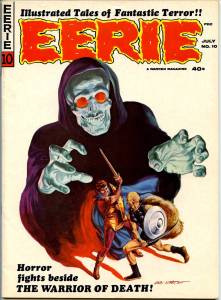
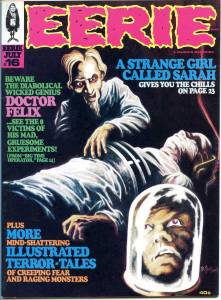
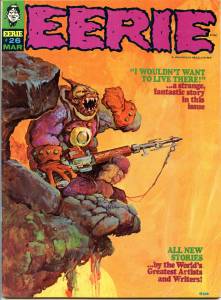
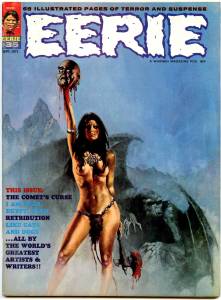
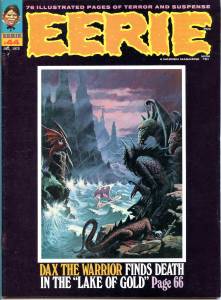
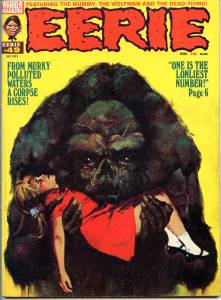
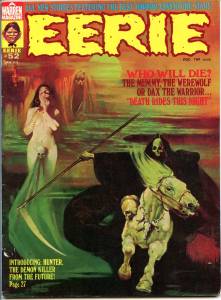
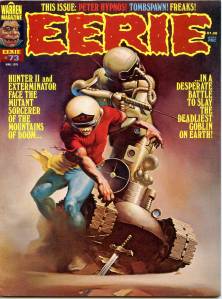
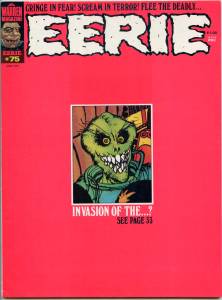
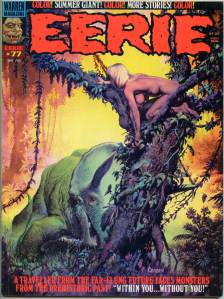
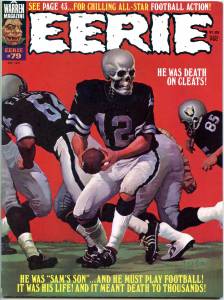
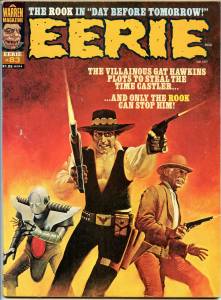
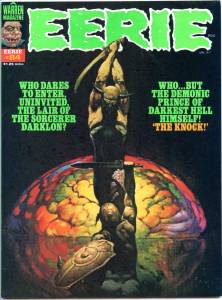
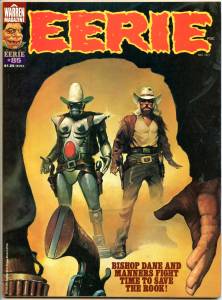
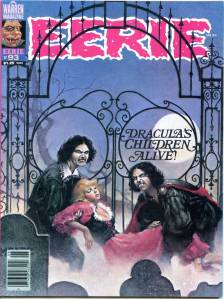
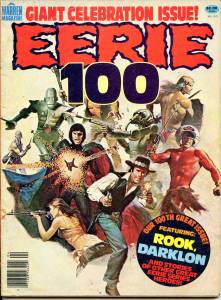
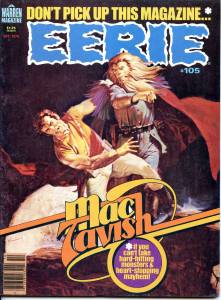
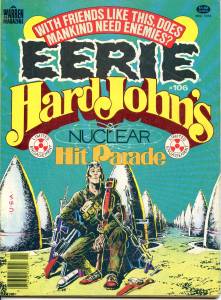
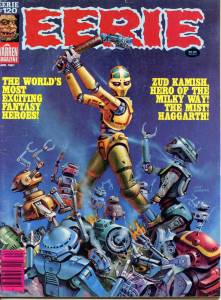
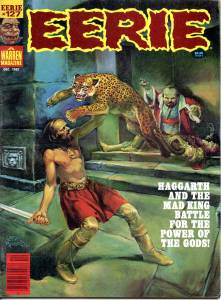
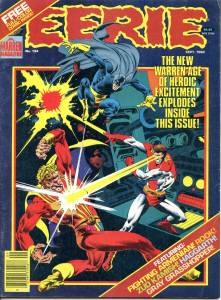
Eerie (1966)
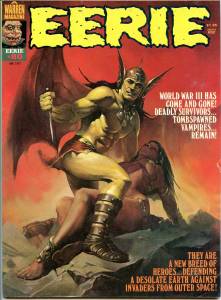
Eerie was an American magazine of horror comics introduced in 1966 by Warren Publishing. Like Mad, it was a black-and-white newsstand publication in a magazine format and thus did not require the approval or seal of the Comics Code Authority. Each issue’s stories were introduced by the host character, Cousin Eerie. Its sister publications were Creepy and Vampirella.
The first issue, in early 1966, had only a 200-issue run of an “ashcan” edition. With a logo by Ben Oda, it was created overnight by editor Archie Goodwin and letterer Gaspar Saladino to establish publisher Jim Warren’s ownership of the title when it was discovered that a rival publisher would be using the name. Warren explained, “We launched Eerie because we thought Creepy ought to have an adversary. The Laurel and Hardy syndrome always appealed to me. Creepy and Eerie are like Boris Karloff and Peter Lorre.”
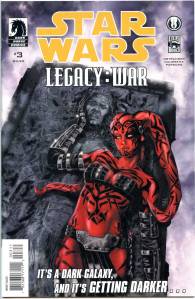
Star Wars Legacy: War (2010)
The Legacy saga ends here! It’s an all-out war as the Sith emperor returns from the dead – stronger, more evil, more determined, and prepared to unleash a new secret weapon upon the galaxy! Roan Fel”s loyalist Imperials, the Galactic Alliance, and the Jedi are all on the defensive – reeling from the attacks by the unified Sith. But Cade Skywalker has his own plans for this war – all this time spent running from his legacy has finally shown him that he can’t run… and he must stand alone against Darth Krayt!