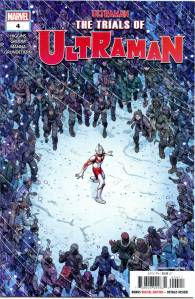
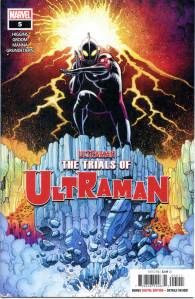
Now come the consequences! Ultraman narrowly averted a catastrophe decades in the making. The world was saved — but also forever changed. Much of the populace regard their defenders with suspicion. Enemies hide in plain sight, and even those closest to Shin Hayata don’t necessarily have faith in the Giant of Light. But at last, a long-thought-lost comrade has returned! That’s a good thing…right? Unfortunately, the forces aligned against the USP and Ultraman are far more widespread — and more organized — than our heroes ever suspected. If they’re going to survive, they’ll need a new ally of their own — and the man they’re thinking of just so happens to be one of the most powerful and influential people in the world. But what is his history with the USP, and why does he seem to have his own hidden agenda?
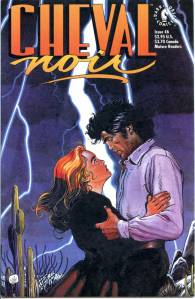
During its 50 issue run, Cheval Noir was published in a variety of formats ranging from the standard 32-pages to giant-sized 72-page issues. The first 23 issues were edited by Mike Richardson, then the role was taken over by Barbara Kesel and later by Anina Bennett and Jennie Bricker.
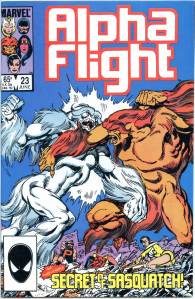
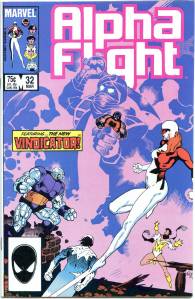
Most team members have distinctly Canadian attributes, such as having Inuit/First Nations or French heritage. Throughout most of its history, the team has worked for Department H, a fictional branch of Canada’s Department of National Defence that deals with super-powered villains.
The team was originally merely a part of the backstory of the X-Men‘s Wolverine but, in 1983, Marvel launched an eponymous series featuring the group, which continued until 1994, lasting 130 issues as well as annuals and miniseries.
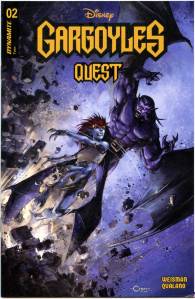
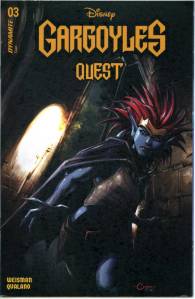
Thwarted in her earlier attempt to gain control of the ancient magical artifacts known as the Original Keys to Power, the evil DEMONA has set her sights on three New Keys that will give her the ability to make any human in her vicinity into her willing puppet. All that stands between Demona and world domination are Goliath and the Manhattan Clan. But despite their best efforts, Demona always seems to be a step ahead, gathering one Key after another. And once she has them all, the entire human race had better beware!
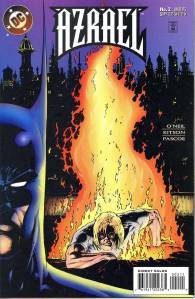
In 1995 Azrael appeared in his on self-titled series, chronicling Valley’s battles against the Order of St. Dumas. Azrael ran for 100 issues between 1995 and 2003. Starting with issue #47, it was re-titled to Azrael: Agent of the Bat in an attempt to boost sales by tying the series in with the rest of the Batman mythos, including Azrael as part of the team of Batman, Robin, and the new Batgirl.
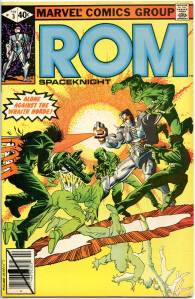
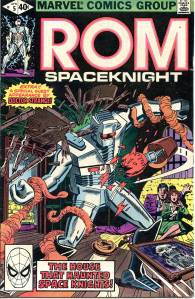
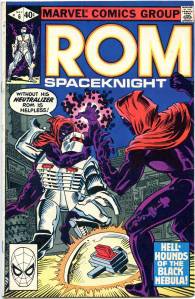
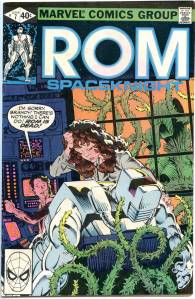
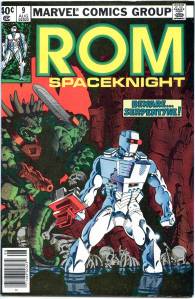
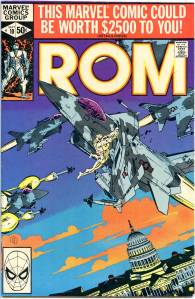
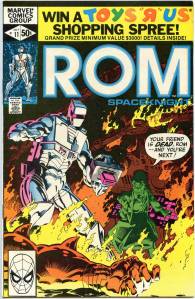
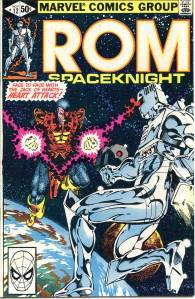
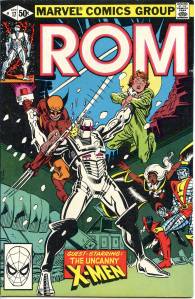
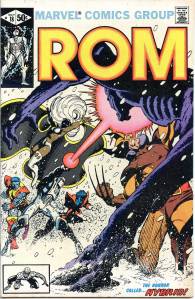
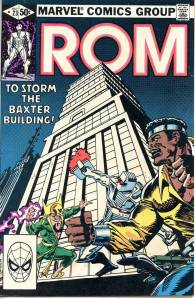
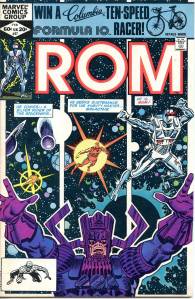
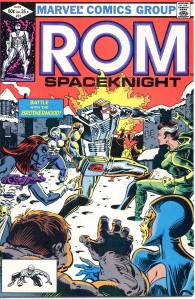
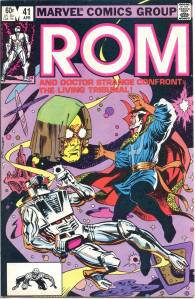
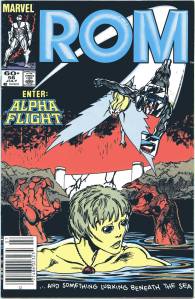
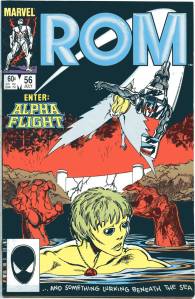
To build interest in the ROM toy, Parker Brothers licensed the character to Marvel Comics, which created a comic book featuring Rom. The comic expanded on the premise that Rom was a cyborg and gave him an origin, personality, set of supporting characters and villains, as well as interaction within the Marvel Universe. The comic was written by Bill Mantlo and initially illustrated by artist Sal Buscema. Buscema stated in a 2010 interview, “I liked the character. And I liked what they did with it. I thought the concept was quite good. It was unique. It made it attractive to do. I almost hate to say this, but it was pretty easy to draw, too.” Buscema was the main artist for the series from its creation through 1984. Steve Ditko took over for the final two years of the original run.
Ultimately, the toy failed and only sold 200,000 to 300,000 units in the US, with creator McCoy blaming the failure on poor packaging and marketing. Parker Brothers subsequently abandoned the line.
The comic book outlasted the toy which it was created to support. The series lasted for 75 issues (not including the four annual issues) from December 1979 to February 1986. Rom’s regular encounters with mainstream heroes and villains established him as part of Marvel continuity.
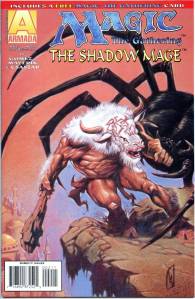
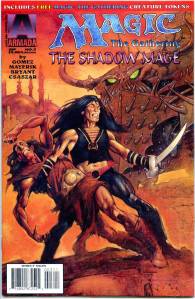
This is the first in a series of limited series relating just one of the epic sagas set on Dominia, the world of Magic: The Gathering! The Shadow Mage tells the story of young Jared, a boy who is rescued from a spectacular battle and then cared for by a lowly Spellsquire. The old man spends years preparing Jared to take vengeance on the immensely powerful Planewalker who slew his father.
Magic the Gathering – The Shadow Mage #1 NM Polybagged with card $19
Magic the Gathering – The Shadow Mage #2 NM with card $9
Magic the Gathering – The Shadow Mage #3 NM Polybagged with tokens $9
The series explicitly does not use a floating timeline like the mainstream Marvel Universe, instead presenting a Punisher who ages in real time. Gravestones and other references indicate that his family was killed in 1976. The Punisher has been active for almost 30 years at the time presented in most stories, with issue #19 specifying that he has killed approximately 2,000 people. Born also establishes that the Punisher’s service in the Vietnam War is still in MAX continuity.
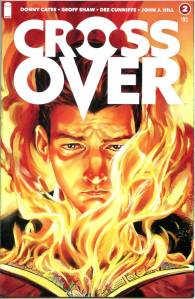
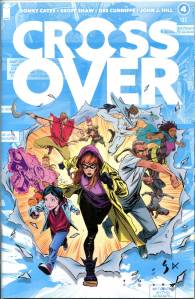
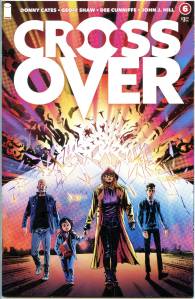
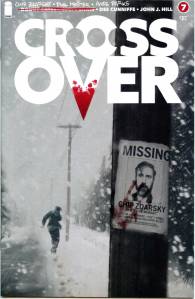
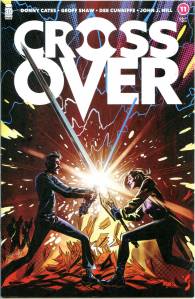
In 2017, fictional characters from comic books and other media come to life in the real world, and their actions cause a lot of unintentional destruction and death around the city of Denver, Colorado. Five years later, in 2022, several humans and characters join forces and embark on a quest to return to Denver and find out the cause behind “The Event”.













 EHT Comics