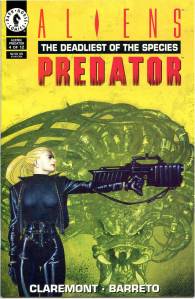
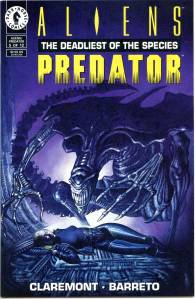
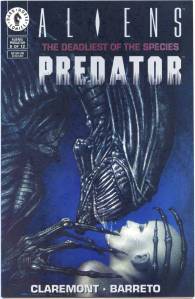
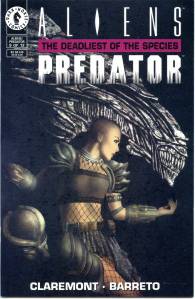
The Story takes place in the futuristic Alien vs. Predator universe, where Earth has been overrun by Aliens, and the social elite have taken refuge in gigantic skyliners. Caryn Delacroix is the protagonist, with an unclear past regarding both the Aliens and Predators throughout most of the comic. An artificial intelligence serves as the primary antagonist, while the Xenomorphs and the Predator are many times in cooperation with Delacroix and her companions for parts of the series, in particular a Predator called “Big Mama”.
Aliens – Predator – Deadliest of the Species #1 NM- $5
Aliens – Predator – The Deadliest of the Species #2 NM $6
Aliens – Predator – Deadliest of Species #3 NM- $6
Aliens – Predator – Deadliest of Species #4 NM $7
Aliens – Predator – Deadliest of Species #5 NM $7
Aliens – Predator – Deadliest of Species #8 NM $7
Aliens – Predator – The Deadliest of the Species #9 NM $6
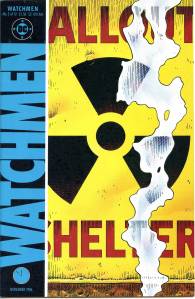
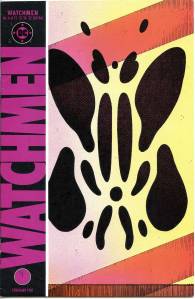
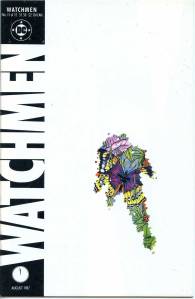
The series was created by a British collaboration consisting of writer Alan Moore, artist Dave Gibbons, and coloristJohn Higgins. Watchmen originated from a story proposal Moore submitted to DC featuring superhero characters that the company had acquired from Charlton Comics. As Moore’s proposed story would have left many of the characters unusable for future stories, managing editor Dick Giordano convinced Moore to create original characters instead.
Moore used the story as a means to reflect contemporary anxieties and to deconstruct and parody the superhero concept. Watchmen depicts an alternate history where superheroes emerged in the 1940s and 1960s and their presence changed history so that the United States won the Vietnam War and the Watergate scandal was never exposed. In 1985, the country is edging toward World War III with the Soviet Union, freelance costumed vigilantes have been outlawed and most former superheroes are in retirement or working for the government. The story focuses on the personal development and moral struggles of the protagonists as an investigation into the murder of a government-sponsored superhero pulls them out of retirement.
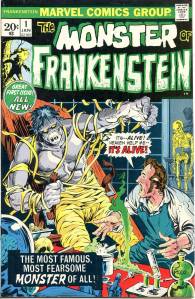
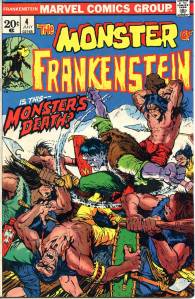
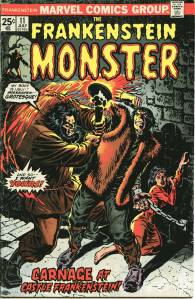
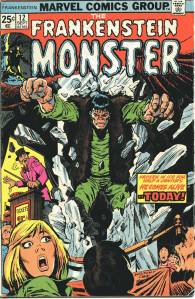
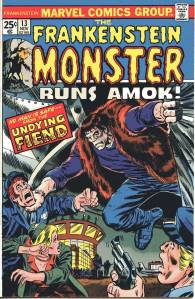
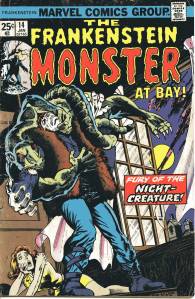
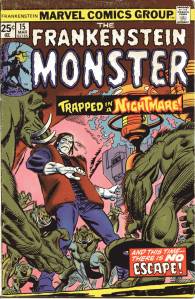
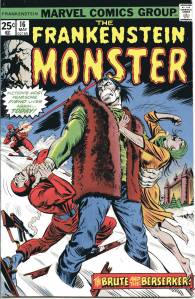
The character received an ongoing series, titled Frankenstein in the postal indicia and initially The Monster of Frankenstein (issues #1-5) and later The Frankenstein Monster as the cover logo, that ran 18 issues (Jan. 1973 – Sept. 1975).This series began with a four-issue retelling of the original novel, by writer Gary Friedrich and artist Mike Ploog. Several more issues continued his story into the 1890s, until he was placed in suspended animation and revived in modern times.
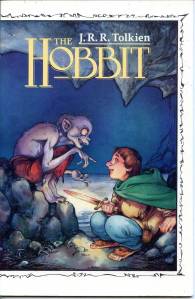
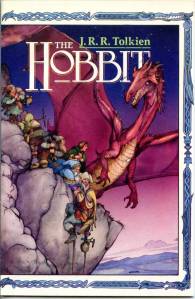
Unwin Paperbacks released a one-volume edition in 1990, with cover artwork by the original illustrator David Wenzel.
Del Rey Books released a reprint collected in one volume in 2001. Its cover, illustrated by Donato Giancola, was awarded the Association of Science Fiction Artists Award for Best Cover Illustration in 2002.
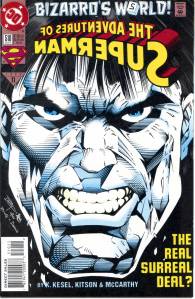
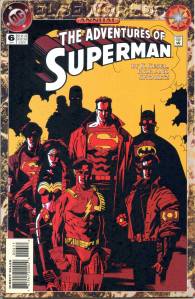
Writer/artist Dan Jurgens worked on the title from 1989–1991. Hank Henshaw, a character who would later become the Cyborg Superman, first appeared in issue #466 (May 1990). By the late 1980s, the plots of the Superman books were often linked. To coordinate the storyline and sequence of event, from January 1991 to January 2002, “triangle numbers” (or “shield numbers”) appeared on the cover of each Superman comic book. During these years, the Superman storylines ran with the story continuing through the titles Superman, Action Comics and later in two further series, Superman: The Man of Steel and Superman: The Man of Tomorrow.
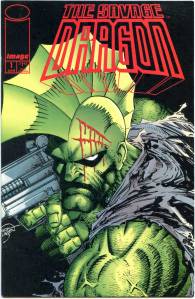
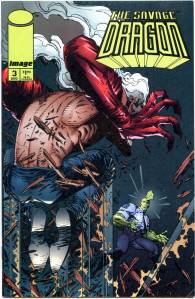
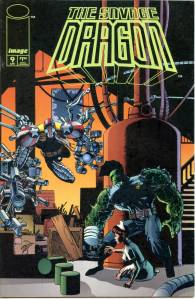
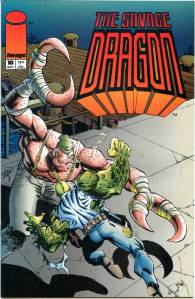
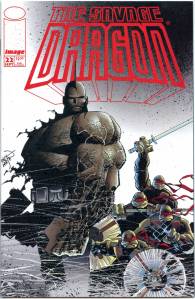
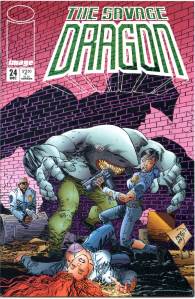
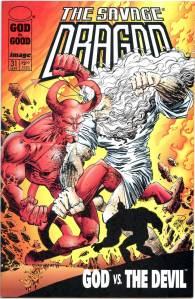
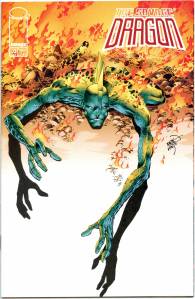
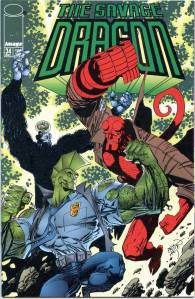
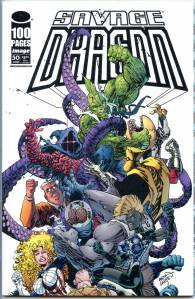
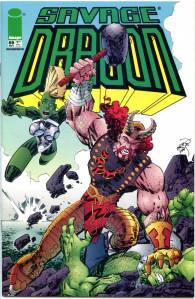
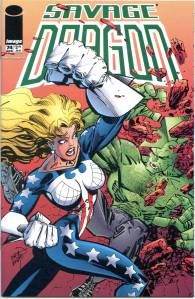
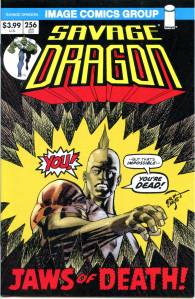
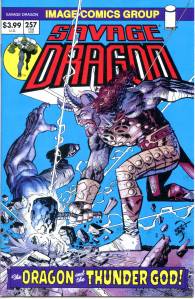
The Savage Dragon features the adventures of a superheroicpolice officer named the Dragon. The character first appeared as the Dragon in Graphic Fantasy #1 (June 1982) and first appeared as the “Savage Dragon” in Megaton #3 (February 1986).
The Dragon is a large, finned, green-skinned humanoid whose powers include super-strength and an advanced healing factor. He is also an amnesiac: his earliest memory is awakening in a burning field in Chicago, Illinois. Thus, for most of the series, the origins of his powers and appearance are a mystery to readers. At the beginning of the series, he becomes a police officer and battles the mutant criminal “superfreaks” that terrorize Chicago.
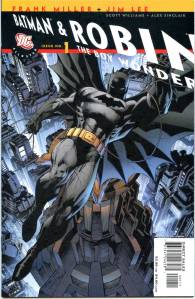
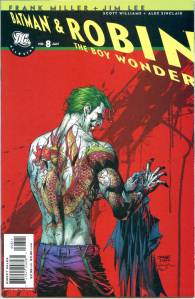
All Star Batman & Robin the Boy Wonder is an American comic book series written by Frank Miller and penciled by Jim Lee. It was published by DC Comics, with a sporadic schedule, between 2005[1] and 2008. The series was to be rebooted under the title Dark Knight: Boy Wonder in 2011, when both Miller and Lee were to finish the last six issues. The series retells the origin story of Dick Grayson, who became Batman‘s sidekick Robin.
This was the first series to be launched in 2005 under DC’s All Starimprint. These series are helmed by renowned writers and artists in the American comic book industry and attempt to retell some of the history of prominent DC Universe characters, but outside of DC Universe continuity, and not be restricted by it, in order to appeal to new and returning readers. Each title under the All Star imprint is set in its own continuity and separate universe.[2] According to Miller, the series takes place in the same continuity as Miller’s other Batman-related works, such as The Dark Knight Returns.
Since its initial publication, Miller’s writing of All Star Batman has consistently received an overwhelmingly negative critical response, though Lee’s artwork has been praised.
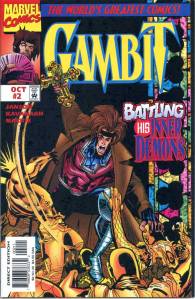
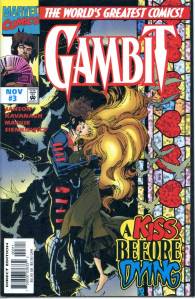
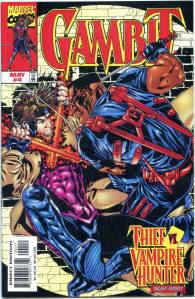
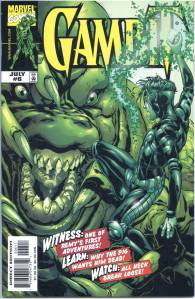
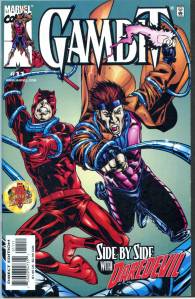
Gambit plays his cards right and vaults into his own kinetically charged solo adventures! He’s a lover and a thief, but what else does ragin’ Cajun Remy LeBeau get up to when he isn’t hangin’ wit’ de X-Men? Would you believe raiding lost temples of Doom? Clashing with the deadly X-Cutioner? Or teaming up with Sabretooth? Still, there’s always time for the ladies- like old friend Storm and his favorite cherie, Rogue. But who is Gambit’s gaseous green guardian?
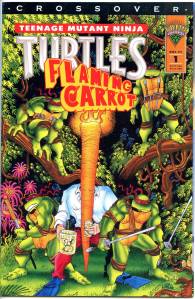
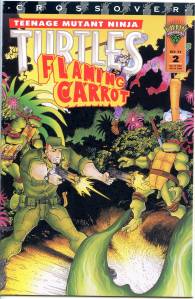
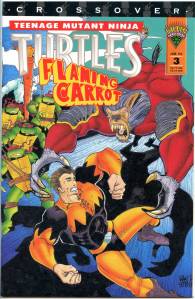
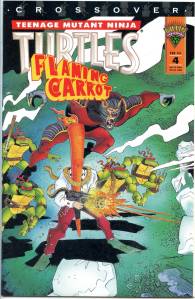
The TMNT are onboard a blimp, traveling to Central America after a devastating storm has crippled much of North and South America. The Turtles are accompanying Colonel Blade, who is using the dirigible to bring relief supplies to those affected by the storm. Upon landing and unloading, Blade receives new instructions from the local ambassador: he’s to travel to the Abecero Penninsula and restore contact with a missing research team. Joining the Colonel and the Turtles on the mission will be archaeologist Professor Daub.
Meanwhile, back in the USA in the secret headquarters of the Mystery Men, the team of unsual heroes (Flamng Carrot, Bondoman, The Shovelor, Mystic Hand, Star Shark, The Zeke’s, the Spleen, Screwball and Mr. Furious) is called into action to find the same research team that the TMNT and Blade are seeking.












 EHT Comics