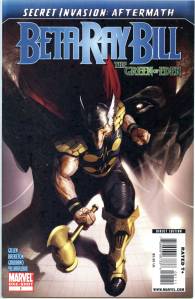
Cosmic defender Beta Ray Bill is approached by a band of monks who ask for his protection. The monks turn out to be Skrulls who are looking for a new god after the Secret Invasion and have decided Bill should be their new deity. Bill and his new pals are attacked by Skrulls who are trying to kill the monks as heretics. When their first attack fails, they form a Super Skrull patterned after the Warriors Three. Once the battle is concluded, Bill takes off for the stars and the Super Skrull has a change of heart and decides to be the new defender of his brother monks.
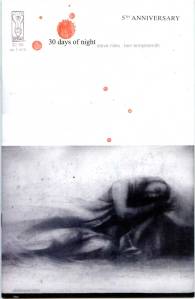
The series takes place in Barrow, Alaska, so far north that during the winter, the sun does not rise for 30 days. In the series, vampires, being vulnerable to sunlight, take advantage of the prolonged darkness to openly kill the townspeople and feed at will.
Initially an unsuccessful film pitch, the series became a breakout success story for Steve Niles, whose previous works had received relatively little attention. It was also the first full-length work by co-creator Ben Templesmith. The series has been followed by numerous sequel series, and in 2007, was adapted into a film of the same name.
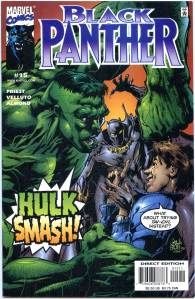
Writer Christopher Priest‘s and penciller Mark Texeira‘s 1998 series The Black Panther vol. 3 used Erik Killmonger, Venomm, and other characters introduced in “Panther’s Rage”, together with new characters such as State Department attorney Everett Ross; the Black Panther’s adopted brother, Hunter; and the Panther’s protégé, Queen Divine Justice. The Priest-Texeira series was under the Marvel Knights imprint in its first year. Priest said the creation of character Ross contributed heavily to his decision to write the series. “I realized I could use Ross to bridge the gap between the African culture that the Black Panther mythos is steeped in and the predominantly white readership that Marvel sells to,” adding that in his opinion, the Black Panther had been misused in the years after his creation.
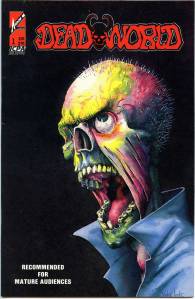
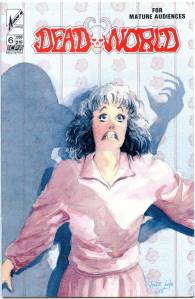
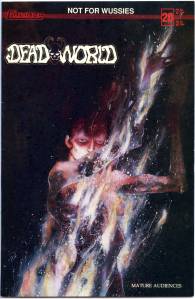
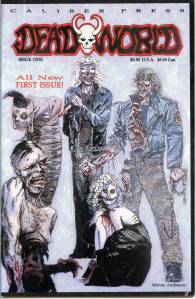
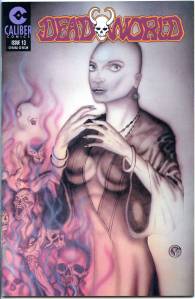
Deadworld follows survivors in a post-apocalyptic scenario brought on by zombie attacks. Led by King Zombie, Deadworld brings forth a different slant than just humans slaughtering zombies.
Originally published by Arrow Comics, Deadworld was written and created by Stuart Kerr and Ralph Griffith in 1987, scripted by Kerr for the first seven issues and illustrated by Vince Locke. The comic book quickly became a cult favorite success in the independent publisher industry.
Arrow Comics ceased production of all titles, but sold the rights of the title to Locke who transferred the rights to Gary Reed‘s Caliber Comics. By the twelfth issue of the title, Reed took over as the primary writer. The first volume of Deadworld ended in 1992 after twenty-six issues. One year later, a second volume began. The second volume ended after fifteen issues.
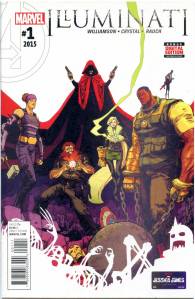
Following Secret Wars, a new Illuminati series was launched by writer Josh Williamson. The book features the Hood leading a new, villainous incarnation of the group. The new Illuminati includes Titania, Enchantress, Mad Thinker, Thunderball, and Black Ant.
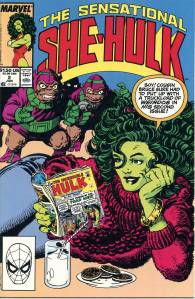
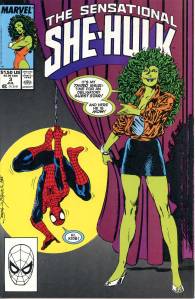
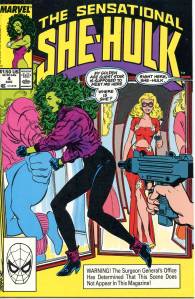
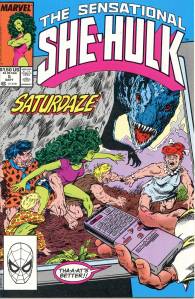
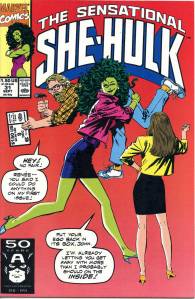
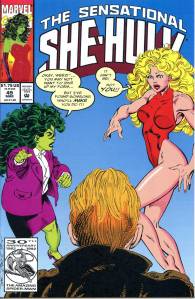
She-Hulk regained a solo series in 1989, The Sensational She-Hulk (maintaining the 1985 graphic novel‘s title). The Sensational She-Hulk ran for sixty issues. Issues #1 to #8, #31 to #46, and #48 to 50 were written and drawn by Byrne. Byrne’s She-Hulk stories satirized comic books and introduced She-Hulk’s awareness that she is a comic book character. Two issues tested the limits of the comics code: #34 makes reference to the 1991 Vanity Fair cover in which actress Demi Moore appeared nude and pregnant (She-Hulk’s version has her holding a green beach ball to imitate Moore’s pregnancy); in issue #40 She-Hulk is entirely naked with her breasts and genital area covered by blur lines as she is depicted jumping rope in the nude. Other writers to contribute to this series include Steve Gerber (#10, 11, 13–23), Simon Furman, and Peter David.
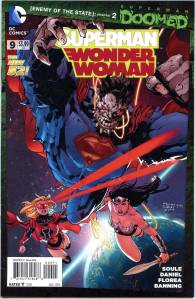
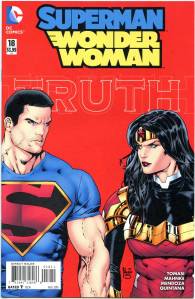
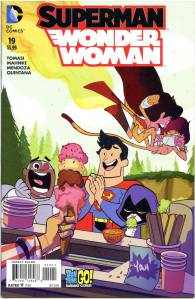
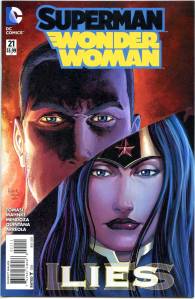
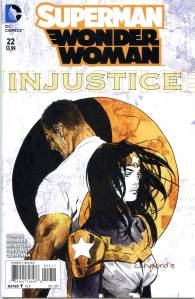
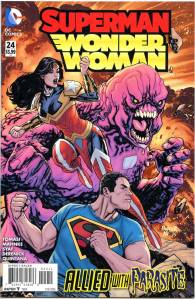
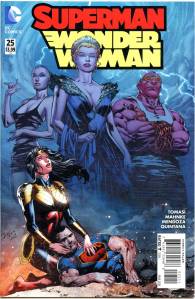
In July 2013, DC Comics announced the launch of Superman/Wonder Woman in October 2013. The series written by Charles Soule, best known for his work on Swamp Thing, and drawn by Tony Daniel (Action Comics, Detective Comics). It was to explore the budding relationship between Superman and Wonder Woman, the DC Universe‘s most powerful heroes. About the series Soule said, “Obviously, the idea of Superman and Wonder Woman being romantic with each other is not brand new. That concept has been around for a long time. It was addressed in Kingdom Come, the great Mark Waid book. Most recently, in Justice League #12 (October 2012), they had the kiss heard ’round the world… They’re arguably two of the most powerful beings in the whole DC Universe and they’re romantic together so just imagine the adventures and excitement that can come from that.”
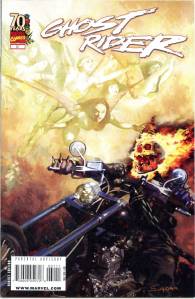
Once upon a time, Johnny Blaze made a deal with the Devil…and to no one’s surprise but his own, he got shafted. Now trapped in hell, with the Spirit of Vengeance bonded to his immortal soul and weighing him down, Johnny may have finally found a way out. But at what cost? From the depths of Hell to the glittering spires of Heaven, the Ghost Rider rides again in his first ongoing series in nearly a decade, blazing new trails and dispensing fiery vengeance in his wake. The demonic team of Daniel Way, Mark Texeira and Javier Saltares reunite to put ol’ Flamehead back in the saddle where he belongs.
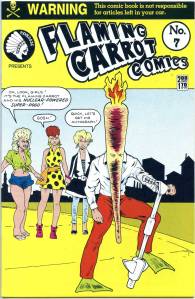
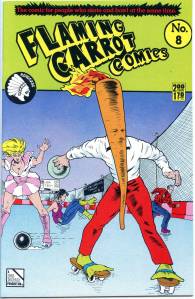
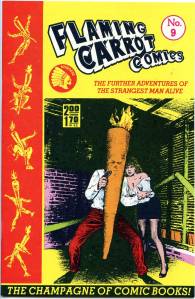
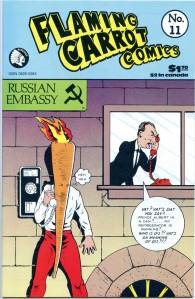
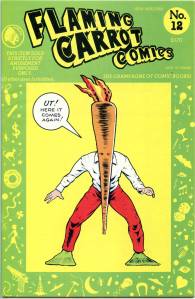
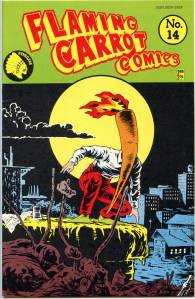
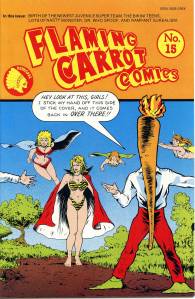
The Flaming Carrot origin states that “having read 5,000 comics in a single sitting to win a bet, this poor man suffered brain damage and appeared directly thereafter as—the Flaming Carrot!”
The Carrot, who lives in Palookaville, a neighborhood of Iron City, has staved off at least three alien invasions, a Communist take over of Iron City, flying dead dogs, the Man in the Moon, Death itself, and a cloned horde of evil marching Hitler‘s boots. Possessing no real super powers, the Carrot wins the day through sheer grit, raw determination, blinding stupidity, and bizarre luck. Flaming Carrot even died in #6 (fell into a deep toxic waste pit in Palookaville), was brought back from clinical death in #7, described his sojourn in Limbo in #8 and got back at those who sent him to Limbo in #9.
Flaming Carrot was also a founding member of the blue collar superhero group the Mystery Men, introduced in a flashback/dream sequence in Flaming Carrot Comics #16. The story of this group was later made into the 1999 movie Mystery Men and a short-lived spin-off comic book series. The Flaming Carrot himself does not appear in the film, although a handful of characters like Mr. Furious, the Shoveler, and Dr. Heller do.