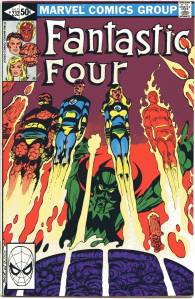
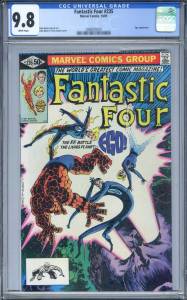
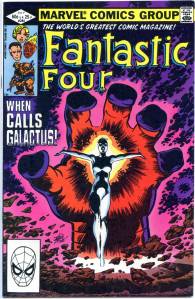
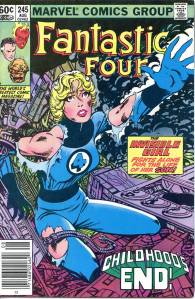
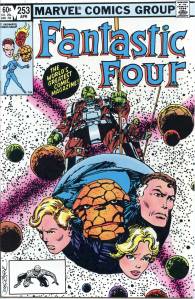
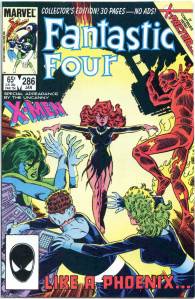
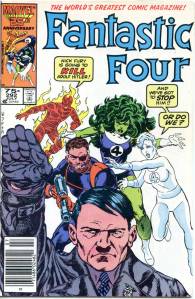
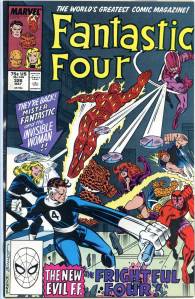
John Byrne revitalized the slumping title with his run. Originally, Byrne was slated to write with Sienkiewicz providing the art. Sienkiewicz left to do Moon Knight, and Byrne subsequently became writer, artist, and inker. Various editors were assigned to the comic; eventually Bob Budiansky became the regular editor. Byrne told Jim Shooter that he could not work with Budiansky, although they ultimately continued to work together. In 2006, Byrne said “that’s my paranoia. I look back and I think that was Shooter trying to force me off the book”. Byrne left following issue #293 (Aug. 1986) in the middle of a story arc, explaining he could not recapture the fun he had previously had on the series. One of Byrne’s changes was making the Invisible Girl into the Invisible Woman: assertive and confident. During this period, fans came to recognize that she was quite powerful, whereas previously, she had been primarily seen as a superpowered mother and wife in the tradition of television moms like those played by Donna Reed and Florence Henderson.
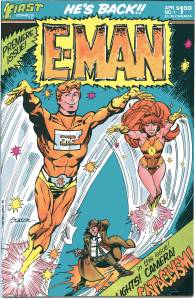
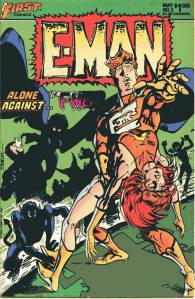
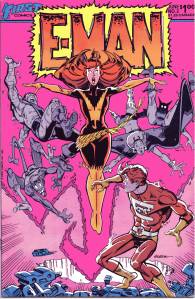
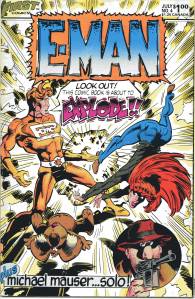
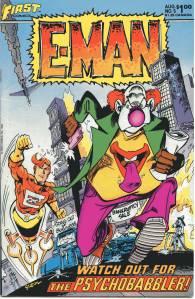
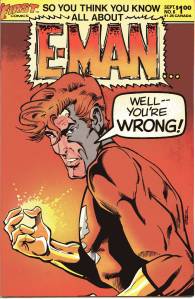
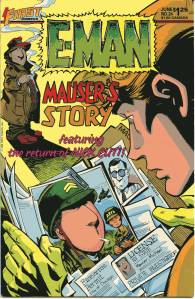
When Staton became art director at First Comics, the publisher acquired the rights to the character from Charlton and launched a series. Cuti was asked to write the title, but his obligations to DC Comics prevented him from accepting. The series was initially written by Martin Pasko, who had previously worked with Staton on Plastic Man and Metal Men. After Pasko’s run, Staton and Paul Kupperberg wrote the series until Cuti took over as writer with issue #24.
As a direct-market publisher not distributed to newsstands, the First series was not obligated to seek Comics Code Authority approval and could address more mature topics than Code-approved comics. Where the Charlton series featured broad whimsical themes, the First Comics series engaged in more specific satire directed at targets including the X-Men, Steven Spielberg, and Scientology.
The first 10 issues each contained a one-page parody of the Hostess snack advertisements that ran in comics through the 1970s and 1980s. These parodies were written and drawn by different creators and featured characters from across the independent comics industry.
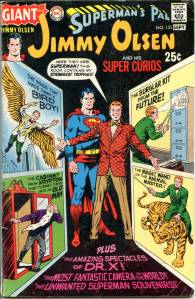
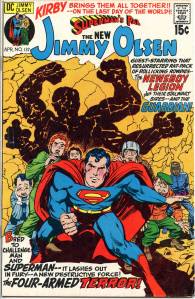
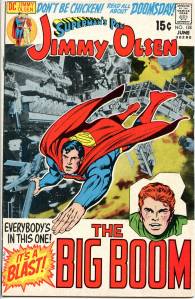
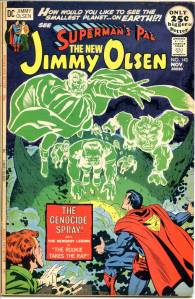
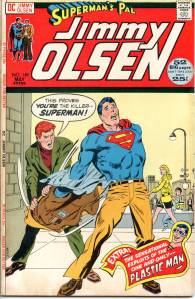
Superman’s Pal, Jimmy Olsen is a series published by DC Comics from September–October 1954 until March 1974, spanning a total of 163 issues.Featuring the adventures of Superman supporting character Jimmy Olsen, it contains stories often of humorous nature.
The 1952 television series Adventures of Superman co-starred actor Jack Larson, who appeared regularly as Jimmy Olsen. Largely because of the popularity of Larson and his portrayal of the character, National Comics Publications (DC Comics) decided to create a regular title featuring Jimmy as the leading character.Curt Swan was the main artist on the series for its first decade.
Many of the issues include Jimmy undergoing a transformation of some form.
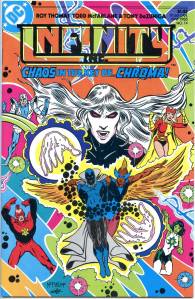
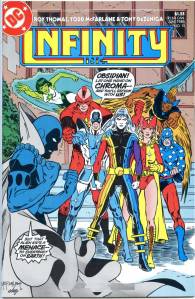
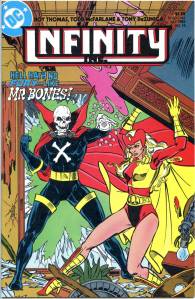
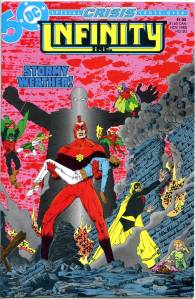
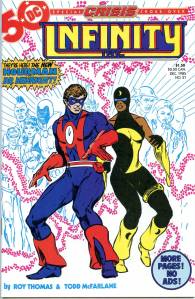
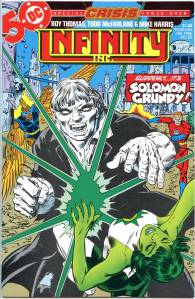
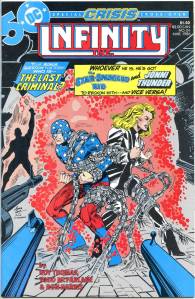
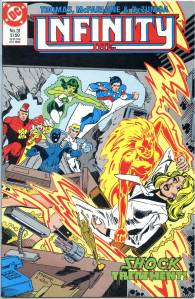
The group was organized by Sylvester Pemberton, the original Star-Spangled Kid, in Infinity Inc. #1, when a number of JSA protégés were denied admission to the JSA. They instead formed their own group. Members of Infinity, Inc. were known as Infinitors.
The series ended in 1988 with the death of the Star-Spangled Kid (by then known as Skyman), and presumably the group disbanded shortly thereafter. Several members have gone on to supporting roles in other comics series. Fury filled a pivotal role in The Sandman and is the mother of Daniel Hall. Hourman, Obsidian, Nuklon (as Atom Smasher), Silver Scarab(as Doctor Fate), and Power Girl eventually joined the 21st century incarnation of the JSA.
Originally, the series took place on the parallel world of Earth-Two, but in 1986 it was merged with the rest of DC continuity following Crisis on Infinite Earths. From then on, they shared their spot as Los Angeles’ superteam with the Outsiders, and were involved in a crossover with the New Teen Titans.
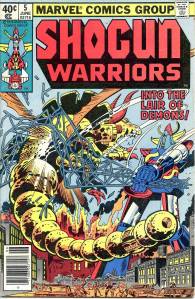
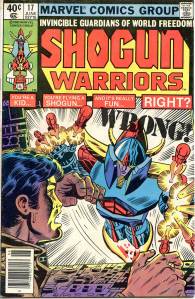
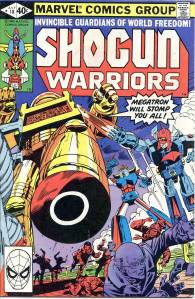
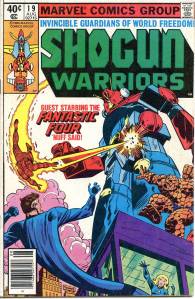
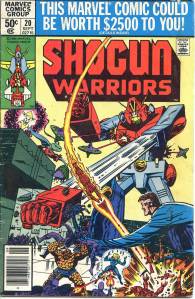
The Shogun Warriors characters were licensed by Marvel Comics to create a comic book series written by Doug Moench and drawn by Herb Trimpe. The series was composed of 20 issues that were published from February 1979 to September 1980. In the comic book series, the Shogun Warriors were created by a mysterious group called the Followers of the Light, and human operators were chosen from all around the world to operate the massive robots in order to battle evil.
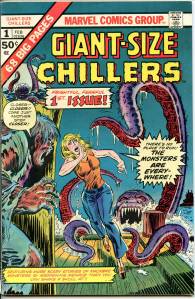
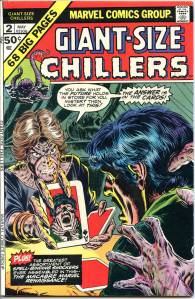
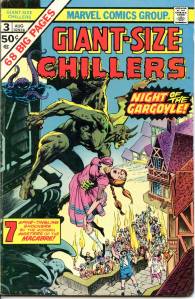
Giant Size Chillers V2 was publish in 1975 and lasted only 3 issues. They contained new Stories combined with 1950’s Atlas reprints. Some of the artists included, G.Kane, B.Everett, D.Heck, B.Wrightson, J.Kirby, G.Colan, BWSmith, A.Alcala & M.Severin.
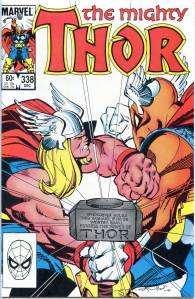
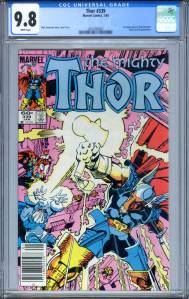
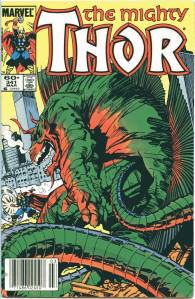
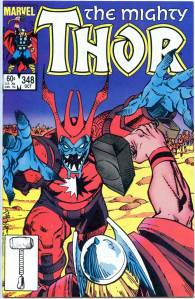
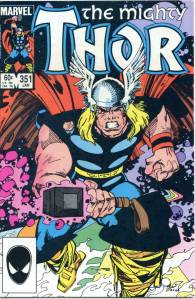
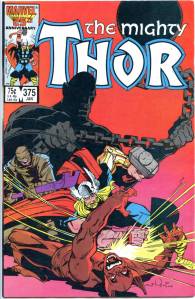
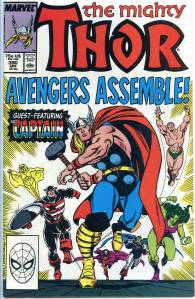
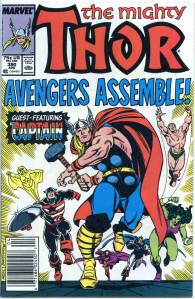
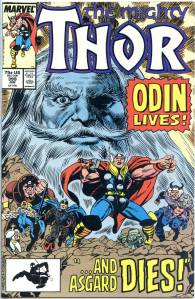
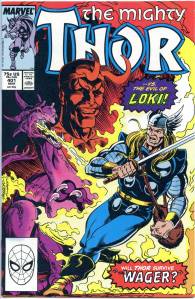
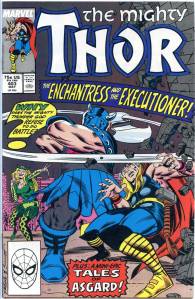
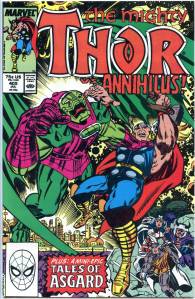
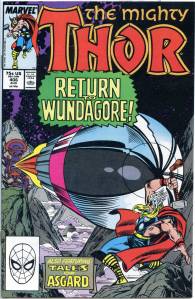
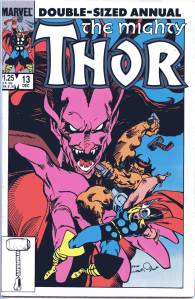
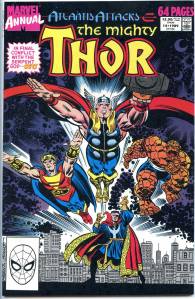
Walt Simonson took over both writing and art as of #337 (Nov. 1983). His stories placed a greater emphasis on the character’s mythological origins. Simonson’s run as writer-artist lasted until #367 (May 1986), although he continued to write – and occasionally draw – the book until issue #382 (Aug. 1987). Simonson’s run, which introduced the character Beta Ray Bill, was regarded as a popular and critical success.Simonson’s later stories were drawn by Sal Buscema, who describes Simonson’s stories as “very stimulating. It was a pleasure working on his plots, because they were a lot of fun to illustrate. He had a lot of great ideas, and he took Thor in a totally new direction.” Asked why he was leaving Thor, Simonson said that he felt the series was due for a change in creative direction, and that he wanted to reduce his work load for a time. After Simonson’s departure, Marvel’s editor-in-chief at the time, Tom DeFalco, became the writer. Working primarily with artist Ron Frenz, DeFalco stayed on the book until #459 (Feb. 1993).
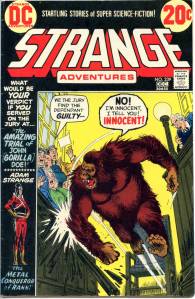
Strange Adventures ran for 244 issues and was DC Comics’ first science fiction title. It began with an adaptation of the film Destination Moon. The sales success of the gorilla cover-featured story in Strange Adventures #8 (May 1951) led DC to produce numerous comic book covers with depictions of gorillas.
With issue #217, the title gained another new logo and began reprinting stories of Adam Strange and the Atomic Knights, among other stories. Several Strange Adventure stories were also reprinted in some of DC Comics’ later anthologies such as From Beyond the Unknown.
In 1978, DC Comics intended to revive Strange Adventures. These plans were put on hold that year due to the DC Implosion, a line-wide scaling back of the company’s publishing output. When the project was revived a year later, the title was changed to Time Warp and the series was in the Dollar Comics format.
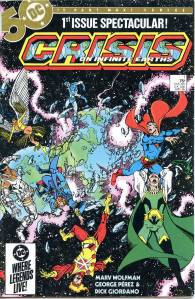
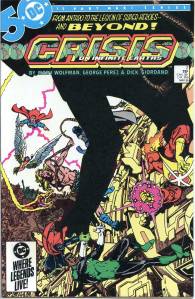
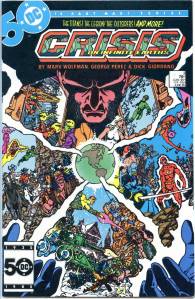
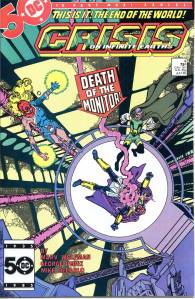
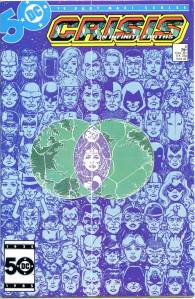
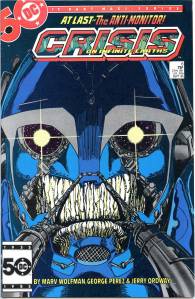
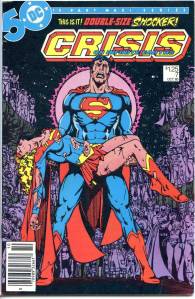
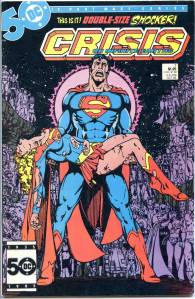
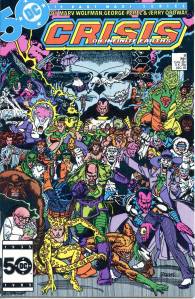
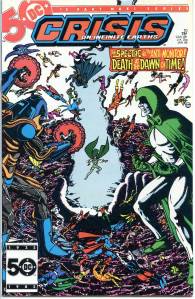
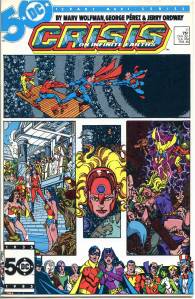
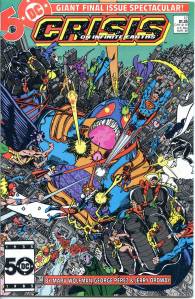
Crisis on Infinite Earths was published by DC Comics from 1985 to 1986, consisting of an eponymous 12-issue, limited series comic book and a number of tie-in books. It was produced by DC Comics to simplify its then-50-year-old continuity. The series was written by Marv Wolfman and illustrated by George Pérez (pencils and layouts), Mike DeCarlo, Dick Giordano and Jerry Ordway (inking and embellishing). The series removed the multiverse concept from the fictional DC Universe, depicting the death of long-standing characters Supergirl and the Barry Allen incarnation of the Flash. Continuity in the DC Universe is divided into pre-Crisis and post-Crisis periods. The Flash was later reborn.



































 EHT Comics