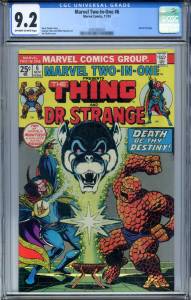
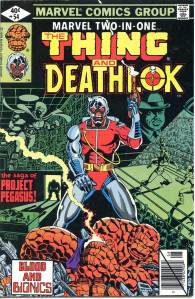
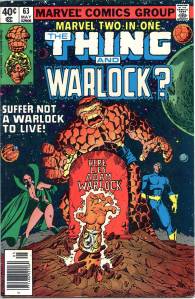
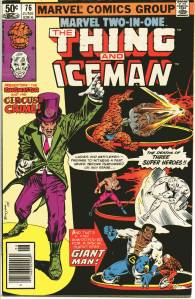
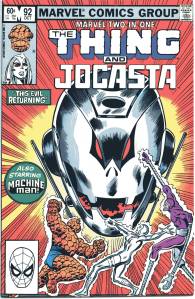
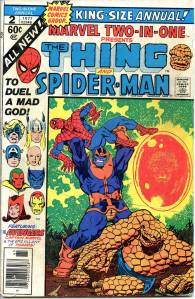
Marvel Two-in-One continued from the team-up stories starring the Thing in the final two issues of Marvel Feature and lasted for 100 issues from January 1974 through June 1983. Seven annuals were also published. Artist Ron Wilson began his long association with the title with issue #12 (November 1975) and worked on it throughout its run. With issue #17, the series had a crossover with Marvel Team-Up #47, which featured Spider-Man. The second Marvel Two-in-One Annual was a crossover with Avengers Annual #7 both of which were written and drawn by Jim Starlin. The “Project Pegasus” storyline in Marvel Two-in-One #53-58 saw the introduction of the name “Quasar” for the Wendell Vaughn characterand the transformation of Wundarr into the Aquarian.
Marvel Two-In-One ended after one hundred issues and was immediately replaced with a Thingsolo series.
Marvel Two-In-One #6 CGC 9.2 Off White to White Pages $59Marvel Two In One #14 VF+ $9Marvel Two In One #20 FN- $4Marvel Two-In-One #54 VF+ $19Marvel Two in One #54 FN+ $9Marvel Two-In-One #63 VF+ $10Marvel Two-In-One #69 VF $5Marvel Two-In-One #76 FN $3Marvel Two -In-One #92 FN+ $5Marvel Two-In-One #93 VF+ $3Marvel Two-In-One #99 VF+ $4Marvel Two In One Annual #1 FN+ $6Marvel Two-In-One Annual #2 VG $19Marvel Two-In-One Annuall #3 FN+ $3
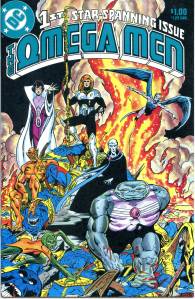
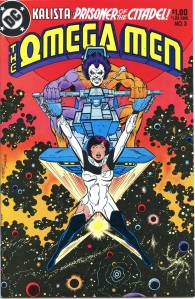
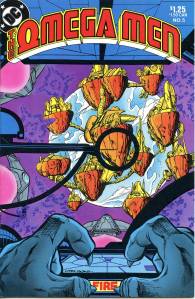
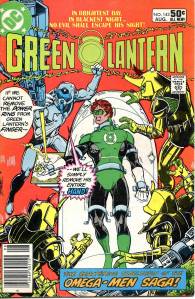
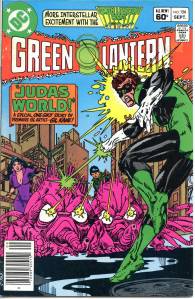
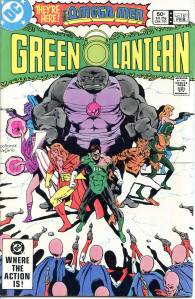
The Omega Men are a team of extraterrestrial superheroes who have appeared in various comic book series published by DC Comics. They first appeared in Green Lantern#141 (June 1981), and were created by Marv Wolfman and Joe Staton.
After appearances in Green Lantern, Action Comics and The New Teen Titans, the Omega Men were featured in their own comics series which ran for 38 issues from April 1983 to May 1986. During its run, writer Roger Slifer and artist Keith Giffen created the mercenary anti-hero Lobo.
The Omega Men were assembled as a group of renegades and representatives of conquered Vegan worlds to fight Citadelian aggression. Pre-Infinite Crisis the team was based on the planet Kuraq. The Omega Men are important peacekeepers in their sector because the Green Lantern Corps is not allowed into Vegan space, due to a long standing agreement with the Psions.
Omega Men #1 NM $4Omega Men V1 #1 VF-NM $3Omega Men #3 NM $120Omega Men #5 NM $9Omega Men #10 NM $14Omega Men #37 NM $14
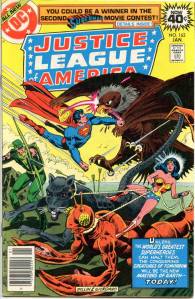
In need of a new secure headquarters, the Justice League moved into an orbiting satellite headquarters in Justice League of America #78 (February 1970). The Elongated Man, the Red Tornado, Hawkwoman, Zatanna, and Firestorm joined the team, and Wonder Woman returned during this period.
Len Wein wrote issues #100–114, in which he and Dillin re-introduced the Seven Soldiers of Victory in issues #100-102 and the Freedom Fighters in issues #107-108. In the fall of 1972, Wein and writers Gerry Conway and Steve Englehart crafted a metafiction an unofficial crossover spanning titles from both Marvel and DC. Each comic featured Englehart, Conway, and Wein, as well as Wein’s first wife Glynis, interacting with Marvel or DC characters at the Rutland Halloween Parade in Rutland, Vermont.
Beginning in Amazing Adventures #16 (by Englehart with art by Bob Brown and Frank McLaughlin), the story continued in Justice League of America #103 (by Wein, Dillin and Dick Giordano), and concluded in Thor #207 (by Conway and penciler John Buscema). As Englehart explained in 2010, “It certainly seemed like a radical concept and we knew that we had to be subtle (laughs) and each story had to stand on its own, but we really worked it out. It’s really worthwhile to read those stories back to back to back — it didn’t matter to us that one was at DC and two were at Marvel — I think it was us being creative, thinking what would be really cool to do.” Justice League of America #103 also featured the Justice League offering membership to the Phantom Stranger. Len Wein commented on the Phantom Stranger’s relationship with the JLA in a 2012 interview stating that the character “only sort of joined. He was offered membership but vanished, as per usual, without actually accepting the offer. Over the years, other writers have just assumed [he] was a member, but in my world, he never really said yes.” Libra, a supervillain created by Wein and Dillin in Justice League of America #111 (May–June 1974), would play a leading role in Grant Morrison‘s Final Crisisstoryline in 2008.
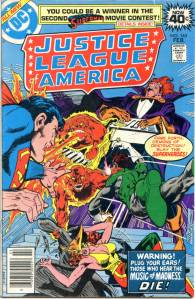
Justice League of America #84 VG+ $7Justice League of America #115 VG-FN $10Justice League of America V1 #131 F $7Justice League of America #134 VF+ $18Justice League of America V1 #136 VF- $19Justice League of America #140 VF $9Justice League of America V1 #161 VF+ $14Justice League of America V1 #162 FN+ $5Justice League of America V1 #163 FN+ $5Justice League of America V1 #164 FN-VF $6Justice League of America V1 #165 F-VF $5Justice League of America #171 VF- $6
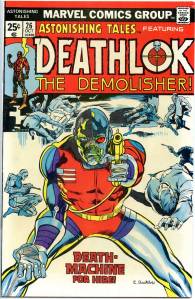
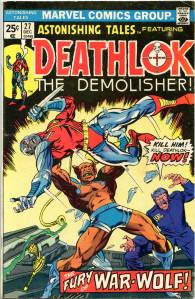
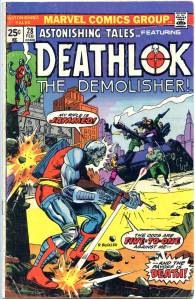
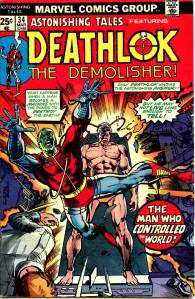
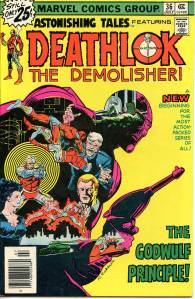
The final feature in Astonishing Tales starred and introduced Deathlok, a conflicted cyborg who predated the popular movie character RoboCop by several years and has become one of the most enduring Marvel characters among those introduced in the 1970s; at least two major iterations of the character, featuring different individuals, starred in series in the 1990s and 2000s. Created by artist Rich Buckler, who devised the initial concept, and writer Doug Moench, the feature ran from #25-28 and 30-36 (Aug. 1974 – Feb. 1975 and June 1975 – July 1976), the final issue. Bill Mantlo scripted issues #32-35, with Buckler himself scripting the finale. Buckler described Deathlok as “an extension of a paranoid fantasy. He was a representation of part of my outlook and world view. He was a culmination of many of the messages in some of the music of the time. He was part of some of the things going wrong in our country at the time. Maybe he was the science that was going wrong.Artist George Pérez made his professional comics debut with a two-page backup feature in issue #25.
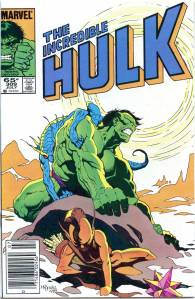
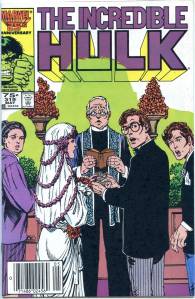
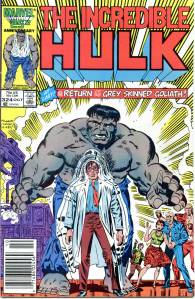
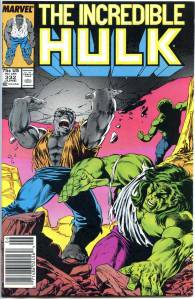
In the 1980s, Banner once again gained control over the Hulk, and gained amnesty for his past rampages; however, due to the manipulations of supernatural character Nightmare, Banner eventually lost control over the Hulk. It was also established that Banner had serious mental problems even before he became the Hulk, having suffered childhood traumas that engendered Bruce’s repressed rage. Banner comes to terms with his issues for a time, and the Hulk and Banner were physically separated by Doc Samson. Banner is recruited by the U.S. government to create the Hulkbusters, a government team dedicated to catching the Hulk. Banner finally married Betty in The Incredible Hulk #319 (May 1986) following Talbot’s death in 1981. Banner and the Hulk were reunited in The Incredible Hulk #323 (Sep. 1986) and with issue #324, returned the Hulk to his grey coloration, with his transformations once again occurring at night, regardless of Banner’s emotional state. In issue #347 the grey Hulk persona “Joe Fixit” was introduced, a morally ambiguous Las Vegas enforcer and tough guy. Banner remained repressed in the Hulk’s mind for months, but slowly began to reappear.
Incredible Hulk #252 F+ $3Incredible Hulk #253 VF $5Incredible Hulk #257 VF $6Incredible Hulk #262 VF $5Incredible Hulk #263 VF- $3Incredible Hulk #264 VF+ $5Incredible Hulk #280 NM- $6Incredible Hulk #281 VF- $3Incredible Hulk #282 Newstand F-VF $45Incredible Hulk #286 F+ $2Incredible Hulk #287 F-VF $3Incredible Hulk #290 VF+ $5Incredible Hulk #291 VF-NM $5Incredible Hulk #292 VF $4Incredible Hulk #296 VF- $3Incredible Hulk #298 VF+ $5Incredible Hulk #299 VF $4Incredible Hulk #301 F+ $2Incredible Hulk #306 NM $6Incredible Hulk #308 Newsstand VF $5Incredible Hulk #309 Newsstand VF $5Incredible Hulk #310 VF+ $5Incredible Hulk #313 VF- $4Incredible Hulk #314 VF-NM $5Incredible Hulk #319 Newsstand VF- $5Incredible Hulk #322 NM- $5Incredible Hulk #323 VF $4Incredible Hulk #324 VF- $15Incredible Hulk #327 VF- $4Incredible Hulk #328 NM- $5Incredible Hulk V1 #330 Newstand VF+ $16Incredible Hulk V1 #332 F+ $4Incredible Hulk #333 NM $14Incredible Hulk #341 Newstand VF+ $5Incredible Hulk #342 Newstand VF+ $5Incredible Hulk #342 VF+ $4Incredible Hulk #343 Newstand VF+ $5Incredible Hulk #346 NM- $6Incredible Hulk #352 NM $5Incredible Hulk #354 Newsstand NM- $9Incredible Hulk #364 NM $4Incredible Hulk Annual #11 FN- $4Incredible Hulk Annual #14 VF $4Incredible Hulk Annual #15 VF- $3
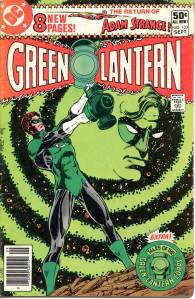
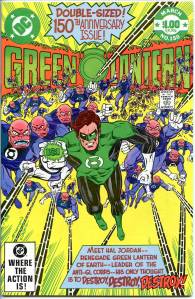
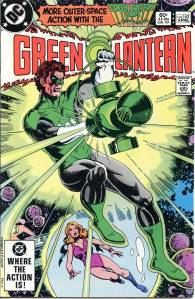
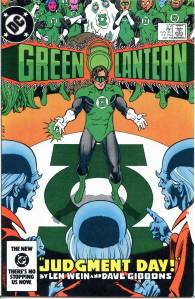
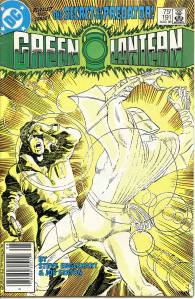
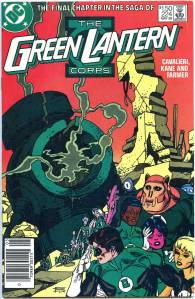
Green Lantern would know a number of revivals and cancellations. Its title would change to Green Lantern Corps at one point as the popularity rose and waned. During a time there were two regular titles, each with a Green Lantern, and a third member in the Justice League.
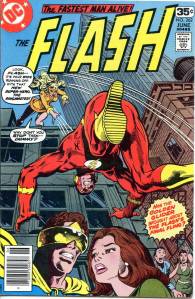
In 1956, DC Comics successfully revived superheroes, ushering in what became known as the Silver Age of comic books. Rather than bringing back the same Golden Age heroes, DC rethought them as new characters for the modern age. The Flash was the first revival, in the aptly named tryout comic book Showcase #4 (Oct. 1956).
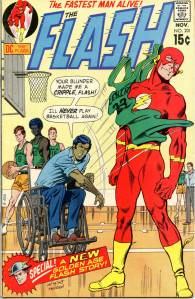
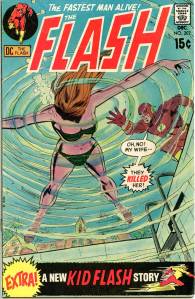
This new Flash was Barry Allen, a police scientist who gained super-speed when bathed by chemicals after a shelf of them was struck by lightning. He adopted the name The Flash after reading a comic book featuring the Golden Age Flash.After several more appearances in Showcase, Allen’s character was given his own title, The Flash, the first issue of which was #105 (resuming where Flash Comics had left off).
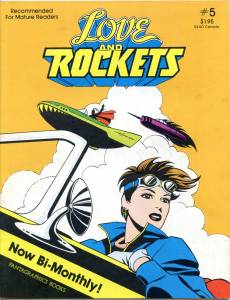
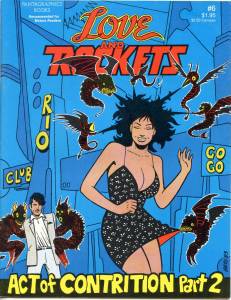
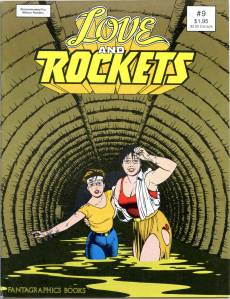
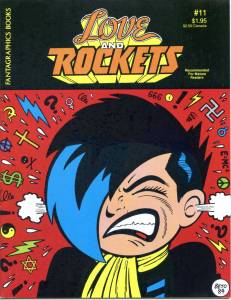
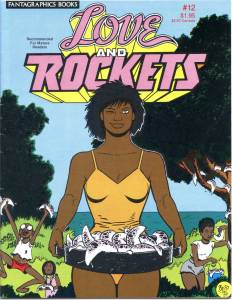
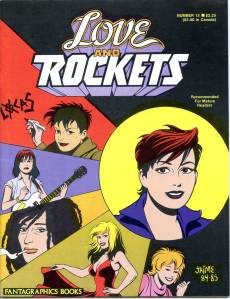
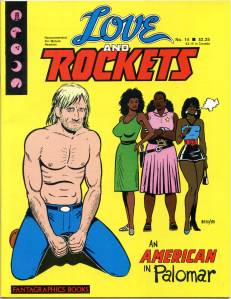
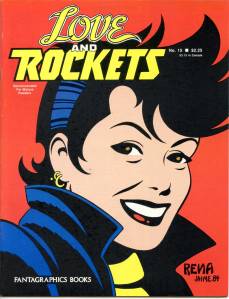
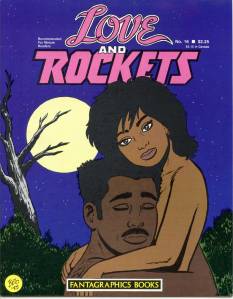
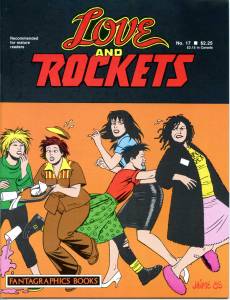
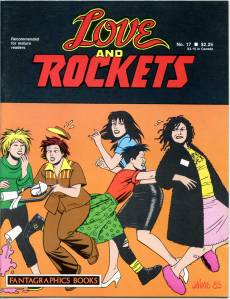
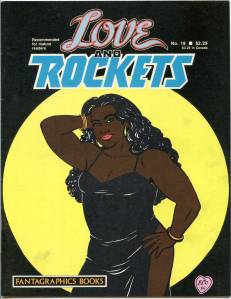
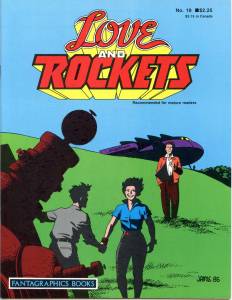
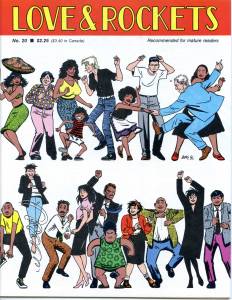
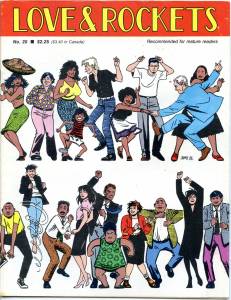
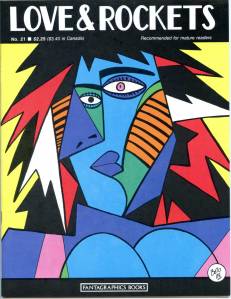
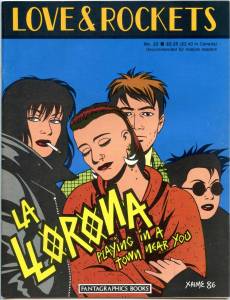
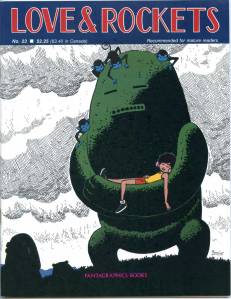
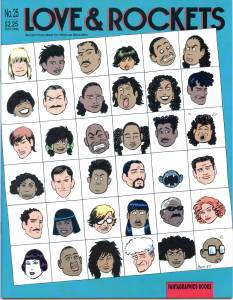
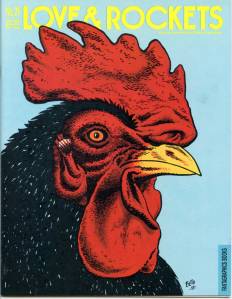
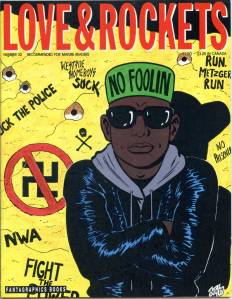
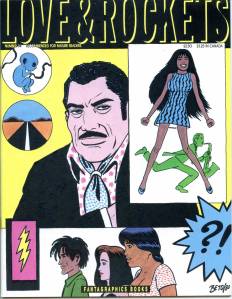
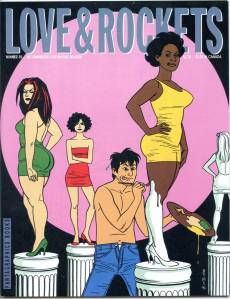
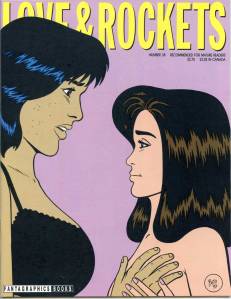
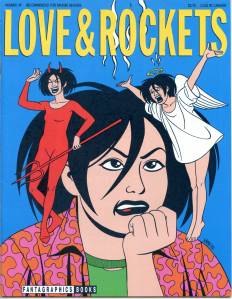
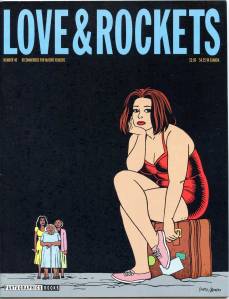
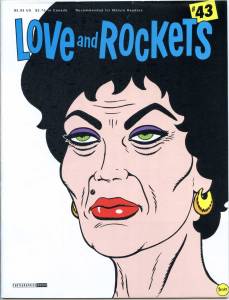
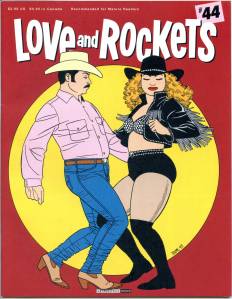
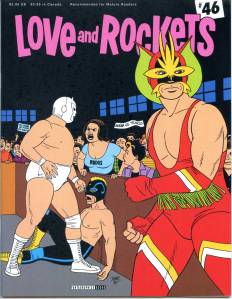
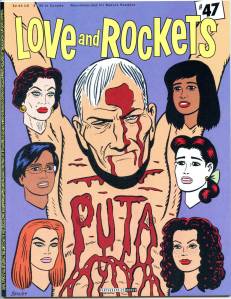
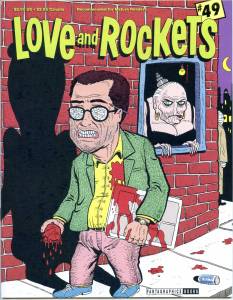
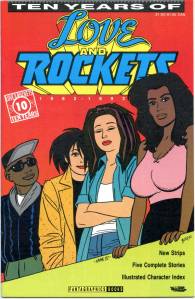
The Hernandez brothers self-published the first issue of Love and Rockets in 1981, but since 1982 it has been published by Fantagraphics Books. The magazine temporarily ceased publication in 1996 after the release of issue #50, while Gilbert and Jaime went on to do separate series involving many of the same characters. However, in 2001 Los Bros revived the series as Love and Rockets Volume 2.
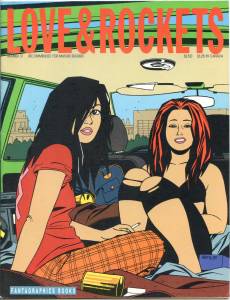
Love and Rockets contains several ongoing serial narratives, the most prominent being Gilbert’s Palomar stories and Jaime’s Hoppers 13(aka Locas) stories. It also contains one-offs, shorter stories, surrealist jokes, and more.
Palomar tells the story of a fictional village in Latin America and its inhabitants. Its vibrant characters and sometimes-fantastic events are sometimes compared to the magical realism literary style of authors such as Gabriel García Márquez. The series is also sometimes referred to as Heartbreak Soup, after the first story set in Palomar.
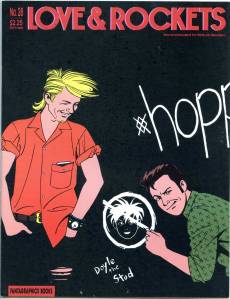
Hoppers 13 follows the tangled lives of a group of primarily chicano characters, from their teenage years in the early days of the California punk scene to the present day. (Hoppers, or Huerta, is a fictional city based on the Hernandezes’s home town of Oxnard, California.) The series is also often called Locas (Spanish for “crazy women”) because of the many quirky female characters depicted.
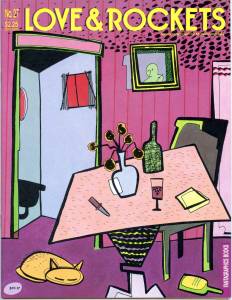
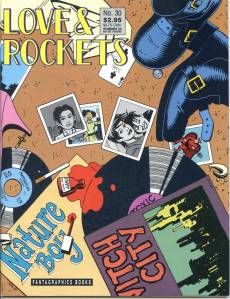
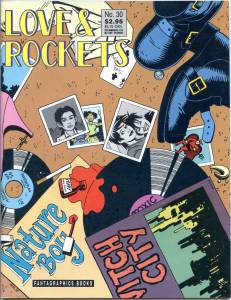
Love and Rockets #5 VF $39Love and Rockets #6 VF- $29Love and Rockets #9 VF+ $39Love and Rockets #11 VF- $29Love and Rockets #12 FN-VFN $19Love and Rockets #13 VF $24Love and Rockets #14 VF $19Love and Rockets #15 VF-NM $27Love and Rockets #15 VF $18Love and Rockets #16 NM- $29Love and Rockets #17 NM $39Love and Rockets #17 VF+ $24Love and Rockets #18 F-VF $9Love and Rockets #19 NM- $34Love and Rockets #20 NM $39Love and Rockets #20 FN-VF $12Love and Rockets #21 NM $39Love and Rockets #22 VF $20Love and Rockets #23 NM $39Love and Rockets #25 NM $39Love and Rockets #27 VF-NM $24Love and Rockets #27 VF+ $22Love and Rockets #28 VF- $14Love and Rockets #29 NM- $34Love and Rockets #30 NM $29Love and Rockets #30 VF- $14Love and Rockets #31 VF $18Love and Rockets #32 NM $29Love and Rockets #34 NM $24Love and Rockets #35 NM $20Love and Rockets #38 NM $24Love and Rockets #39 VF $12Love and Rockets #40 VF $16Love and Rockets #43 VF+ $14Love and Rockets #44 VF $18Love and Rockets #46 VF-NM $29Love and Rockets #47 NM- $18Love and Rockets #49 VF- $16Ten Years of Love and Rockets NM $35
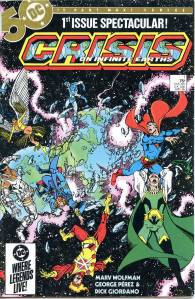
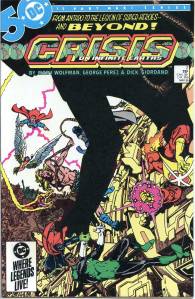
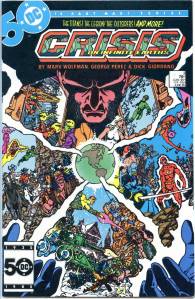
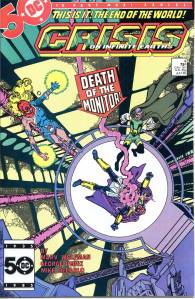
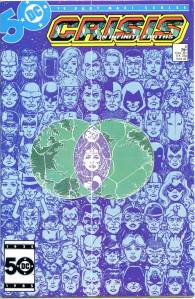
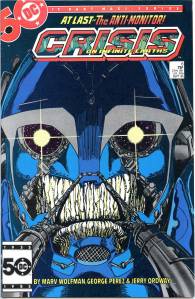
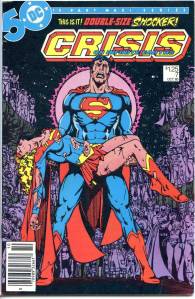
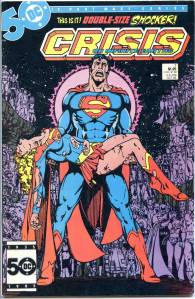
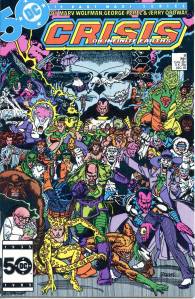
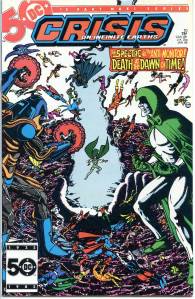
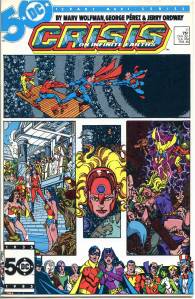
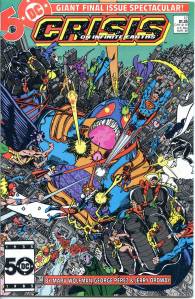
Crisis on Infinite Earths was published by DC Comics from 1985 to 1986, consisting of an eponymous 12-issue, limited series comic book and a number of tie-in books. It was produced by DC Comics to simplify its then-50-year-old continuity. The series was written by Marv Wolfman and illustrated by George Pérez (pencils and layouts), Mike DeCarlo, Dick Giordano and Jerry Ordway (inking and embellishing). The series removed the multiverse concept from the fictional DC Universe, depicting the death of long-standing characters Supergirl and the Barry Allen incarnation of the Flash. Continuity in the DC Universe is divided into pre-Crisis and post-Crisis periods. The Flash was later reborn.
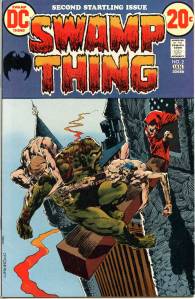
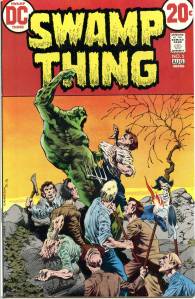
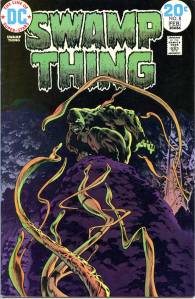
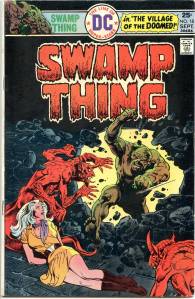
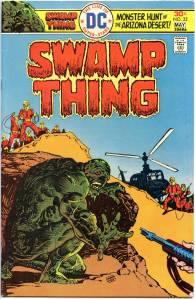
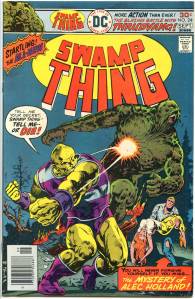
The Swamp Thing character first appeared in House of Secrets #92 (June–July 1971). After the success of the short story in the House of Secrets comic, the original creators were asked to write an ongoing series, depicting a more heroic, more contemporary creature. InSwamp Thing #1 (October–November 1972) Wein and Wrightson updated the time frame to the 1970s and featured a new version character: Alec Holland, a scientist working in the Louisiana swamps on a secret bio-restorative formula “that can make forests out of deserts”. Holland is killed by a bomb planted by agents of the mysterious Mr. E (Nathan Ellery), who wants the formula. Splashed with burning chemicals in the massive fire, Holland runs from the lab and falls into the muck-filled swamp, after which a creature resembling a humanoid plant appears. Roy Thomas and Gerry Conway, who co-created Man-Thing for Marvel Comics a year and a half earlier, thought that this origin was too similar to that of their character, and Wein himself had written a Man-Thing story that was published with a June 1972 cover date, but he refused to change the origin in spite of some cajoling by Conway, who was his roommate at the time. Marvel, however, never took the issue to court, realizing the similarity of both characters to The Heap.
Swamp Thing #2 VF signed Wrightson $159Swamp Thing #5 VF+ signed Wrightson $139Swamp Thing #6 VF+ signed Wrightson $119Swamp Thing #8 VF signed Wrightson $99Swamp Thing #9 VF+ signed Wrightson $139Swamp Thing V1 #18 FN+ $8Swamp Thing V1 #22 FN-VF $10Swamp Thing V1 #24 VG $6