In 1973–1975, DC Comics published a nine-issue series reprinting Simon–Kirby material from the earlier series.[2] The new incarnation featured new covers with the same logo as the earlier issues of the Prize series. The reprint issues generally grouped the stories by theme; for example, all the stories in issue #1 dealt with intolerance toward human oddities, while all the stories in #4 were about death.
Doctor Strange was canceled with #183 (Nov. 1969). Four years later, Strange Tales resumed at its old numbering with #169 (Sept. 1973), which introduced the supernatural feature Brother Voodoo by writer Len Wein and artist Gene Colan. This lasted only to issue #173 (April 1974), with Brother Voodoo continuing briefly in the black-and-white Marvel horror-comics magazine Tales of the Zombie. This was followed by two different creative teams producing three stories of The Golem in four issues (#174–177), the second of these a fill-in monster-reprint issue.
The next feature was writer-artist-colorist Jim Starlin‘s take on Adam Warlock, picking up the character from the 1972–73 series Warlock (a.k.a. The Power of Warlock) and reviving him in Strange Tales #178 (Feb. 1975). Another creative high-water mark, this feverishly imaginative feature from Starlin, who had similarly reinvigorated Captain Marvel, introduced the Marvel characters Gamora, Pip the Troll and The Magus, and helped establish the mythos Starlin would mine in his many “Infinity” sagas of the 1990s. After issue #181 (Aug. 1975), the story would continue in Warlock #9 (Oct. 1975), picking up from the old series’ numbering. Strange Tales soldiered on with Doctor Strange reprints through issue #188 (Nov. 1976).
The first supernatural Ghost Rider is stuntmotorcyclistJohnny Blaze, who, in order to save the life of his father, agreed to give his soul to “Satan” (later revealed to be an arch-demon named Mephisto). At night and when around evil, Blaze finds his flesh consumed by hellfire, causing his head to become a flaming skull. He rides a fiery motorcycle and wields trademark blasts of hellfire from his skeletal hands. He eventually learns he has been bonded with the demon Zarathos. Blaze starred in the series from 1972–1983.
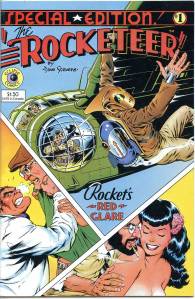
The Rocketeer’s first adventure appeared in 1982 as a backup feature in issues #2 and #3 of Mike Grell‘s Starslayer series from Pacific Comics. Two more installments appeared in Pacific’s showcase comic Pacific Presents #1 and 2. The fourth chapter ended in a cliffhanger that was later concluded in a special Rocketeer issue released by Eclipse Comics. The complete story was then collected by Eclipse in a single volume titled The Rocketeer.
The Teen Titans were spun off into their own series with Teen Titans #1 by Haney and artist Nick Cardy in 1966. The series’ original premise had the Teen Titans helping teenagers and answering calls. Comics historian Les Daniels noted that Haney “took some ribbing for the writing style that described the Teen Titans as ‘the Cool Quartet’ or ‘the Fab Foursome’. The attempt to reach the youth culture then embracing performers like the Beatles and Bob Dylan impressed some observers.
American Flagg, which ran 50 issues (Oct. 1983 – March 1988),was one of the first titles to be published by First Comics, an early alternative press comics company founded in Evanston, Illinois in 1983. Unusually for the time, the company offered its freelance writers and artists creator rights, including ownership of their creations.Regardless, writer-artist Howard Chaykin, then living in New York City, felt trepidation when First Comics approached him to do a project. He recalled in 2010,
“My concern had all and everything to do with the fact that this was a brand new company, located in [a suburb of] Chicago. I’d always worked for companies I’d visited and had day-to-day-dealings with. [But they talked about a financial plan that would make it possible for me to get out from under the debt I had accrued working for [publisher] Byron Preiss[illustrating early graphic novels]. It was encouraging, so I went home and concocted a scenario, a pitch document, and that was it.”
Chaykin devised a series set in 2031, a high-tech but spiritually empty, consumerist world in which the American government has relocated to Mars, leaving what remains of the U.S. to be governed by the all-encompassing corporation the Plex. The series star is Reuben Flagg, a former TV star drafted into the Plexus Rangers and posted as a deputy in Chicago, Illinois.
The first 12 issues, running through cover-date September 1984, consisted of four interlocking, three-issue story arcs. Chaykin recalled his difficulty in producing 28 pages of art and script monthly. “I was still a smoker and a drinker at the time. And [the output was such that] I’d never done anything like that before, and it was insane. It just devoured my life I had no assistants. I didn’t how to work with an assistant at that point, and it was a very difficult process. … I was trying to do a fairly high-quality product and I didn’t want to slough it off.”
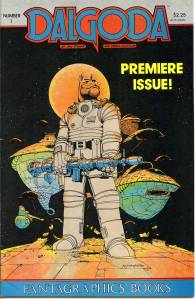
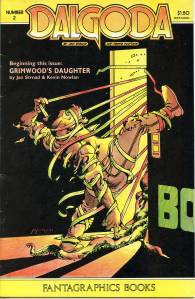
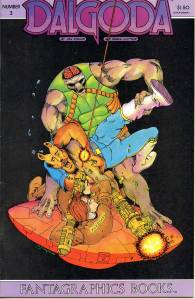
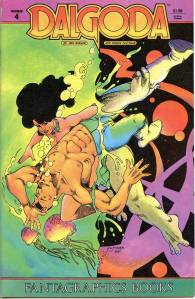
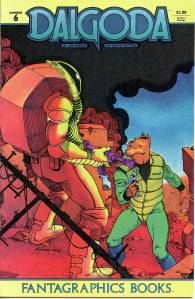
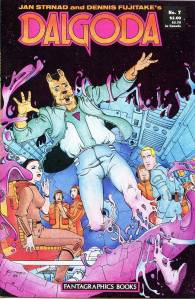
Dalgoda by Jan Strnad and Dennis Fujitake was published by Fantagraphics Books in 1984. This is a series that needs to come back! Not only were the featured stories and art amazing, but the books also featured back-up stories by Alan Moore (“The Bojeffries Saga”) and Kevin Nowlan (“Grimwood’s Daughter”).
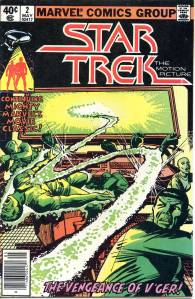
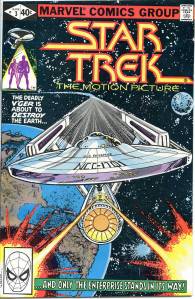
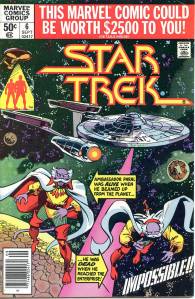
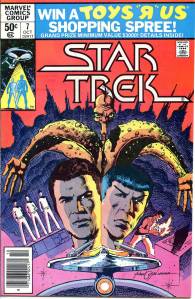
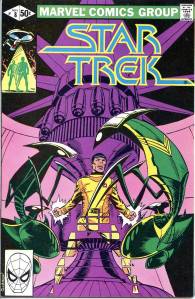
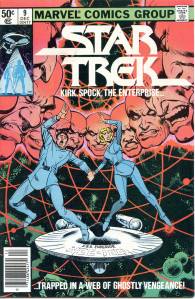
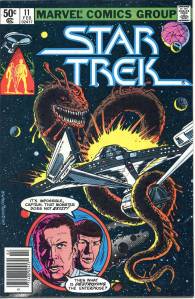
Marvel’s series of Star Trek comics began in 1979 with an adaptation of Star Trek: The Motion Picture and continued for another two years. These tales take place during a second five-year mission of Kirk and the Enterprise that would have been featured in the never-produced Star Trek: Phase II TV series. Marvel’s license from Paramount prohibited them from using concepts introduced in the original series. They were only allowed to use the characters and concepts from Star Trek: The Motion Picture. The series lasted 18 issues and ended in 1981.
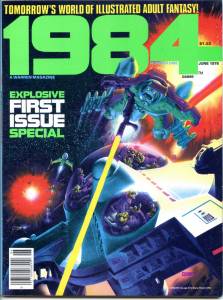
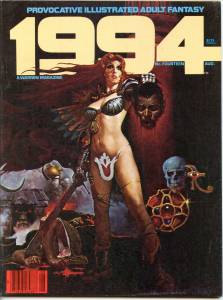
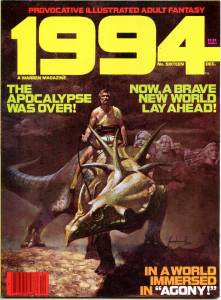
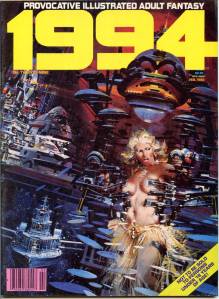
1984 was an American black and white science-fictioncomic magazine published in New York City by Warren Publishing from 1978 to 1983. 1984 was edited by Bill Dubay. The title of the magazine was changed to 1994 starting with issue #11 in February, 1980 based on a request by the estate of George Orwell. The magazine ceased publication with issue #29 in February, 1983 due to the bankruptcy of Warren Publishing.
Similar to its sister publications Eerie and Vampirella, 1984 featured numerous recurring series and characters. This included the following:
Mutant World (Artist: Richard Corben; Writer; Jan Strnad)
Ghita of Alizarr (Drawn and written by Frank Thorne)
Idi Amin (Artist: Esteban Maroto; Writer: Bill Dubay)
Rex Havoc (Artist: Abel Laxamana; Writer: Jim Stenstrum)
The Starfire Saga (Artist: Rudy Nebres; Writer: Bill Dubay)
Young Sigmond Pavlov (Artist: Alex Niño; Writer: Bill Dubay)










 EHT Comics