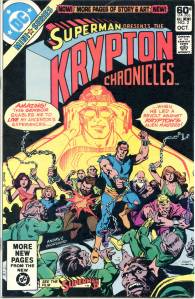
A three-issue miniseries entitled The Krypton Chronicles, published in 1981, tells of Superman researching his roots when, as Clark Kent, he was assigned to write an article about Superman’s family by an assignment editor impressed with the television miniseries Roots. To do so, he and Supergirl travel to Kandor, where they learn the history of the El family.
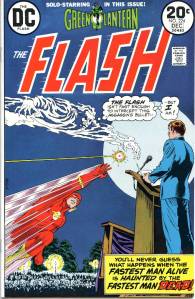
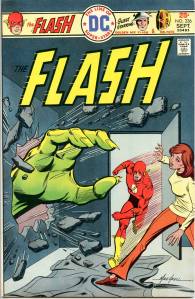
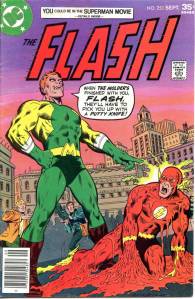
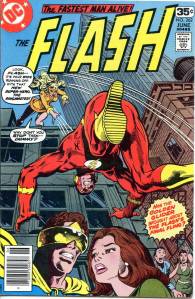
In 1956, DC Comics successfully revived superheroes, ushering in what became known as the Silver Age of comic books. Rather than bringing back the same Golden Age heroes, DC rethought them as new characters for the modern age. The Flash was the first revival, in the aptly named tryout comic book Showcase #4 (Oct. 1956).
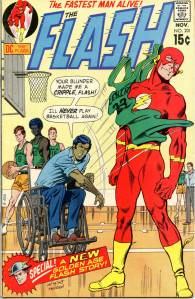
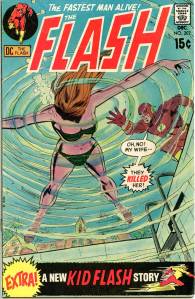
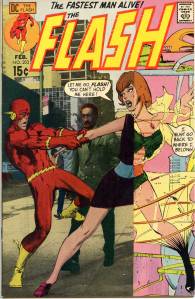
This new Flash was Barry Allen, a police scientist who gained super-speed when bathed by chemicals after a shelf of them was struck by lightning. He adopted the name The Flash after reading a comic book featuring the Golden Age Flash.After several more appearances in Showcase, Allen’s character was given his own title, The Flash, the first issue of which was #105 (resuming where Flash Comics had left off).
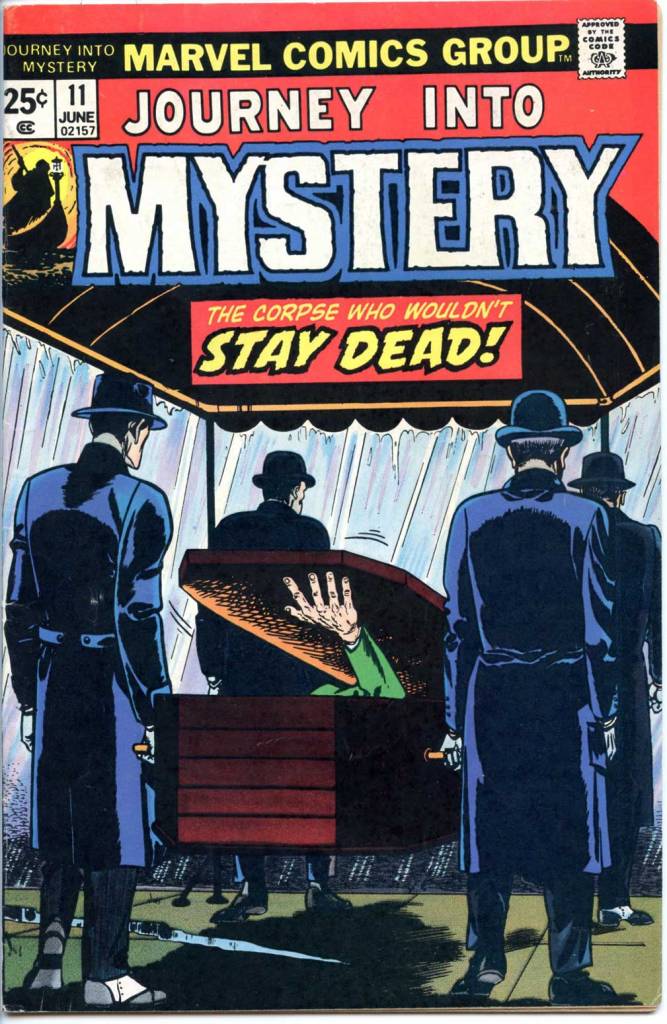
A second Journey into Mystery ran 19 issues (October 1972 – October 1975). The title was one of four launched by Marvel Comics editor-in-chief Roy Thomas to form a line of science fiction and horroranthologies with more thematic cohesiveness than the company’s earlier attempts that decade,which had included the series Chamber of Darkness and Tower of Shadows. Whereas those titles generally presented original stories, these new books would instead adapt genre classics and other stories. With the four titles’ debuts set to be staggered over the course of four months, Marvel premiered Journey into Mystery vol. 2 (October 1972), Chamber of Chills (November 1972), Supernatural Thrillers (December 1972), and, with a late start, Worlds Unknown (May 1973).
Man-Bat was the second ongoing comic series featuring a Batman villain, the first one being Joker (Volume 1). Man-Bat started publication in 1975, but was prematurely cancelled after the second issue by DC Comics Publisher, Carmine Infantino. The Man-Bat stories featured in this series were later moved as back-up features on Detective Comics (Volume 1) and later Batman Family (Volume 1).
In October 1984 – January 1985, the Machine Man title was resurrected, in a four-issue miniseries written by Tom DeFalco with art by Herb Trimpe (breakdowns only, issues #1-3) and Barry Windsor-Smith (finishes only, issues #1-3 & full art for issue #4), with Windsor-Smith also coloring the entire miniseries & co-plotting issue #4 with DeFalco. This series turned out to be one of the most popular of all the Machine Man titles, tying with previous continuity, but with the action set in the distant cyberpunk future of 2020, starting with Machine Man’s reassembly.
The miniseries was republished again in 1994 as two double-size books, with the name Machine Man 2020. Characters from this alternate future have made appearances in other Marvel books, namely Arno Stark, the mercenary Iron Man 2020.
In 1990, Machine Man guest-starred in Iron Man Annual #11 (part of the “Terminus Factor” storyline). That story created strong hints that the 2020 Machine Man may turn out not to be the true X-51, but instead a duplicate created by Sunset Bain.
Marvel Comics introduced a fairly faithful version of Conan in 1970 with Conan the Barbarian, written by Roy Thomas with art initially by Barry Windsor-Smith, then John Buscema and Ernie Chan (aka Ernie Chua). The highly successful Conan the Barbarian series spawned the more adult, black-and-white Savage Sword of Conan in 1974, by Thomas, Buscema, and Alfredo Alcala. Savage Sword of Conan soon became one of the most popular comic series in the 1970s.
The Marvel Conan stories were also adapted as a newspaper comic strip which appeared daily and Sunday from September 4, 1978, to April 12, 1981. Originally written by Roy Thomas and illustrated by John Buscema, the strip was continued by several different Marvel artists and writers.
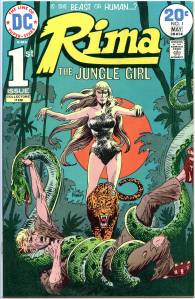
Rima starred in a seven-issue comic book series, DC Comics‘ Rima the Jungle Girl (May 1974 – May 1975), adapted by DC writer-editor Robert Kanigher with artwork by penciler–inkerNestor Redondo and covers by Joe Kubert. A variation of the character debuted in a six-issue DC Comics limited series May 2010 to Mar 2011 First Wave, written by Eisner Award–winning writer Brian Azzarello.
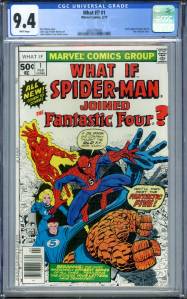
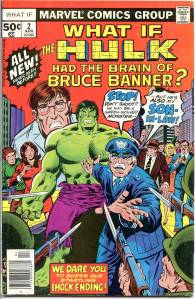
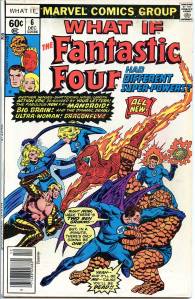
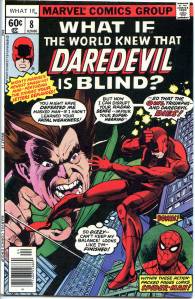
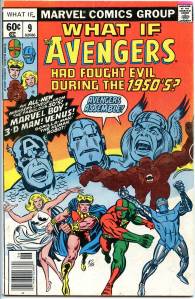
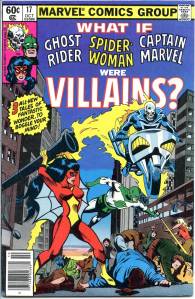
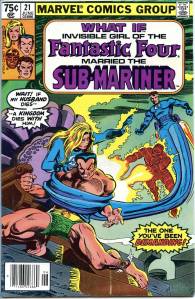
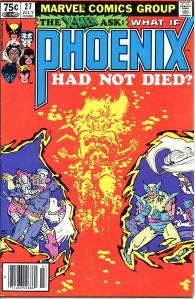
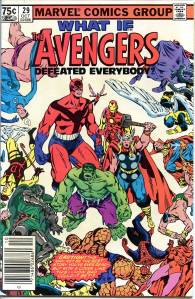
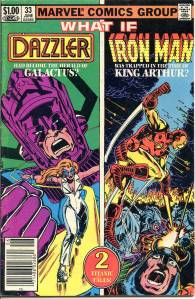
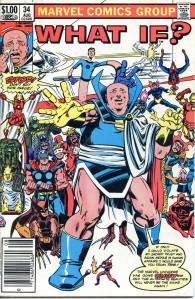
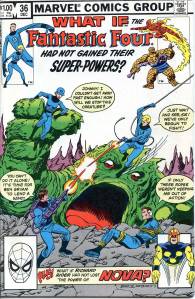
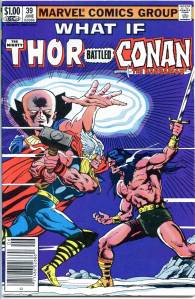
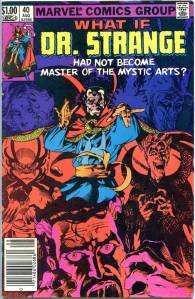
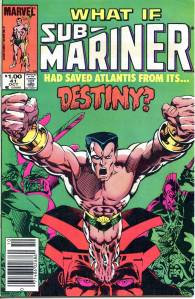
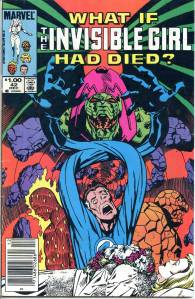
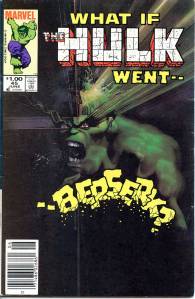
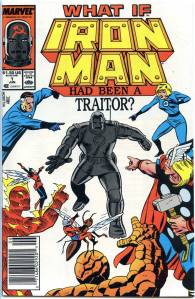
What If, sometimes rendered as What If…?, is published by Marvel Comics whose stories explore how the Marvel Universe might have unfolded if key moments in its history hadn’t occurred as they did in mainstream continuity. What If comics have been published in eleven series (volumes).
The stories of the inaugural series (1977–1984) feature the alien Uatu the Watcher as a narrator. From the moon, Uatu, a member of an immortal race of “Watchers”, observes both the Earth and alternate realities. Most What If stories begin with Uatu describing an event in the mainstream Marvel Universe, then introducing a point of divergence in that event and then describing the consequences of the divergence. Uatu was used similarly in the second series (1989–1998) until a point where, in the Fantastic Four comic book, Uatu was punished for destroying another Watcher. This made the use of Uatu improbable so the character was phased out to its last appearance in issue #76. Without a framing device, the stories themselves became the focus.
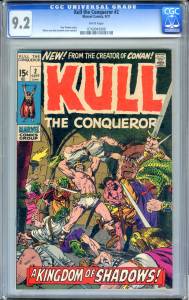
Kull has been adapted to comics by Marvel Comics with three series between 1971 and 1985. The first was drawn by Marie Severin and her brother John Severin. He also appeared several times in The Savage Sword of Conan series and other anthology books. Another graphic novel, Kull: The Vale of Shadow, was published in 1989.


















 EHT Comics