Deadline USA (1992)

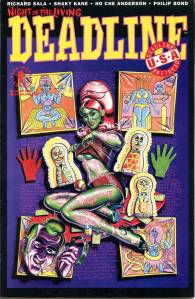
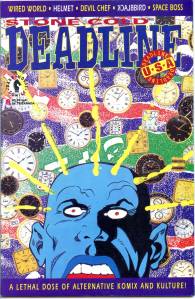
You’ve seen him on MTVs Liquid Television–Richard Sala continues his all-new, ultraterrifying 13 O’clock! He’s harder than hard-boiled, he’s Johnny Nemo by the ultrascientific Peter Milligan and Brett Ewins! It’s sex, it’s rock n’ roll, but is it drugs? It’s Doe, the latest graphic vortex from Harvey Award ultranominee Ho Che Anderson! They play the game, God makes the rules! They’re the A-Men by the ultraconservative Shaky Kane! Plus work by Julie Hollings, Philip Bond, Alec Stevens, D’Israeli and never forget GWAR, puny human! And an ultraspecial music feature! And another ultraschizophrenic cover painting from the corkscrewed psyche of Mitch O’Connell!
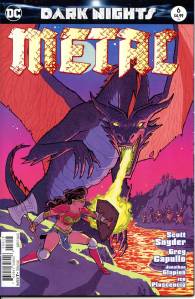
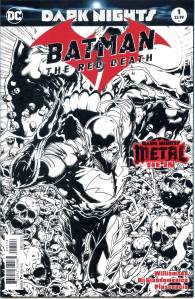
Dark Nights: Metal (2017)

The story involves Batman discovering a dark multiverse that exists beneath the core DC multiverse. It is revealed that both multiverses are connected through mysterious metals that Batman has encountered over the years. His investigations eventually result in him releasing seven evil versions of himself from the dark multiverse, led by the dark god known as Barbatos, who plans to unleash darkness across every Earth.

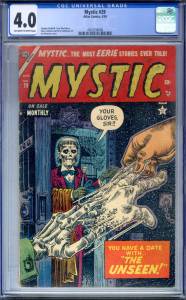
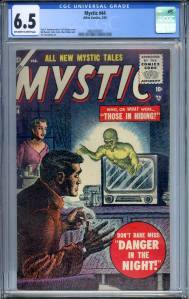
Mystic – Atlas (1951)

Titled simply Mystic and published by Marvel’s 1950s iteration, Atlas Comics, this was a 61-issue horror-suspense anthology (March 1951-Aug. 1957).

Mystic debuted shortly before Atlas’ Strange Tales, increasing the company’s science fiction/fantasy/horror line from four titles to six. Begun prior to the creation of the comic-book industry’s self-censorship board, the Comics Code AuthorityMystic softened its horror when it went under the auspices of the Comics Code beginning with issue #37 (May 1955). The series’ contributors included artists Bill Everett and John Severin.

Invincible (2003)

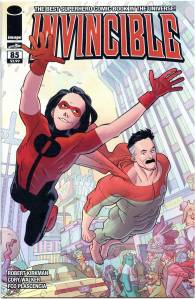
Invincible is an Image Comics Universe series named for its superhero, “Invincible” (“Mark Grayson”). Created by writer Robert Kirkman and artist Cory Walker and illustrated by artist Ryan Ottley, Invincible first appeared in Tech Jacket #1 (November 2002), before graduating to his own self-titled regular series in 2003, as the premier title in Image’s then-new superhero line.

Invincible is the son of Omni-Man, an extraterrestrial superhero of the Viltrumite race. Invincible inherited his father’s superhuman strength and ability to fly and he has sworn to protect the Earth. As a teenager he had trouble adjusting to his newfound powers and coping with the reality of his origins.

Time Warp (1979)

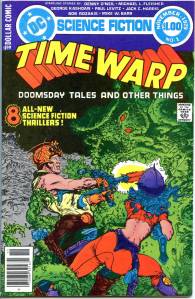
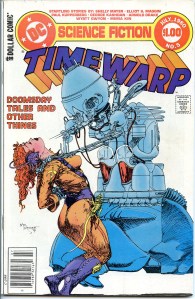
In 1978, DC Comics intended to revive its science-fiction anthology series Strange Adventures. These plans were put on hold that year due to the DC Implosion, a line-wide scaling back of the company’s publishing output. When the project was revived a year later, the title was changed to Time Warp and the series was in the Dollar Comics format. The first issue was published with an October–November 1979 cover date. Michael Kaluta provided the cover art for the entire run.

The title featured a mixture of both established comics creators and new talent. The writing team of Dan Mishkin and Gary Cohn made their comics debut in issue #3 with the three-page short story “On the Day of His Return” which was drawn by Steve Ditko.

Time Warp was canceled with issue #5 (June–July 1980) and unused inventory originally intended for the series was published in a revival of the Mystery in Space title. Other Time Warp stories appeared in the mystery anthology The Unexpected.

A one-shot was published by DC’s Vertigo imprint in May 2013. It included a Rip Hunter story by writer Damon Lindelof and artist Jeff Lemire.

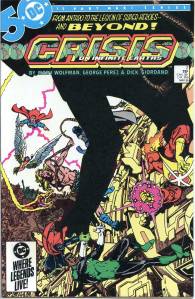
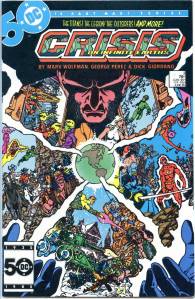
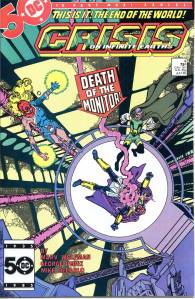
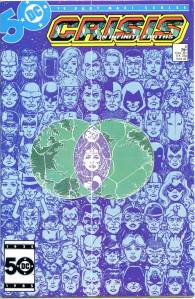
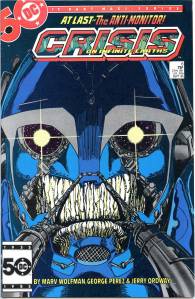
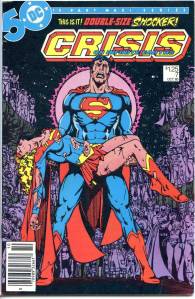
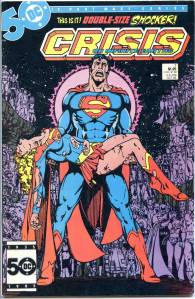
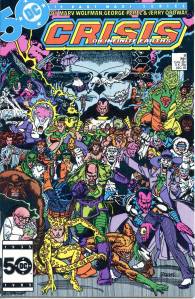
Crisis on Infinite Earths (1985)

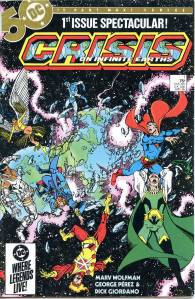
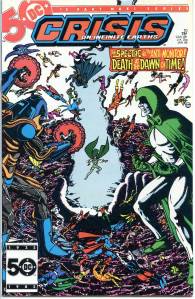
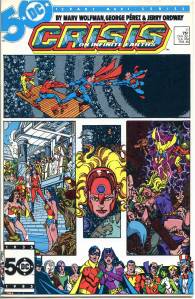
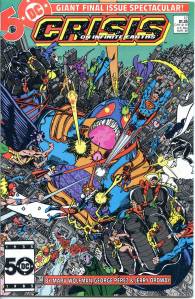
Crisis on Infinite Earths was published by DC Comics from 1985 to 1986, consisting of an eponymous 12-issue, limited series comic book and a number of tie-in books. It was produced by DC Comics to simplify its then-50-year-old continuity. The series was written by Marv Wolfman and illustrated by George Pérez (pencils and layouts), Mike DeCarlo, Dick Giordano and Jerry Ordway (inking and embellishing). The series removed the multiverse concept from the fictional DC Universe, depicting the death of long-standing characters Supergirl and the Barry Allen incarnation of the Flash. Continuity in the DC Universe is divided into pre-Crisis and post-Crisis periods. The Flash was later reborn.

The series’ title was inspired by earlier multiverse crossover stories of parallel Earths, such as “Crisis on Earth-Two” and “Crisis on Earth-Three“, and involves almost every significant character in every parallel universe of DC Comics history. It inspired the titles of three DC crossover series: Zero Hour: Crisis in Time! (1994), Infinite Crisis (2005–2006), and Final Crisis(2008).

Amazing Spider-Man V4 (2015)

Following the 2015 Secret Wars event, a number of Spider-Man-related titles were either relaunched or created as part of the “All-New, All-Different Marvel” event. Among them, The Amazing Spider-Man was relaunched as well and primarily focuses on Peter Parker continuing to run Parker Industries, and becoming a successful businessman who is operating worldwide. It also tied with Civil War II (involving an Inhuman who can predict possible future named Ulysses Cain), Dead No More (where Ben Reilly [the original Scarlet Spider] revealed to be revived and as one of the antagonists instead), and Secret Empire (during Hydra’s reign led by a Hydra influenced Captain America/Steve Rogers, and the dismissal of Parker Industries by Peter Parker in order to stop Otto Octavius).

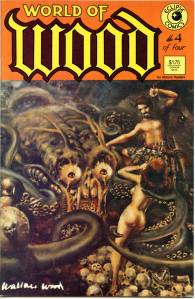
World of Wood (1986)

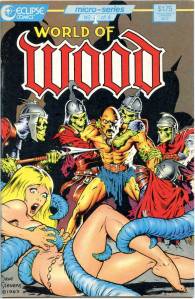
Color anthology reprint series of Wally Wood stories that included the following and more:

The Curse: Originally published in Vampirella Magazine #9 (Harris, 1971)
Overworked: Originally published in Eerie Magazine #131 (Warren, 1966)
The Misfits: Originally published in Heroes, Inc. Presents Cannon #1 (self published, 1969)
ME – 262!: Originally published in Blazing Combat #4 (Warren, 1966)
Prelude To Armageddon: Originally presented in Creepy #41 (Warren, 1971)
The Battle Of Britain!: Originally presented in Blazing Combat #3 (Warren, 1966)
The Manhunters: Originally presented in Eerie #60 (Warren, 1974)

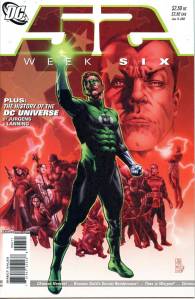
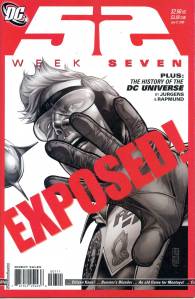
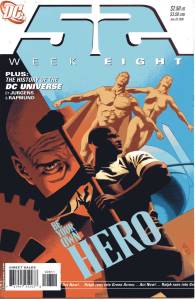
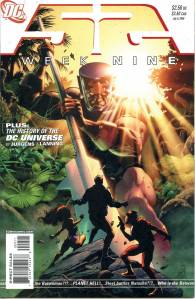
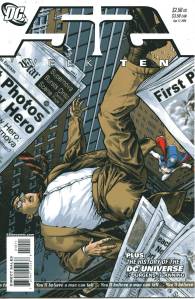
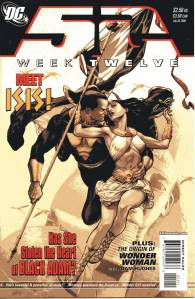
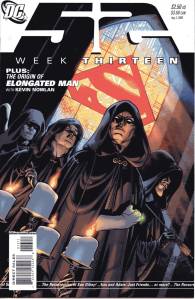
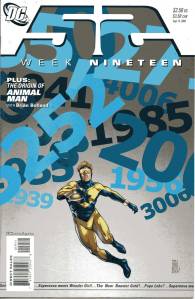
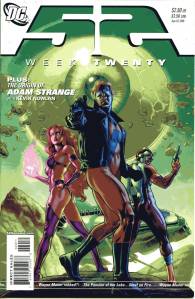
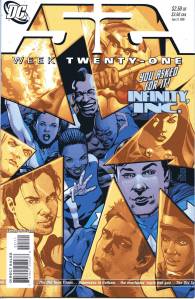
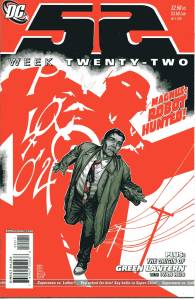
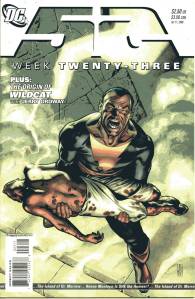
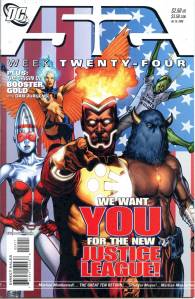
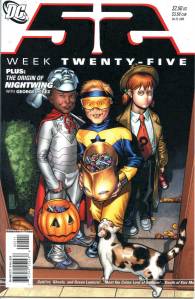
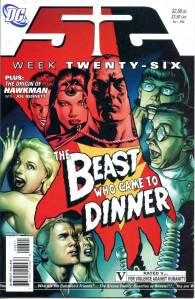
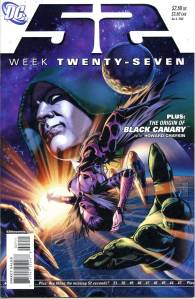
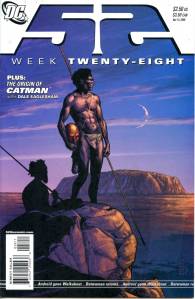
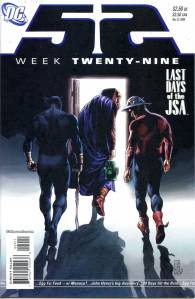
52 (2006)

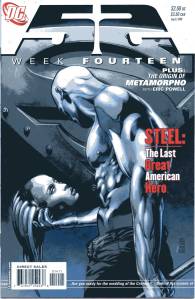
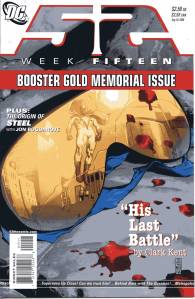
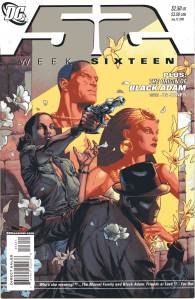
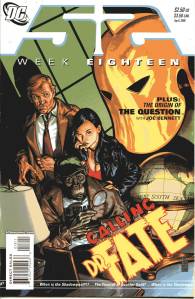
52 debuted on May 10, 2006, one week after the conclusion of the Infinite Crisis miniseries. The series was written by Geoff JohnsGrant MorrisonGreg Rucka, and Mark Waid, with layouts by Keith Giffen. 52 also led into a few limited series spin-offs.

52 consists of 52 issues, published weekly for one year, each issue detailing an actual week chronicling the events that took place during the missing year after the end of Infinite Crisis. The series covers much of the DC Universe, and several characters whose disparate stories interconnect. The story is directly followed by the weekly limited series Countdown to Final Crisis. It was the first weekly series published by DC Comics since the short-lived anthology Action Comics Weekly in 1988–1989.

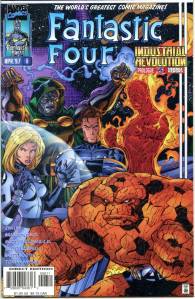
Fantastic Four V2 (1996)

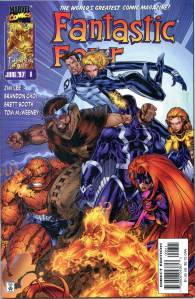
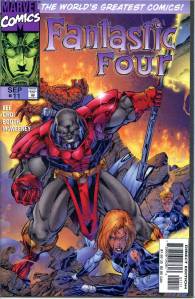
The ongoing series was canceled with issue #416 (Sept. 1996) and relaunched with vol. 2 #1 (Nov. 1996) as part of the multi-series “Heroes Reborn” crossover story arc. The yearlong volume retold the team’s first adventures in a more contemporary style, and set in a parallel universe. Following the end of that experiment, Fantastic Four was relaunched with vol. 3 #1 (Jan. 1998).