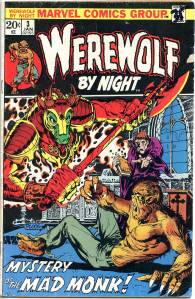
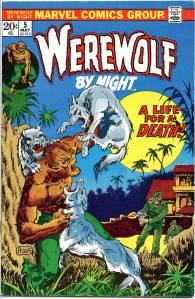
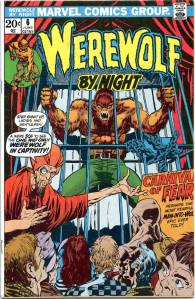
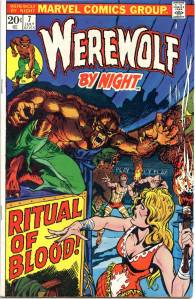
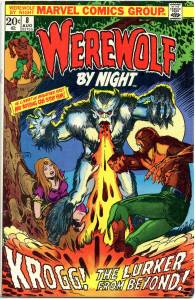
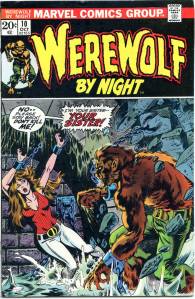
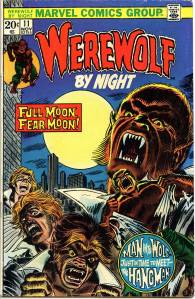
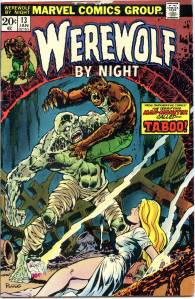
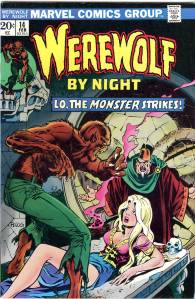
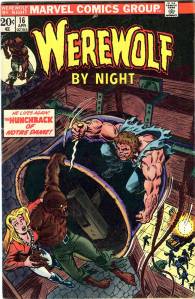
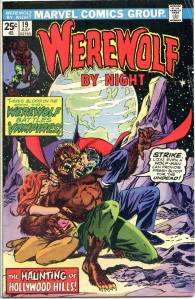
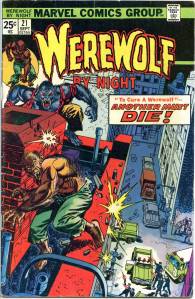
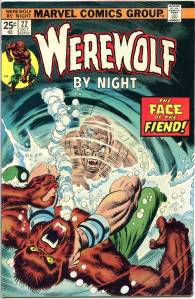
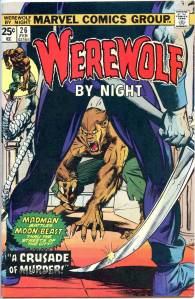
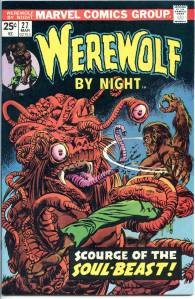
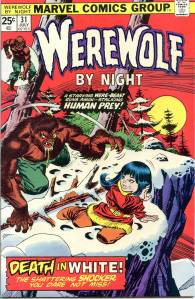
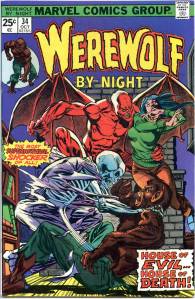
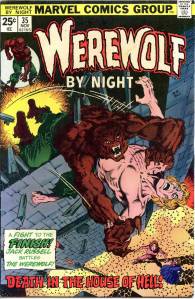
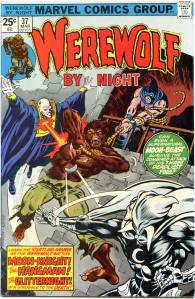
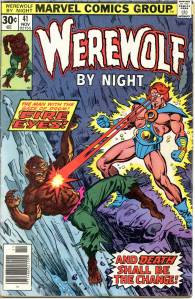
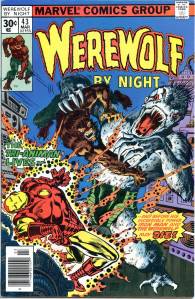
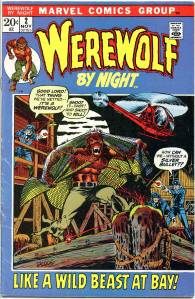
The Werewolf by Night character first appeared in Marvel Spotlight #2 (Feb. 1972) and was based on an idea by Roy Thomas. The series name was suggested by Stan Lee and the debut story was crafted by Gerry Conway and Mike Ploog. The character made additional appearances in Marvel Spotlight #3 and #4 and then graduated to his own eponymous series in September 1972. Werewolf by Night was published for 43 issues and ran through March 1977. Issue #32 contains the first appearance of Moon Knight. Jack Russell co-starred with Tigra in Giant Size Creatures #1 (July 1974), which was the first appearance of Greer Grant as Tigra instead of the Cat. That series was retitled Giant-Size Werewolf with its second issue.
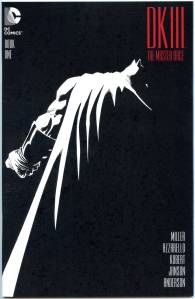
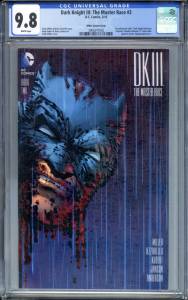
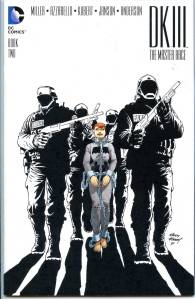
DK III: The Master Race (2015)
The series is a sequel to Miller’s 1986 Batman miniseries The Dark Knight Returns and the 2001 miniseries The Dark Knight Strikes Again, continuing the story of an aged Bruce Wayne resuming his identity as a crimefighter, aided by his sidekick Carrie Kelley (Robin) and featuring an ensemble of DC Universe characters including Superman, Green Lantern, and Wonder Woman. In DK III, Ray Palmer restores the inhabitants of Kandor to full-size, but they immediately begin to terrorize the Earth. Batman sets out to assemble his former allies against the invaders.
The series is accompanied by a series of one-shots which fill in events between issues. They are written and drawn by Frank Miller, which continues his experimentation with noir-style writing and divisive art style.
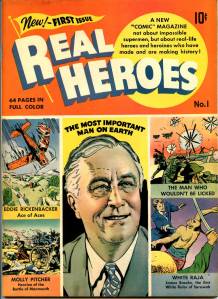
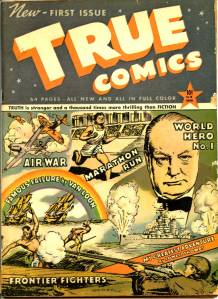
Real Heroes & True Comics (1941)
One of the first series of comics dedicated to educational topics was True Comics, published by Gworge J. Hecht’s Parents’ Magazine Press, beginning in 1941. Designed to convey not only information but also wholesome attitudes, the series covered a variety of materials, but many issues were devoted to patriotic stories from American history or to biographies of famous American (and occasionally non-Americans, such as Winston Churchill) from the past. The series also included stories of the exploits of the FBI, designed to heroize law enforcers and demonize criminal. These fact-based comics were enough of a commercial success that the series ran until 1950.
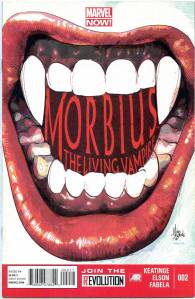
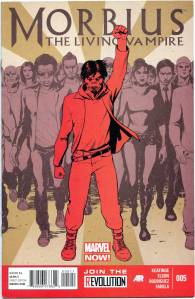
Morbius: The Living Vampire (2013)
The ALL-NEW Michael Morbius? Morbius, is back, but on the run and desperate to quell his vampiric tendencies. But has the midnight son really changed? As Morbius tries to stay under the radar, a new threat arises, and they want Morbius dead.
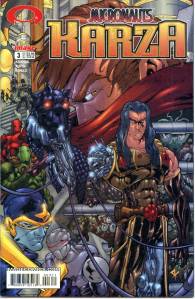
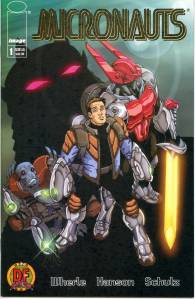
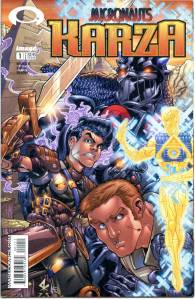
Micronauts – Image (2002)
In June 2002, a new Micronauts series by Image Comics was published for eleven issues before its cancellation in September 2003. The same year saw a four-issue limited series featuring Baron Karza’s origin and his relationship with the Time Traveler entity.
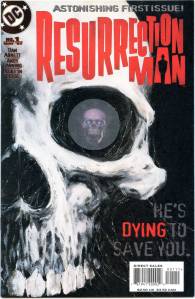
Resurrection Man (1997)
Mitch Shelley made his debut in Resurrection Man #1 (1997). The monthly series was structured to follow a grand story arc planned by Abnett and Lanning, with stories following Shelley as he wandered America, having adventures while searching for the truth behind his past and his transformation. During this, he is pursued by “the Lab”, its former director Hooker, and the bounty hunters known as the Body Doubles.
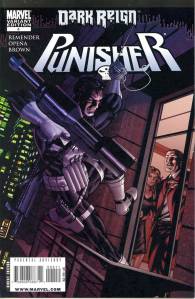
Punisher V8 (2009)
Marvel relaunched The Punisher War Journal in 2009 as simply Punisher, with a thematic link tied to the events of the “Dark Reign” storyline. As part of his work on the character, Rick Remender wrote the one-shot title Dark Reign: The List – Punisher, which, as part of the “Dark Reign” storyline, shows the character dismembered and decapitated by Daken.
Godzilla, King of the Monsters (1995)
In 1987, Dark Horse Comics acquired the rights to Godzilla and for the next 12 years published various comic books and trade paperbacks based on the character. These ran the gamut from back-up stories in anthology titles, to one-shots, to miniseries, to an ongoing series, as well as various reprints in the trade paperback format.
In 1993, Godzilla was featured in the anthology series Dark Horse Comics in issues #10 and #11 (parts of Dark Horse Comics #10’s story and artwork would be slightly altered twice in both Godzilla, King of the Monsters #0 and the trade paperback Godzilla: Age of Monsters).
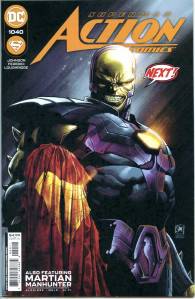
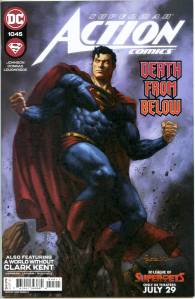
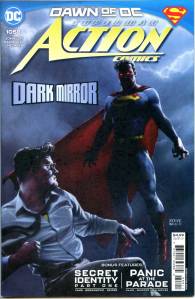
Action Comics (2020’s)
After learning of an enslaved race with mysterious ties to Krypton, Superman and the Authority leave earth and travel across the galaxy to liberate Warworld. Think it’s that simple? Think again.
With Superman captured on Warworld and banished to the lower catacombs, he’ll need to team up with other enslaved gladiators to turn the hordes of Warworld against their masters. As the Warworld Saga reaches a breaking point, battle lines are drawn between the two towering forces at odds: Mongul and Superman.
Which heroes will survive the conflict and what will be the fate of the citizens of Warworld?
Deadpool V1 (1997)
In 1997, Deadpool was given his own ongoing title, initially written by Joe Kelly, with then-newcomer Ed McGuinness as an artist. Deadpool became an action comedy parody of the cosmic drama, antihero-heavy comics of the time. The series firmly established his supporting cast, including his prisoner/den mother Blind Al and his best friend Weasel. The ongoing series gained cult popularity for its unorthodox main character and its balance of angst and pop culture slapstick and the character became less of a villain, though the element of his moral ambiguity remained. The writer Joe Kelly noted, “With Deadpool, we could do anything we wanted because everybody just expected the book to be cancelled every five seconds, so nobody was paying attention. And we could get away with it.”
The series was taken over by Christopher Priest who noted that he found Kelly’s issues to be “complex and a little hostile to new readers like me” and that by issue 37, he realized that “it was okay to make Deadpool look stupid.”