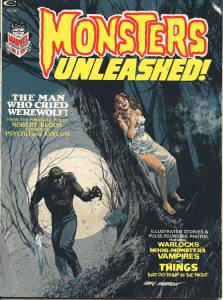
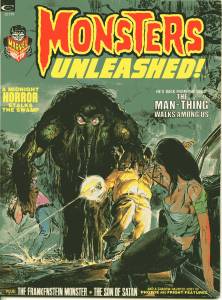
A magazine rather than a comic book, Monsters Unleashed did not fall under the purview of the comics industry’s self-censorship Comics Code Authority, allowing the title to feature stronger content — such as moderate profanity, partial nudity, and more graphic violence — than color comics of the time.
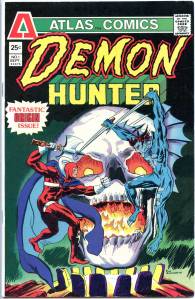
The origin of Gideon Cross, who turns against the demon cult that trained him as a killer. First and only issue of the series; creator Rich Buckler later revised the idea as Marvels Devil-Slayer. Story by Buckler and David Anthony Kraft; art and cover by Buckler.
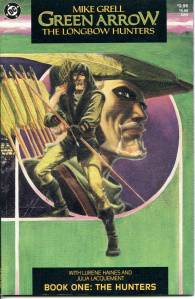
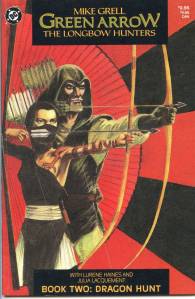
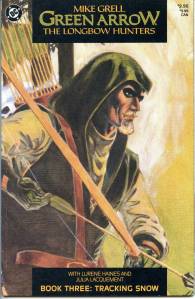
Green Arrow: The Longbow Hunters was nominated for a 1988 Eisner Award for Best Finite Series.
The series proved popular enough that DC Comics commissioned the first ever Green Arrow ongoing series, also written by Grell (writer from issues #1-80, 1988-1993).The series ran for 11 years. Grell would write a retelling of Green Arrow’s origin and first case in Secret Origins, (vol. 2) #38 (March 1989). Grell also wrote and illustrated the official Post-Crisis origin of Green Arrow in Green Arrow: The Wonder Year miniseries in 1993.
The series was major influence on TV series Arrow. Oliver is not referred to as “Green Arrow” in the show, wears a hooded costume similar to that worn in The Longbow Hunters, and in the first season, is willing to use lethal force. Edward Fyers is a main antagonist in the first season, and Shado has a recurring role in the first and second seasons. A character based on the Seattle Slasher, referred to as the Starling Slasher to match the show’s setting, appeared in the episode “Blind Spot.”
In 2014, writer Jeff Lemire used the name “Longbow Hunters” for a team of villains in his final story arc in the New 52 Green Arrow series.
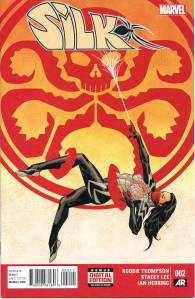
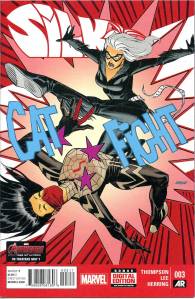
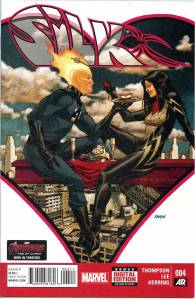
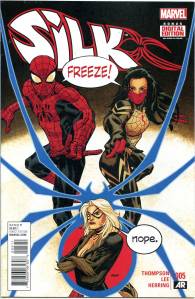
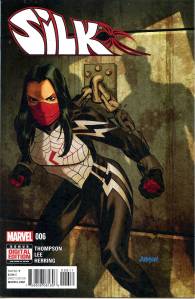
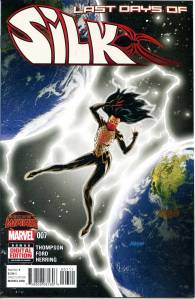
Silk first appeared in The Amazing Spider-Man #1 (April 2014) as a faceless cameo and was created by writer Dan Slott and artist Humberto Ramos. She made several other faceless appearances throughout the volume’s first story arc, before making her full debut in The Amazing Spider-Man #4 (July 2014), as part of a tie-in to the “Original Sin” storyline. An ongoing title featuring Silk started publishing in February 2015, with scripts by Supernatural writer Robbie Thompson and art by Stacey Lee.Silk volume 1 came to an end during the Secret Wars event. After the event, a second volume began which concluded on issue #19.
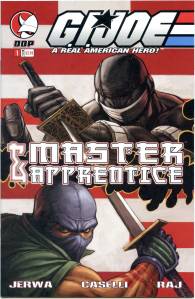
G.I. Joe: Master and Apprentice was a mini-series published in 2004 by Devil’s Due. The story chronicles how the destinies of Snake-Eyes and Kamakura become entwined, providing part of the untold story of how things came to be in the main series.
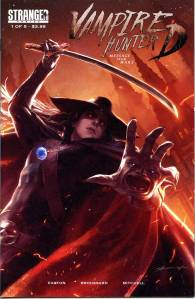
Drawn to Mars by an ancient message from Cecile, a girl who could see the future, D arrives to find a colony that is little more than a blood farm. With Left Hand by his side, D sets out to cleanse Mars of the vampire scourge.
He’s arguably one of the most influential men in America today. He’s inarguably the evilest. His name is Lex Luthor…and whatever Luthor wants, Luthor gets – even if it’s the life of a man who threatens his privacy. But it’s Clark Kent who’s arrested for the brutal murder of down-and-out biographer Peter Sands, a man who hoped to climb back to the top with THE UNAUTHORIZED BIOGRAPHY OF LEX LUTHOR. All it got him was dead. What are the secrets of his past that Luthor is willing to kill for…secrets that the merciless criminal mastermind wants kept dead and buried?
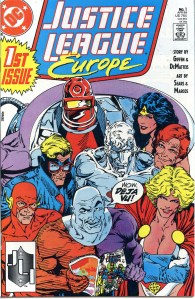
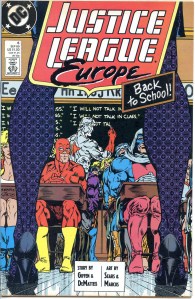
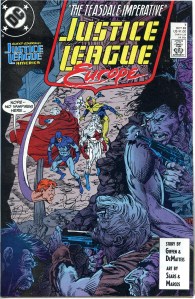
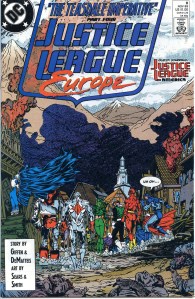
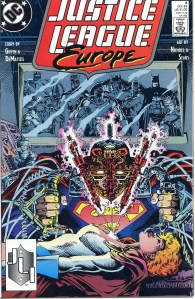
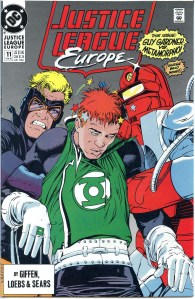
Justice League Europe was published for 68 issues (plus five annuals) from 1989 to 1994. Starting with issue #51 the title was renamed Justice League International (vol. 2). Like Justice League America, the series featured tongue-in-cheek humor but was a much more action-centric series than Justice League America. The action-themed nature of the series was most overt with the series’ most famous arc “The Extremists”. The arc featured the JLE fighting The Extremists, a cadre of psychopathic villains patterned after Marvel Comics villains Doctor Doom, Magneto, Doctor Octopus, Sabretooth and Dormammu.
The team was originally headquartered in Paris, France but later moved to an abandoned castle in Great Britain.
The character of Captain Sternn, created by Bernie Wrightson, was the focus of the segment “Captain Sternn” of the 1981 film Heavy Metal. In this film adaptation he was voiced by Eugene Levy. He is drawn as a caricature of Superman, although his clothing is different; he wears a pseudo-military uniform. He is always accompanied by a small, levitating one-eyed robot, named Beezer, that is his most faithful companion.