Lady Mechanika (2021)

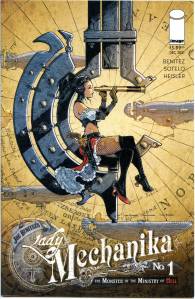
In a Victorian asylum full of grotesque inmates, sadistic guards, and a fanatical doctor, a young lady wakes to find her arms and legs have been replaced with mechanical limbs. But who among this gruesome menagerie is the true monster of the Ministry of Hell? The origins of the notorious adventuress known as Lady Mechanika!

Lobo – One Shots (1990’s)

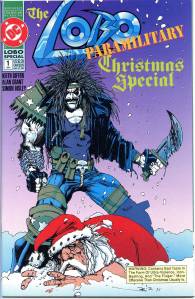
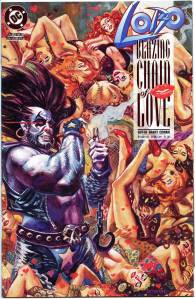
The Lobo character was created by Roger Slifer and Keith Giffen, and first appeared in Omega Men #3 (June 1983). Lobo is an alien, and works as an interstellar mercenary and bounty hunter. Lobo was introduced – although initially rarely used – as a hardboiled villain in the 1980s, and remained in limbo until his revival as an anti-hero biker with his own comic in the early 1990s.

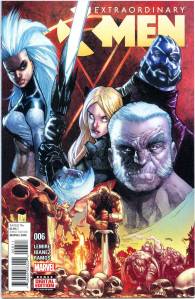
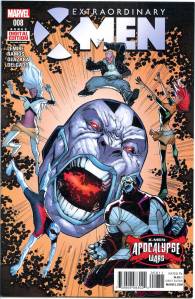
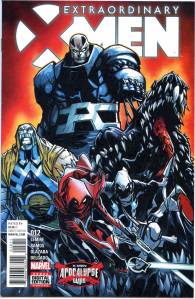
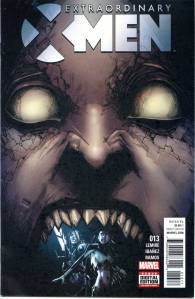
Extraordinary X-Men (2016)

The story takes place following the conclusion of the Secret Wars crossover event. In this comic series, mutants are again faced with possible extinction due to Terrigen Mist which causes exposed mutants to become sterile and possibly suffer from a fatal degenerative disease called “M-Pox”. The gas also prevents the activation of the X-Gene. The series ended with #20.

Superman – Worlds of War (2021)

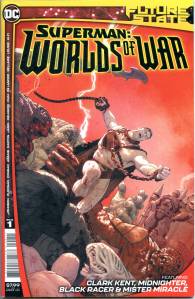
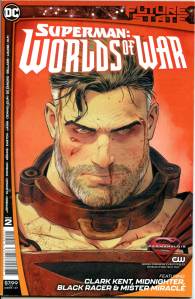
Clark Kent is gone, leaving a Superman-shaped hole behind. People gather in Smallville to celebrate their hero, little realizing that he is across the galaxy helping others. Superman has gone to Warworld, where he fights as a gladiator in the deadly pits of Mongul. But this is Superman we’re talking about-and his idea of a victory does not line up with the expectations of Mongul’s hordes!

Bill & Ted’s Excellent Comic Book (1991)

The first two issues revolve around the efforts of Bill (Bill S. Preston, Esq.) and Ted (Theodore Logan) as they plan a party to celebrate their recent nuptials. Unfortunately the personification of mortality, Death, a more recent ally, becomes vastly out of sorts and steals the phone-booth time machine. Rufus, their old guide, helps by directing them to a prototype for the phone booth/time machine. Bill and Ted must take the device and find Death before he causes too much damage to the time stream. The two also must deal with jealous rivals, who do not accept that Bill and Ted’s wives had freely chosen to marry.

Nexus V2 – Capital Comics (1980’s)

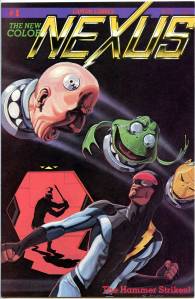
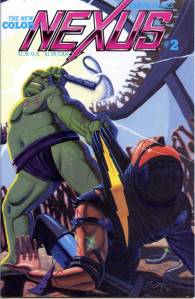
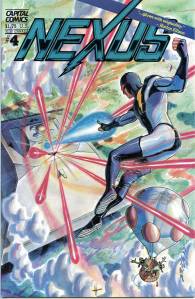
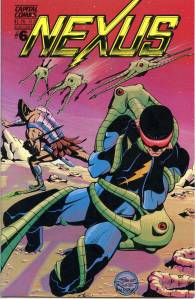
Nexus is a comic book series created by writer Mike Baron and penciler Steve Rude in 1981. The series is a combination of the superhero and science fiction genres, set 500 years in the future.

The series debuted as a three-issue black-and-white limited series (the third of which featured a 33 RPM flexi disc with music and dialogue from the issue), followed by an eighty-issue ongoing full-color series. The black-and-white issues and the first six color issues were published by Capital Comics; after Capital’s demise, First Comics took over publication.

On the creation of the series: Baron noted that they had originally pitched a series called Encyclopaedias to Capital Comics, but the company rejected this, saying they were looking for a superhero title. Over a drink at a restaurant, Baron outlined his ideas for Nexus to Rude.

Nexus was entirely Baron’s idea. He even came up with the lightning bolt for the costume. All that we needed then was a name… a few weeks passed. Baron calls, and, without preamble, just says “Nexus.” We finally had our name.”

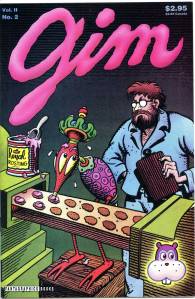
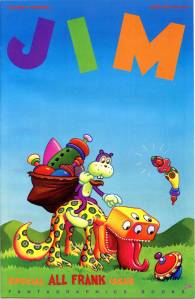
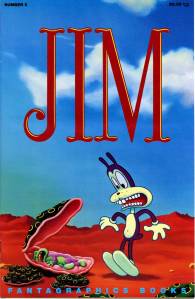
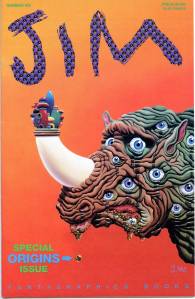
Jim & Frank (1993)

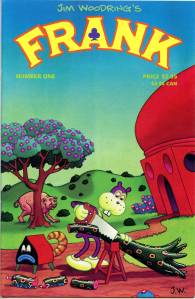
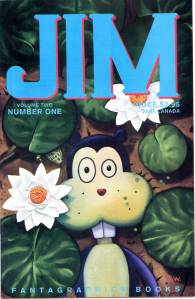
Jim is a series created by Jim Woodring. It began in 1980  as a self-published zine and was picked up by Fantagraphics Books in 1986 after cartoonist Gil Kane introduced Woodring to Fantagraphics co-owner Gary Groth. The publisher released four magazine-sized black-and-white issues starting in September 1987. A comic book-sized continuation, Jim Volume II, with some color, began in 1993 and ran for six issues until 1996.

Jim, which Woodring described as an “autojournal”, contained comics on a variety of subjects, many based on dreams, as well as surreal drawings and free-form text which resembled Jimantha automatic writing. Besides dreams, the work drew on Woodring’s childhood experiences, hallucinations, past alcoholism, and Hindu beliefs. It also included stories of recurring Woodring characters such as Pulque (the embodiment of drunkenness), boyhood friends Chip and Monk, and, in Volume II, his signature creation Frank.

Batman: The Dark Knight Strikes Again (2001)

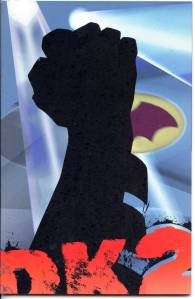
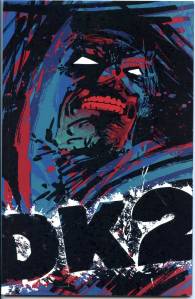
Batman: The Dark Knight Strikes Again, also known as DK2, is a 2001-2002 DC Comics three-issue limited seriescomic book written and illustrated by Frank Miller and colored by Lynn Varley. The series is a sequel to Miller’s 1986 miniseries The Dark Knight Returns. It tells the story of an aged Bruce Wayne who returns from three years in hiding, training his followers and instigating a rebellion against Lex Luthor‘s dictatorial rule over the United States. The series features an ensemble cast of superheroes including CatgirlSupermanWonder WomanPlastic ManThe Flash, and the Atom.

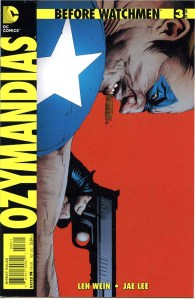
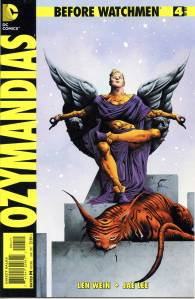
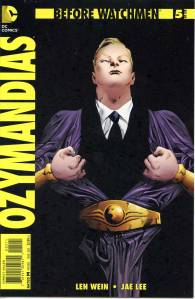
Before Watchmen: Ozymandias(2012)

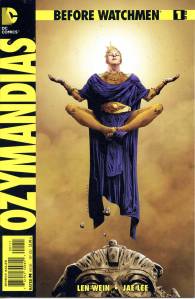
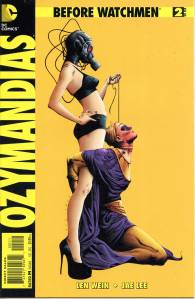
As he awaits the final moment for his master plan to come together, Ozymandias reflects on what brought him there and makes an autobiographical recording of his life that spans 1939-1985 (when the story of Watchmen takes place). We see his early studies and adventures, the beginnings of his financial empire and his crime-fighting career, and his first unnerving encounters with The Comedian and Doctor Manhattan—the latter of which prompted him to build his Antarctic fortress of Karnak, aid in resolving the Cuban Missile Crisis, and retire from crime-fighting to concentrate on saving the world at any cost. The story debuted to mostly positive reviews.

Mr. Punch – Hardcover 1st Printing (1994)

The book follows the childhood memories of the narrator, illustrating various experiences in his life: fishing on the beach at dawn; his grandparents and how one grandfather went mad; a hunchback great-uncle; the betrayal of children by adults; fear of the unknown; an unwanted pregnancy, violence, possibly even murder.

The general story is paralleled with the traditional story of the Mr. Punch show, ‘The oldest, the wisest play’. The narrator is first introduced to Mr. Punch when fishing with his grandfather, but encounters it, and a mysterious ‘professor’ (Punch & Judy man), during various other activities. The story of Mr. Punch, is that he kills his baby, then his wife Judy and the police officer who comes to arrest him. He outwits a ghost, a crocodile and a doctor, convinces the hangman to be hanged in his place and, at the play’s end, even defeats the devil himself.

Like many of Gaiman’s works, a major theme in this graphic novel is memory and the unreliability of one’s own recollections.